Holy Trinity Church in Kendal is one of Cumbria’s most significant ecclesiastical buildings and an important Grade I listed landmark. As with many historic churches, the long-term performance of its traditional building envelope relies heavily on the condition of its lead roofing systems and associated weathering details.
Following a condition assessment of the building fabric, a programme of localised conservation repairs was developed to address defects affecting the church’s lead roofs, flashings and associated masonry interfaces. The works formed part of a wider initiative to tackle isolated areas of deterioration before they developed into more extensive water ingress or structural issues.
The project focused on repairing historic leadwork, reinstating failed weatherproofing details and addressing localised defects within the roof coverings while preserving as much original fabric as possible.
Addressing Long-Term Deterioration in Historic Lead Roofs in Cumbria
The surveys identified several recurring issues associated with ageing leadwork across the nave, chancel and aisle roofs.
Many of the defects were concentrated around traditional lead roll joints, cover flashings and masonry chases where historic cement-based repairs had become brittle and detached. Failed pointing and inappropriate rigid mortar repairs had prevented the lead from moving naturally with seasonal expansion and contraction, resulting in splits, cracking and localised failure of flashings.
The repair strategy was therefore centred on removing inappropriate cementitious repairs and replacing them with traditional leadwork detailing and flexible low-modulus sealants better suited to the performance requirements of historic lead roofs.
Conservation-Led Lead Flashing Repairs to historic church in Cumbria
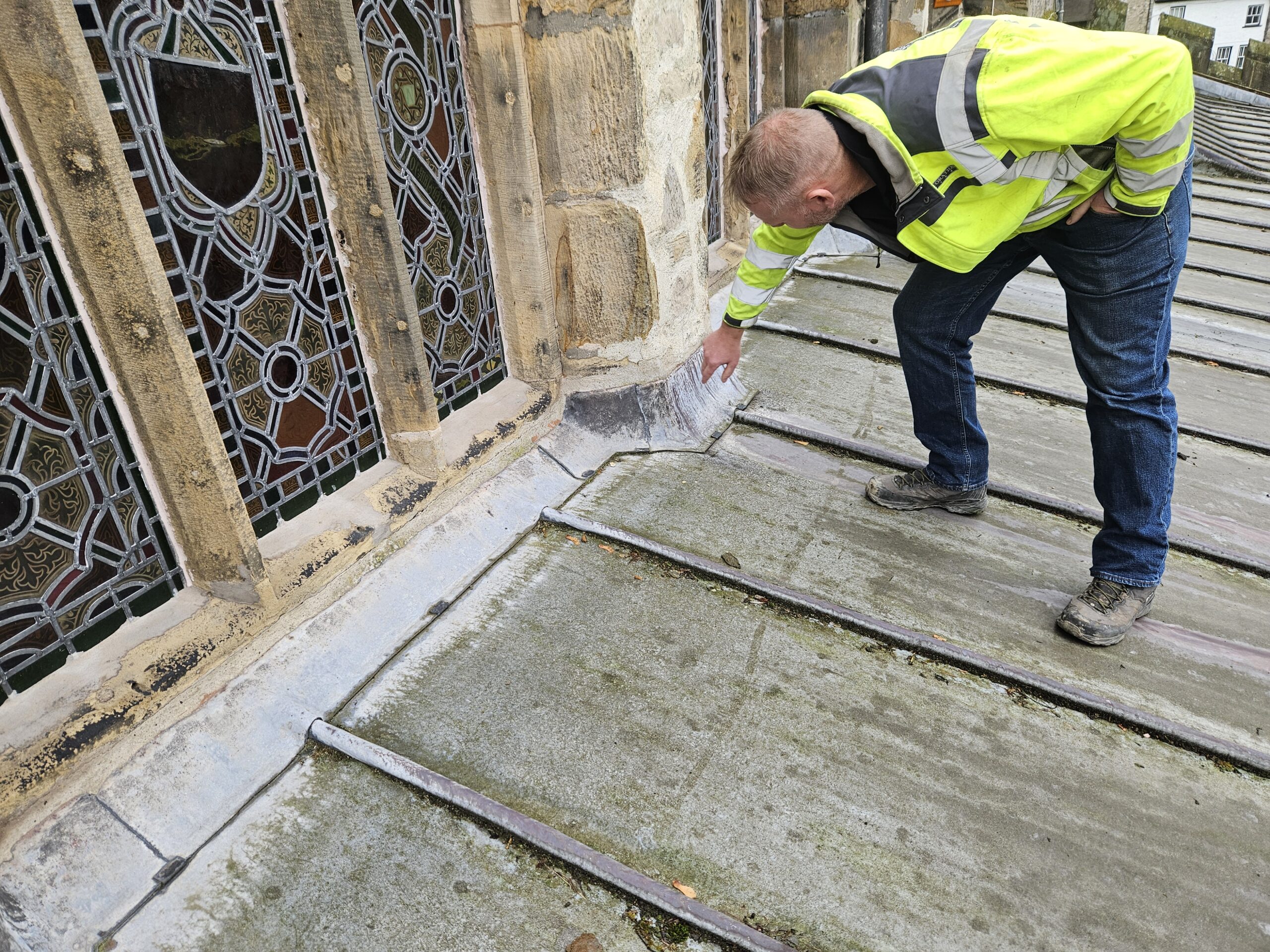
A significant proportion of the works involved the careful repair of lead cover flashings around the church’s clerestories, parapets and chancel roof.
Existing cement pointing was removed from flashing chases and replaced with lead wedges fixed at regular centres before being sealed using specialist low-modulus lead-compatible sealants. This approach restored the weatherproof integrity of the flashings while allowing the lead to move naturally without future stress concentrations.
The works included repairs to:
- North clerestory flashings.
- Nave north parapet flashings.
- Chancel perimeter flashings.
- Clerestory window cover flashings.
- Eaves and parapet junction details.
By adopting a conservation-led approach, the project retained the maximum amount of historic leadwork while improving long-term performance.
Specialist Repairs to Split Lead Rolls on Grade I listed church
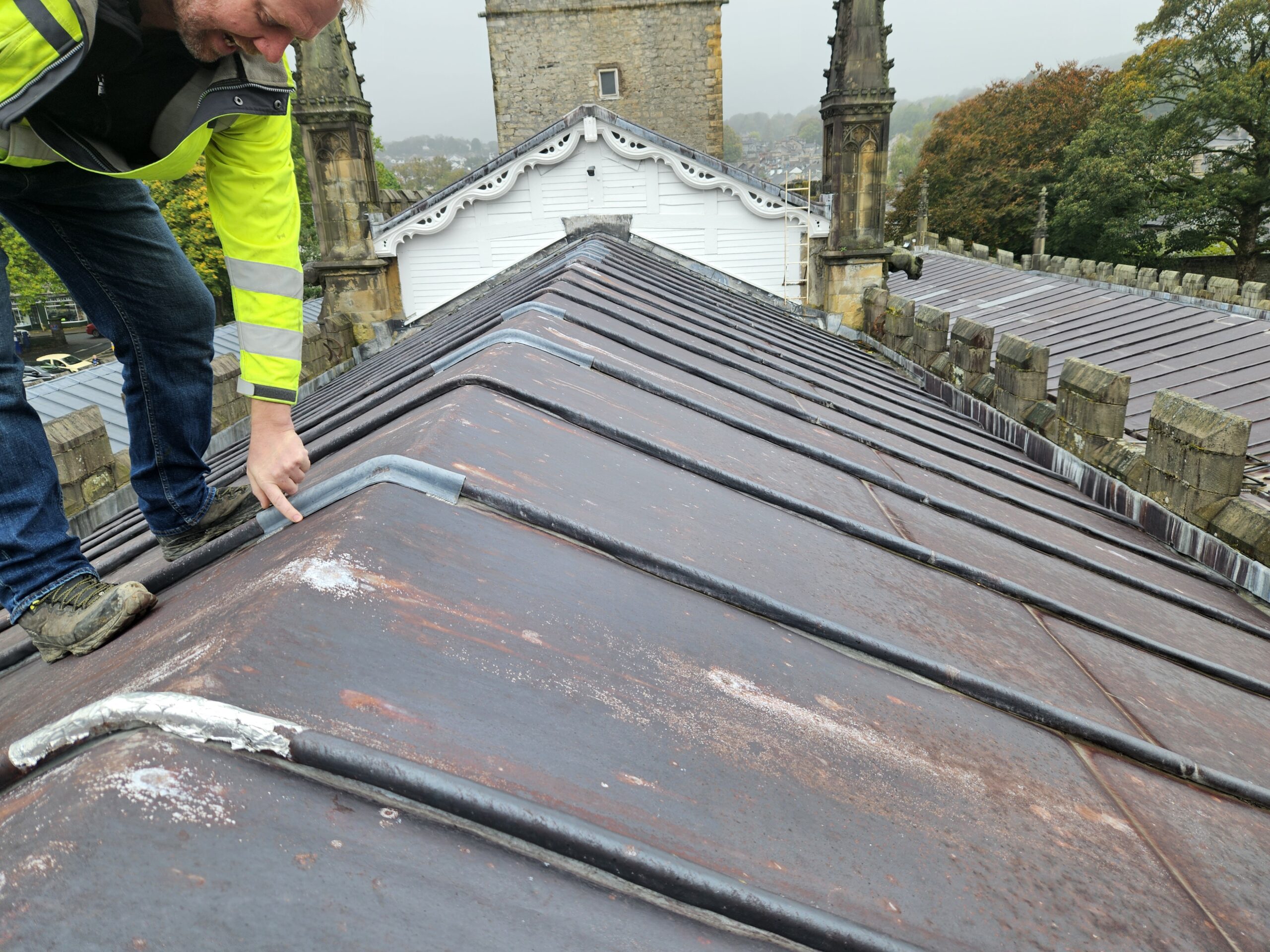
Detailed inspections identified numerous splits within the lead roll joints across both the nave and chancel roofs.
Rather than undertaking wholesale replacement, specialist leadworkers carried out localised repairs using carefully formed Code 6 lead patches. New lead sections were introduced over damaged areas and secured using traditional lead wedging techniques before being sealed back into the masonry chases.
The works addressed:
- Five separate flashing failures along the north aisle and clerestory junction.
- Split flashings at parapet abutments.
- Twelve split roll joints along the chancel ridge.
- Twenty-three split lead roll terminations at the south eaves of the chancel roof.
- Eight split ridge rolls across the nave roof.
Many of these defects were associated with historic repairs that had themselves begun to fail. The new interventions were designed to provide a durable solution while maintaining compatibility with the existing roof covering.
Preventative Repairs to Isolated Defects across church roof
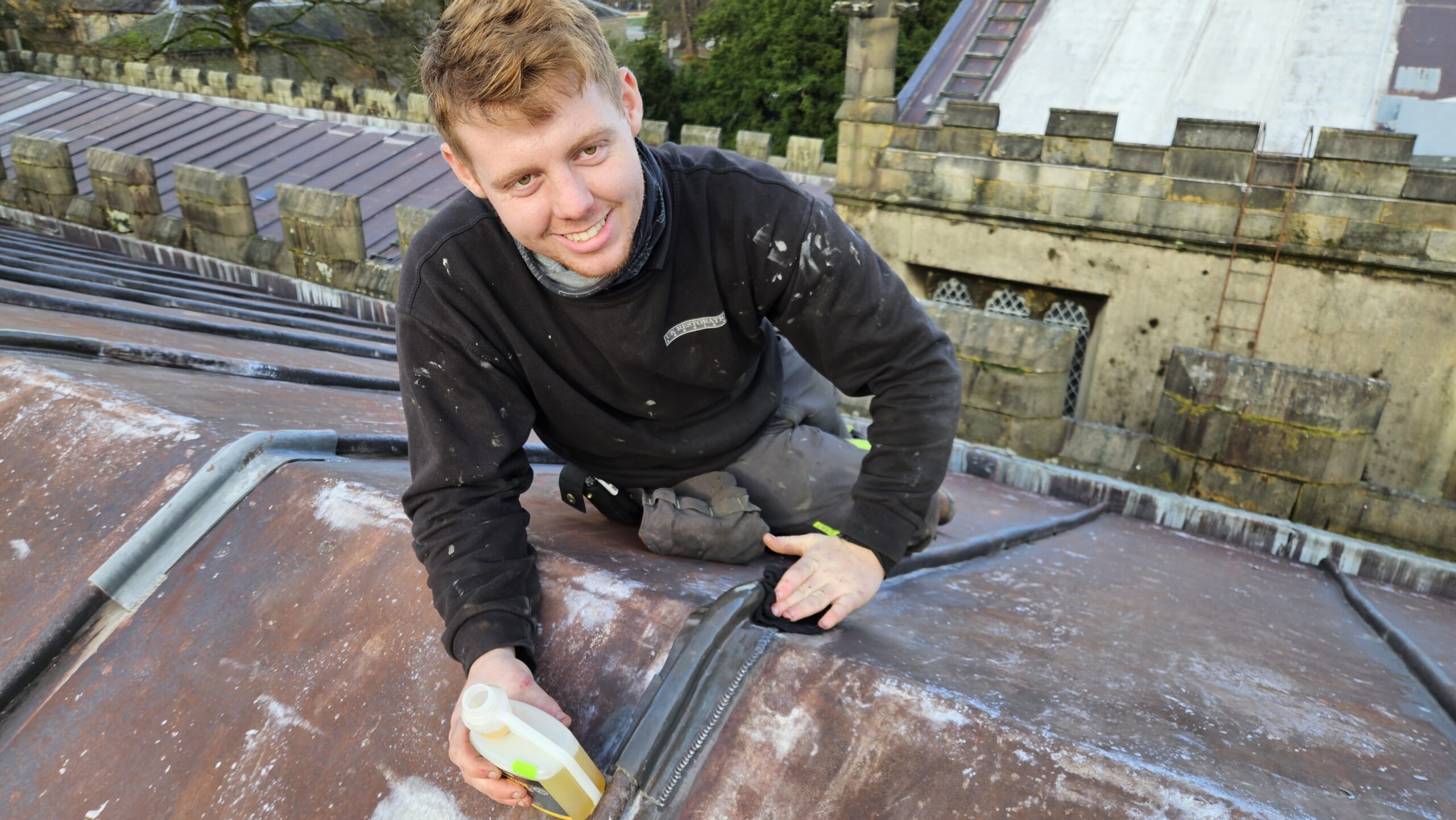
Alongside the larger leadwork repairs, several isolated defects were identified that required prompt intervention to prevent future water ingress.
These included small punctures within the lead lining, localised flashing failures and areas where mortar pointing had completely detached from the lead chase. Even seemingly minor defects were carefully addressed as part of the overall conservation strategy, ensuring that the building envelope remained watertight and resilient.
This preventative approach helps minimise future maintenance requirements and extends the lifespan of the existing roof coverings.
Working on a Grade I Listed Church in Cumbria
As a Grade I listed building, Holy Trinity Church demanded an exceptionally careful approach to all repair works.
The project team specified that all interventions should be undertaken by contractors experienced in heritage conservation and, ideally, church restoration projects. The church remained operational throughout the works, requiring careful planning and sequencing to minimise disruption while maintaining safe access for visitors and congregation members.
Every repair was designed to preserve the building’s historic significance while ensuring that replacement materials and methods remained sympathetic to the original construction.
Preserving Historic Fabric Through Minimal Intervention
A key principle throughout the project was the conservation philosophy of minimum intervention.
Rather than replacing large areas of historic lead roofing, repairs were focused on localised failures, allowing sound original material to remain in service. This approach reduced material loss, preserved historic craftsmanship and provided a more sustainable conservation solution.
By combining traditional leadworking techniques with modern conservation materials, the project successfully balanced heritage preservation with practical long-term maintenance requirements.
Securing the Future of an Important Historic Building
The completion of the localised leadwork repairs has significantly improved the weather resistance and long-term durability of Holy Trinity Church’s roofscape.
Through targeted interventions addressing flashing failures, split lead rolls and defective weathering details, the project has reduced the risk of water ingress while preserving the character and historic fabric of one of Cumbria’s most important parish churches.
The works demonstrate how carefully planned conservation repairs can protect historic buildings from further deterioration, ensuring that important heritage assets continue to serve their communities for generations to come.