Grade I Listed Building Conservation and Restoration in the Heart of Lancaster
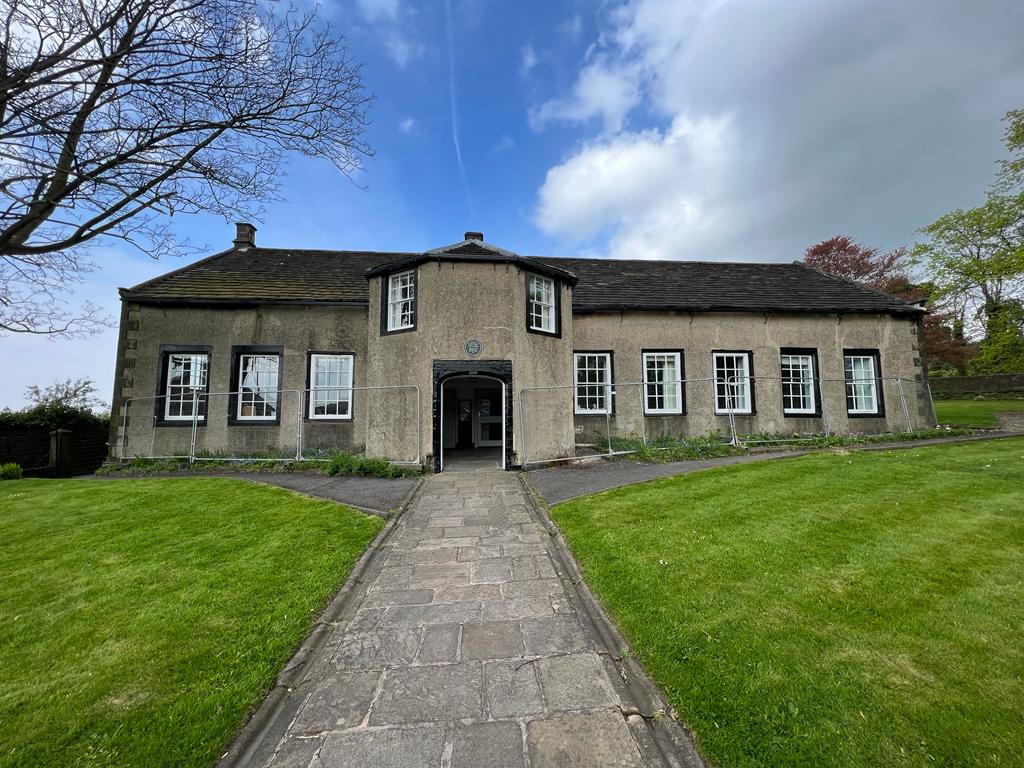
UK Restoration Services was appointed as Principal Contractor to deliver an extensive programme of heritage restoration and conservation works to Lancaster Friends Meeting House, one of the oldest surviving Quaker Meeting Houses in the United Kingdom. Situated within the historic city of Lancaster, Lancashire, the Grade I listed building dates from 1677 and remains an important place of worship and community gathering.
Working alongside the client, conservation architect Buttress, structural engineers and specialist consultants, our role was to undertake a comprehensive package of structural repairs, masonry conservation, traditional lime works, roofing improvements and rainwater management upgrades designed to preserve the historic fabric of this nationally significant heritage asset for future generations. The project required a highly collaborative approach, balancing modern performance requirements with the principles of traditional building conservation and best practice heritage restoration.
Conservation of the Historic Front Elevation
The principal element of the scheme focused on the restoration of the Meeting House’s prominent front elevation facing Meeting House Lane in Lancaster.
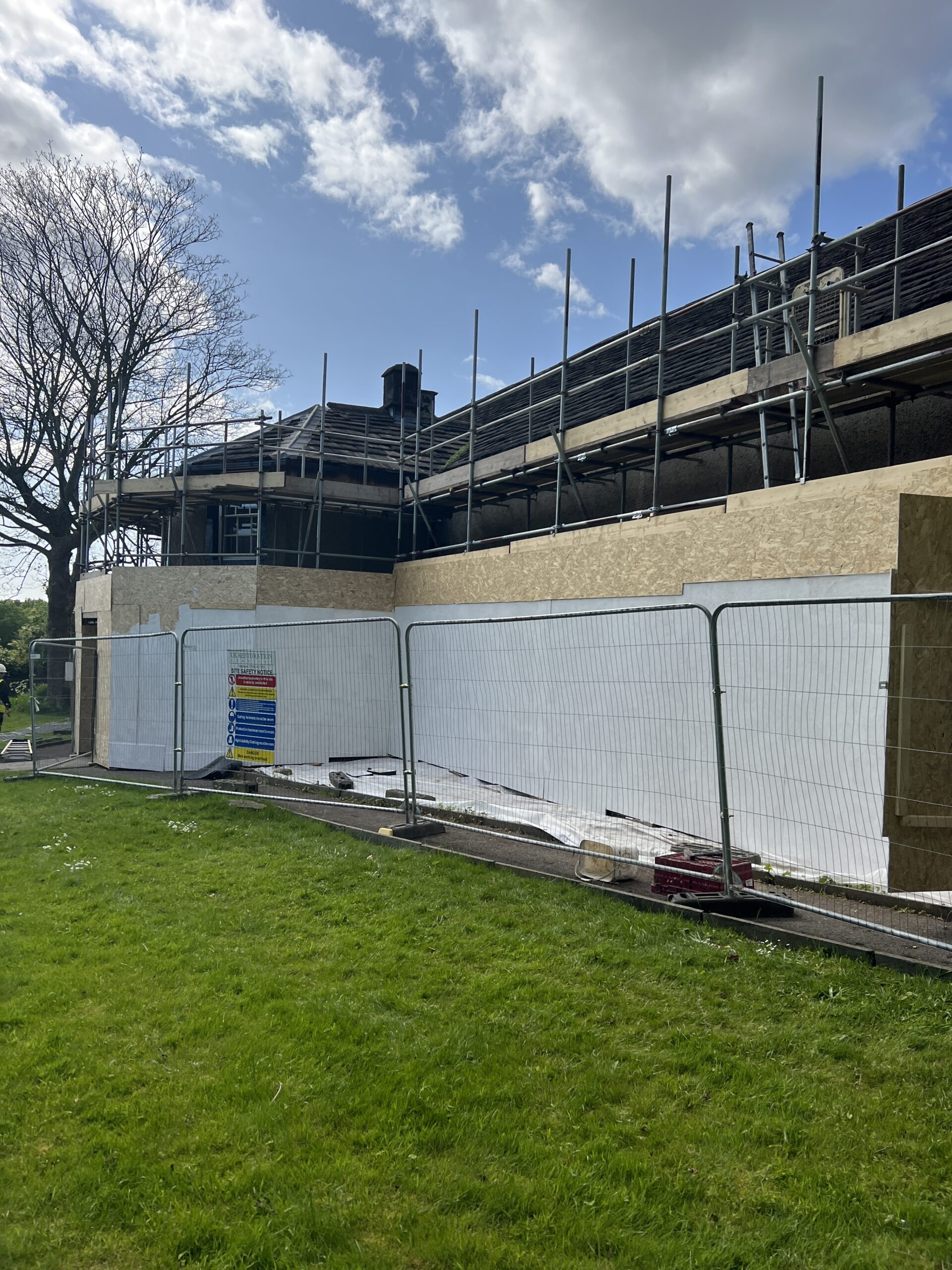
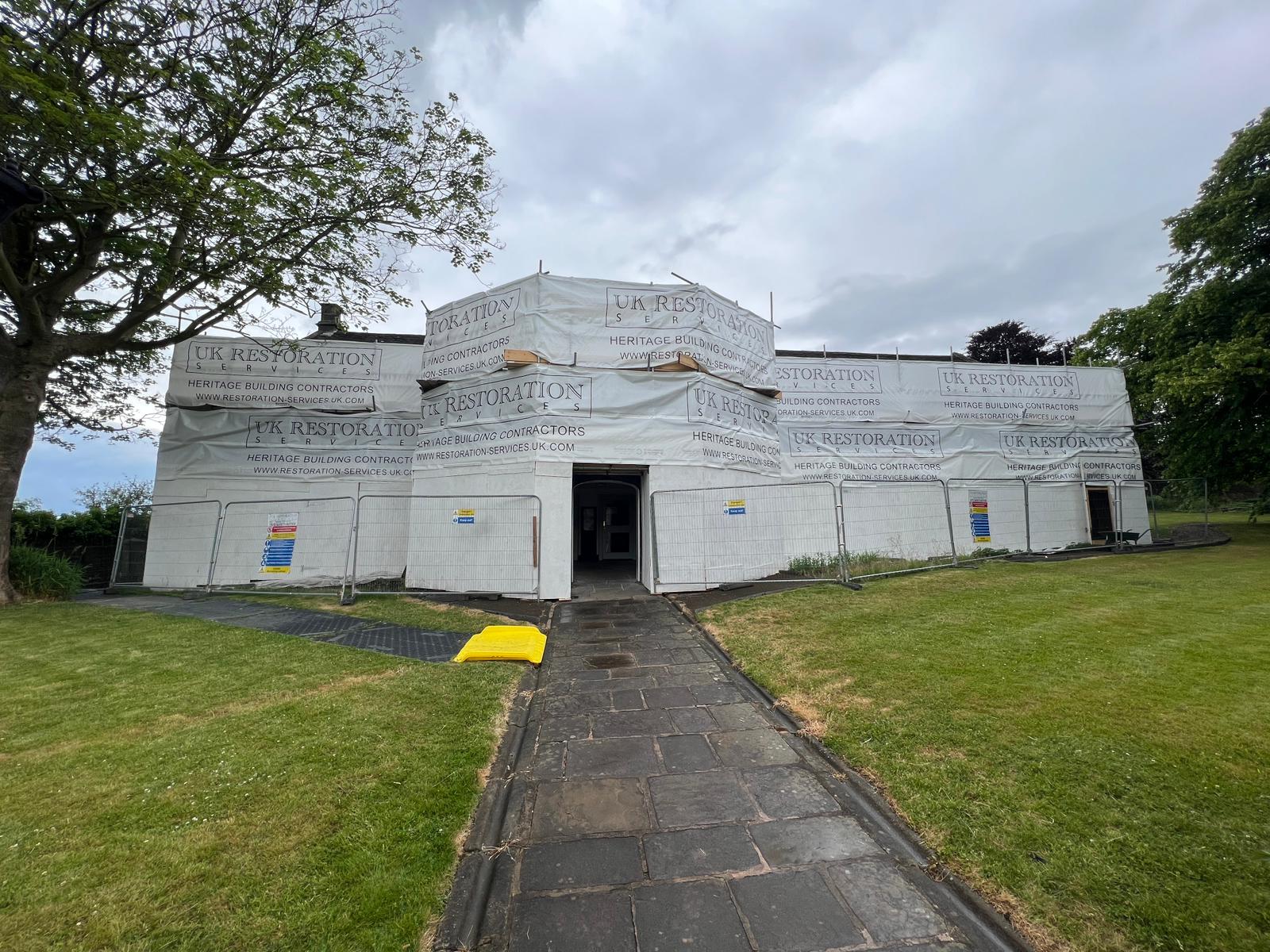
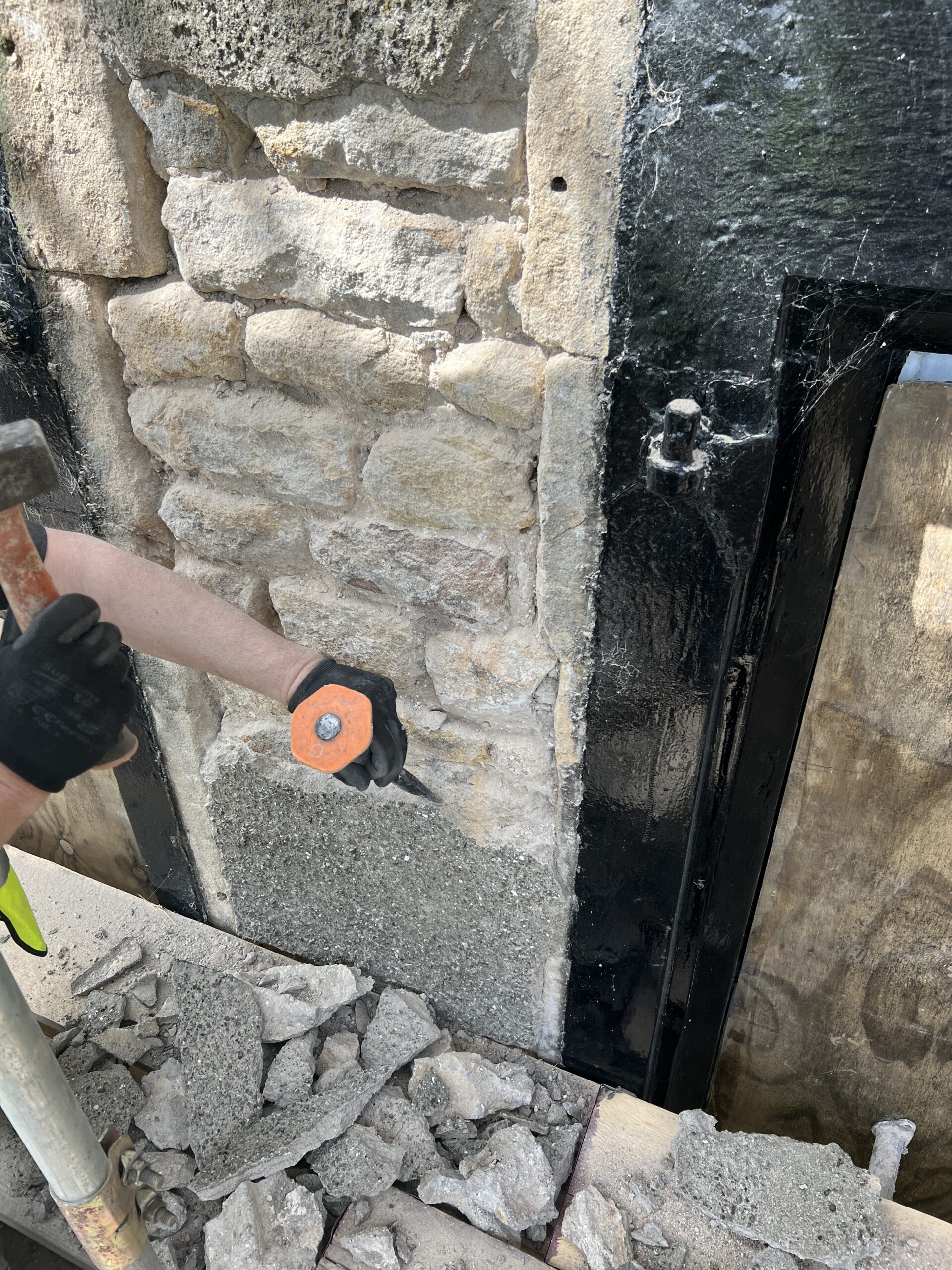
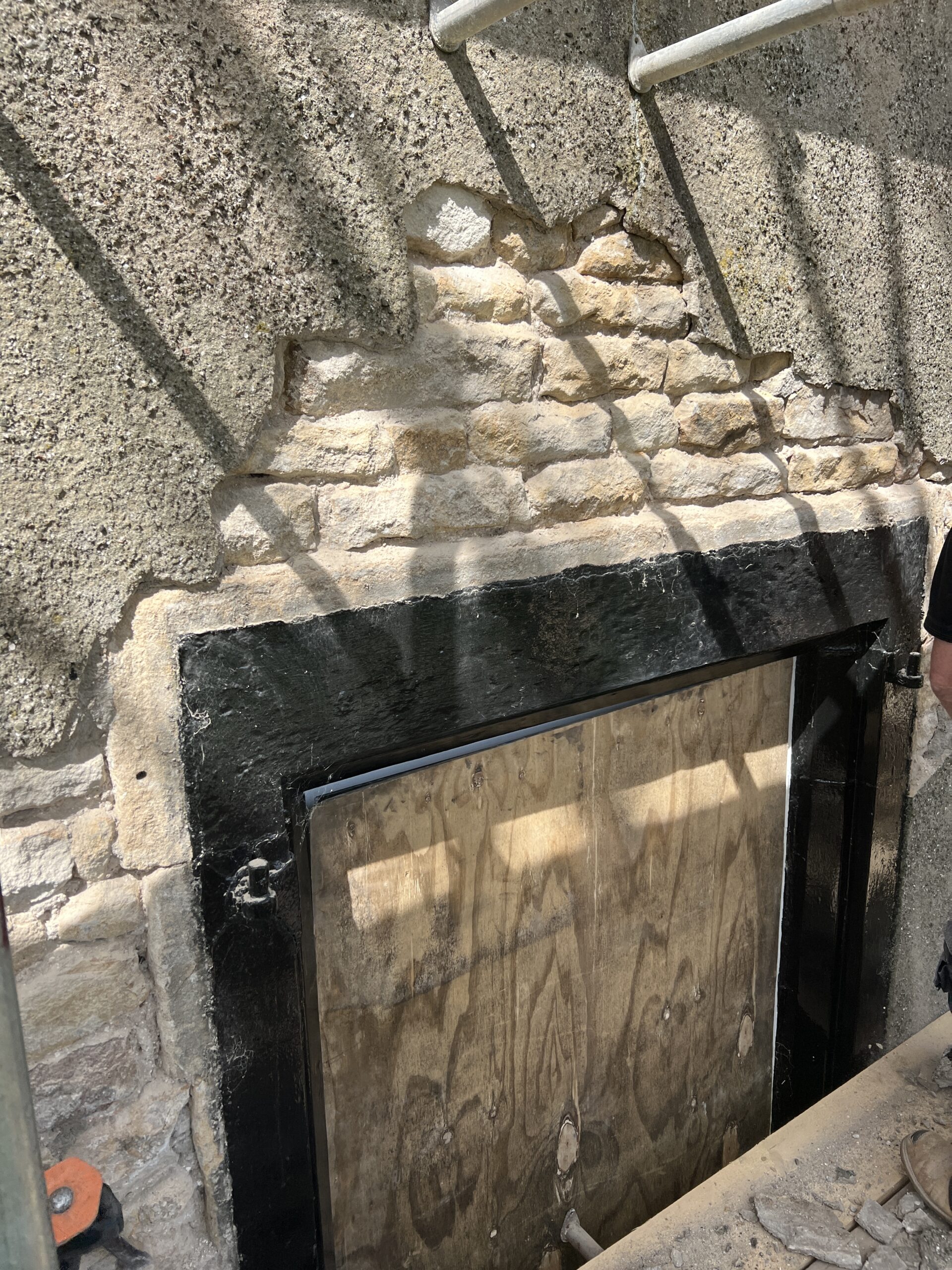
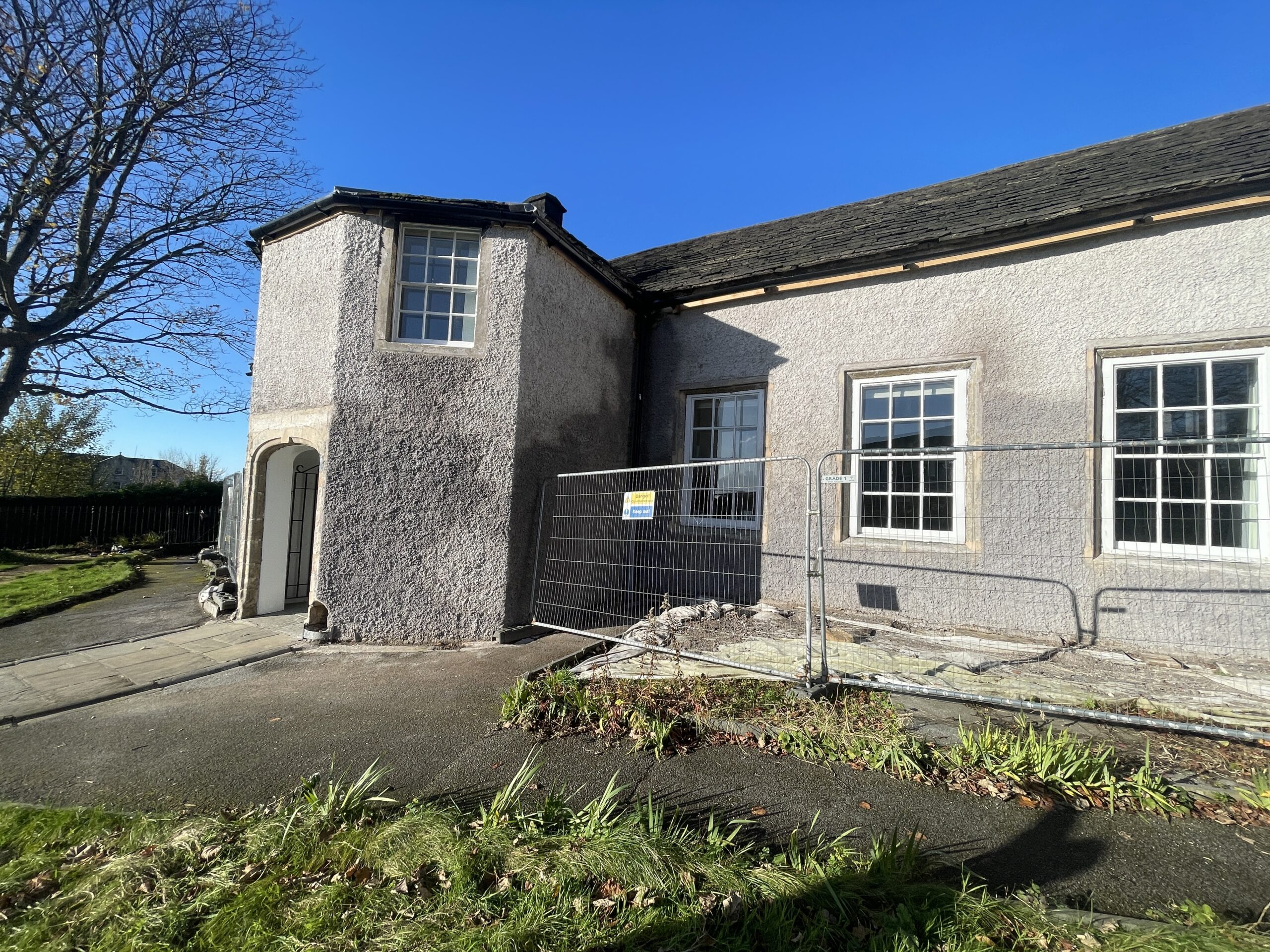
Following the erection of specialist access scaffolding and protective hoarding, extensive investigations and trial works were undertaken to determine the most appropriate conservation methodology. Existing cementitious render was carefully removed from the façade to expose the underlying historic masonry and allow the building to breathe naturally once again. Throughout the removal process, close consultation was maintained with the architect and conservation team to assess the condition of the underlying substrate and refine the repair strategy.
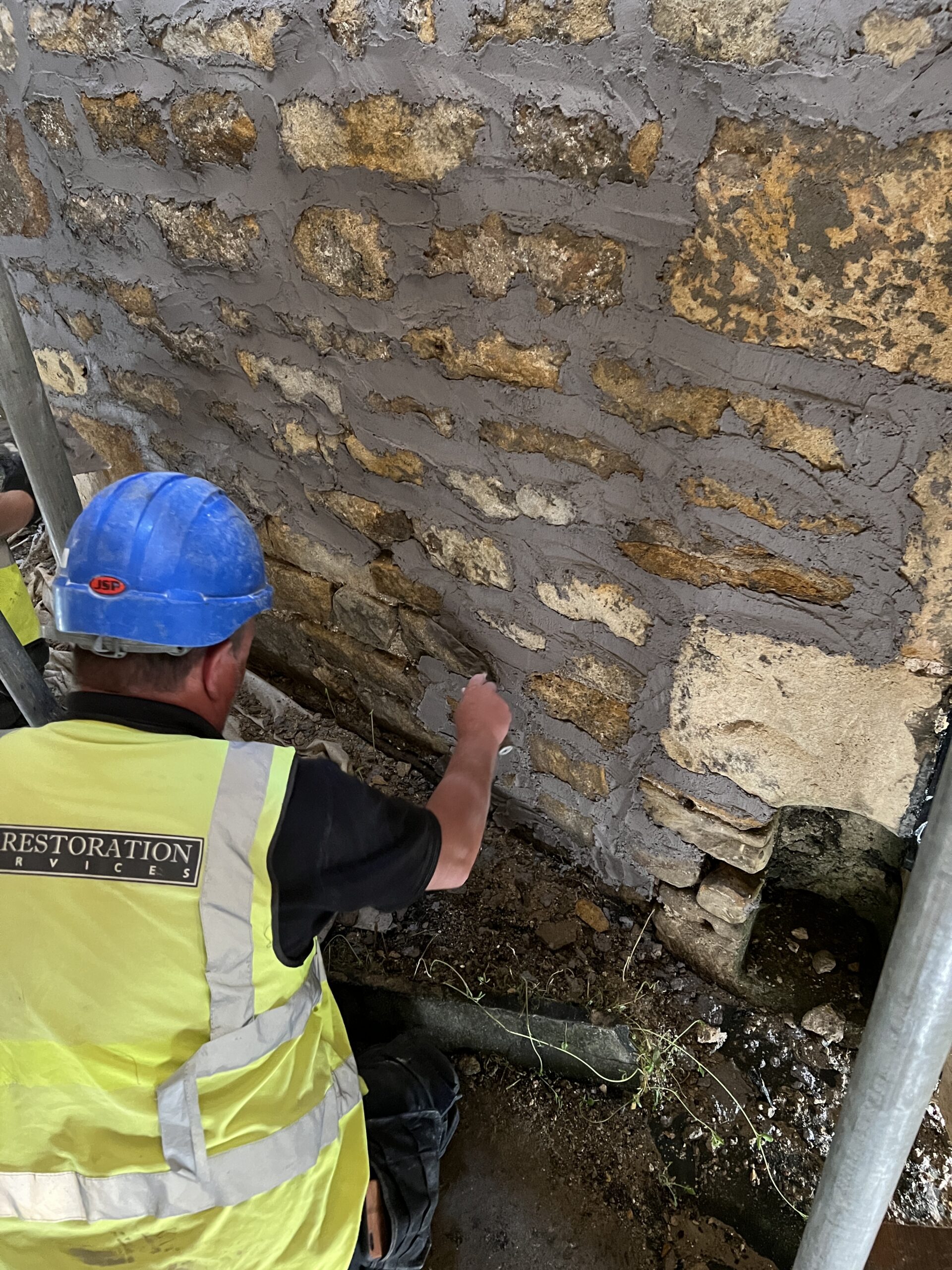
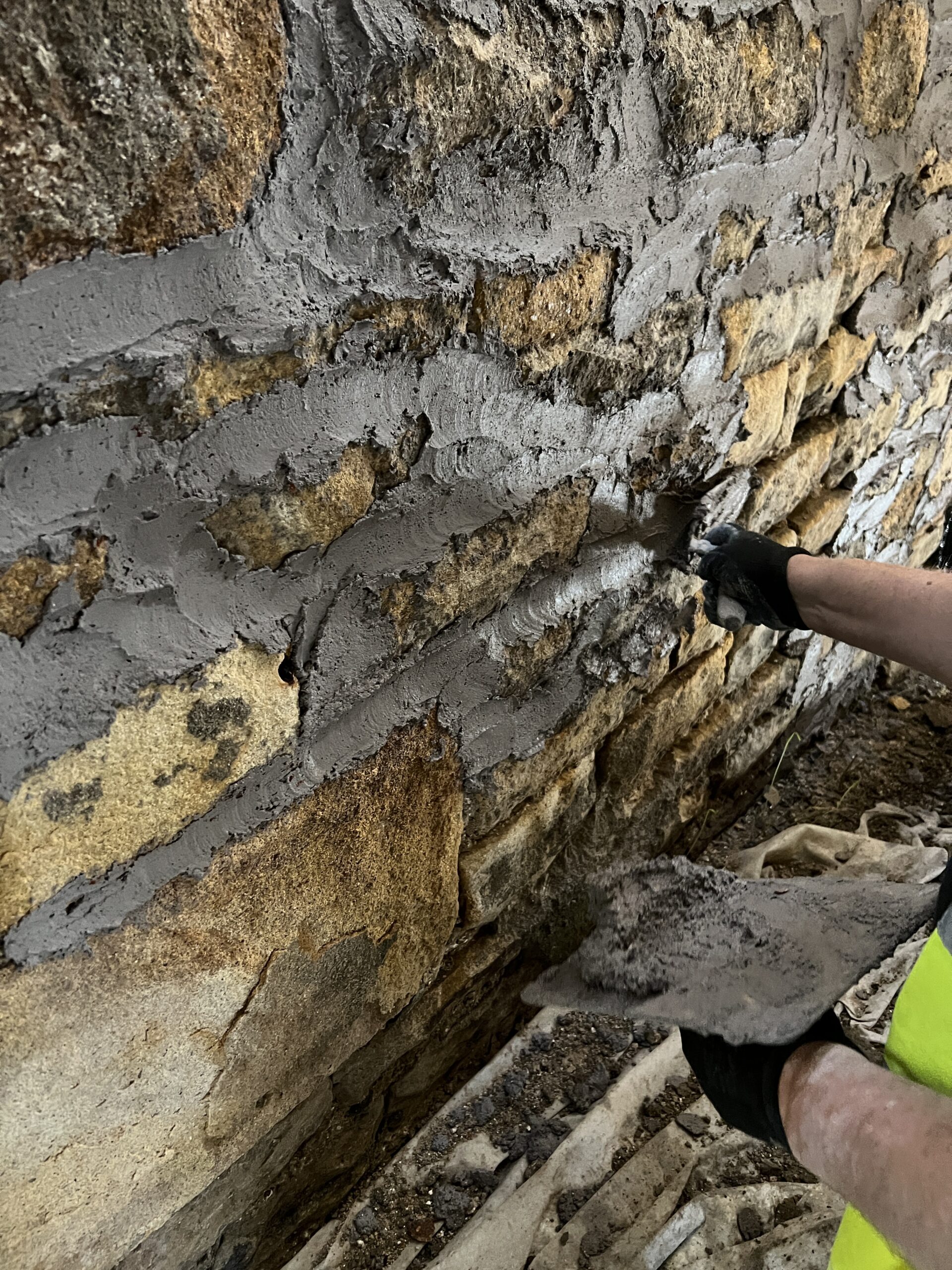
Following exposure of the historic stonework, a series of hot lime mortar pointing trials were undertaken to develop a mortar mix compatible with the original construction. The selected mix incorporated quicklime, NHL 5, Nosterfield sand, coal ash and crushed brick, carefully formulated to match the performance and appearance of the original materials whilst allowing appropriate moisture movement through the structure.
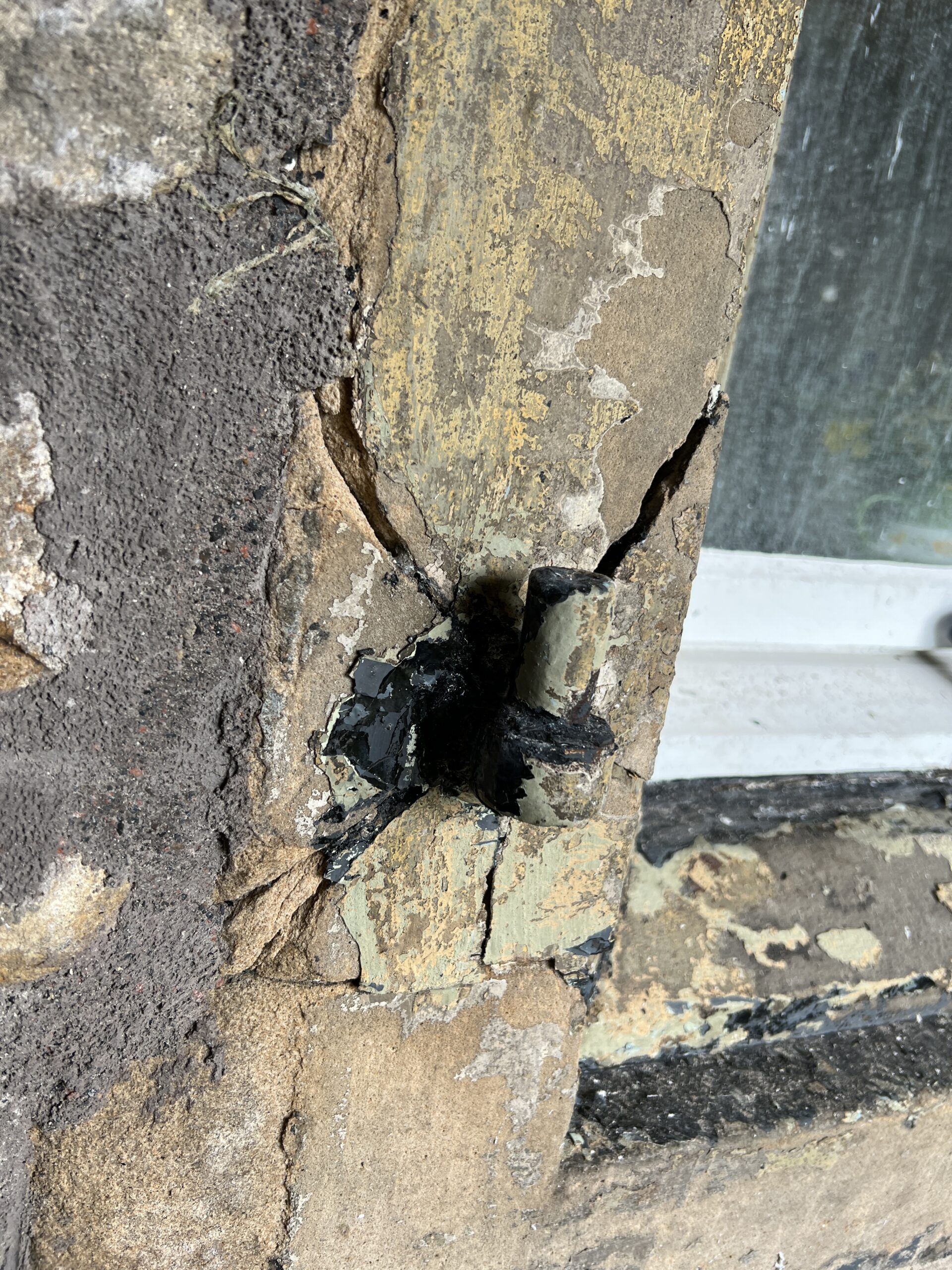
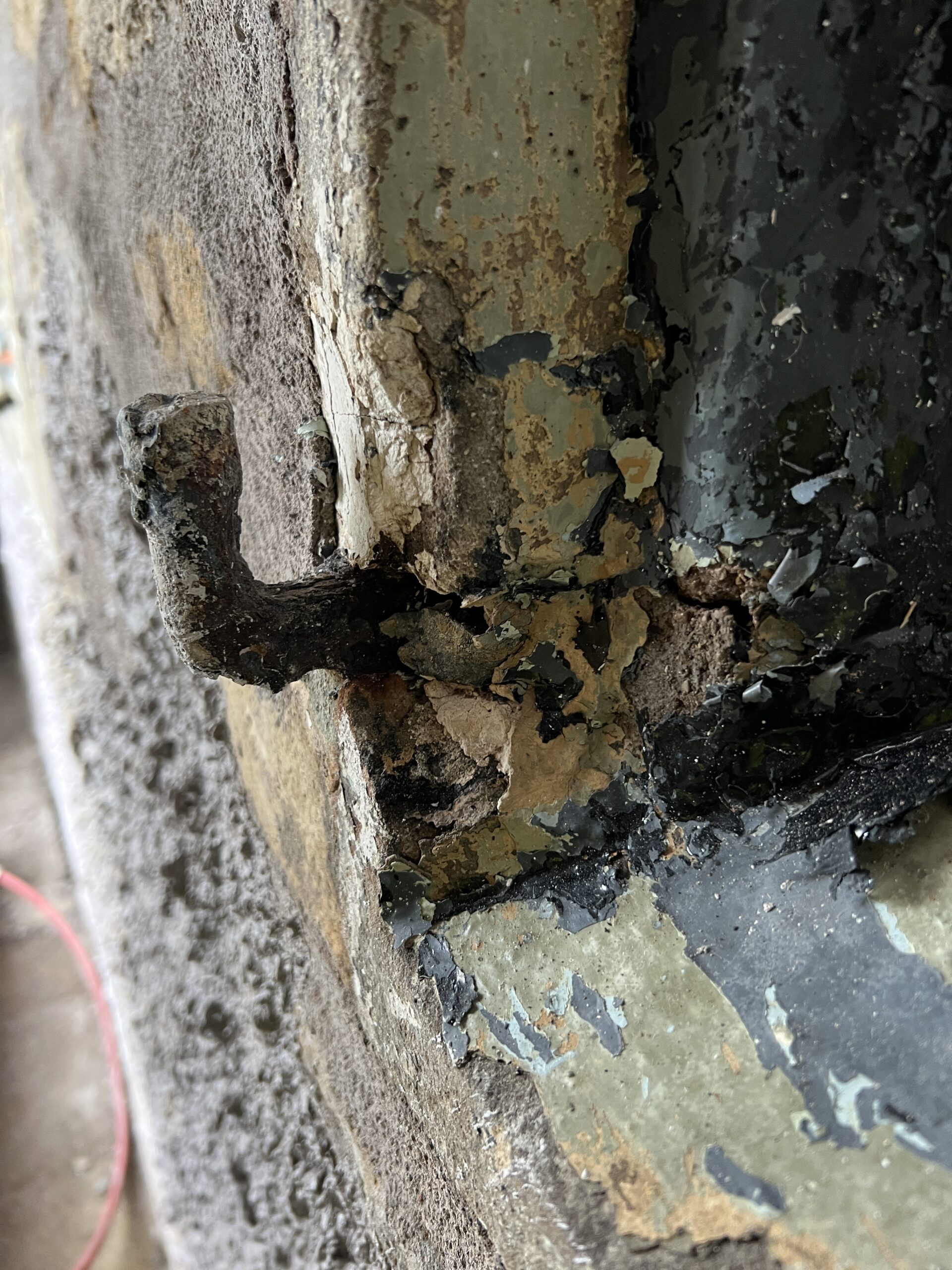
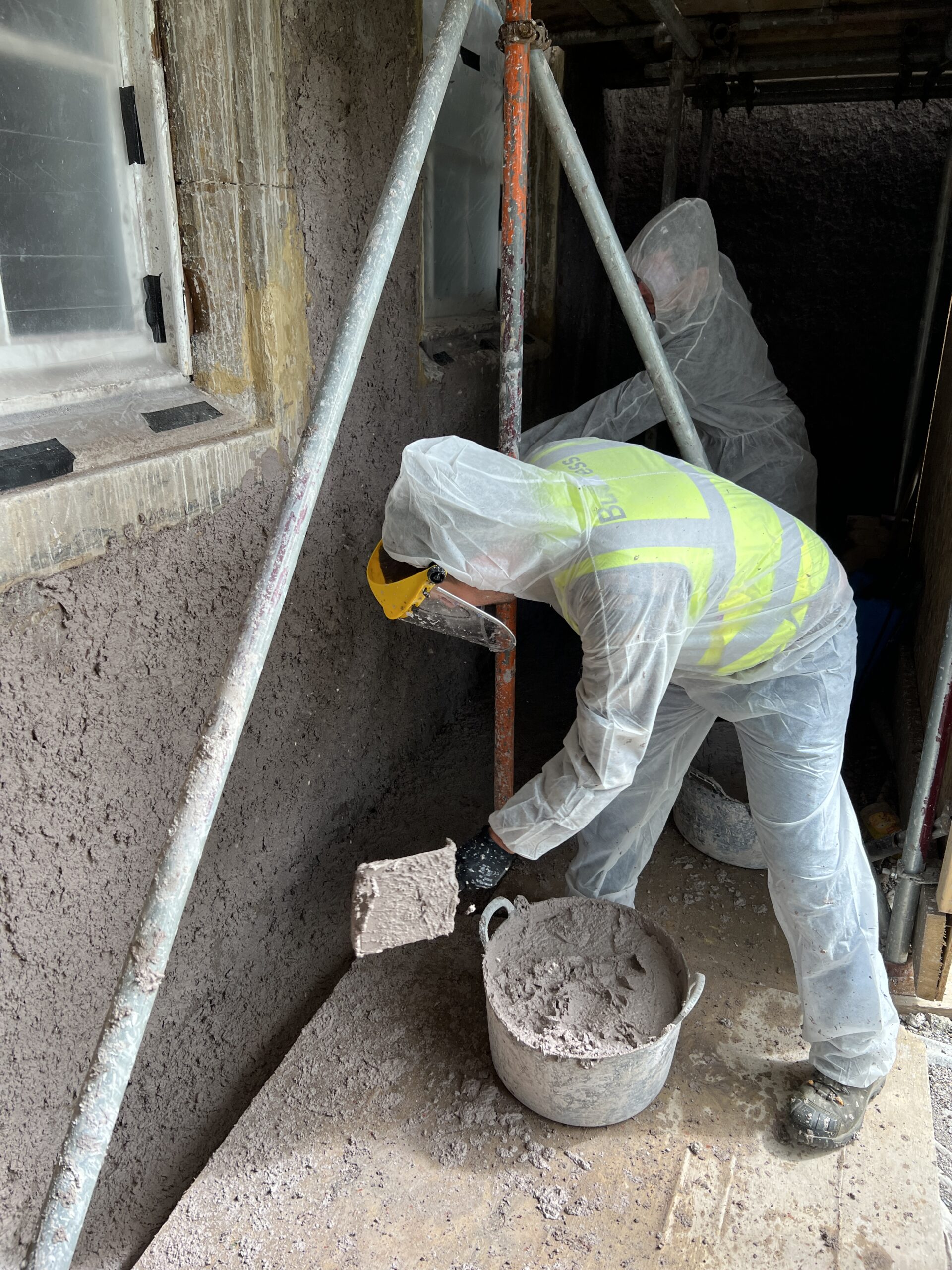
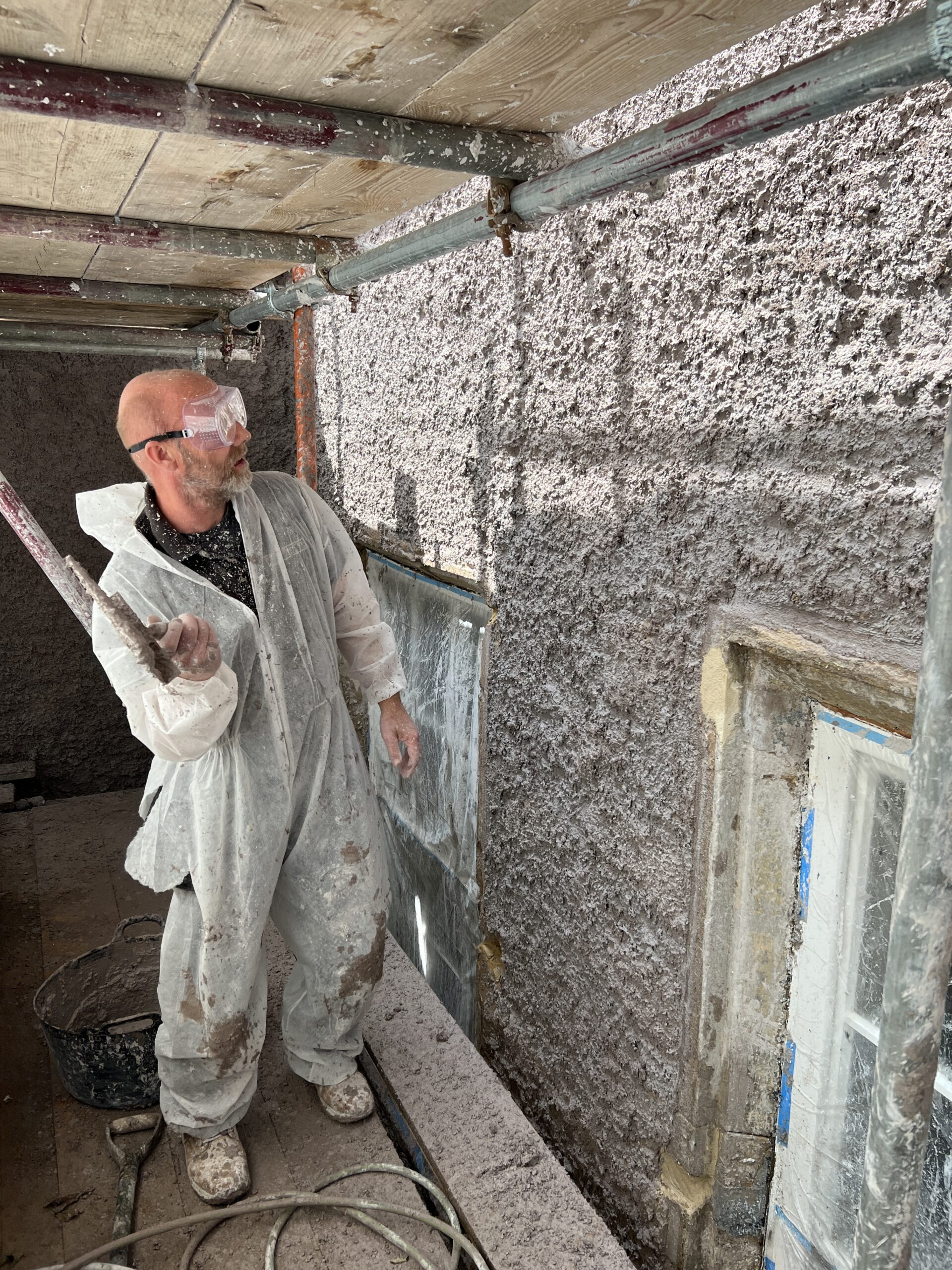
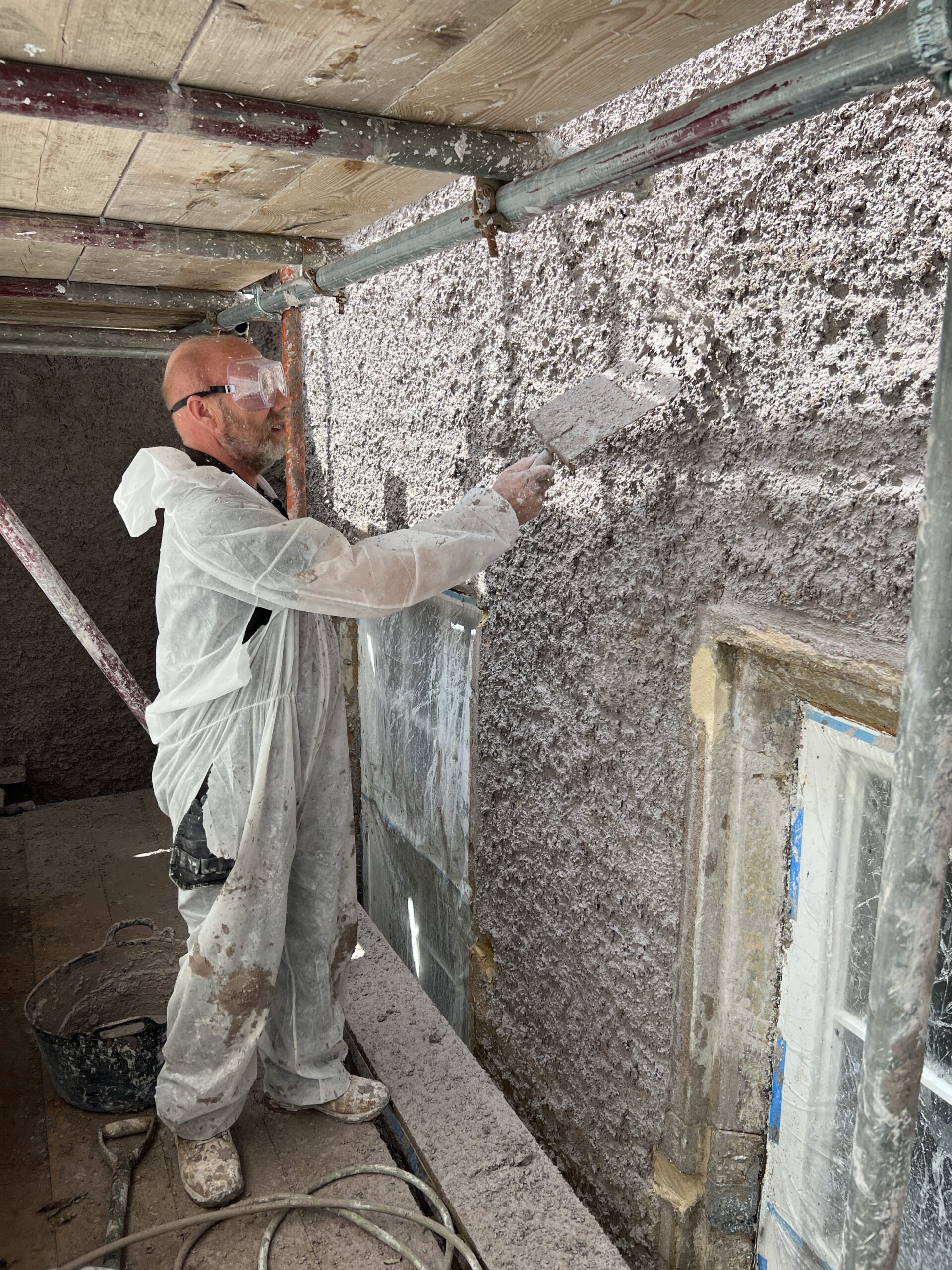
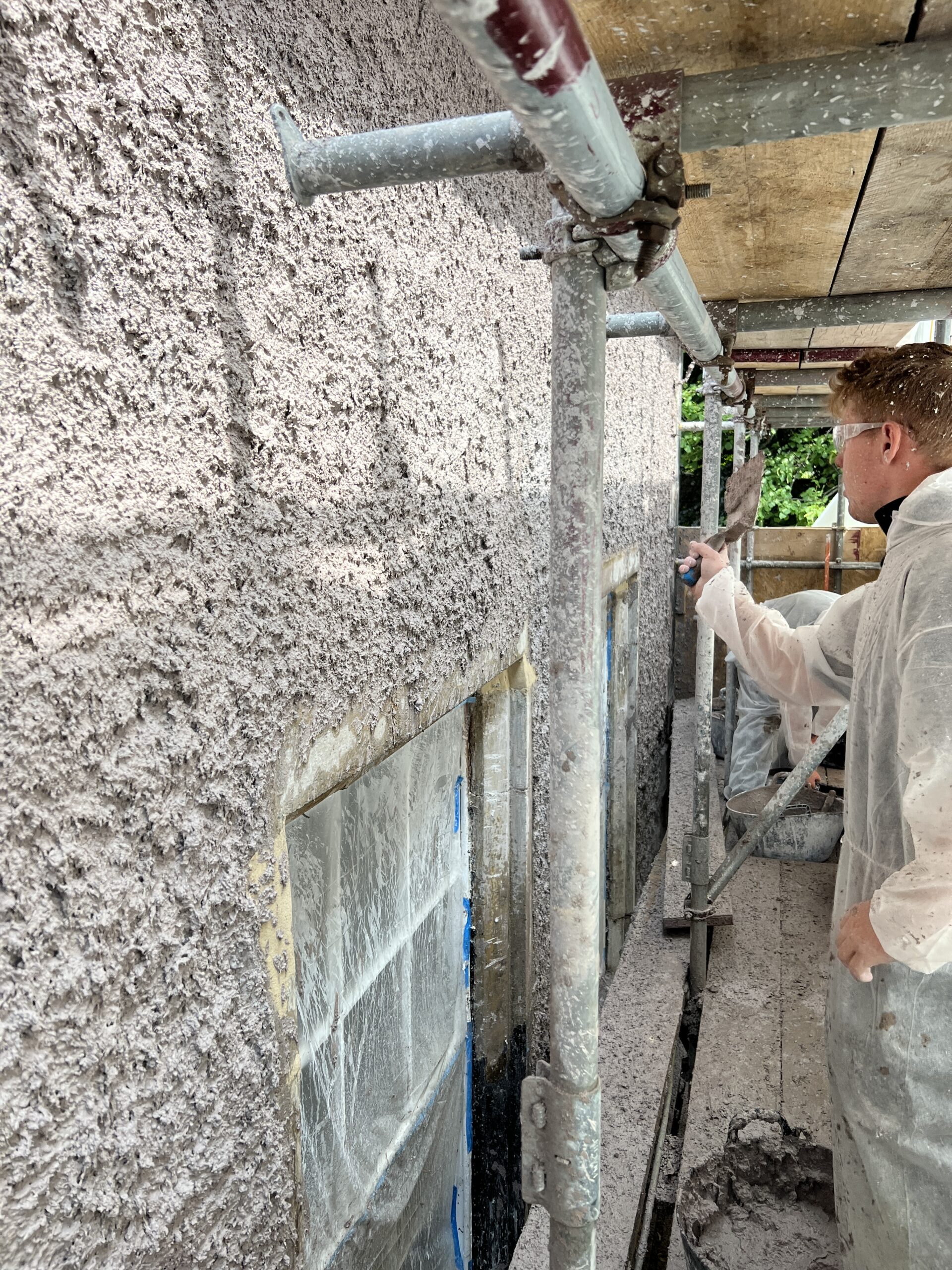
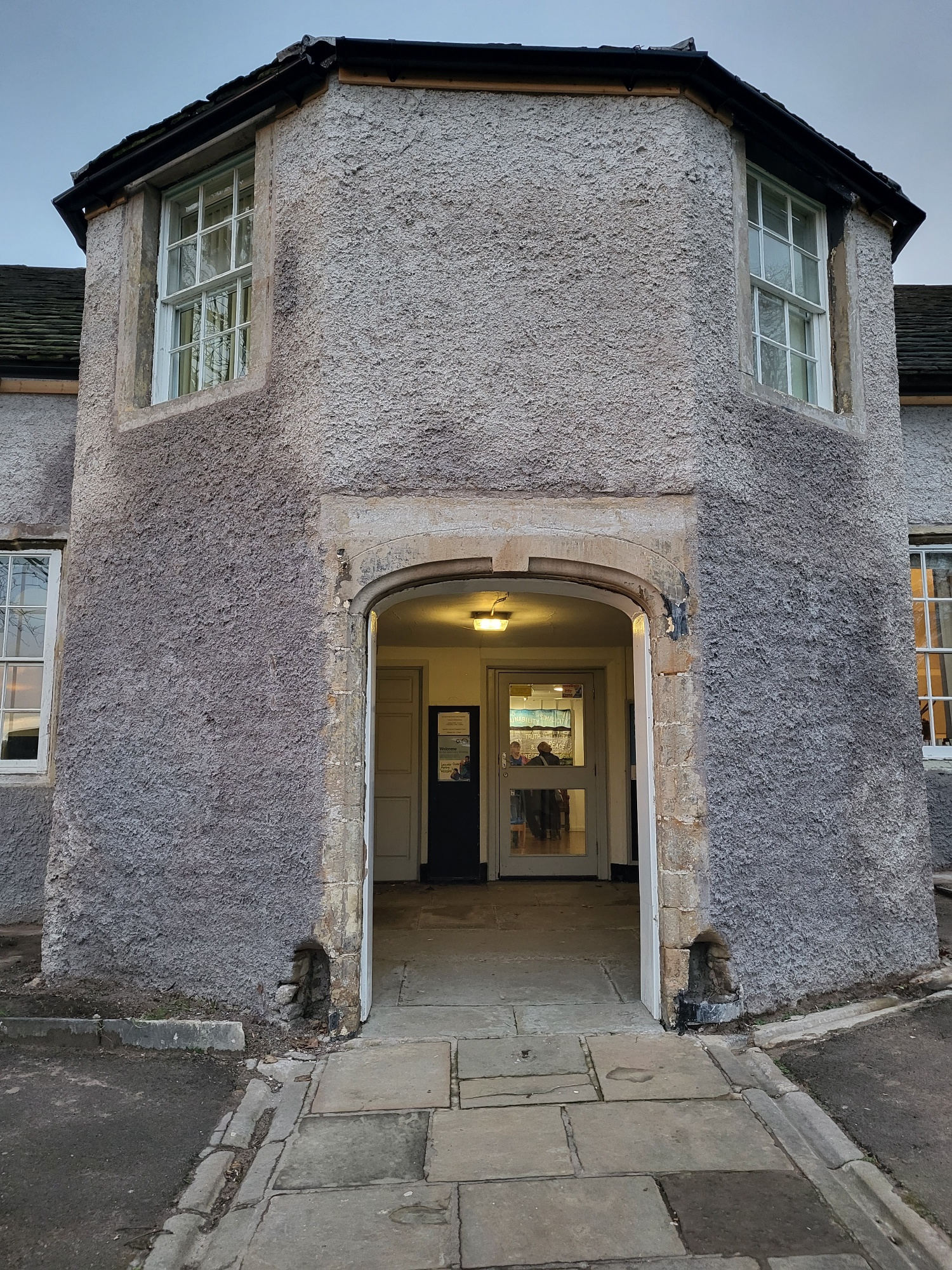
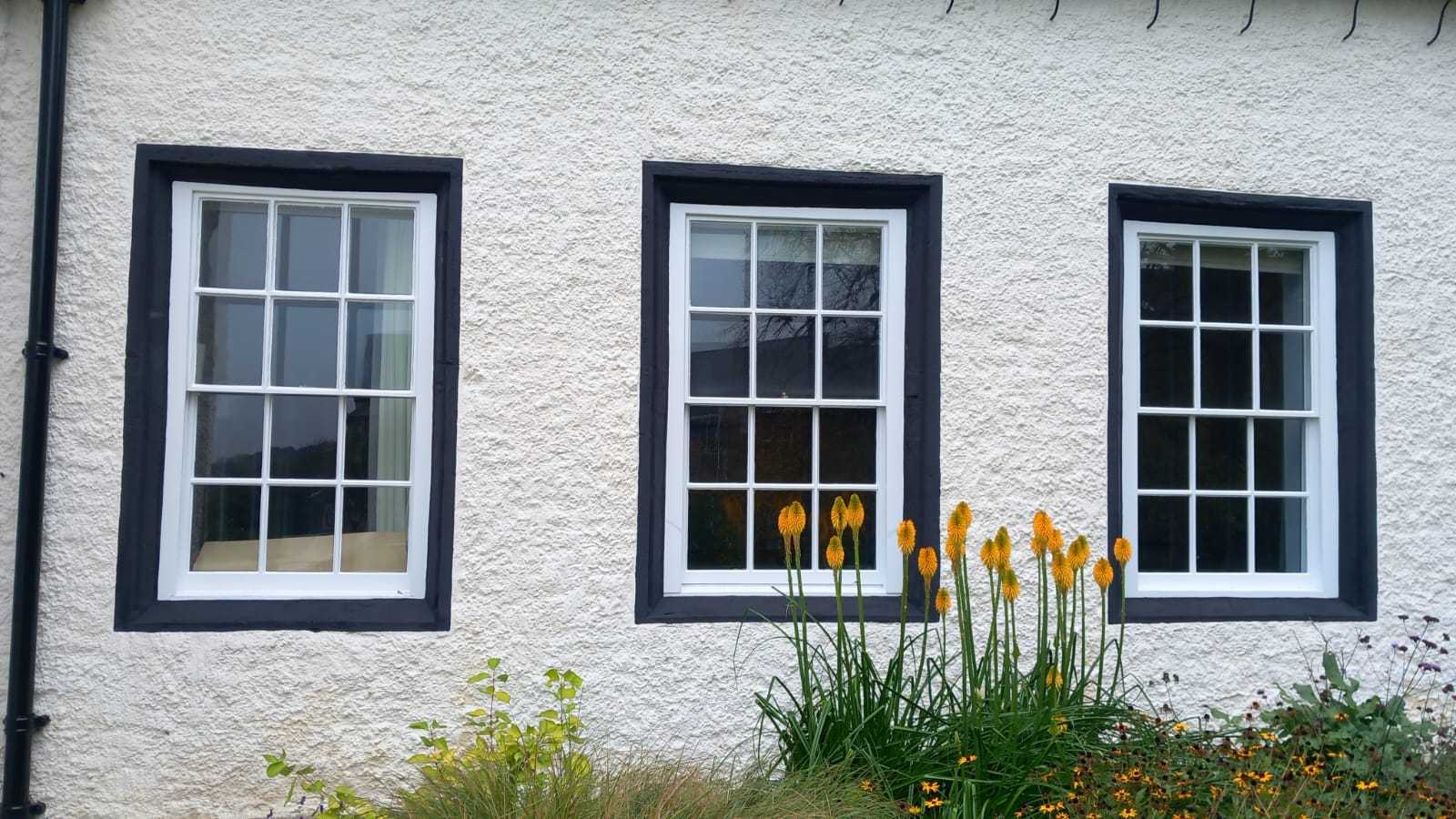
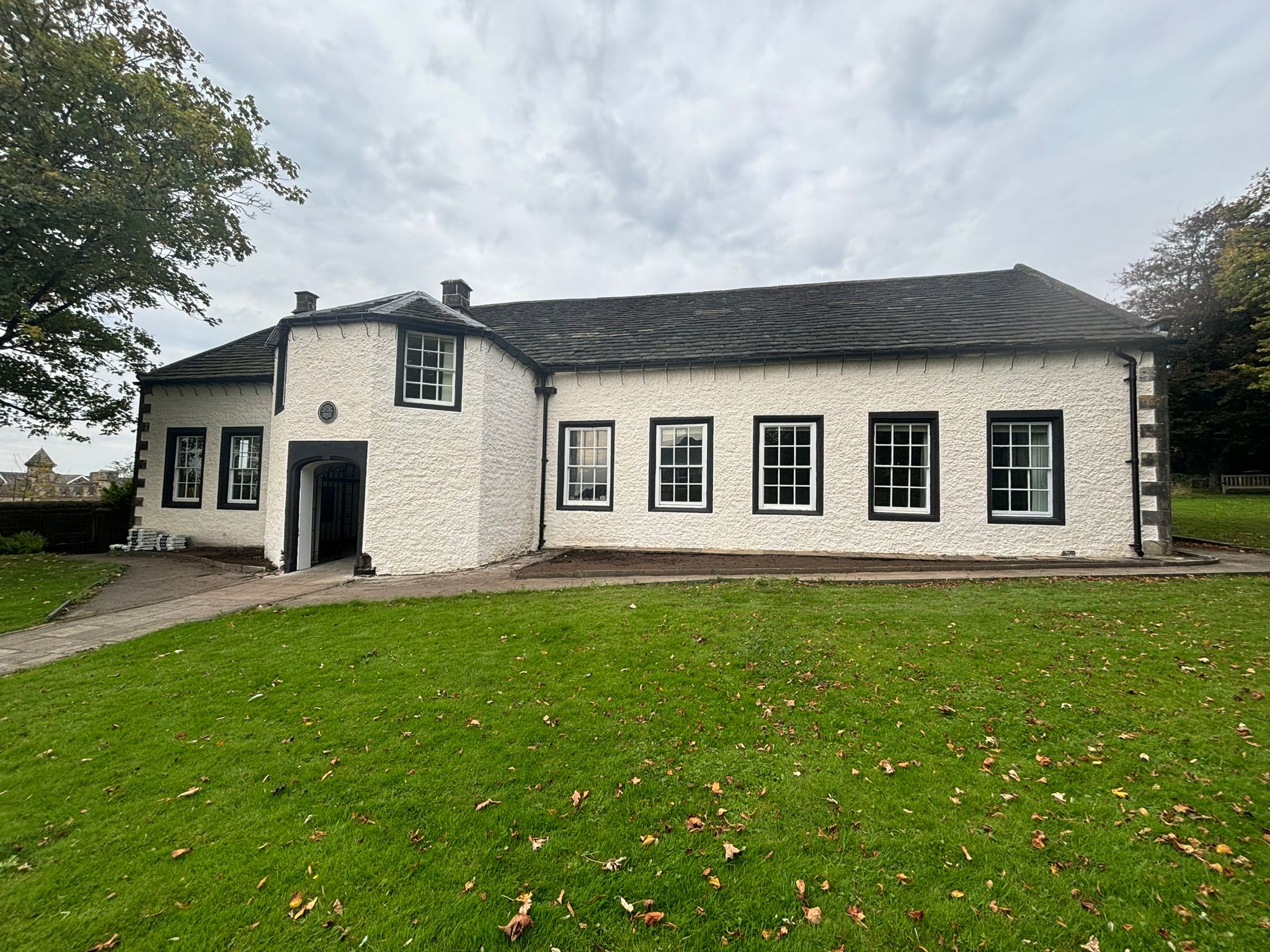
Once repointing and localised masonry repairs had been completed, the façade was finished using a traditional hot lime harling system. Two coats of lime harl were applied across the elevation, recreating the historic textured finish whilst providing a breathable protective coating appropriate to the age and significance of the building. Additional conservation repairs included the removal of historic ferrous shutter pins, repairs to damaged stonework surrounding window openings, and the consolidation of areas affected by previous inappropriate repairs.
A Conservation-Led Approach to Limewashing
One of the most important decisions during the project involved the timing of the final limewash application.
Following completion of the lime harling works, extended periods of wet weather significantly slowed the natural drying process. Rather than applying the augmenting limewash prematurely, the project team adopted a conservation-led approach and allowed the newly applied harling to cure naturally over an extended period.
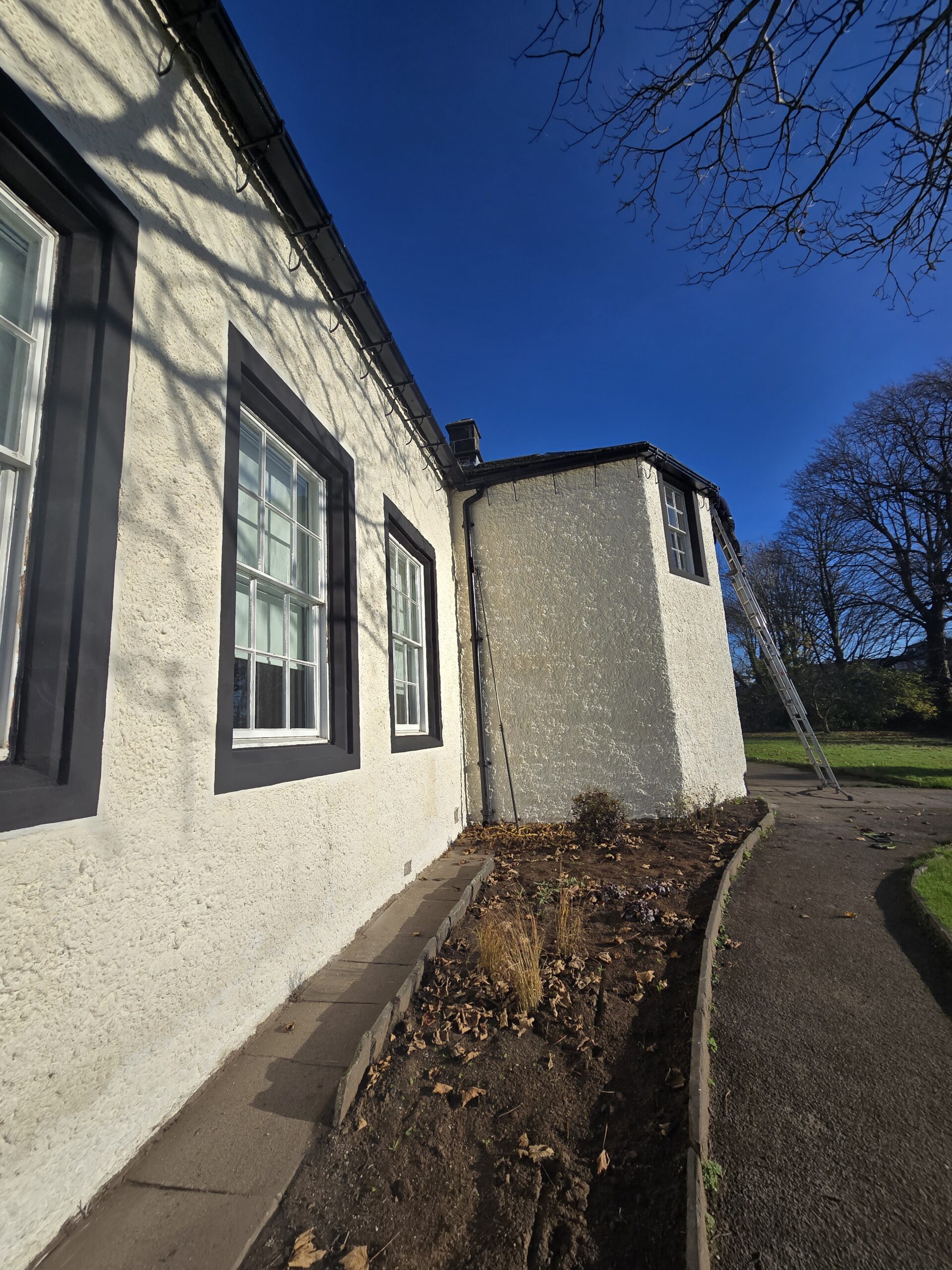
The decision was subsequently taken to postpone the final limewash application until the following spring and summer. This ensured that the lime harl had achieved sufficient drying and curing, allowing the limewash to bond correctly and deliver a durable, long-term finish. Ultimately, five coats of traditional limewash were applied to the restored façade, providing the distinctive appearance appropriate to the building’s historic character while maintaining the breathability essential to traditional masonry construction.
This phased approach exemplified the project’s conservation ethos, prioritising the long-term performance of the building over programme expediency.
Structural Repairs to the Warden’s Cottage
Alongside the external conservation works, structural improvements were undertaken to the adjoining Warden’s Cottage.
Investigations identified areas requiring strengthening and stabilisation. Floor structures were carefully opened up to allow the installation of heavy-duty lateral restraint straps in accordance with the conservation engineer’s design. New timber strengthening elements were introduced where required before the original floor construction was reinstated.
In addition, localised underpinning works were undertaken to stabilise the corner of the cottage. These works were completed in accordance with specialist engineering specifications and required a carefully controlled approach to avoid disturbing the surrounding historic fabric. The completed repairs have enhanced the long-term structural stability of the cottage while preserving its historic significance.
Specialist Roof Drainage and Parapet Gutter Restoration
Water ingress and ineffective rainwater management were key issues addressed by the project.
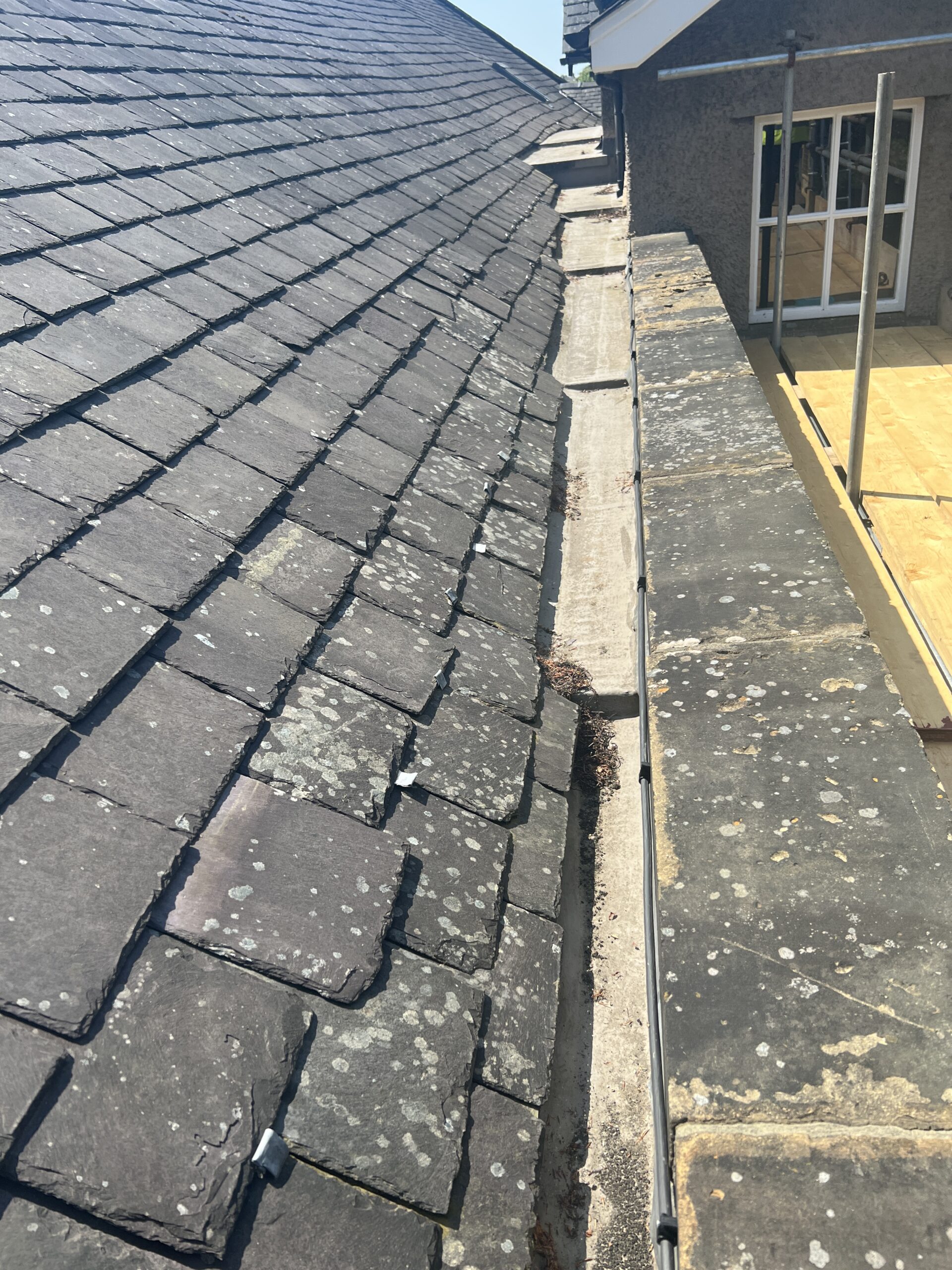
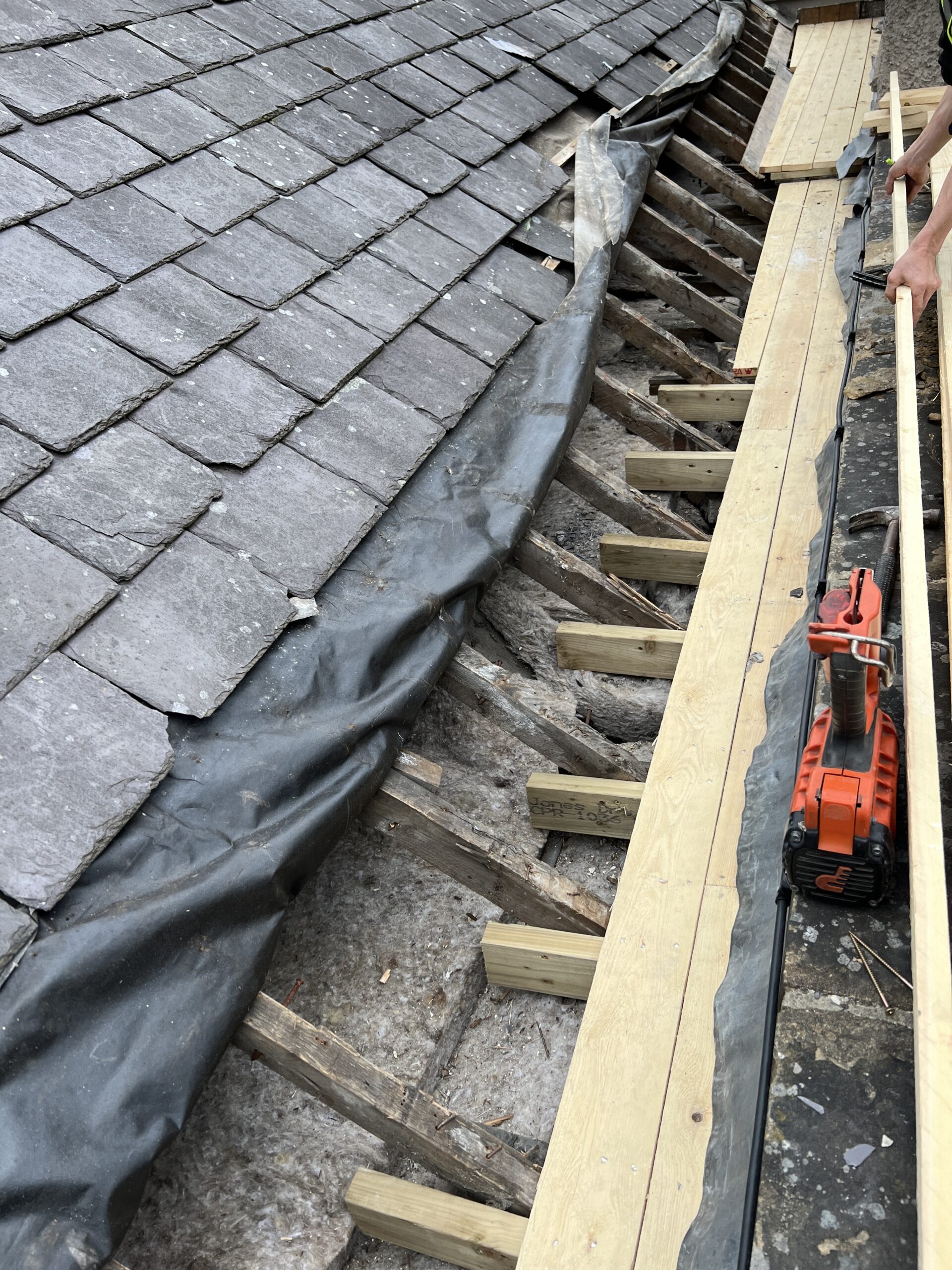
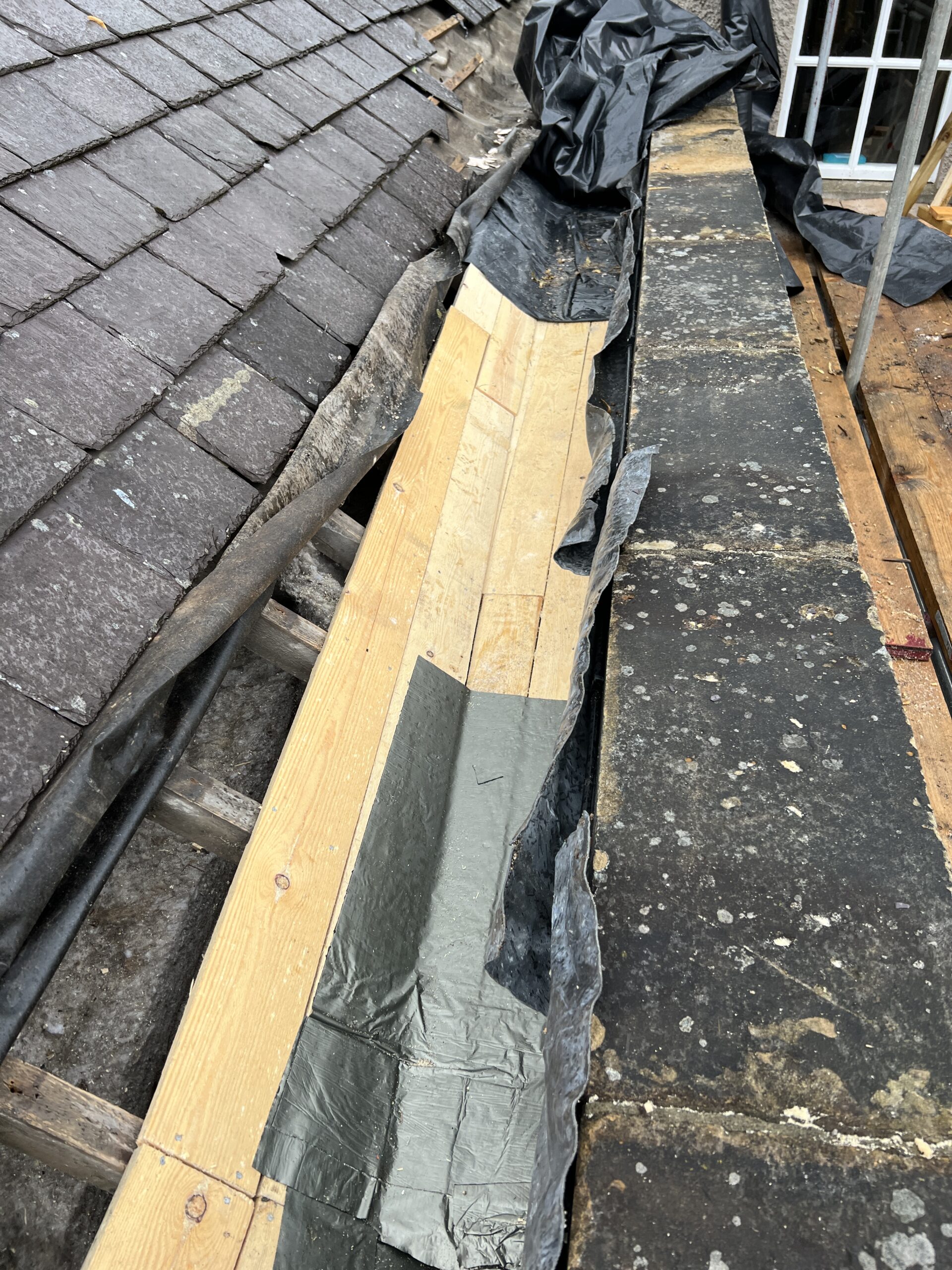
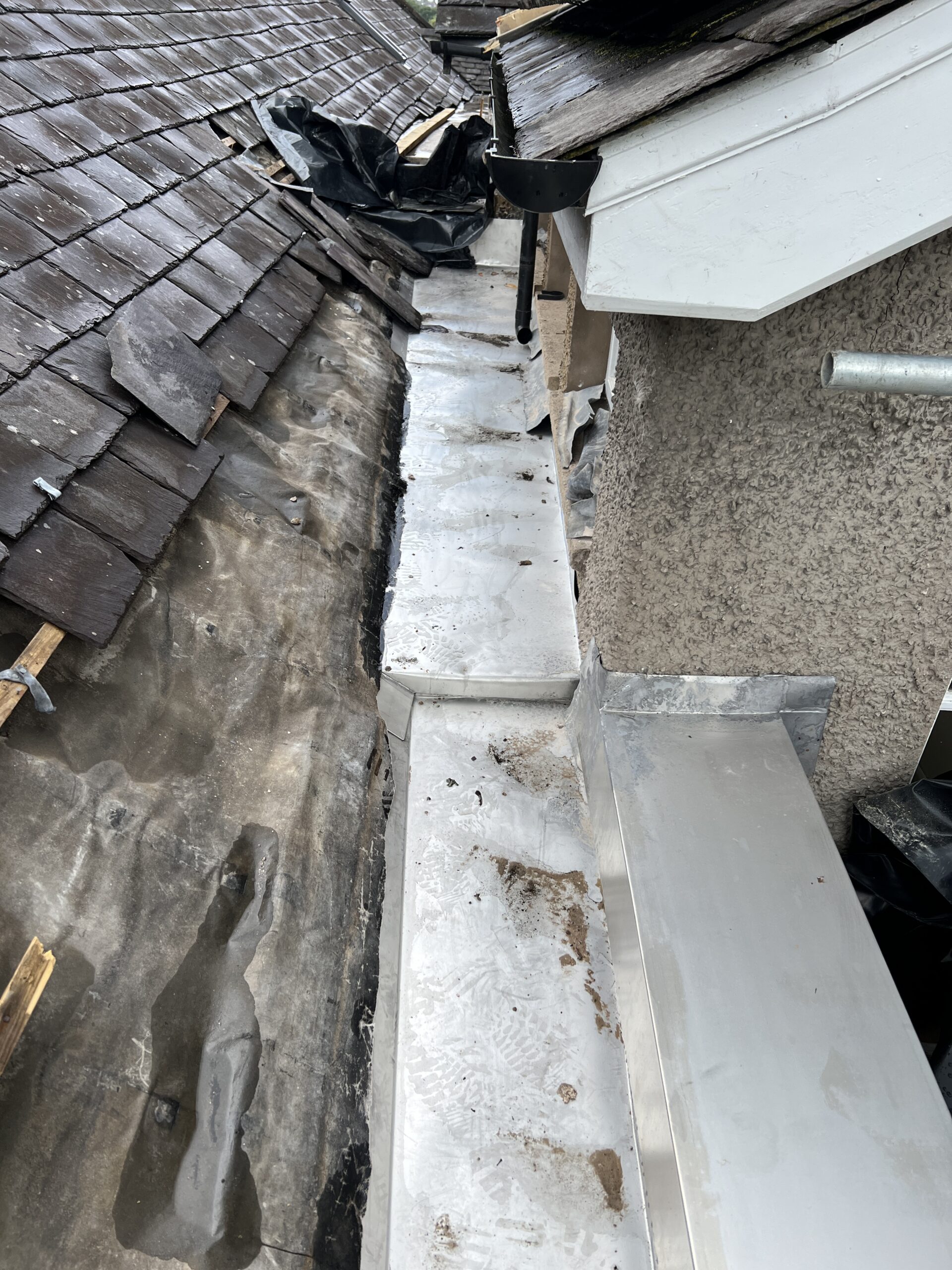
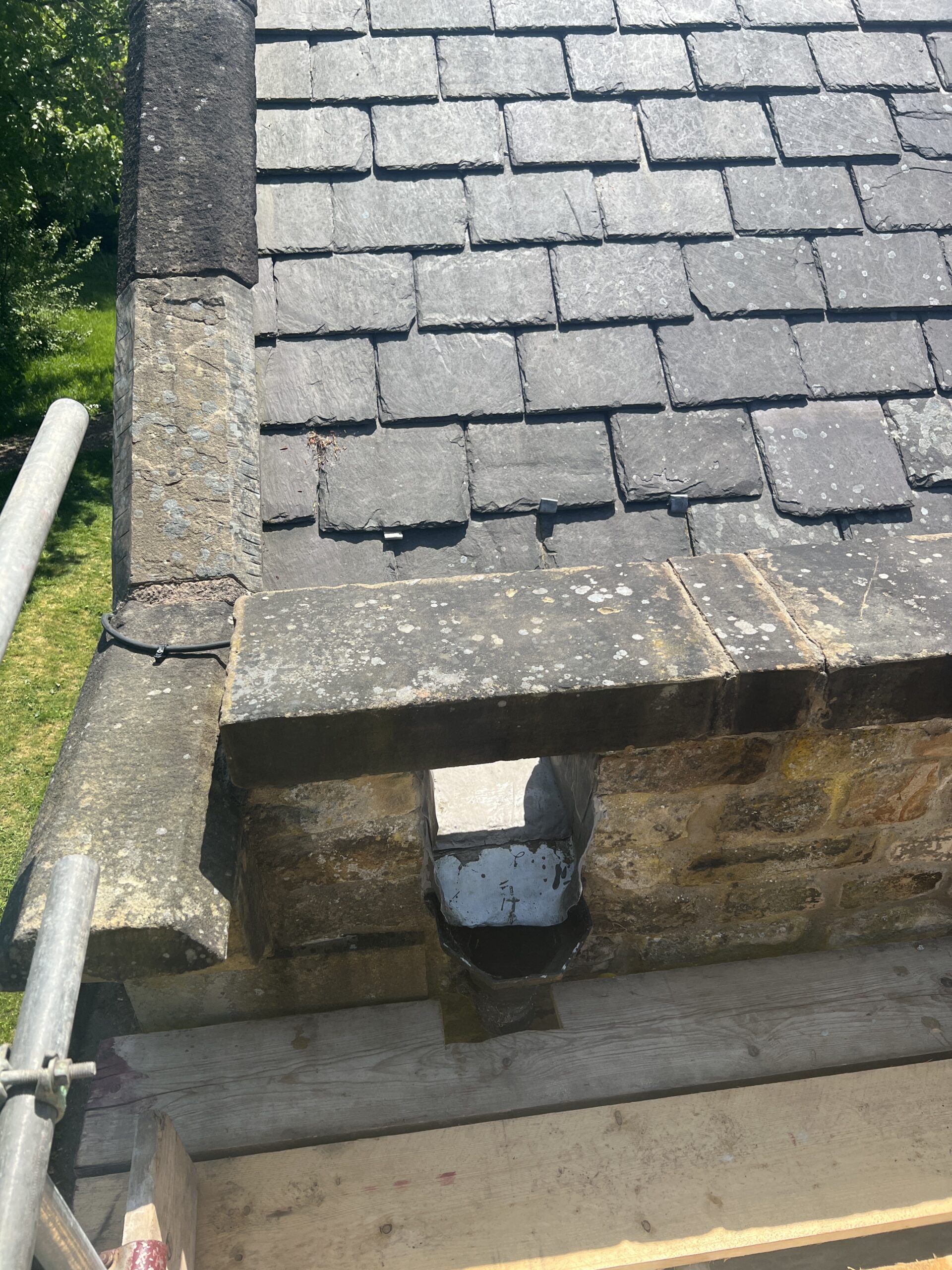
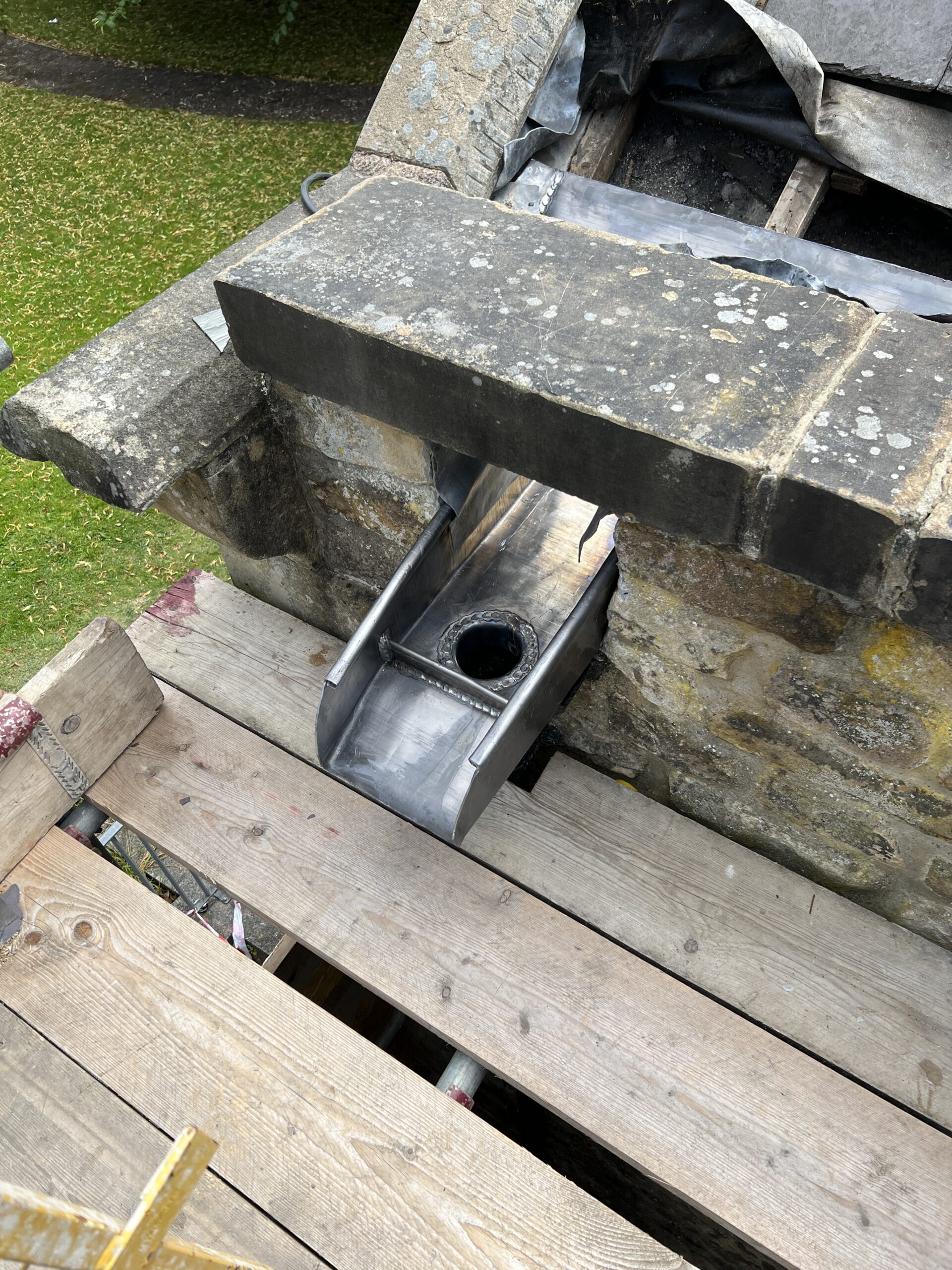
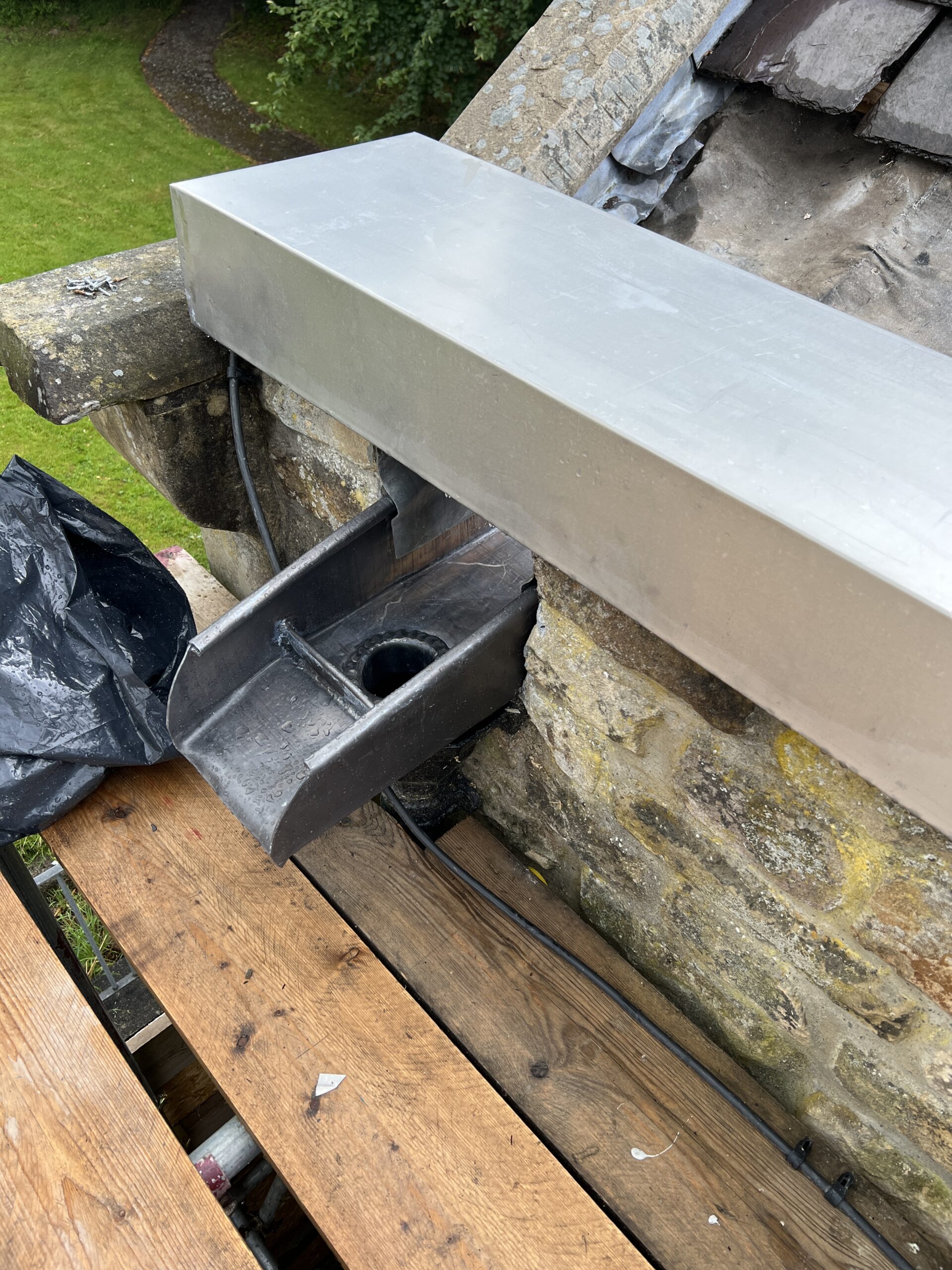
The existing rear parapet gutter system was stripped back, allowing the removal of deteriorated fibreglass linings and the reformation of the gutter structure. The gutter was reconstructed using redwood boarding and lined with a terne-coated stainless steel gutter system designed to provide exceptional durability whilst remaining sympathetic to the historic building. New lead outlet chutes, stainless steel cappings and associated flashings were installed to improve weatherproofing and drainage performance.
The project team carefully addressed several complex junctions between new and existing roof elements, introducing additional leadwork where necessary to eliminate water ingress. Following completion of the gutter restoration, slate roofing was reinstated and detailed to ensure a fully integrated and weatherproof solution.
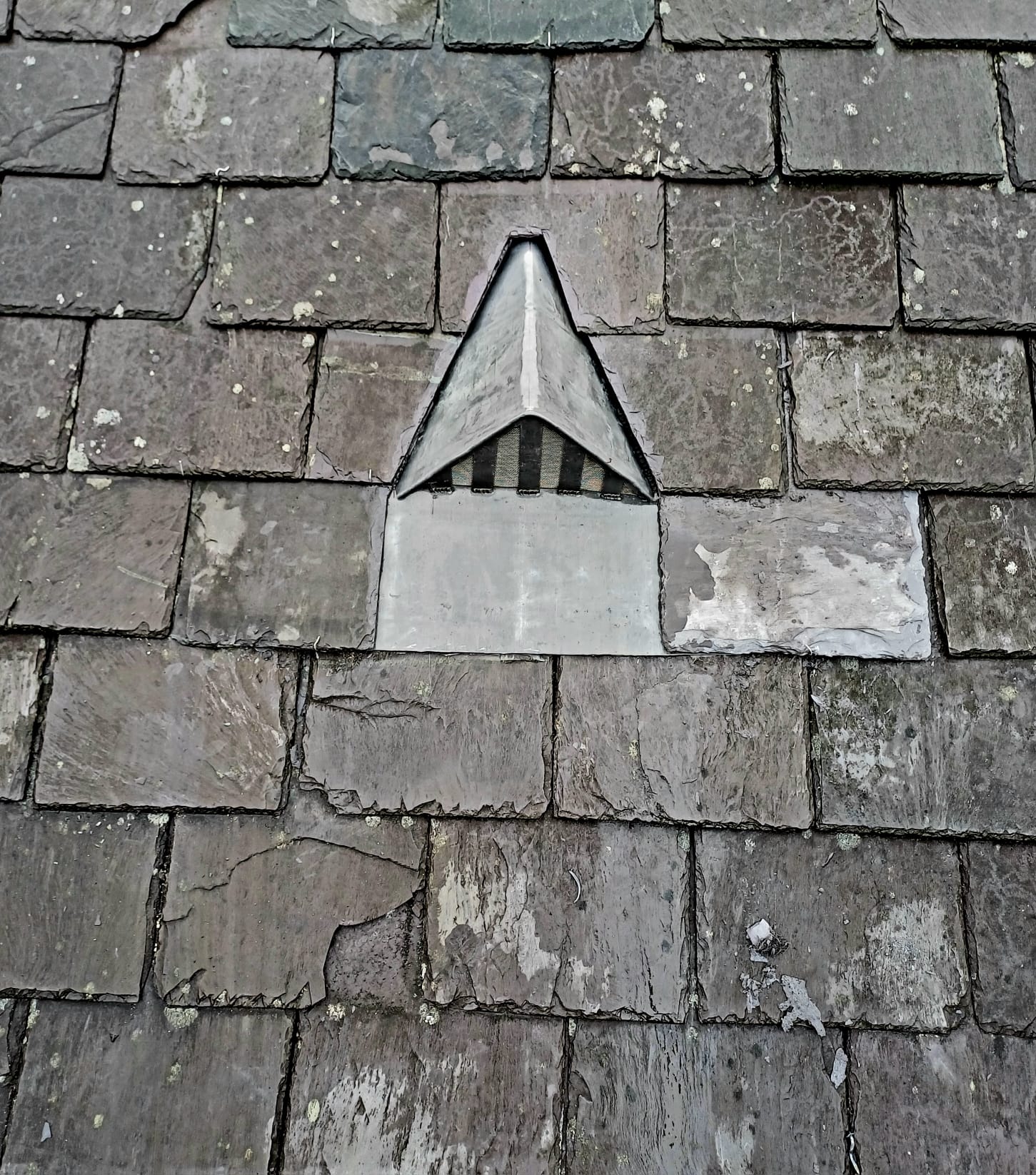
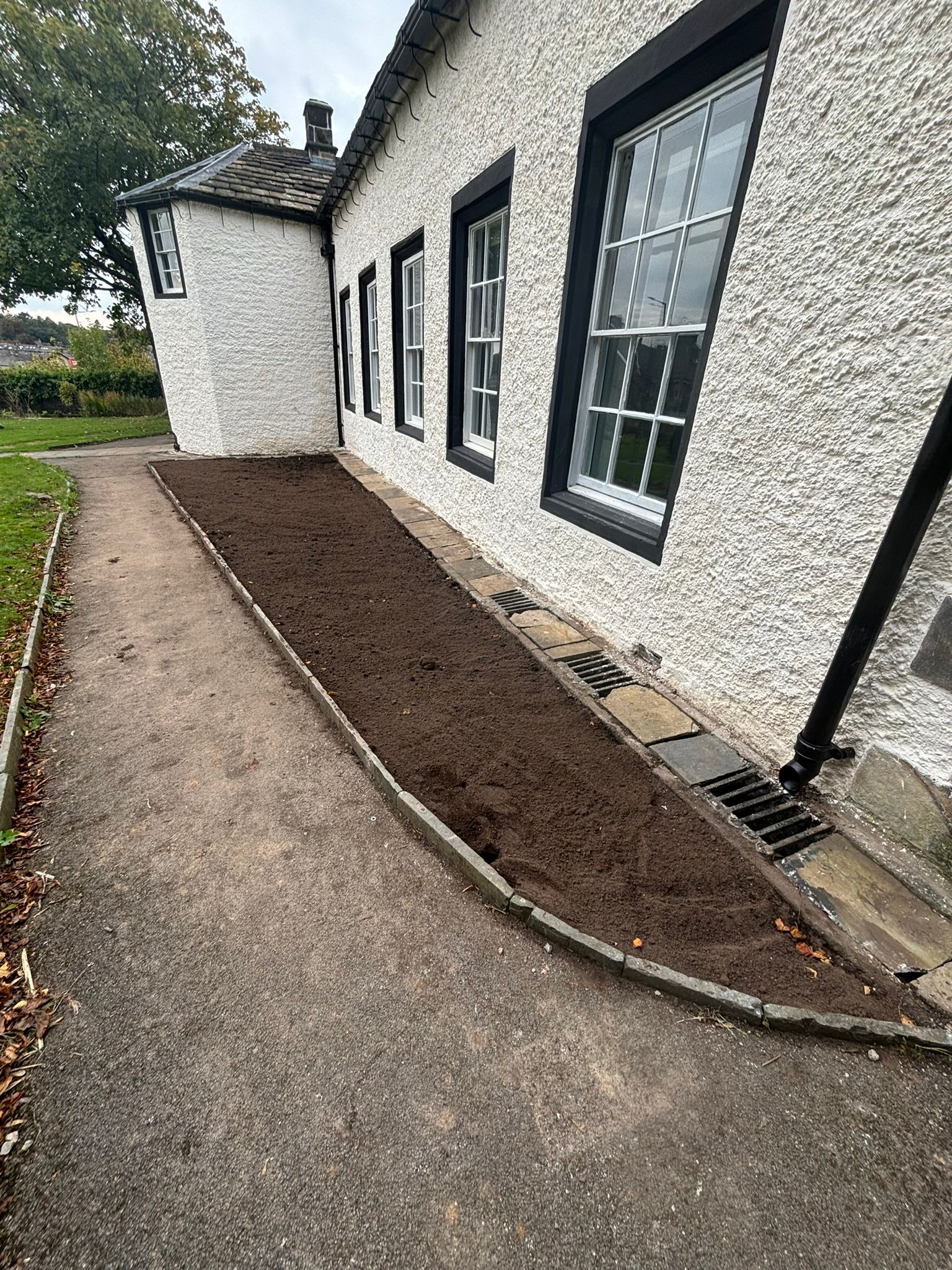
Additional works included the installation of lead roof vents, replacement underground drainage connections, repairs to valley gutters and improvements to surface water management throughout the site.
Bespoke Cast Iron Rainwater Goods Installation
A major feature of the final phase of works was the replacement of the building’s rainwater goods system.
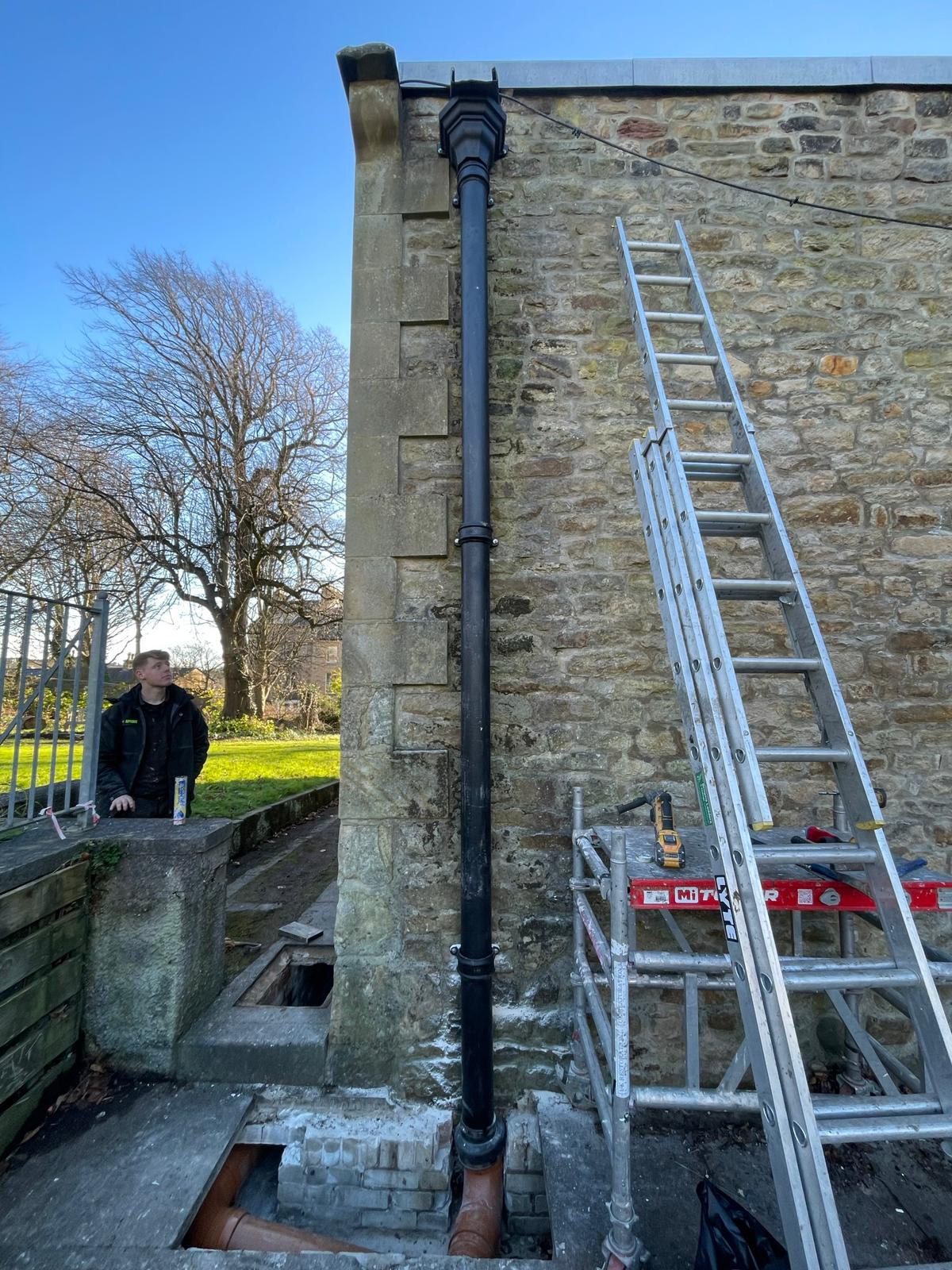
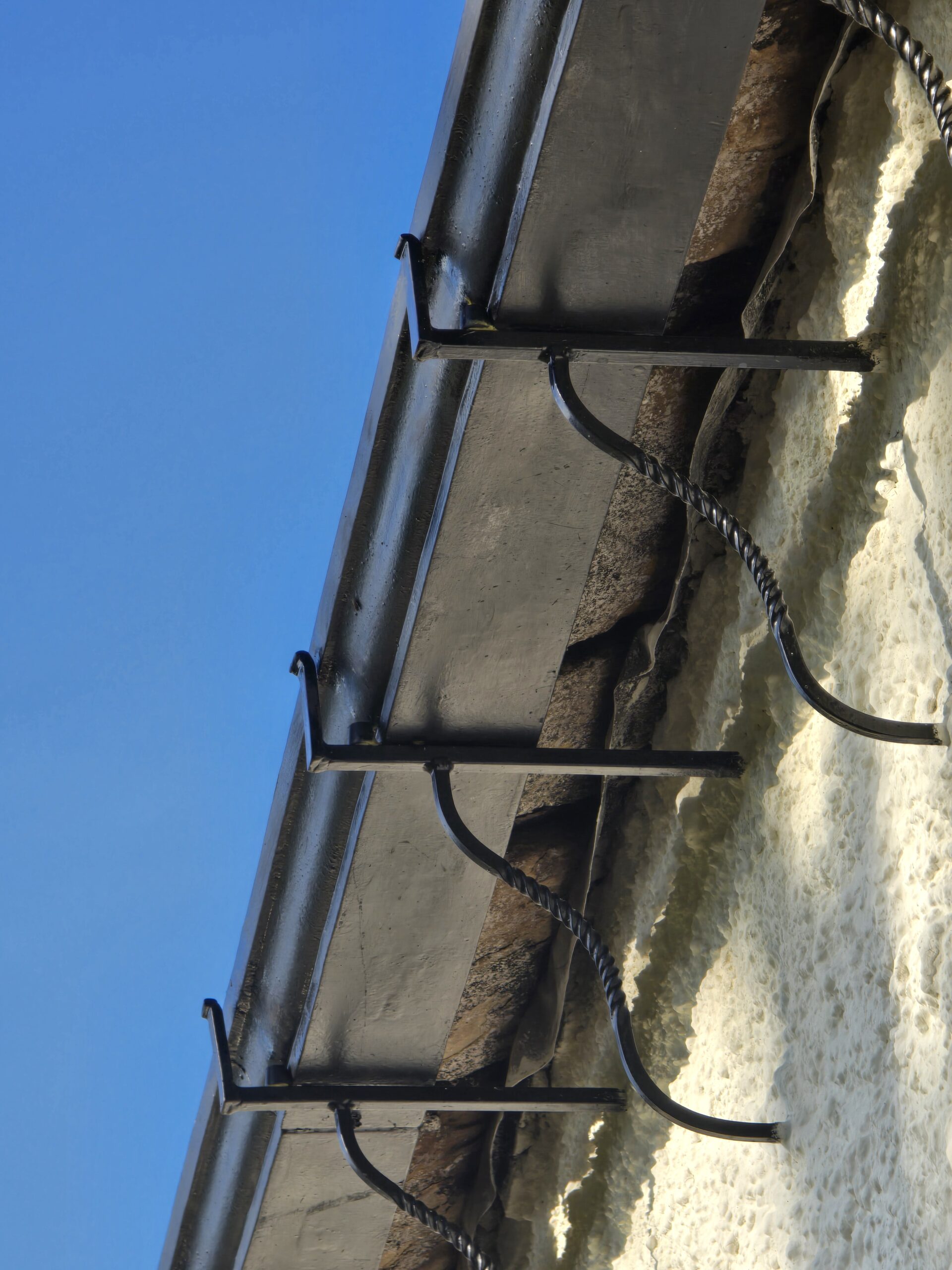
The original cast iron gutters and downpipes had reached the end of their serviceable life and no longer provided adequate capacity for effective water management. Working with specialist manufacturers, a completely bespoke cast iron rainwater goods system was designed and fabricated specifically for Lancaster Friends Meeting House. The package included custom hopper heads, purpose-made brackets, specialist corner sections and new downpipes manufactured to complement the historic character of the building whilst providing significantly improved performance.
The installation required extensive surveying and setting out due to the irregular nature of the historic masonry. Bespoke brackets were resin-fixed into the stonework, with particular care taken around vulnerable architectural features and window lintels. During installation, specialist solutions were developed to accommodate structural constraints whilst maintaining the visual appearance of the historic rainwater system. Custom castings were refined and recast where necessary to achieve the required quality and accuracy.
To ensure the best possible finish, installation of the permanent cast iron rainwater goods was delayed until after the façade had sufficiently dried and the limewashing programme could be completed. Temporary plastic rainwater goods were installed in the interim period, ensuring the building remained protected while the conservation works progressed. Once the limewashing and associated decoration works were complete, the permanent cast iron system was installed, painted and finished to provide a robust long-term solution that remains entirely in keeping with the historic appearance of the Meeting House.
Heritage Construction Challenges in Lancaster
Delivering a complex conservation project within the centre of Lancaster presented a range of challenges. The building remained an important community facility throughout the works, requiring careful planning around access, public safety and ongoing use of the site.
As with many historic buildings, unforeseen conditions were encountered during the course of the project, requiring investigation, trial works and close collaboration with the wider consultant team. The use of traditional materials also introduced programme considerations not typically associated with modern construction, particularly around drying times and environmental conditions.
Through proactive management, specialist conservation expertise and close communication with all stakeholders, UK Restoration Services successfully navigated these challenges while maintaining the highest standards of workmanship and heritage conservation.
Specialist Heritage Restoration Contractors in Lancashire
The Lancaster Friends Meeting House project demonstrates UK Restoration Services’ expertise in delivering complex conservation and restoration projects to nationally important heritage assets.
Acting as Principal Contractor, we coordinated specialist trades, conservation professionals and suppliers to deliver a comprehensive programme of structural repairs, lime-based conservation works, roofing restoration, bespoke rainwater goods installation and masonry repairs. The completed project has not only resolved long-standing structural and water management issues but has also safeguarded the character and significance of one of Lancaster’s most important historic buildings.
Our experience delivering listed building restoration, ecclesiastical conservation, masonry repairs, lime mortar works, roofing conservation and heritage construction projects throughout Lancashire and the wider Northwest continues to make UK Restoration Services a trusted partner for architects, surveyors, conservation officers and heritage property owners.