Traditional Stone Barn Conservation and Re-Roofing Works in the Forest of Bowland, Lancashire.
UK Restoration Services was appointed as Principal Contractor to undertake the restoration and conservation of two historic agricultural barns at Sabden Fold Farm, near Fence and Sabden in Lancashire. Located within the Forest of Bowland Area of Outstanding Natural Beauty (AONB), the projects formed part of a wider programme to preserve traditional farm buildings that contribute significantly to the historic landscape and agricultural heritage of rural Lancashire.
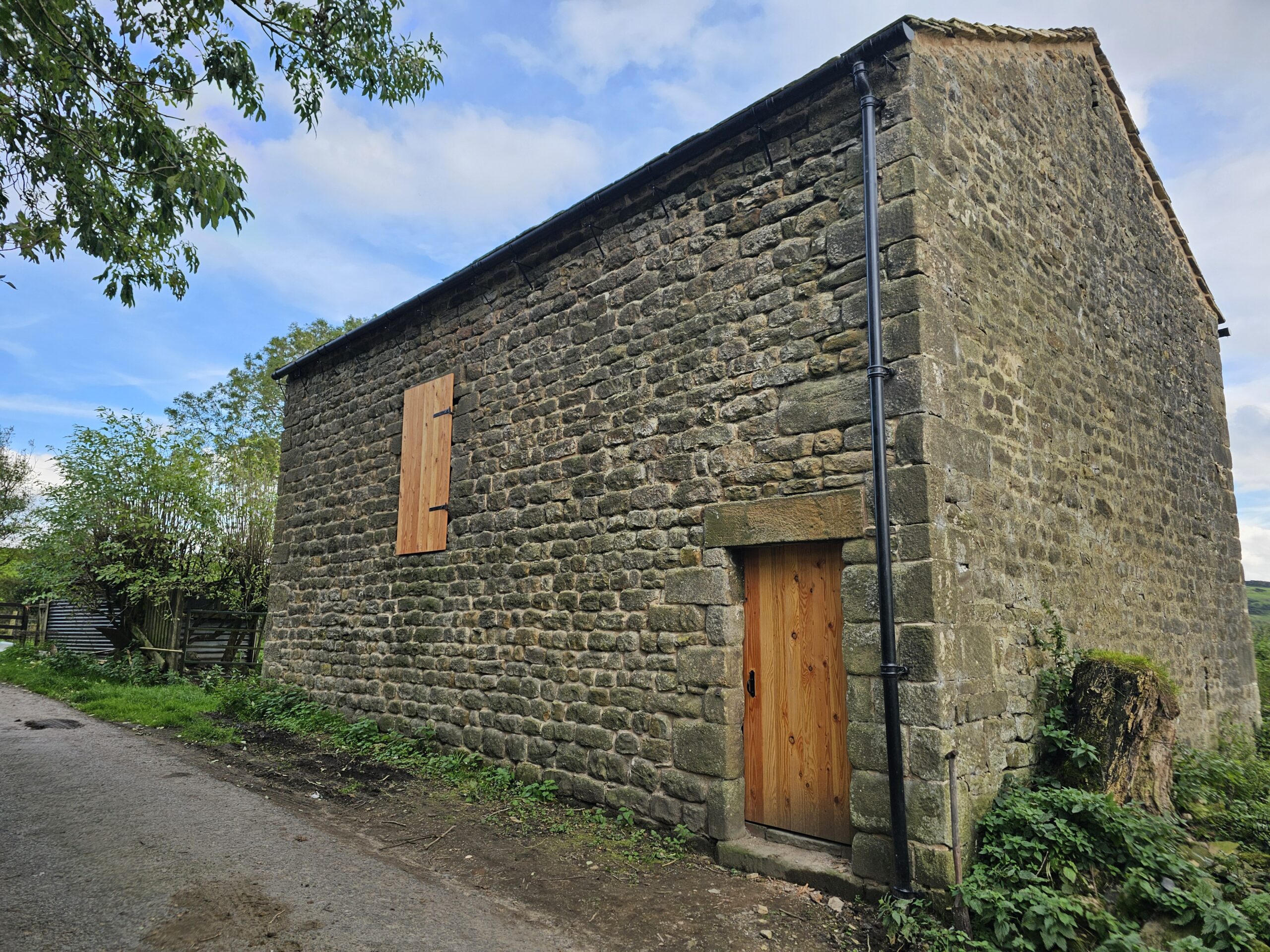
The two stone-built barns, dating from before the mid-nineteenth century, had suffered from decades of weather exposure, roof deterioration and gradual structural decay. Working closely with conservation specialists, the project focused on retaining as much original fabric as possible whilst undertaking essential structural repairs, traditional stone roofing works, lime mortar masonry repairs and bespoke joinery restoration.
As Principal Contractor, UK Restoration Services coordinated all conservation works, ensuring that traditional building techniques, heritage materials and best conservation practice remained at the heart of the restoration programme.
Conserving Historic Agricultural Buildings Within the Forest of Bowland
The barns occupy a prominent position within the historic farming landscape of Sabden Fold, an area renowned for its traditional stone-built agricultural architecture. Situated within the nationally protected Forest of Bowland landscape, the restoration works required a sensitive approach that balanced structural necessity with the preservation of historic character.
Unlike modern construction projects, conservation-led barn restoration requires careful assessment of every element of the existing structure. Historic roof timbers, stone slates, masonry and joinery were all inspected individually to determine whether repair, reinforcement or replacement represented the most appropriate intervention.
The project philosophy followed established conservation principles of minimum intervention, retaining original materials wherever possible and introducing new materials only where existing components were beyond repair.
Traditional Stone Slate Roof Restoration in Lancashire
The most significant element of both projects involved the conservation and reinstatement of the original stone slate roofing systems.
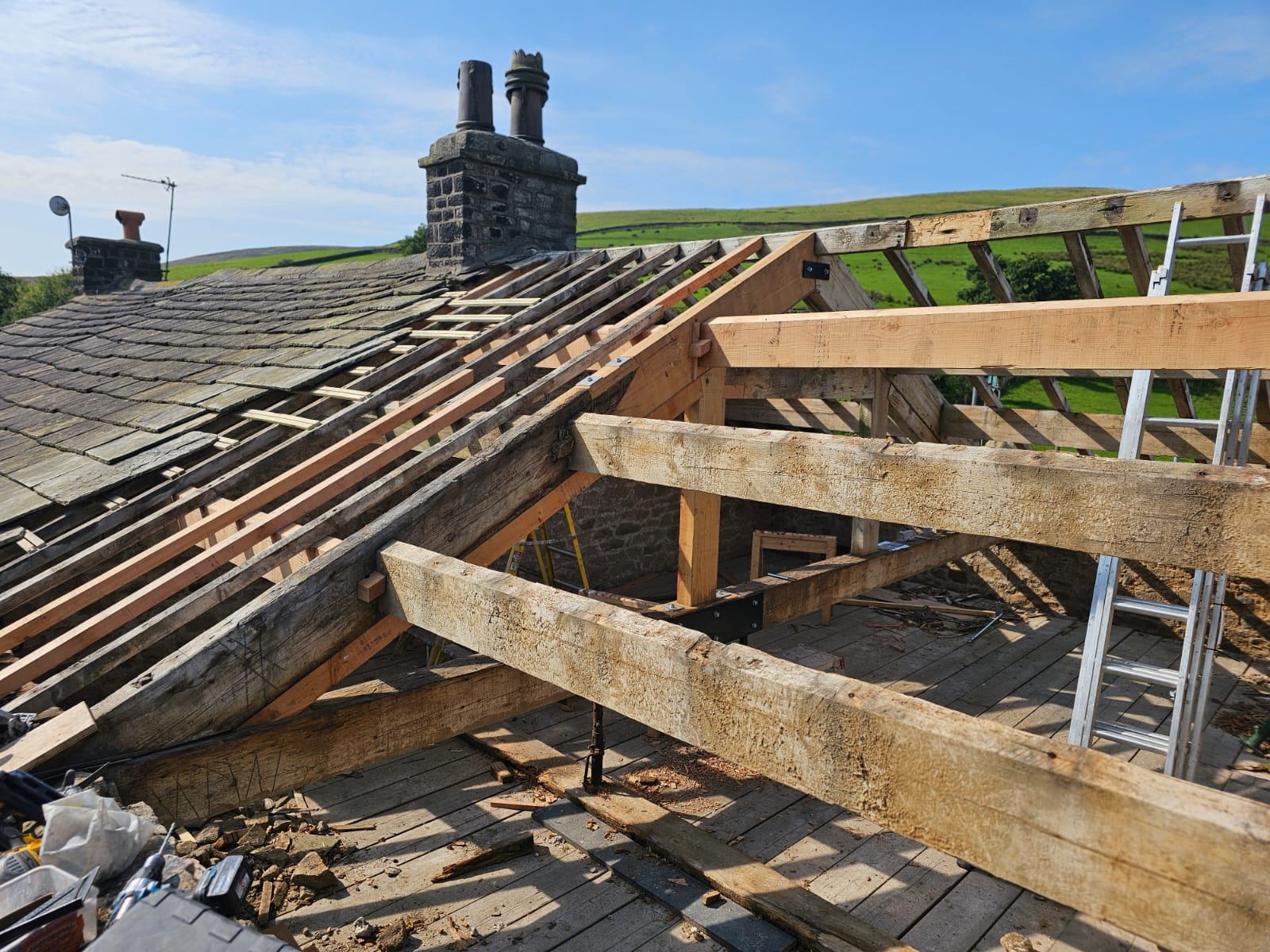
Over many decades, movement within the roof structures, decayed timbers and natural weathering had compromised the integrity of the roof coverings. To facilitate repairs, the existing sandstone ridge pieces and stone slates were carefully stripped by hand, sorted and catalogued before being set aside for reuse. This process ensured that the maximum amount of original roofing material could be retained within the finished scheme.
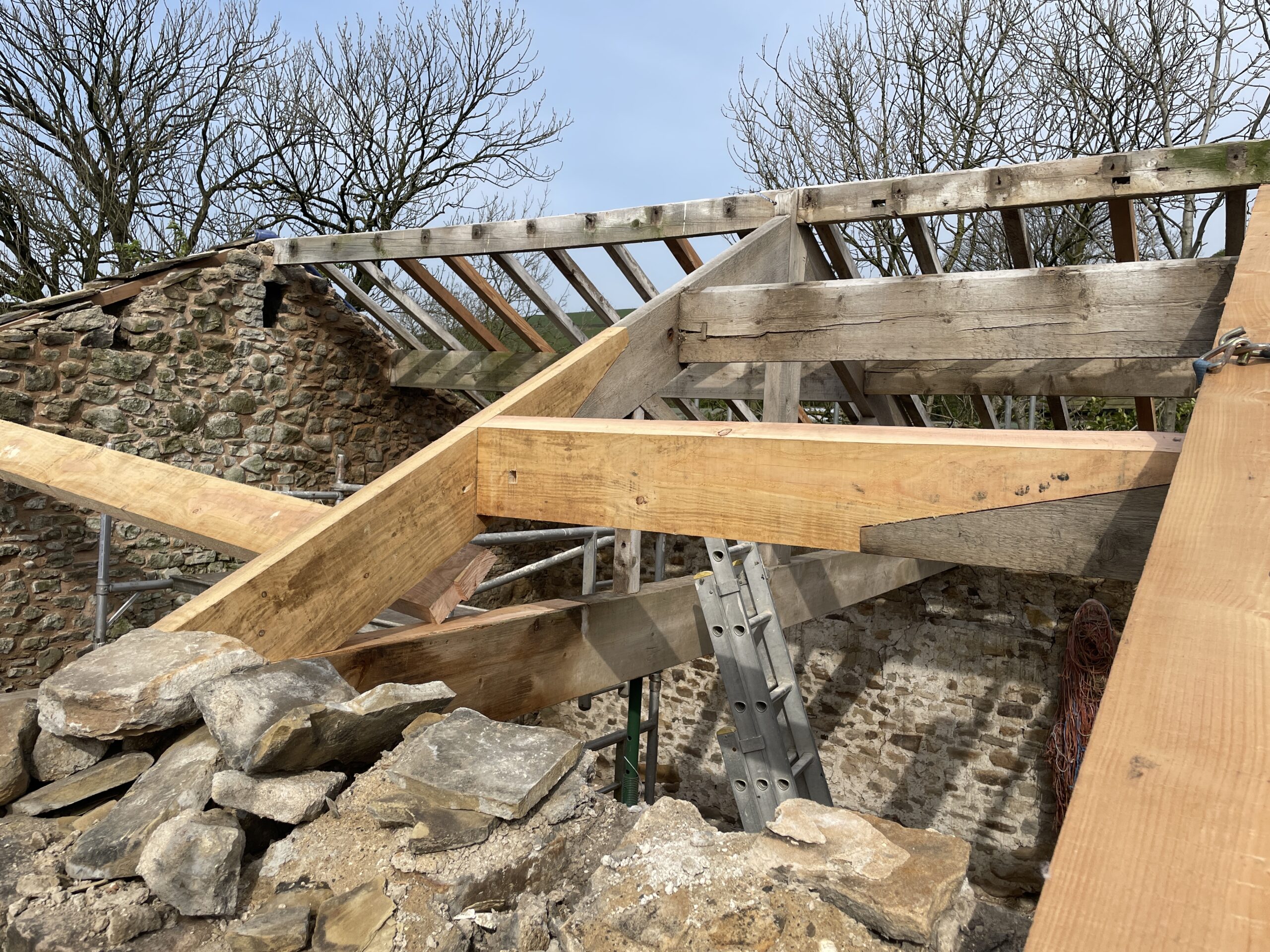
Following detailed inspection of the exposed roof structures, extensive timber repairs were undertaken. Works included:
- Installation of new ridge beams.
- Repair and strengthening of historic roof trusses.
- Replacement of decayed purlins.
- Renewal of defective rafters.
- Reinforcement of structural roof members.
- Conservation repairs to retained timber elements.
Once structural repairs were completed, the roofs were re-lathed and re-slated using the salvaged sandstone slates. Any shortfall was carefully supplemented with matching reclaimed stone slates to ensure consistency in colour, thickness and appearance. Traditional diminishing courses were retained to preserve the authentic character of the historic roofscape.
Structural Timber Repairs and Conservation Carpentry on heritage barn
The condition of the existing timber structures presented several conservation challenges across both barns.
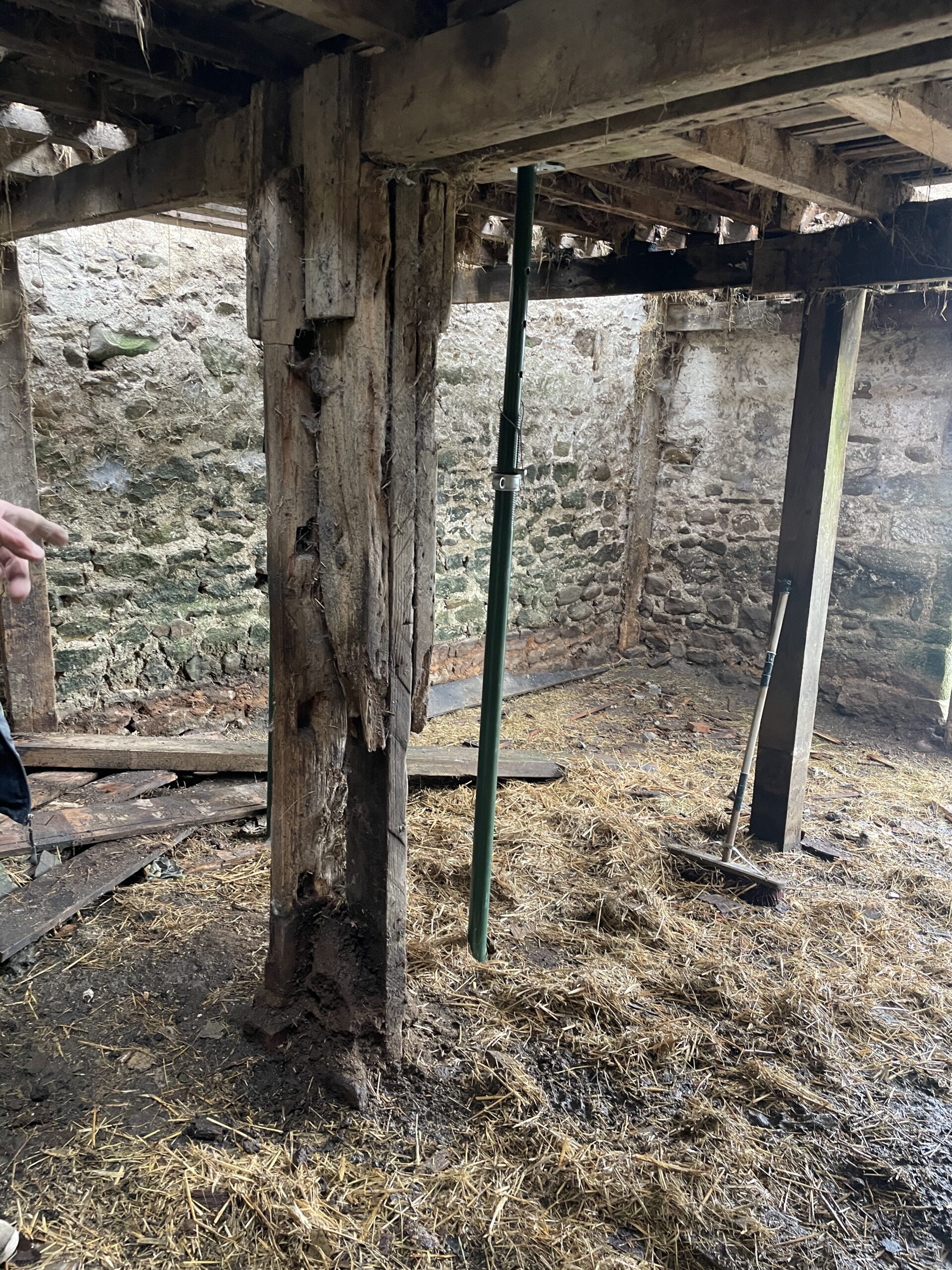
Years of moisture ingress had caused localised decay within principal rafters, purlins and supporting structural members. Rather than adopting wholesale replacement, the repair strategy prioritised the retention and strengthening of historic timbers wherever feasible.
Within Barn one, repairs included strengthening the western roof truss, installing a new ridge beam, replacing decayed rafters and repairing structural loft supports. Existing timber boarding within the loft area was carefully dismantled, repaired and reinstated using salvaged material supplemented with matching new timber where necessary.
Barn two required similarly extensive timber conservation works, including the renewal of a principal rafter, replacement purlins and repairs to approximately twenty-five percent of the roof rafters.
This conservation-led approach enabled significant quantities of original timber fabric to remain in situ, preserving the historic integrity of the buildings while improving long-term structural performance.
Heritage Masonry Repairs and Lime Mortar Conservation in Ribble Valley
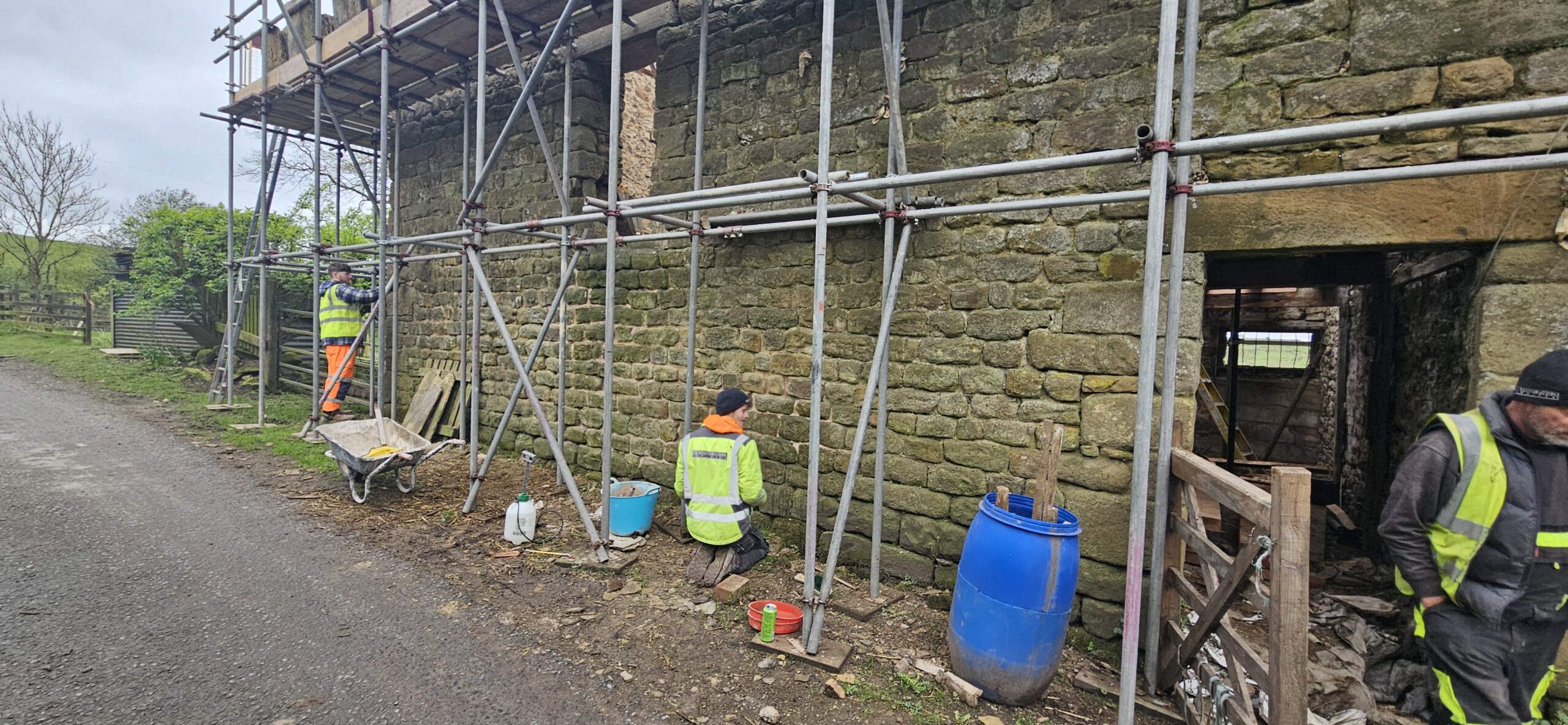
Alongside the roofing works, extensive masonry conservation repairs were undertaken to stabilise and protect the stone walling.
Historic stonework exhibited areas of mortar loss, open joints and localised instability, particularly around openings, wall heads and exposed elevations. All repairs were carried out using traditional hot lime mortar mixes specifically selected to match the original construction and ensure compatibility with the historic masonry.
The works included:
- Consolidation of wall heads.
- Deep packing of voids.
- Lime mortar repointing.
- Repair of exposed lintel details.
- Internal masonry repairs.
- Localised structural stitching and stabilisation.
By using breathable lime-based mortars, the restored masonry can continue to manage moisture naturally, reducing the risk of future deterioration and improving the longevity of the historic fabric.
Bespoke Joinery and Traditional Farm Building Features Restoration
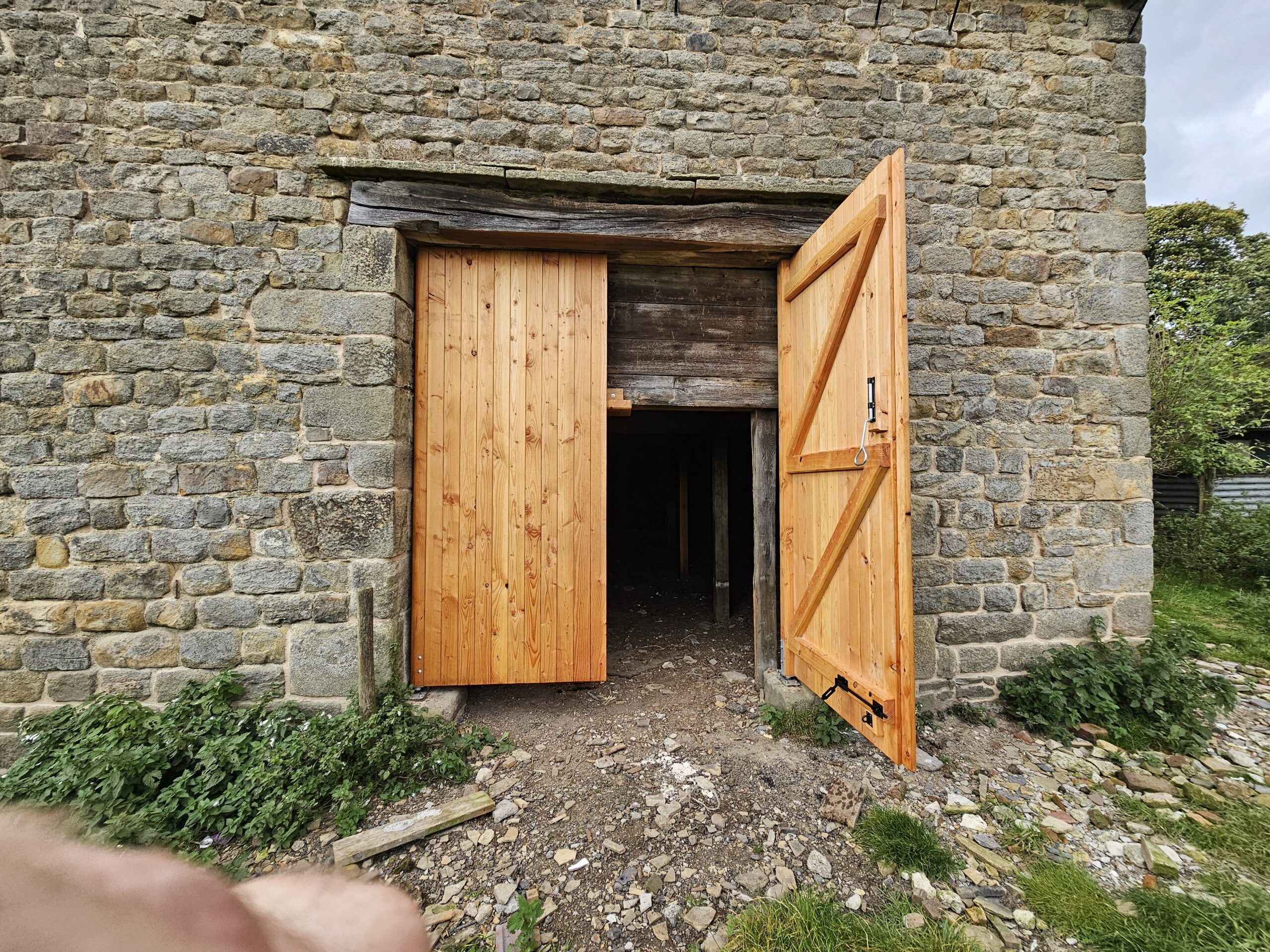
An important aspect of the restoration involved the reinstatement of traditional agricultural joinery features that contribute significantly to the barns’ historic character.
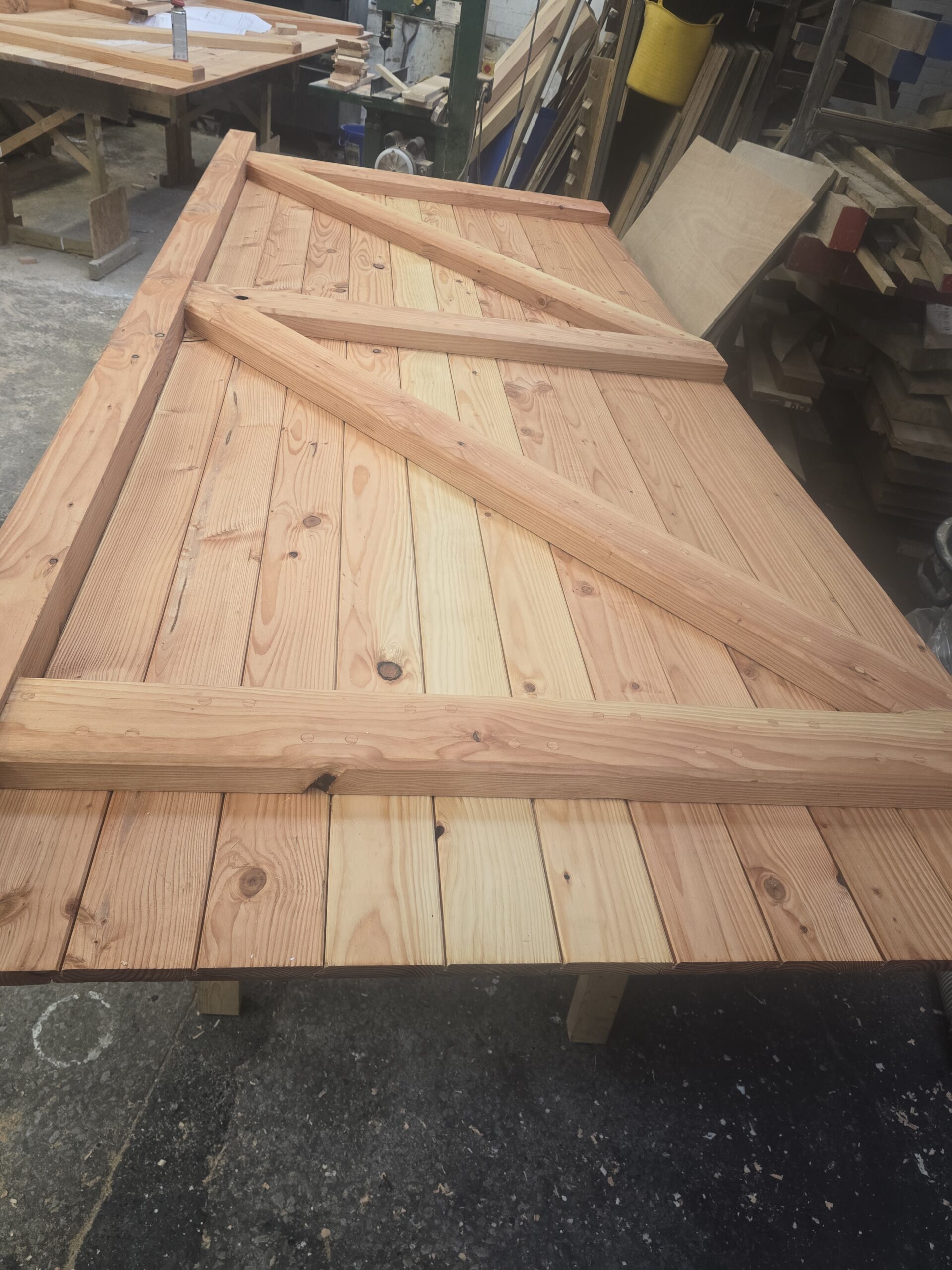
New external joinery was manufactured using untreated larch, selected for its durability and suitability within a rural agricultural environment. Works included the installation of:
- Traditional cart entrance doors.
- Pitching doors.
- Timber shutters.
- Agricultural access doors.
- Replacement boarding to historic openings.
All new joinery was designed to reflect the original forms and detailing of the historic structures, ensuring that the appearance of the barns remained authentic to their agricultural heritage.
Rainwater Goods and Long-Term Building Protection to Heritage Barn
Effective rainwater management is critical to the long-term preservation of historic agricultural buildings.
As part of the restoration programme, new cast iron and traditional rainwater systems were installed to replace defective drainage components. These improvements were designed to direct water safely away from the masonry and foundations, reducing future moisture-related deterioration and helping protect the newly repaired structures.
The use of traditional materials ensured visual compatibility with the historic buildings while providing robust long-term performance.
Delivering Heritage Construction in a Working Agricultural Environment in Lancashire
The restoration works were undertaken within an active farm setting, creating a range of logistical and operational challenges.
As Principal Contractor, UK Restoration Services carefully coordinated access, materials handling and construction activities to minimise disruption to ongoing farming operations. Particular attention was given to protecting livestock, maintaining access routes and ensuring safe working practices within a live agricultural environment.
The remote rural location, challenging weather conditions and sensitive historic fabric demanded careful planning and sequencing throughout the project, ensuring that conservation objectives could be achieved without compromising safety or quality.
Preserving Lancashire’s Agricultural Heritage
The completion of the Sabden Fold Barn restoration projects has secured the future of two important historic farm buildings within the Forest of Bowland landscape.
Through the careful repair of traditional stone slate roofs, conservation of historic timber structures, lime mortar masonry repairs and bespoke joinery restoration, the barns have been preserved for continued agricultural use while retaining their historic significance and rural character.
The project demonstrates UK Restoration Services’ expertise as a Principal Contractor in delivering complex heritage construction projects, traditional farm building restoration, stone slate roofing conservation, lime mortar masonry repairs and historic building preservation. Working closely with architects, surveyors, conservation professionals and private clients, we continue to provide specialist restoration services that safeguard some of the UK’s most valuable historic structures for future generations.