Recreating a Historic Bath Stone Urn at The Slopes, Buxton
UK Restoration Services was appointed as Principal Contractor to deliver the recreation and installation of Urn No. 12 at The Slopes, Buxton, working alongside Bench Architects and High Peak Borough Council as part of the wider High Street Heritage Action Zone (HSHAZ) programme. The project involved the complete reconstruction of a missing Grade II* listed ornamental Bath stone urn that forms part of the historic landscape surrounding The Crescent and The Slopes in the heart of Buxton, Derbyshire.
The Slopes is one of Buxton’s most significant historic public spaces and contains a collection of twelve highly decorative eighteenth-century stone urns that contribute greatly to the character and setting of the town’s historic centre. Originally carved around 1750 for Lord Burlington’s Londesborough Estate in Yorkshire, the urns were relocated to Buxton during the nineteenth century as part of the landscaping works associated with the development of The Crescent and surrounding pleasure gardens. Historic research undertaken as part of the project traced the origins of the urns and their significance within the wider landscape design heritage of Buxton.
Heritage Background and Conservation Challenges
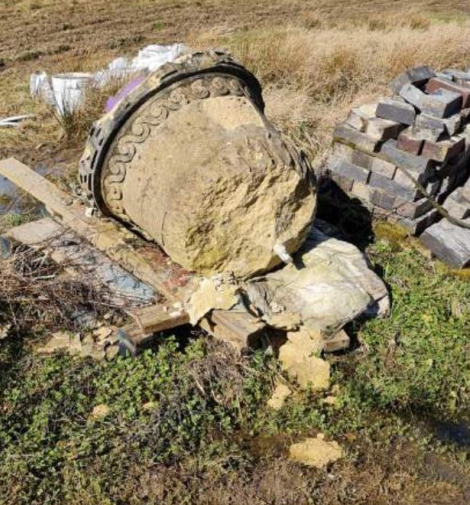
Urn No. 12 had been removed from its original location several years prior to the project due to severe structural deterioration and safety concerns. Surveys revealed extensive damage caused by weathering, freeze-thaw action and long-term exposure, leaving the original urn beyond practical repair. Fragments of the original structure had been recovered and recorded, providing valuable information regarding the original carving details, proportions and construction methods.
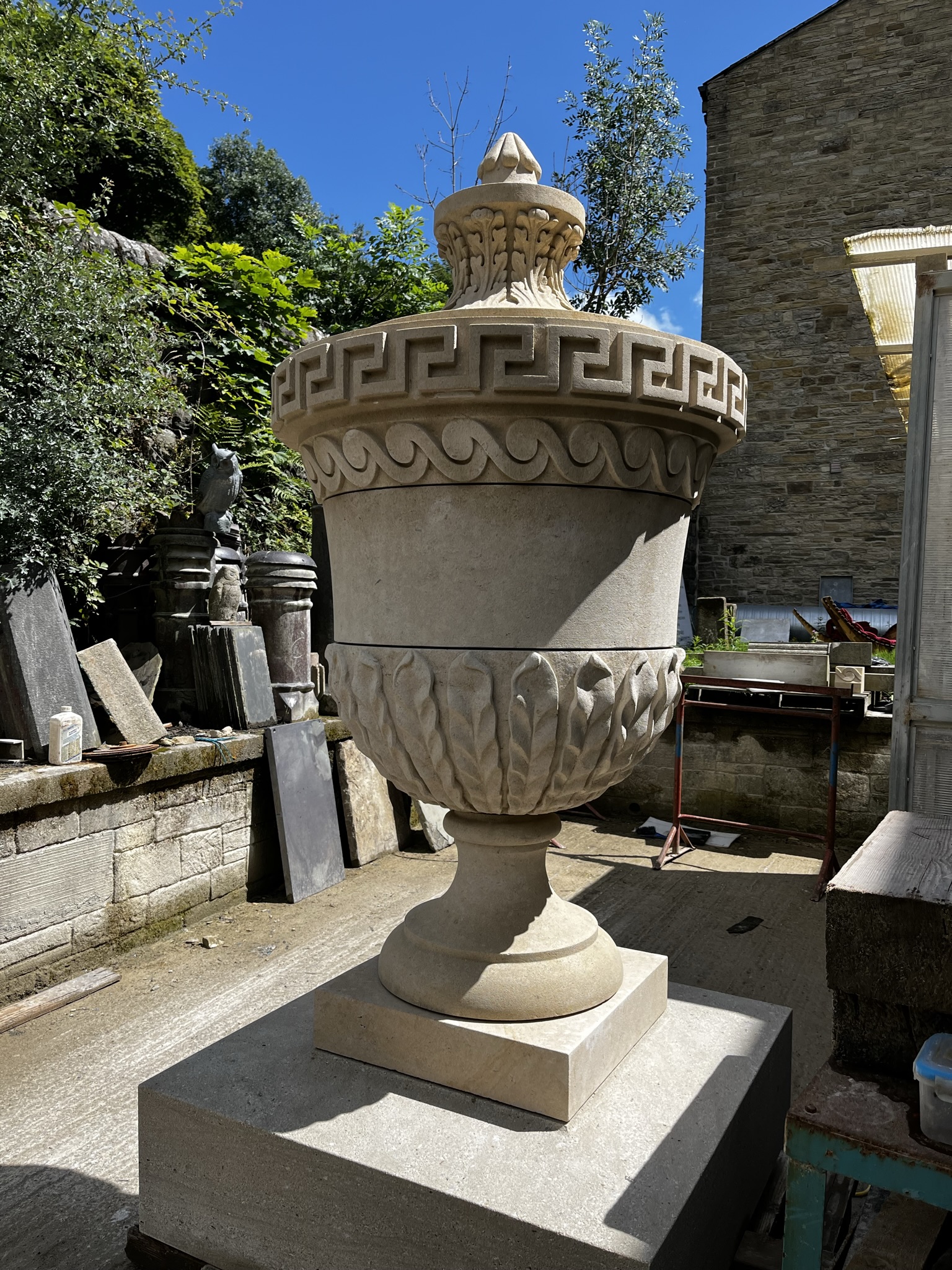
The replacement urn needed to accurately replicate the appearance, craftsmanship and detailing of the surviving original examples while also incorporating discreet structural improvements to ensure long-term durability and public safety. The completed urn would stand over five feet tall and occupy a prominent position within a publicly accessible historic landscape, making precision and authenticity essential throughout the project.
Traditional Stone Masonry and Hand Carving
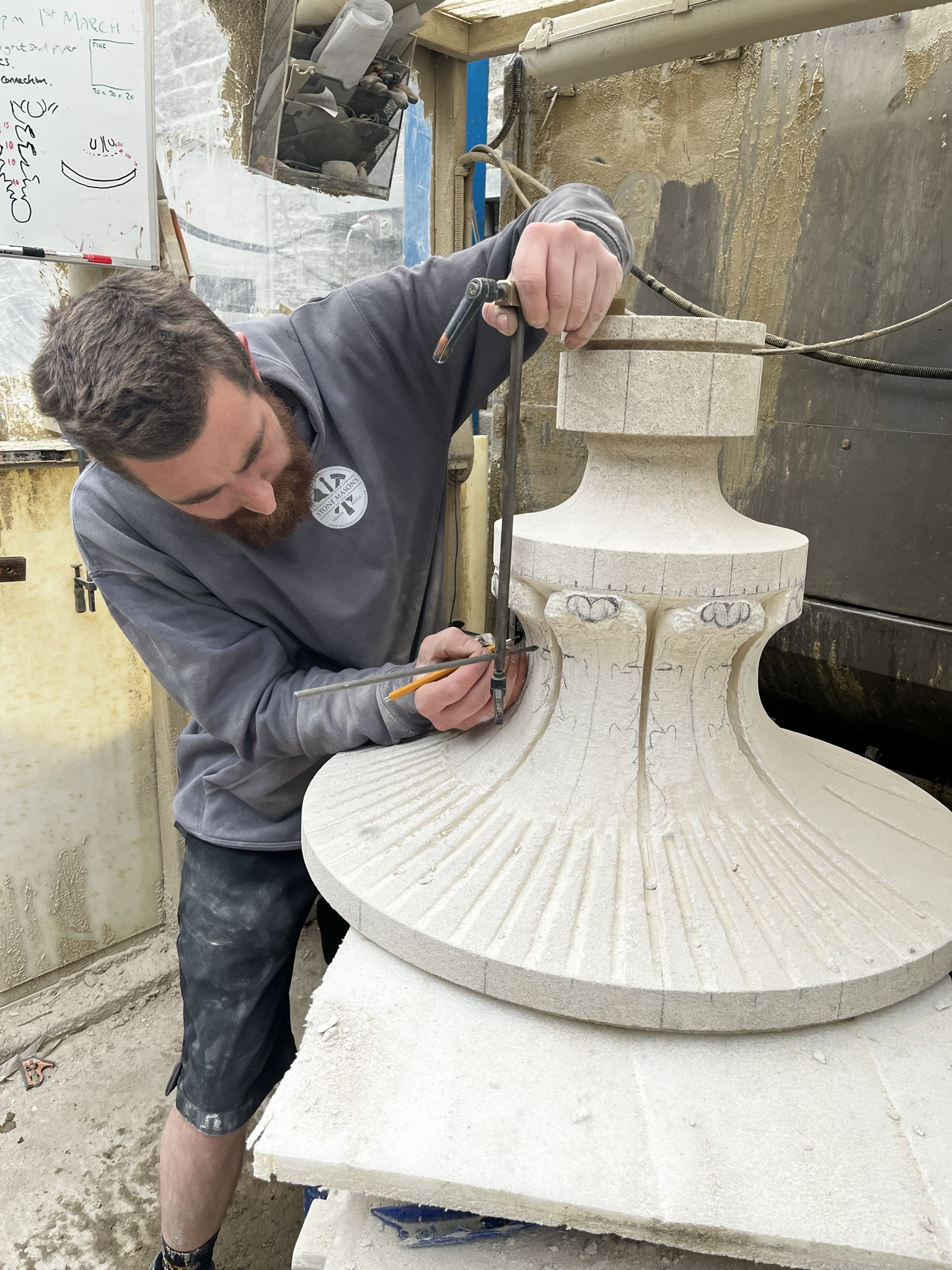
Working closely with specialist stonemasons Whitaker Stone Ltd, the project began with detailed surveys of the surviving urns at The Slopes. Dimensional records, photographs and historical references were used alongside architectural drawings to recreate the missing monument as faithfully as possible. The specification required the new urn to match the style, finish and decorative features of the original eighteenth-century examples as closely as possible.
A high-quality block of Stoke Ground Bath Stone was personally selected from Hayes Wood Mine near Bath following approval by the project team. The chosen stone was carefully assessed for colour, consistency and durability before being transported to the stonemasons’ workshop.
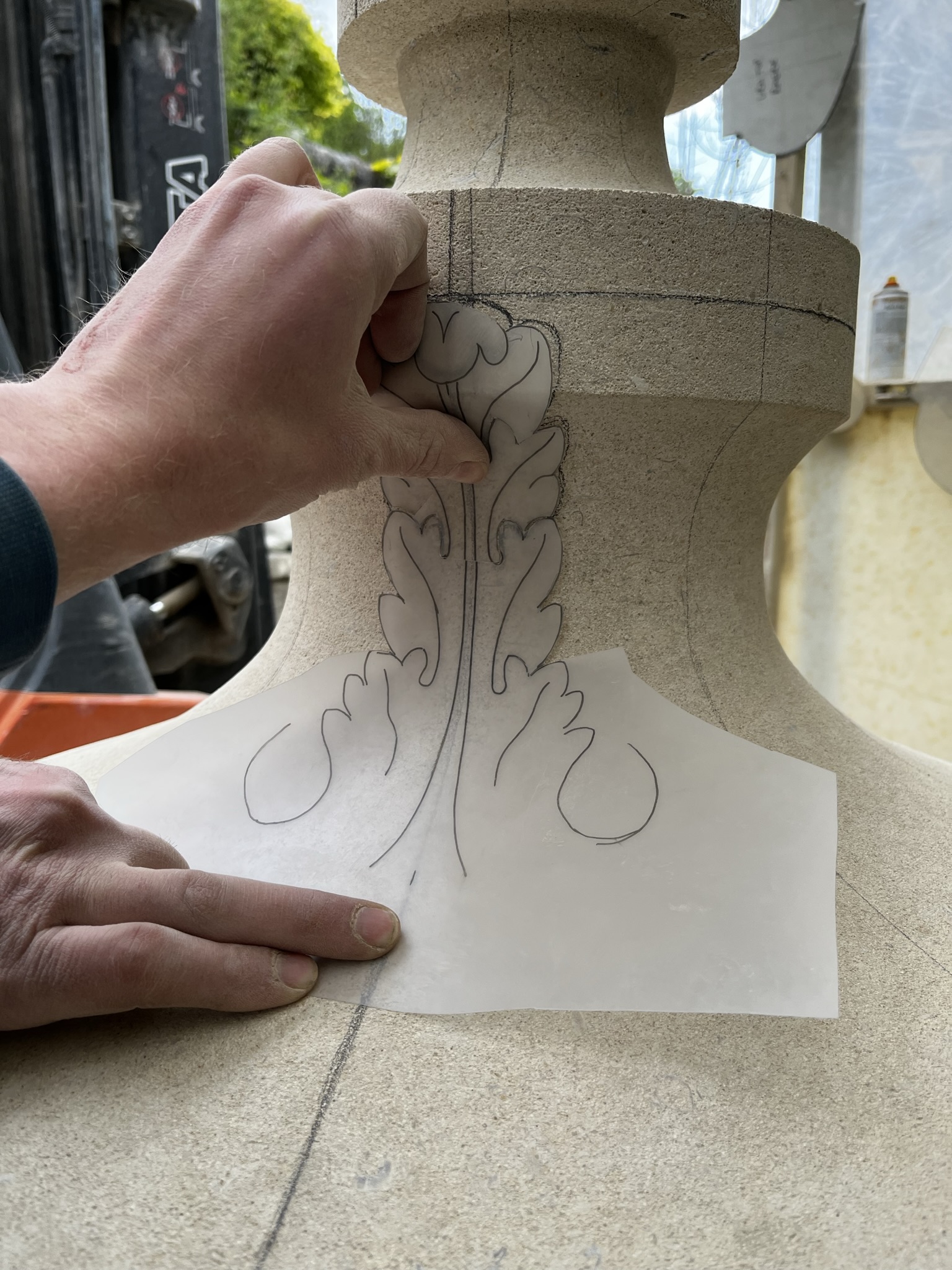
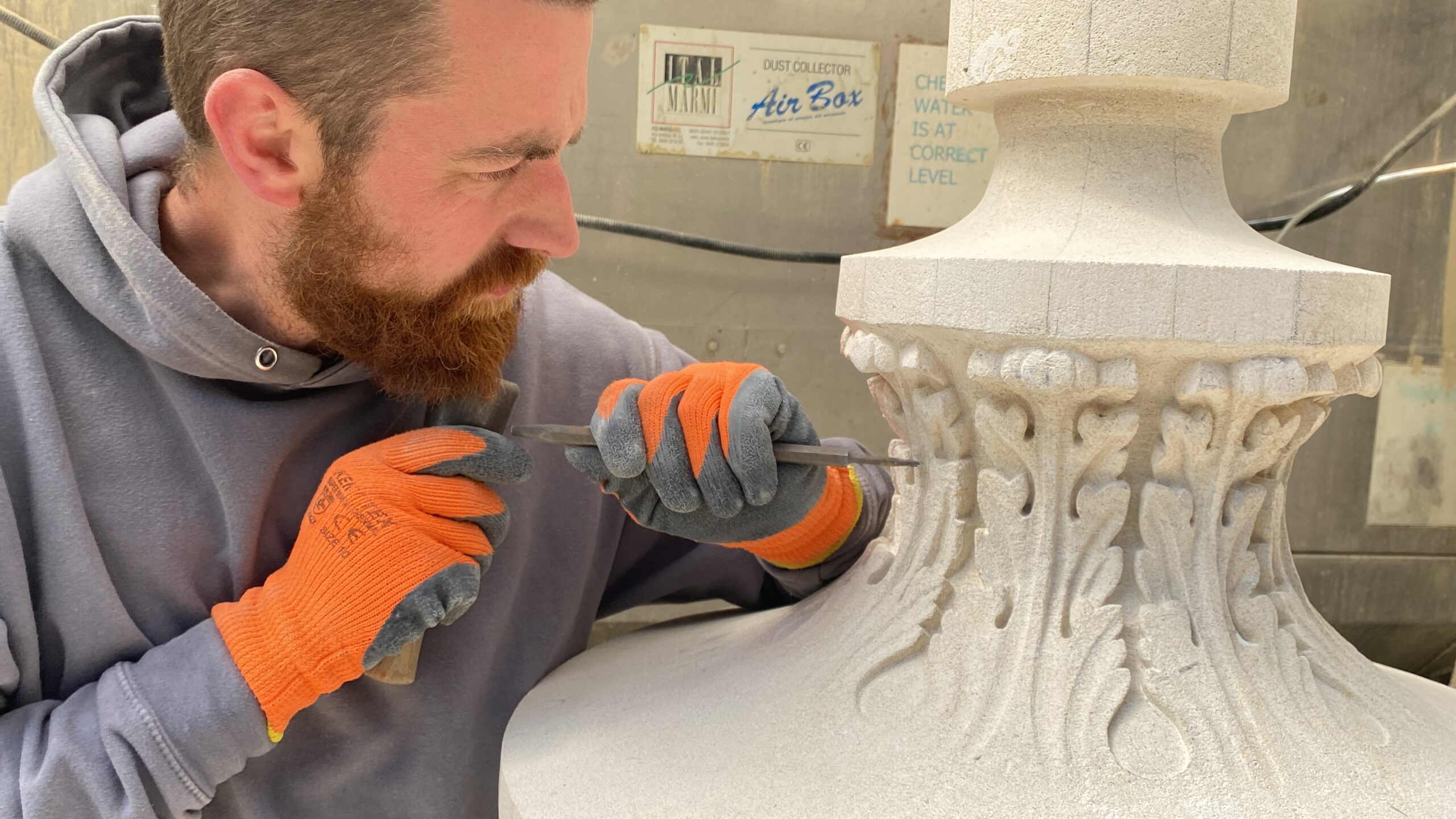
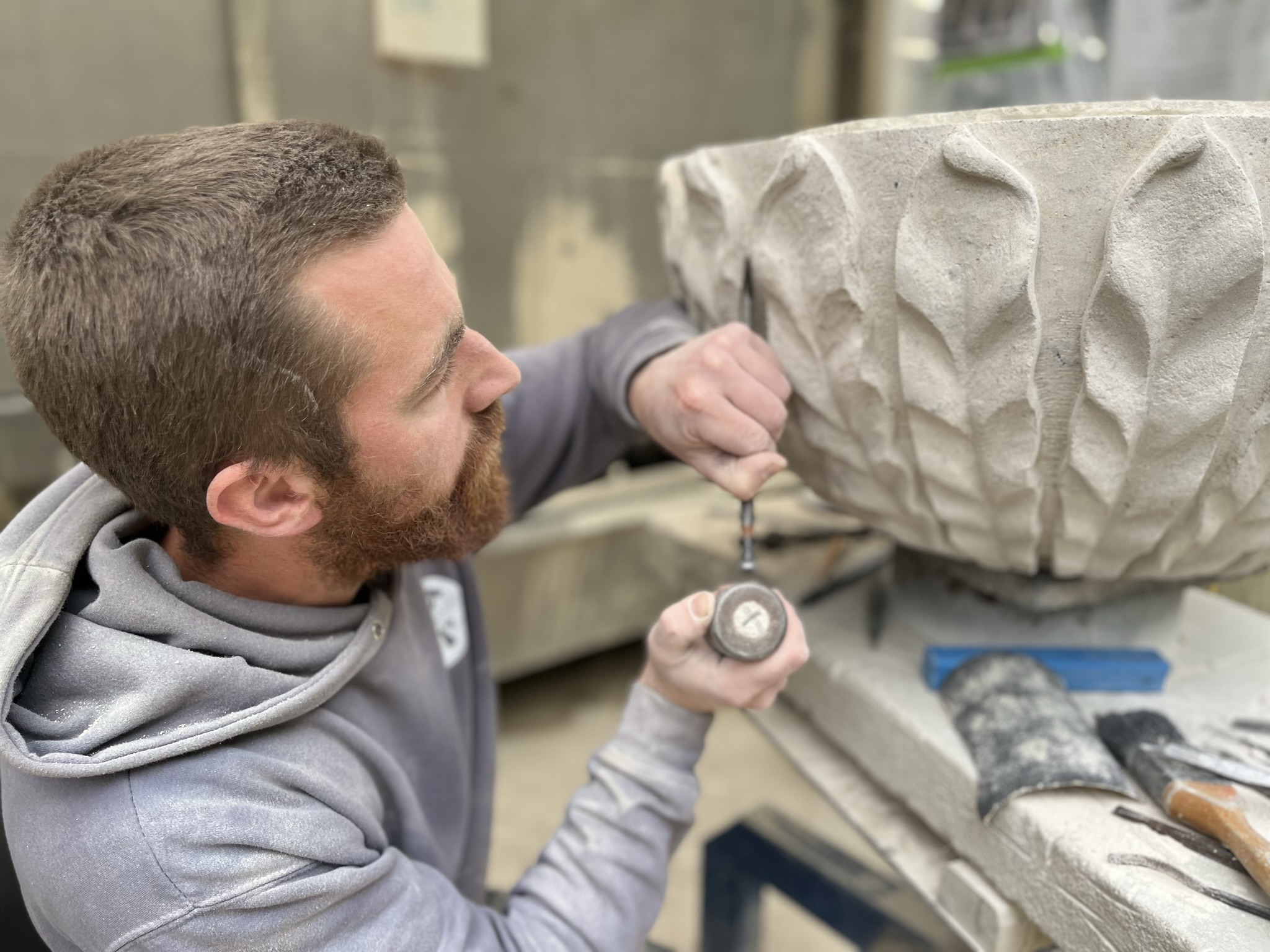
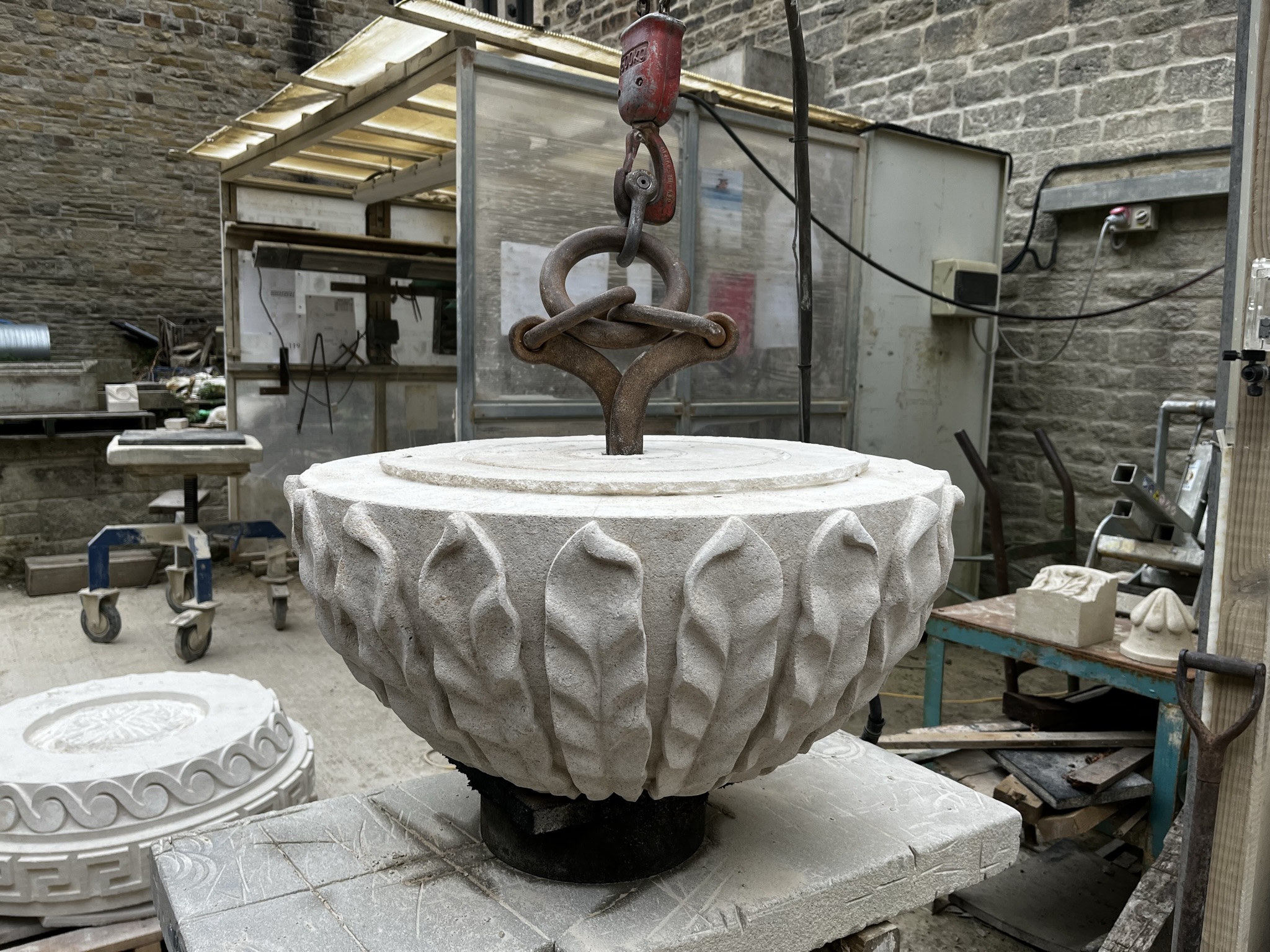
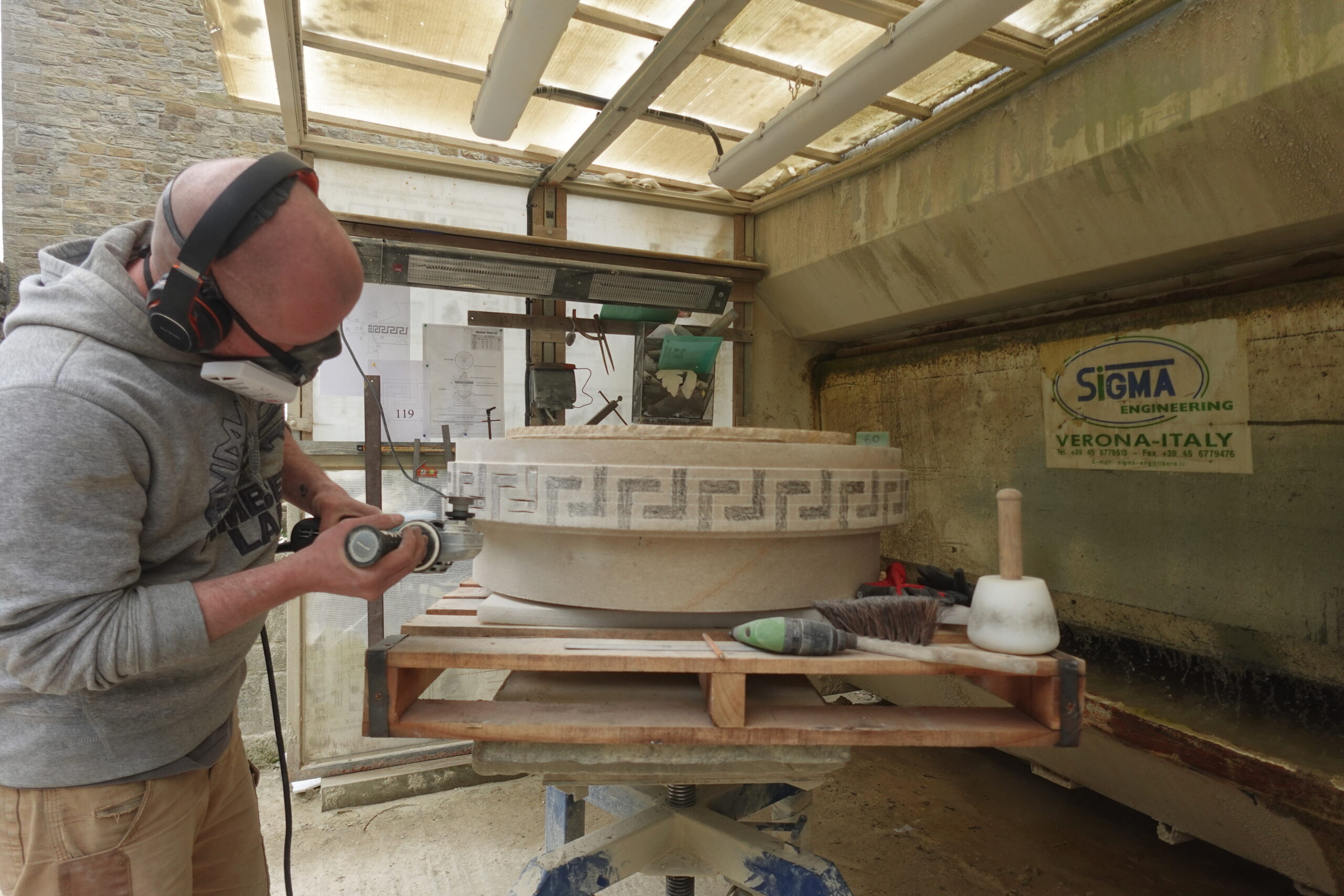
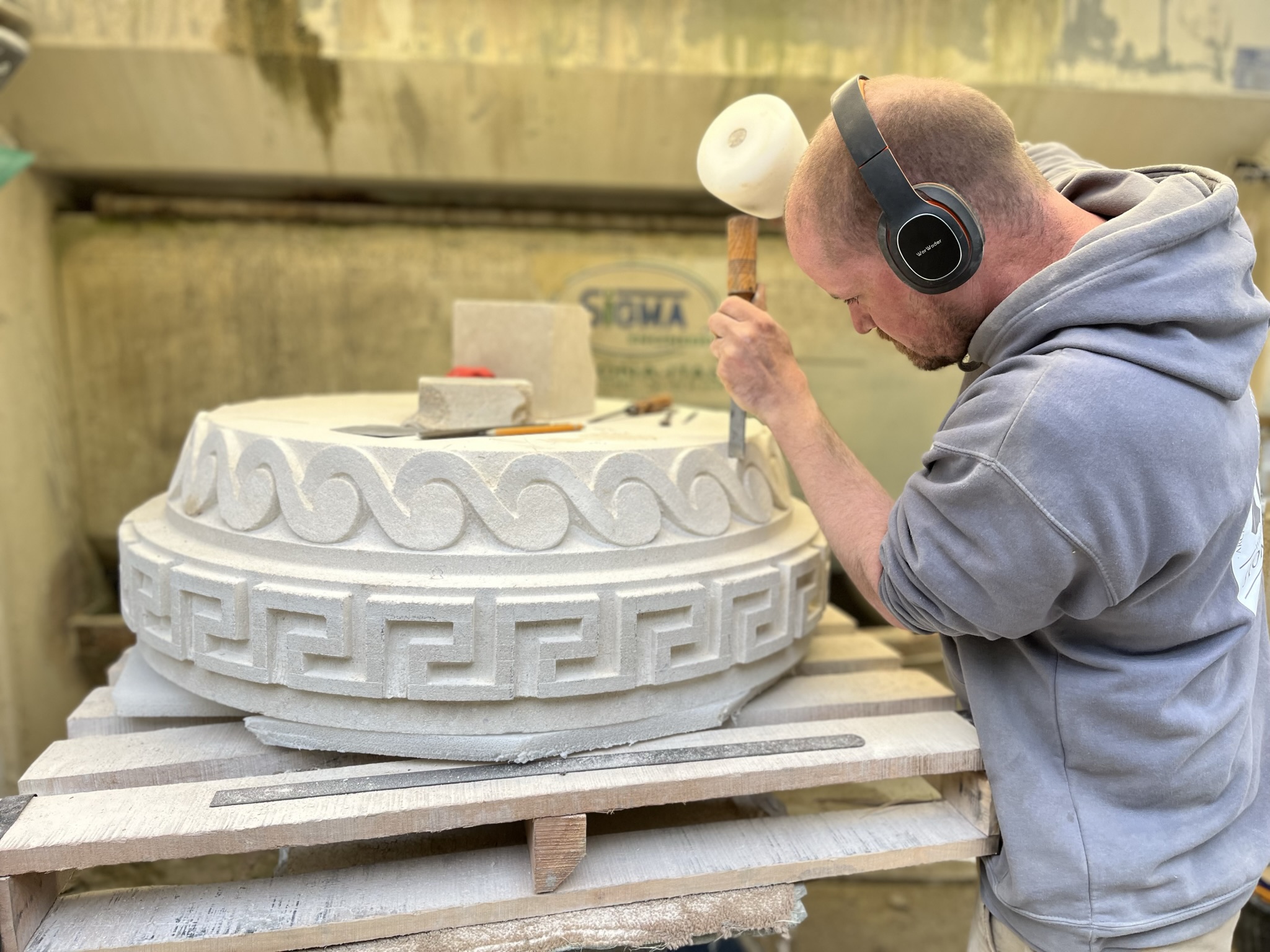
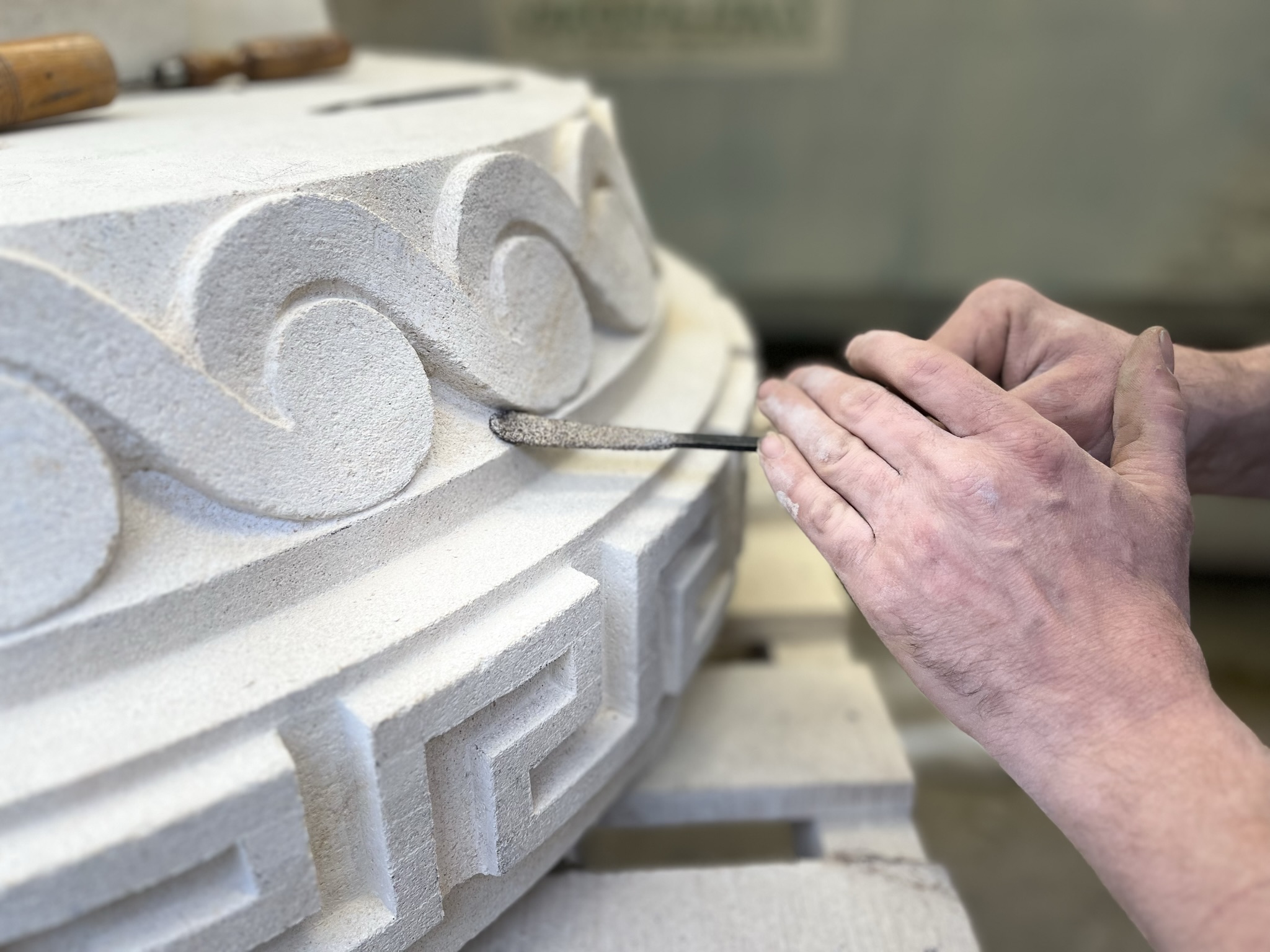
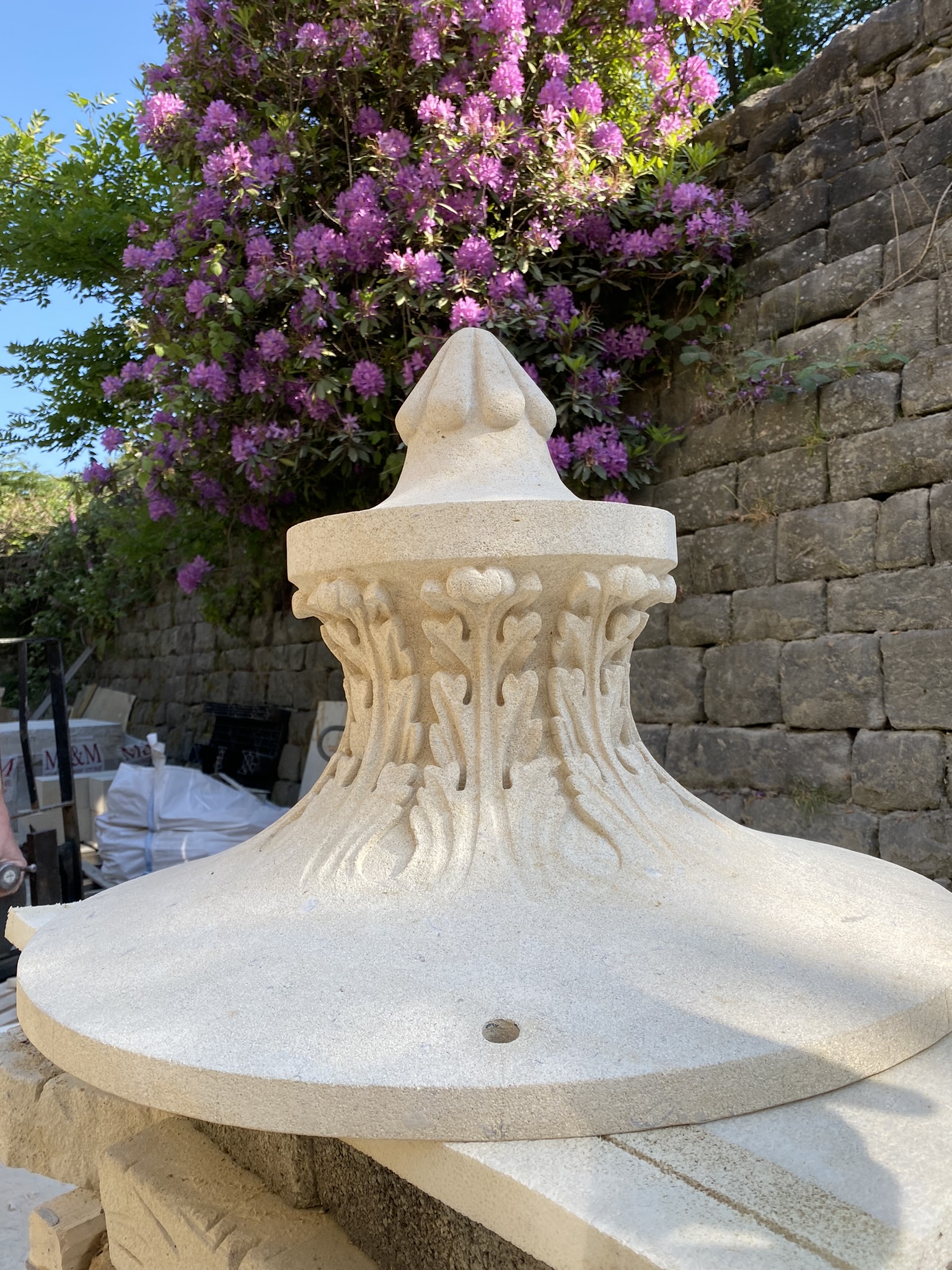
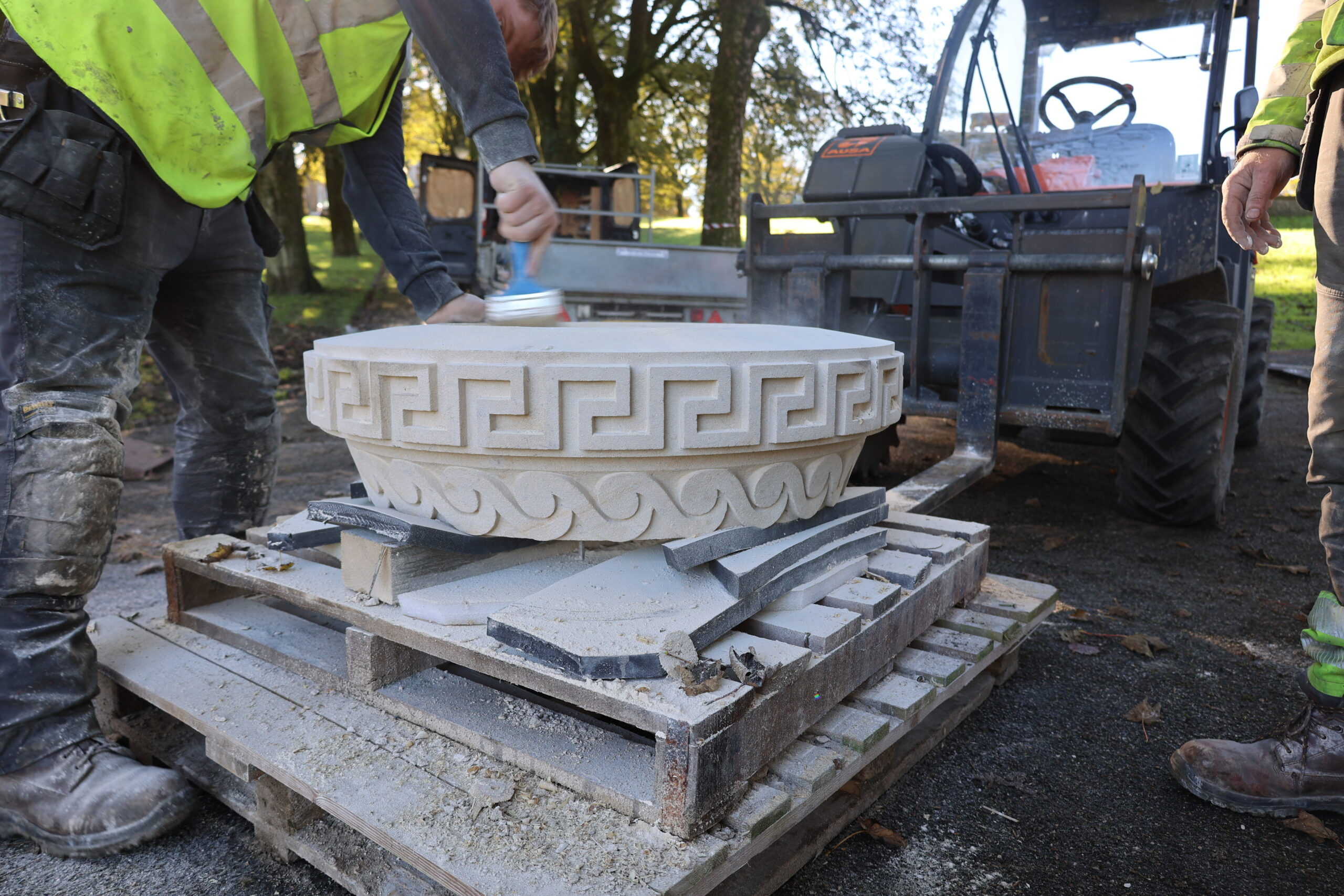
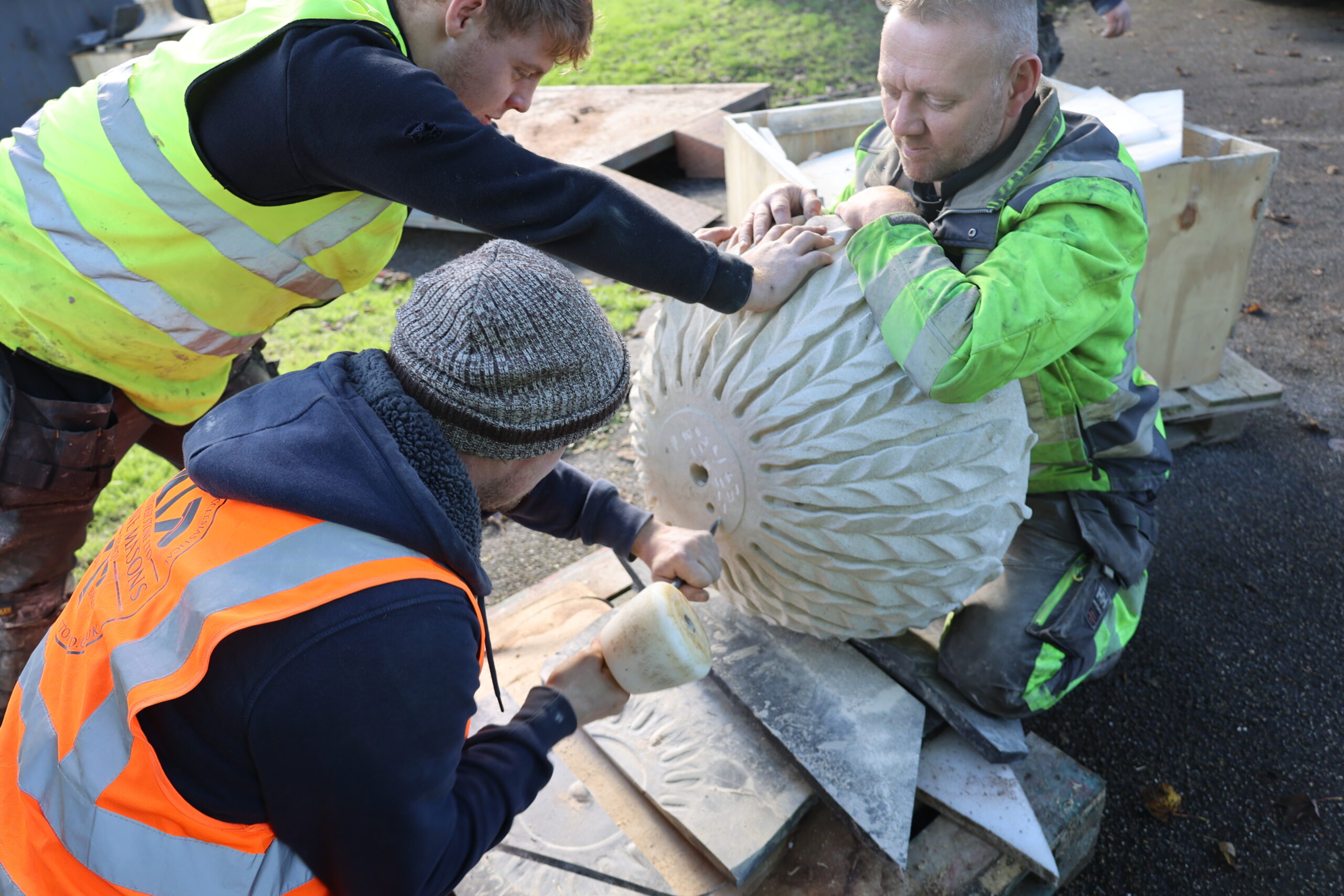
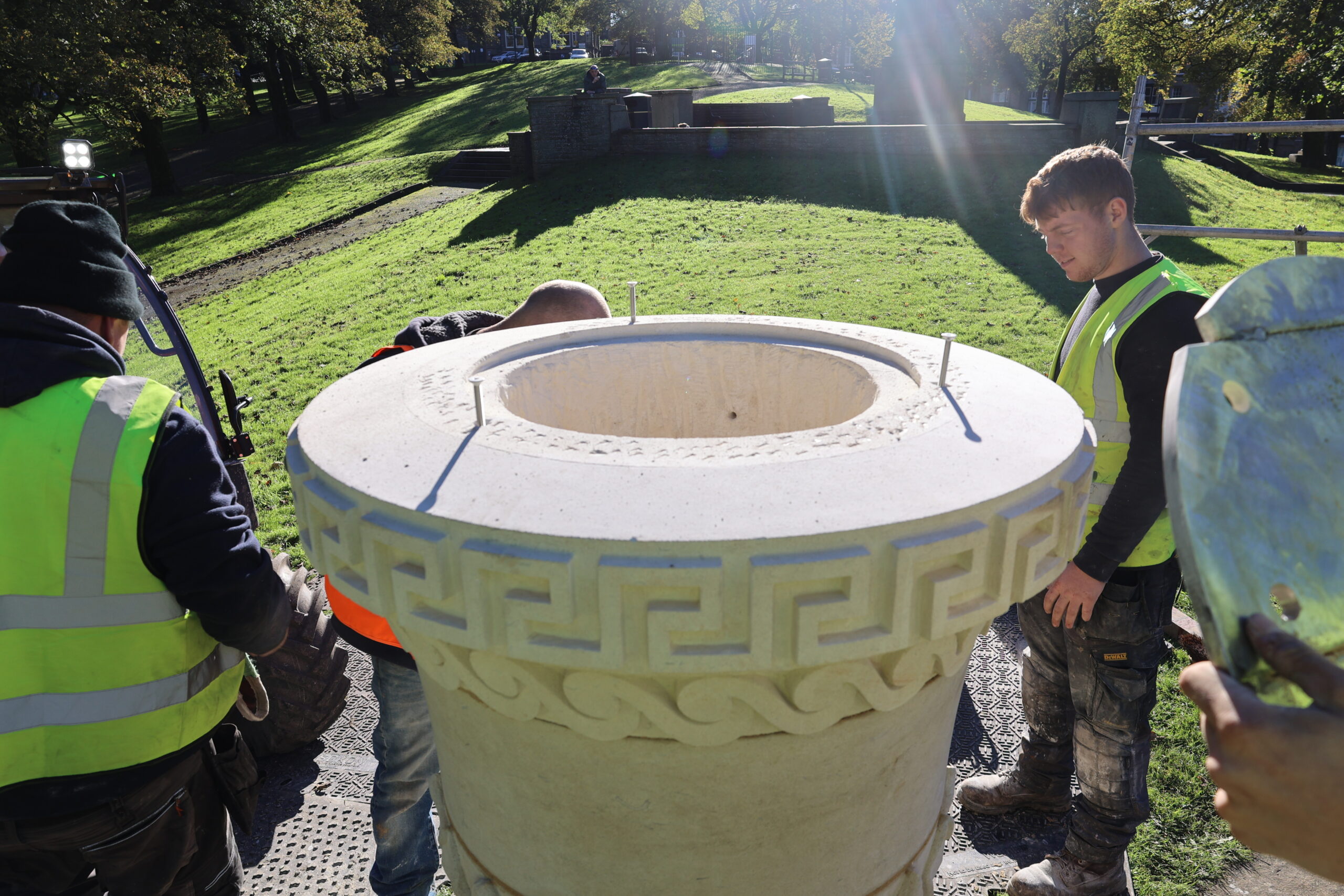
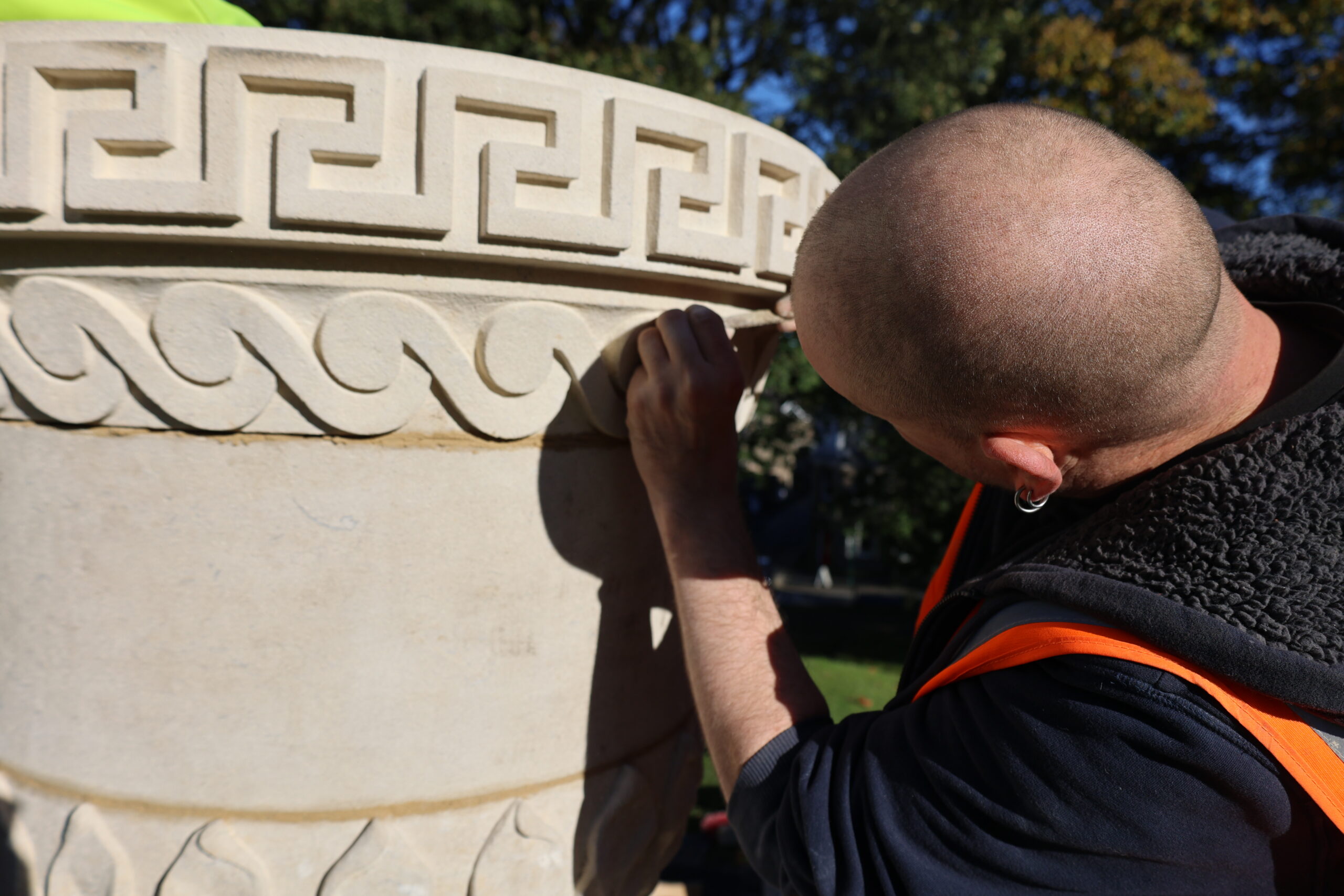
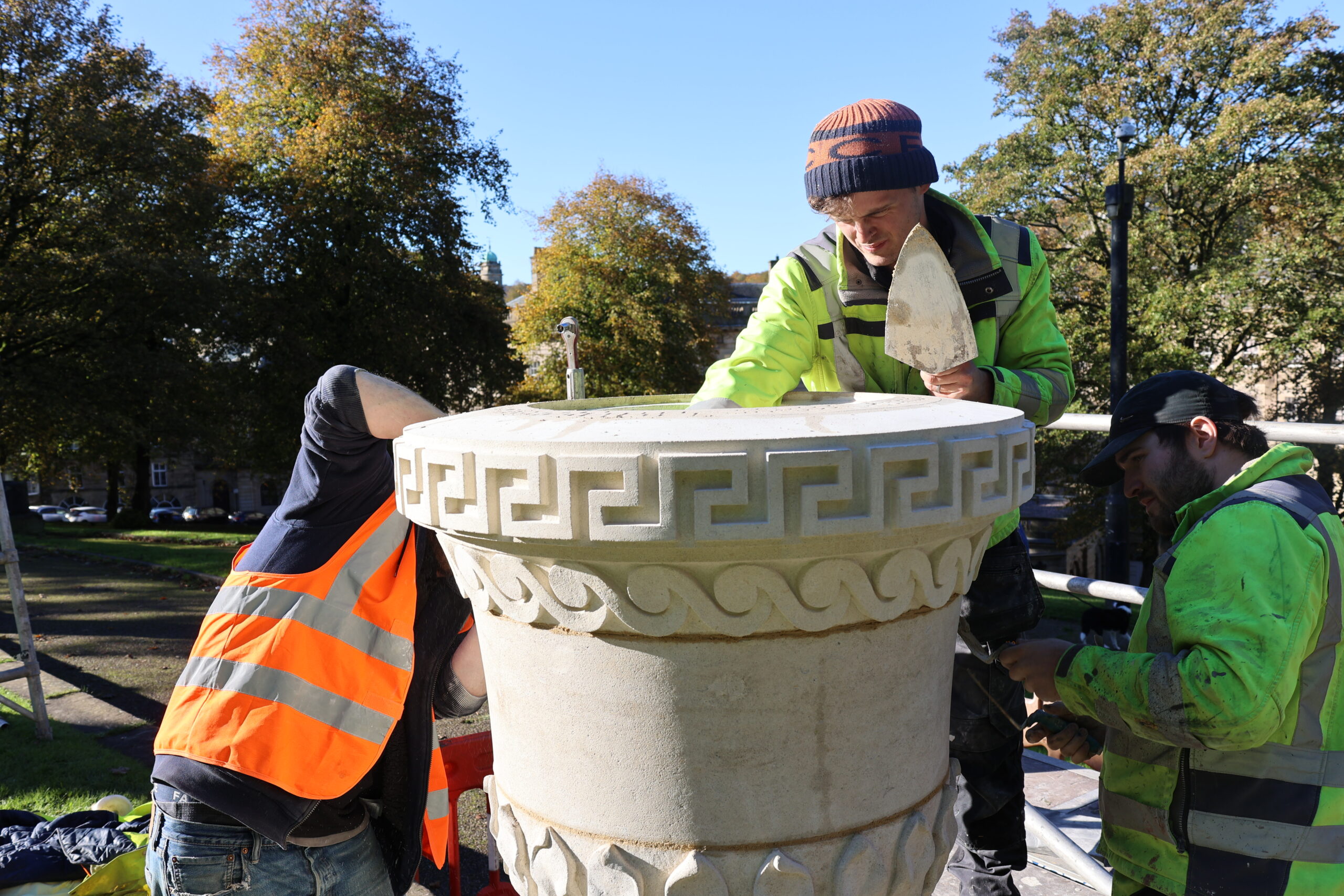
The urn was hand carved using traditional masonry techniques, with particular attention given to the highly decorative elements that define the original design. These included the acanthus leaf finial, the Greek Key moulding, Vitruvian scroll detailing around the vase rim and the deeply carved lower bowl leaf ornamentation. Sample carvings were produced and reviewed before the full carving process commenced, ensuring the finished work reflected the quality and character of the surviving historic urns.
Structural Design and Long-Term Durability
Although visually identical to its historic counterparts, the replacement urn incorporates a carefully engineered concealed fixing system designed to improve stability and resilience. Working in conjunction with structural engineers Price & Myers, a stainless-steel reinforcement system was developed comprising a central threaded stainless-steel dowel, stainless steel dowel pins, specialist fixings and concealed support plates. This system securely connects the individual stone components while remaining entirely hidden from view.
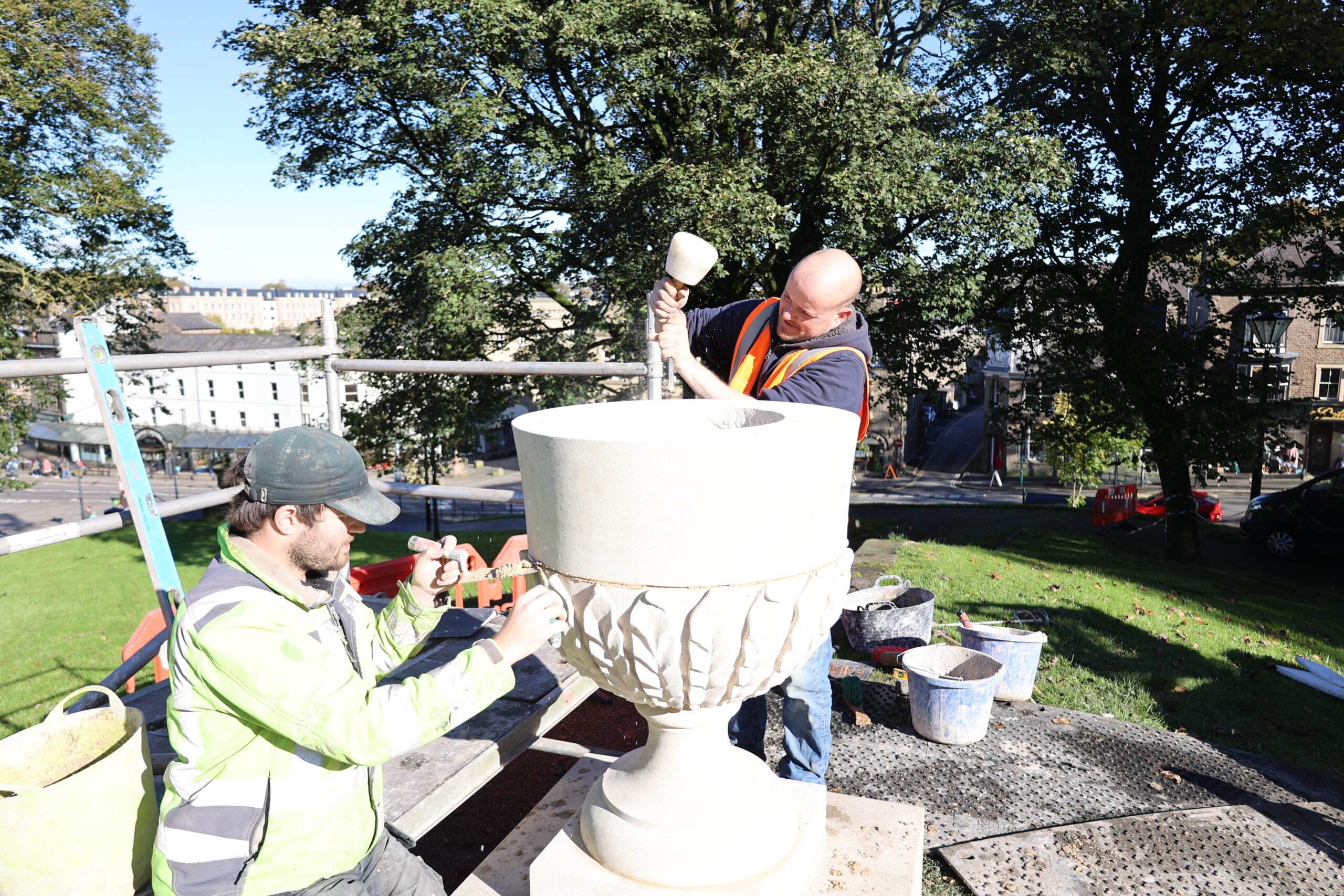
The reconstruction was assembled using traditional lime mortars specified for compatibility with Bath Stone, ensuring that the monument remains breathable and behaves sympathetically with the historic material. The use of lime-based construction methods reflects best practice in heritage conservation and contributes to the long-term preservation of the structure.
Case Hardening and Installation at The Slopes
One of the most unusual aspects of the project was the requirement for the newly carved Bath Stone urn to undergo a twelve-month case-hardening period following completion. This allowed the stone to fully stabilise and develop its natural durability before installation within the exposed environment of The Slopes. During this period, the completed urn was carefully protected and stored in controlled conditions.
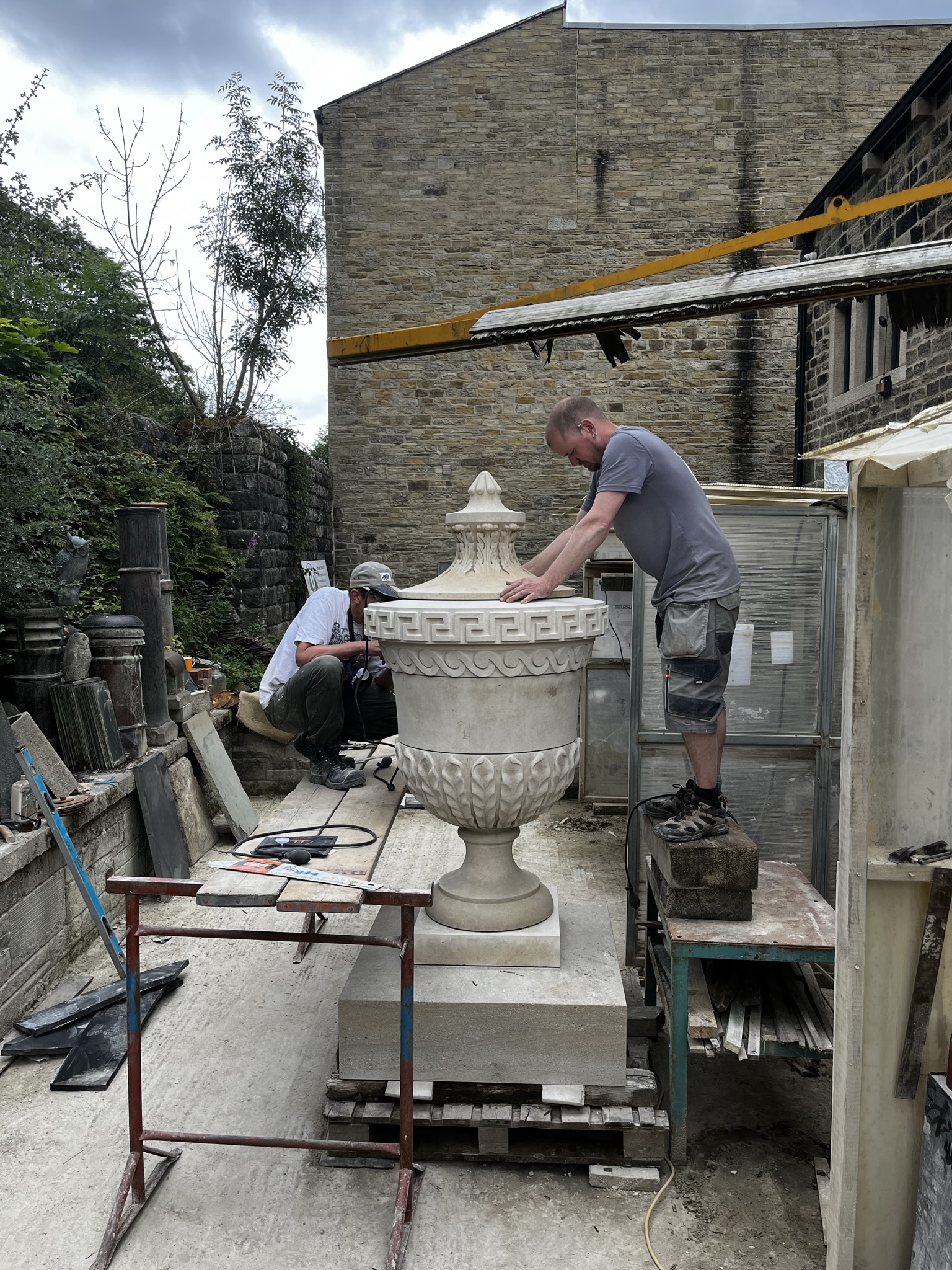
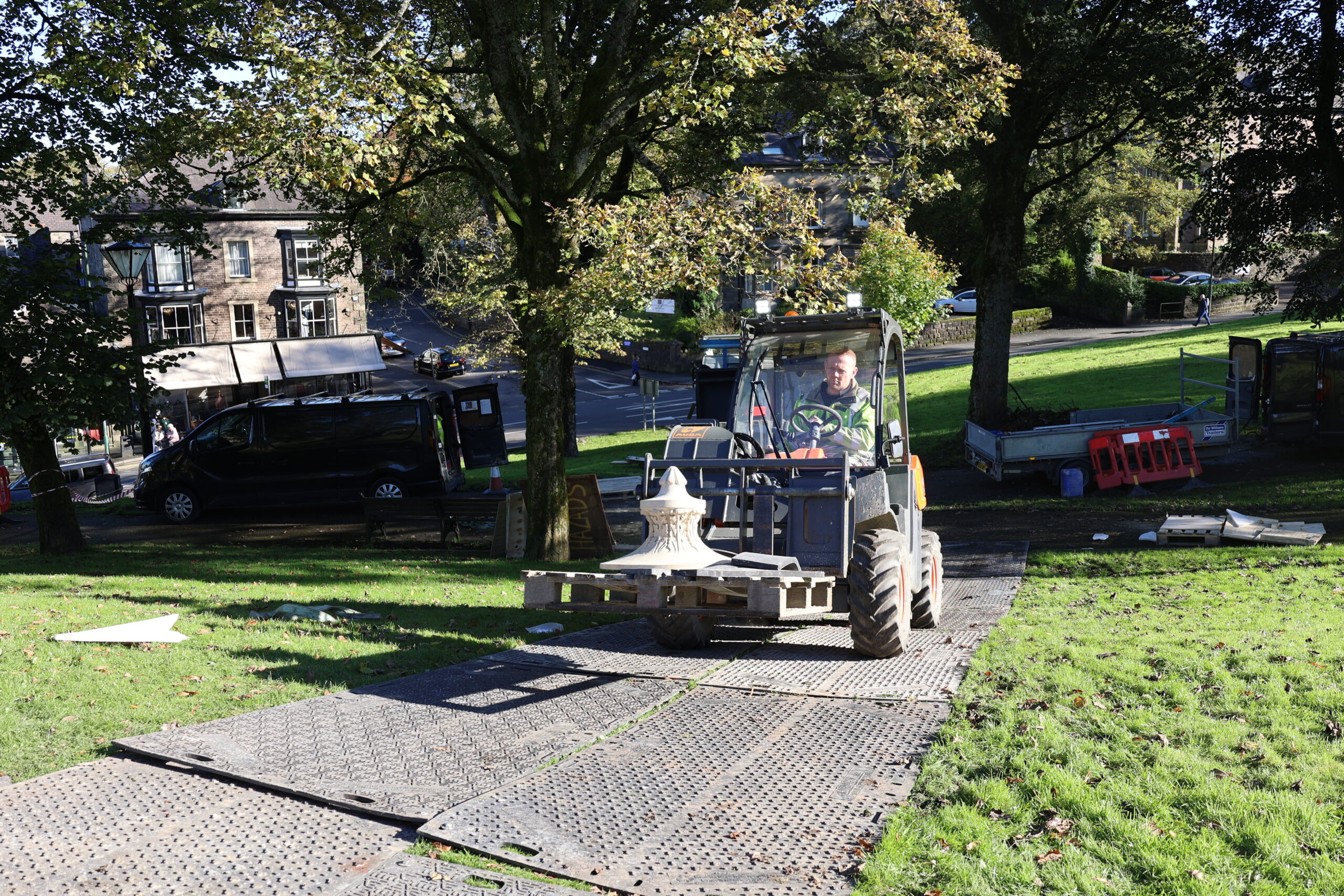
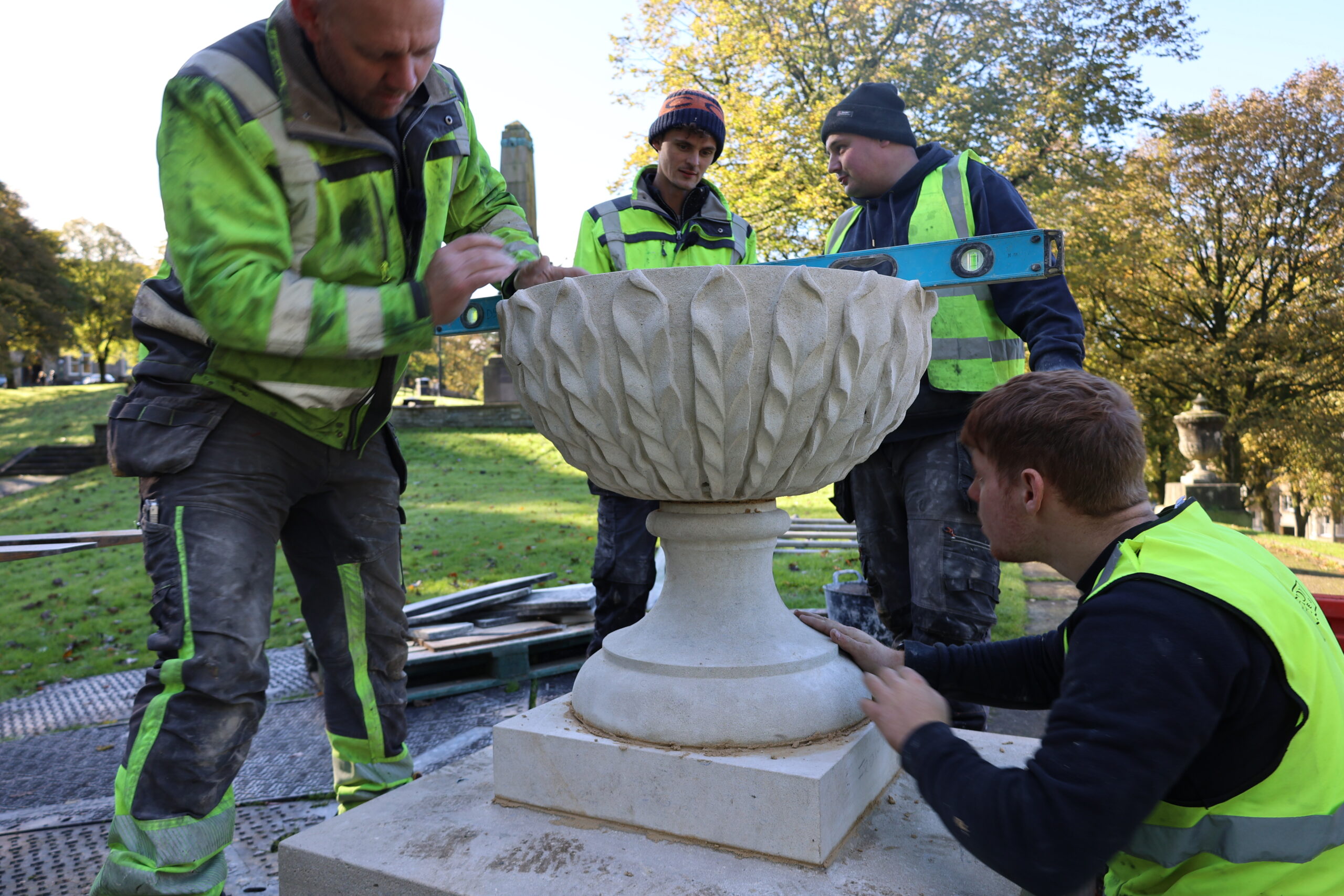
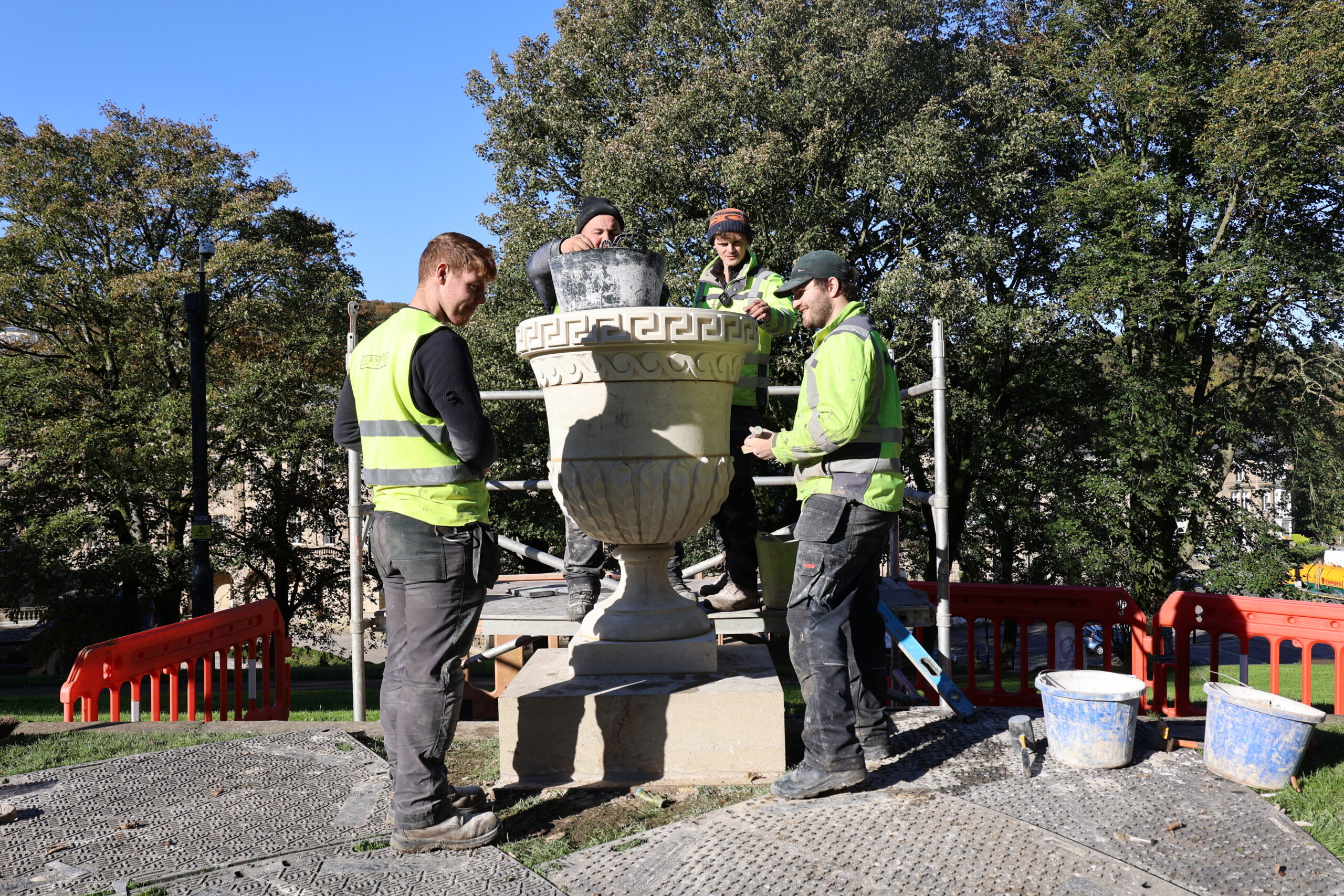
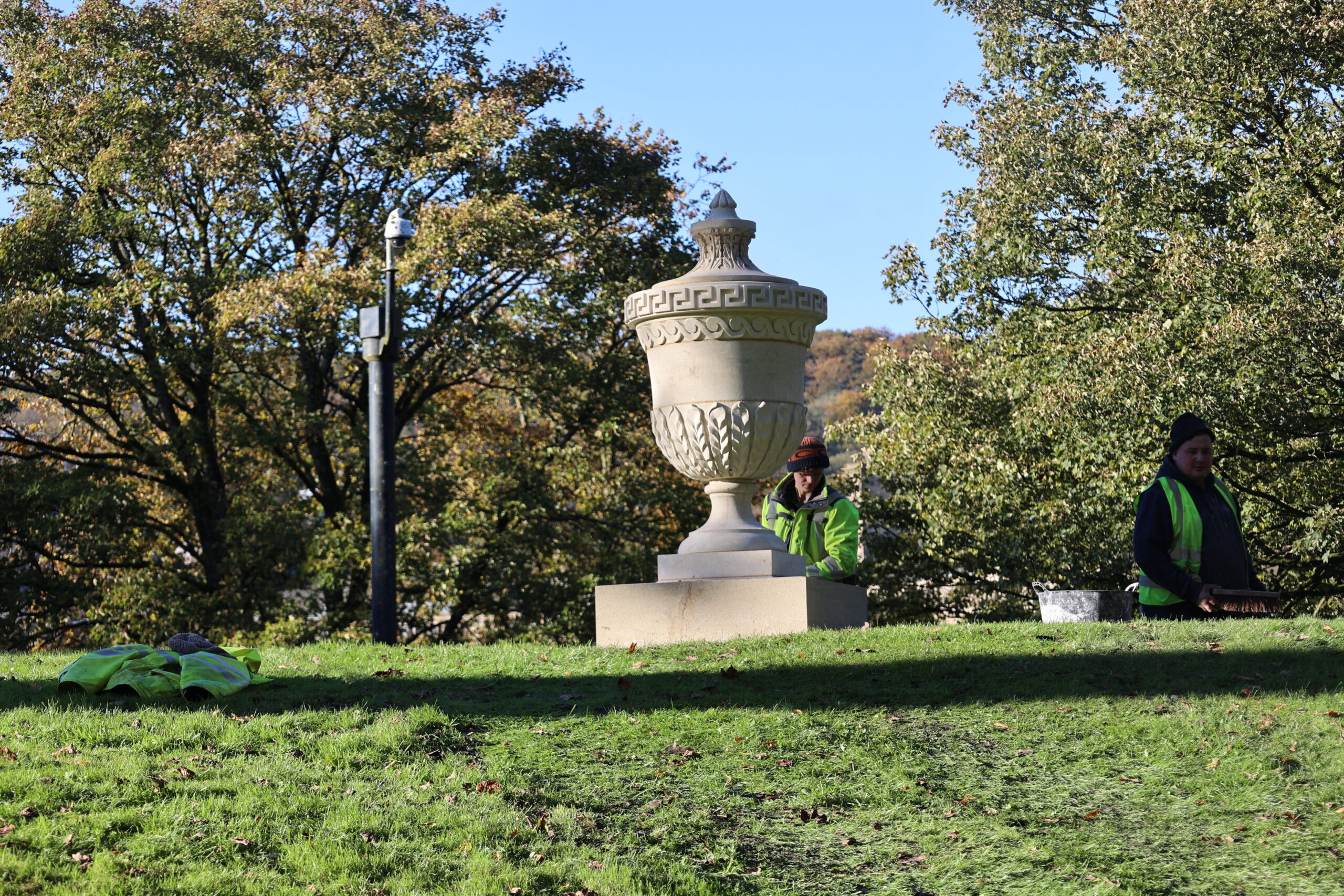
Following the case-hardening period, UK Restoration Services coordinated the transport, lifting and installation of the completed urn back to its original location within The Slopes. Given the size, weight and fragility of the individual stone components, the installation required meticulous planning, specialist lifting equipment and close coordination between the project team and conservation specialists. Installation was undertaken within a publicly accessible park environment, requiring careful management of public safety and site logistics throughout the works.
Restoring a Landmark Feature of Historic Buxton
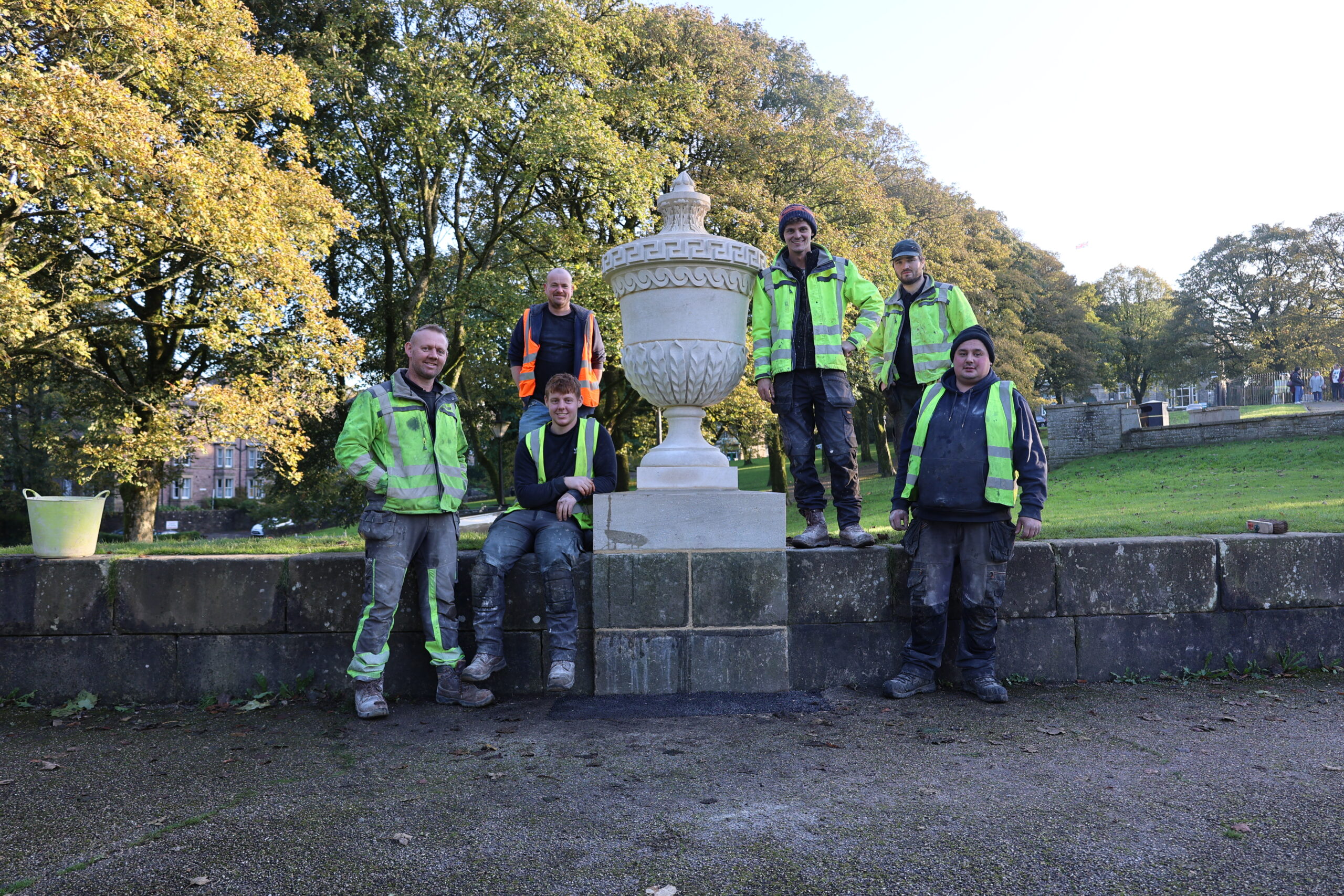
The successful completion of Urn No. 12 represents the restoration of an important element of Buxton’s historic townscape and landscape heritage. By combining traditional craftsmanship, specialist conservation expertise and modern structural engineering, the project has reinstated a missing feature that contributes significantly to the character of The Slopes and the wider setting of The Crescent.
As Principal Contractor, UK Restoration Services managed the conservation works from initial surveys through to final installation, ensuring the highest standards of workmanship throughout. The project demonstrates our expertise in heritage stone masonry, architectural stone carving, listed structure conservation and the recreation of historically significant features within sensitive heritage environments.
The reinstatement of Urn No. 12 completes the historic sequence of ornamental urns along The Slopes and helps preserve one of Derbyshire’s most important historic landscapes for future generations to enjoy. As High Peak Borough Council noted upon completion, the replacement urn has been returned to its rightful place, restoring an important part of Buxton’s heritage and ensuring the continued integrity of this remarkable public space.