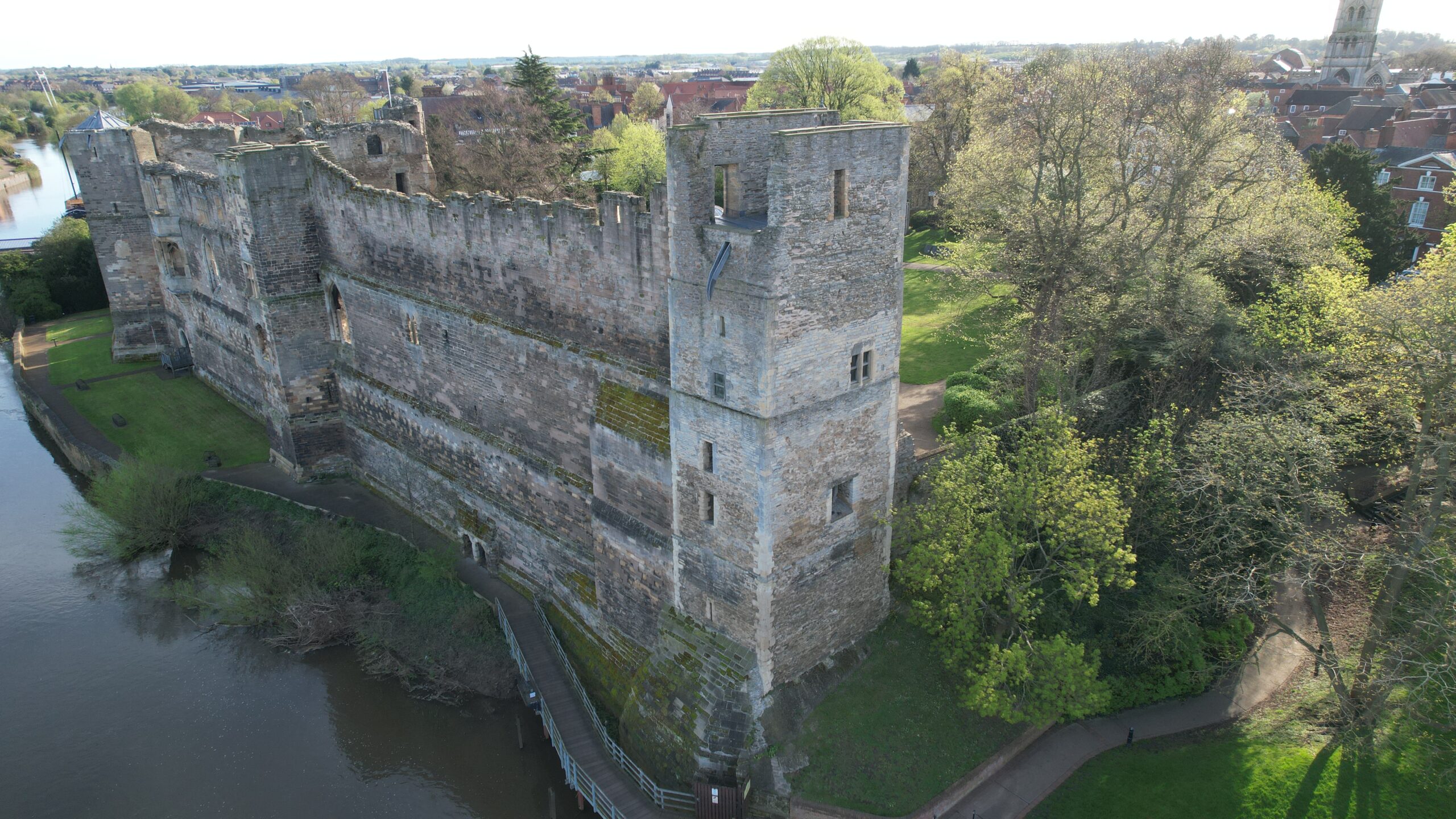
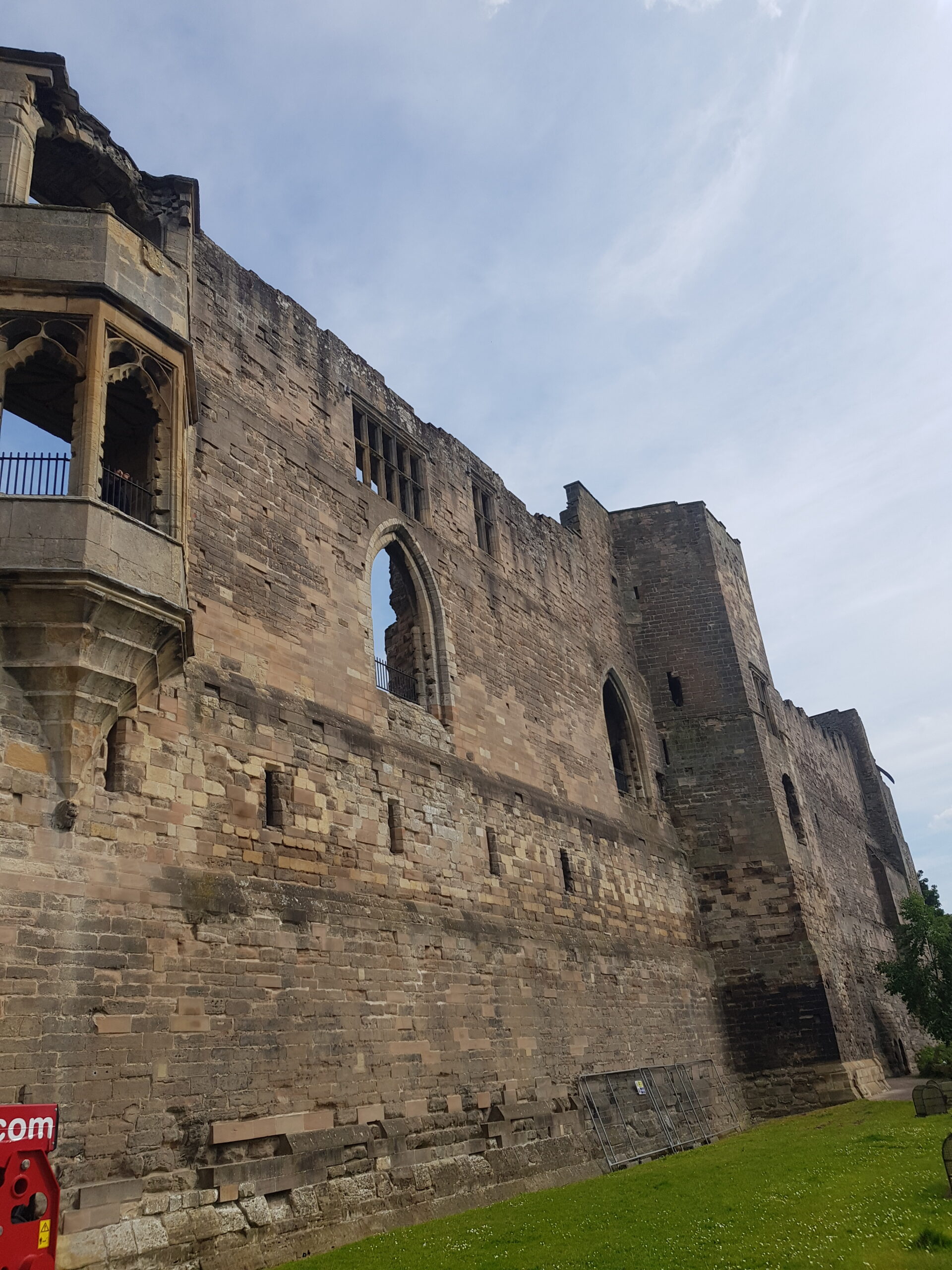
Newark Castle is one of the Midlands’ most significant historic landmarks. Founded in the mid-12th century by Bishop Alexander “the Magnificent” of Lincoln, the castle was constructed with permission from King Henry I and remains one of only around 150 surviving episcopal castles in England. Today, the site is recognised as both a Grade I listed building and a Scheduled Ancient Monument, standing proudly on the banks of the River Trent within the Newark Conservation Area.
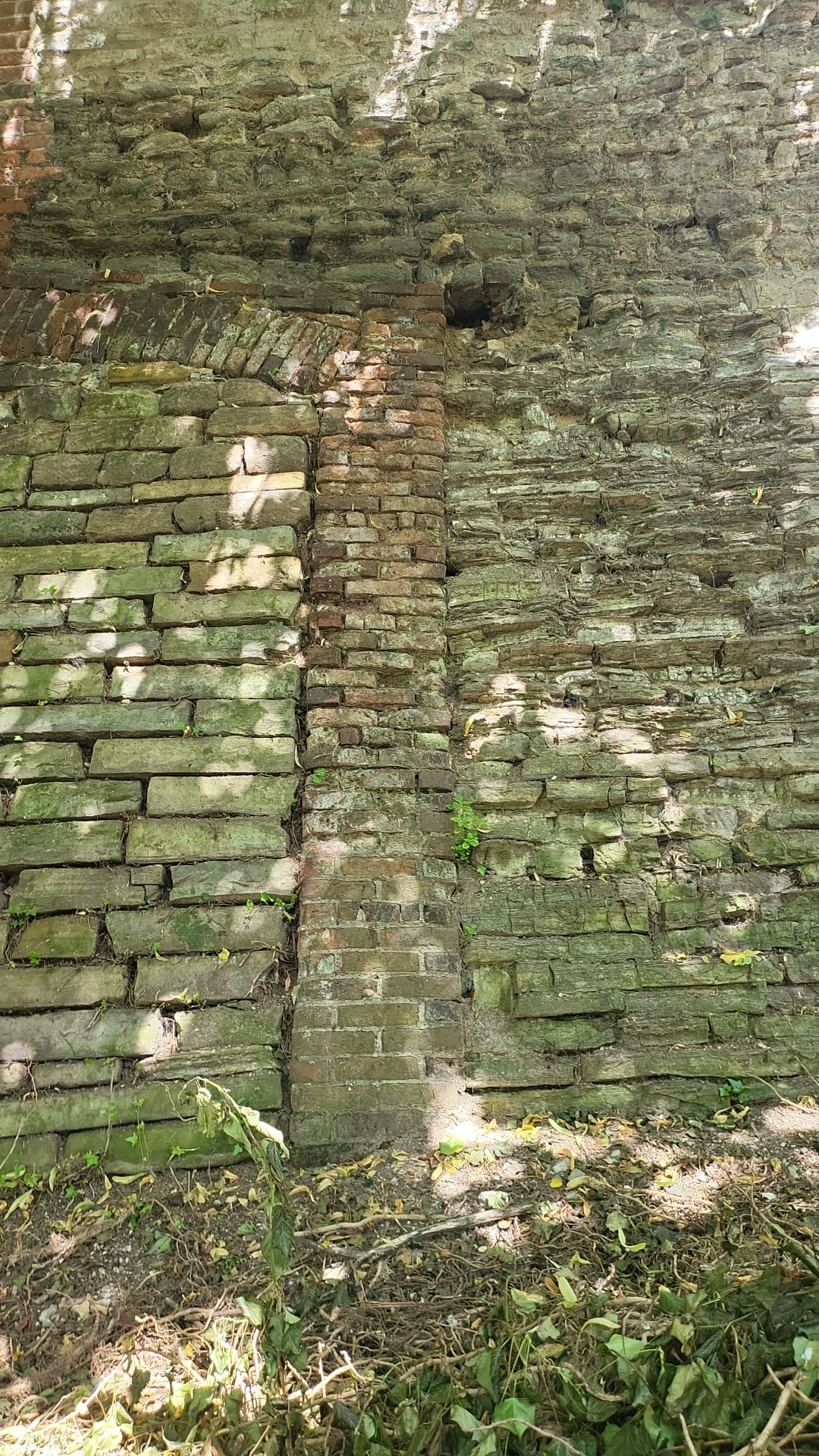
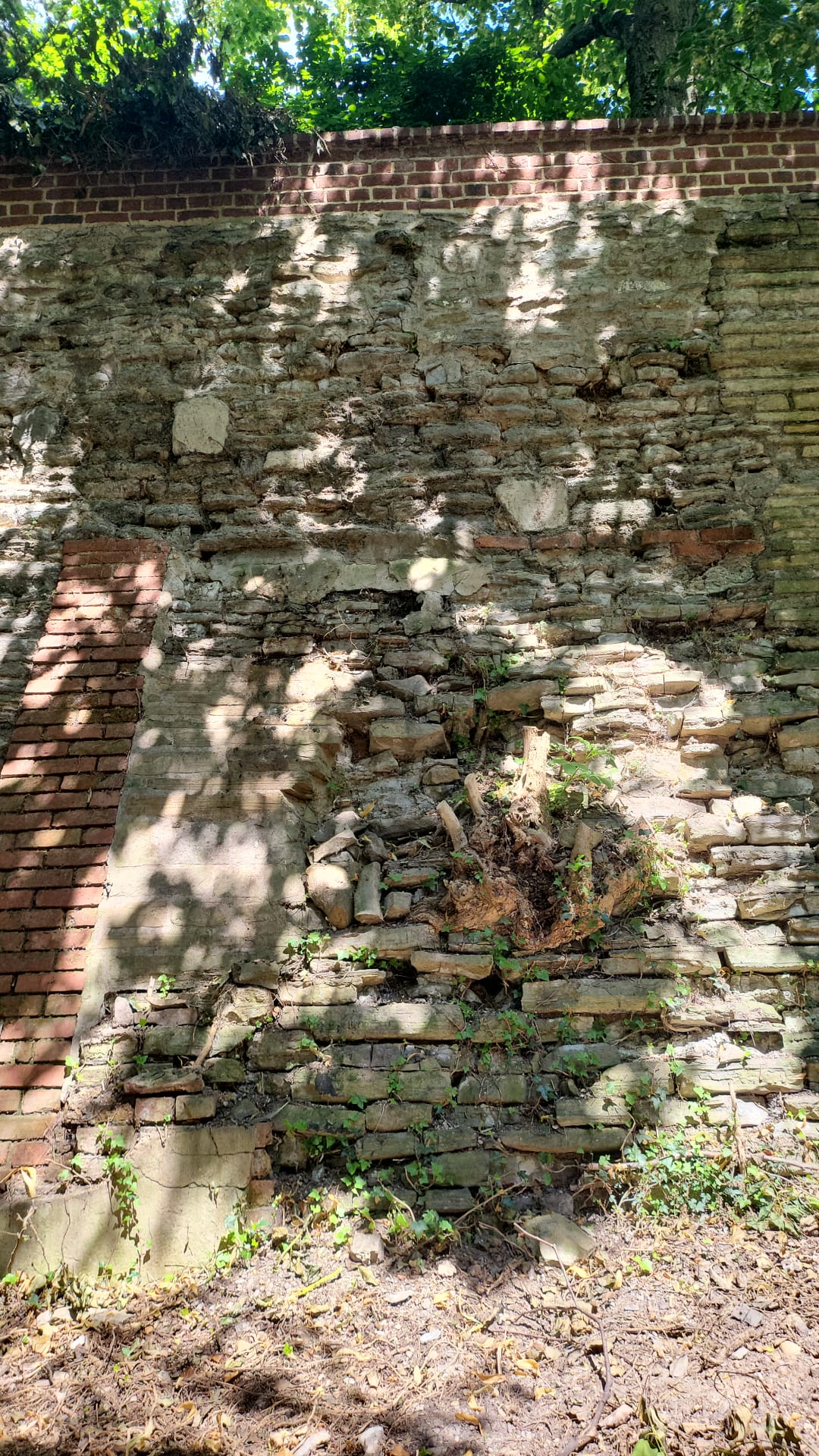
Over the last 150 years, archaeological investigations have continued to reveal the castle’s rich history. Recent excavations uncovered the remains of a red-brick structure believed to date from the late 18th or early 19th century, thought to have served as stables and a coal wharf. Among the discoveries were heat-damaged bricks and part of a horse skull, providing further insight into the site’s evolution through the centuries.
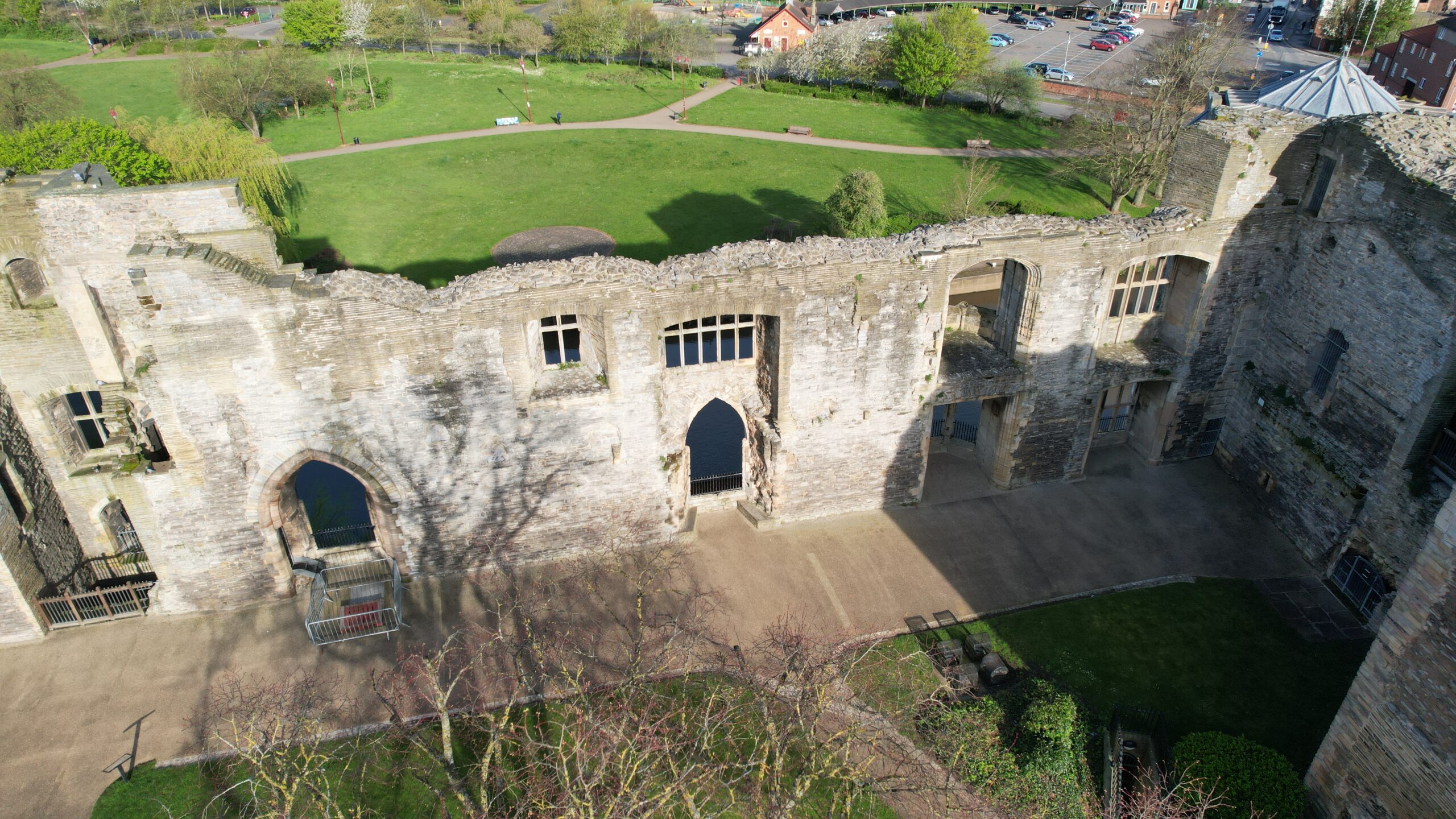
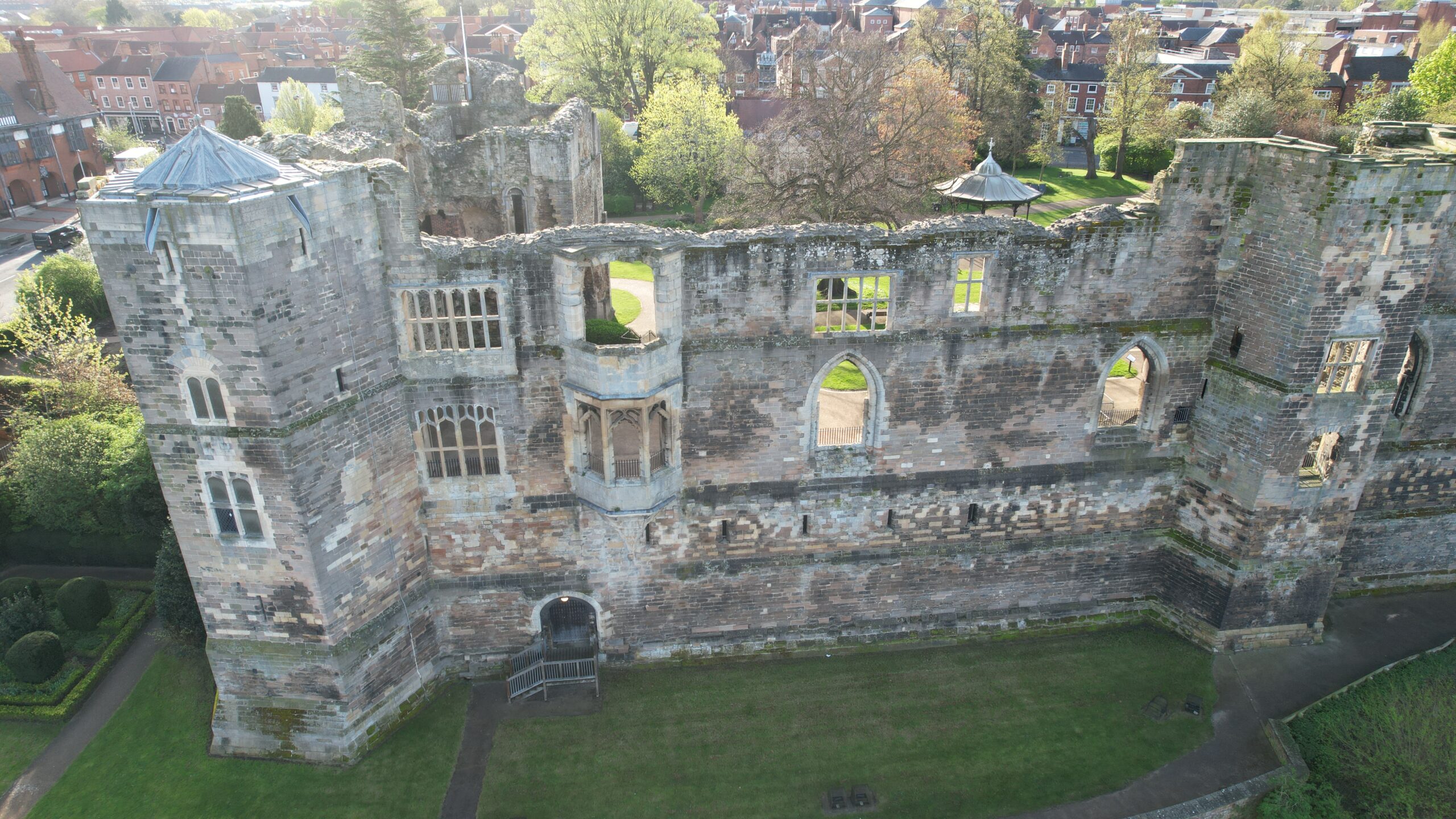
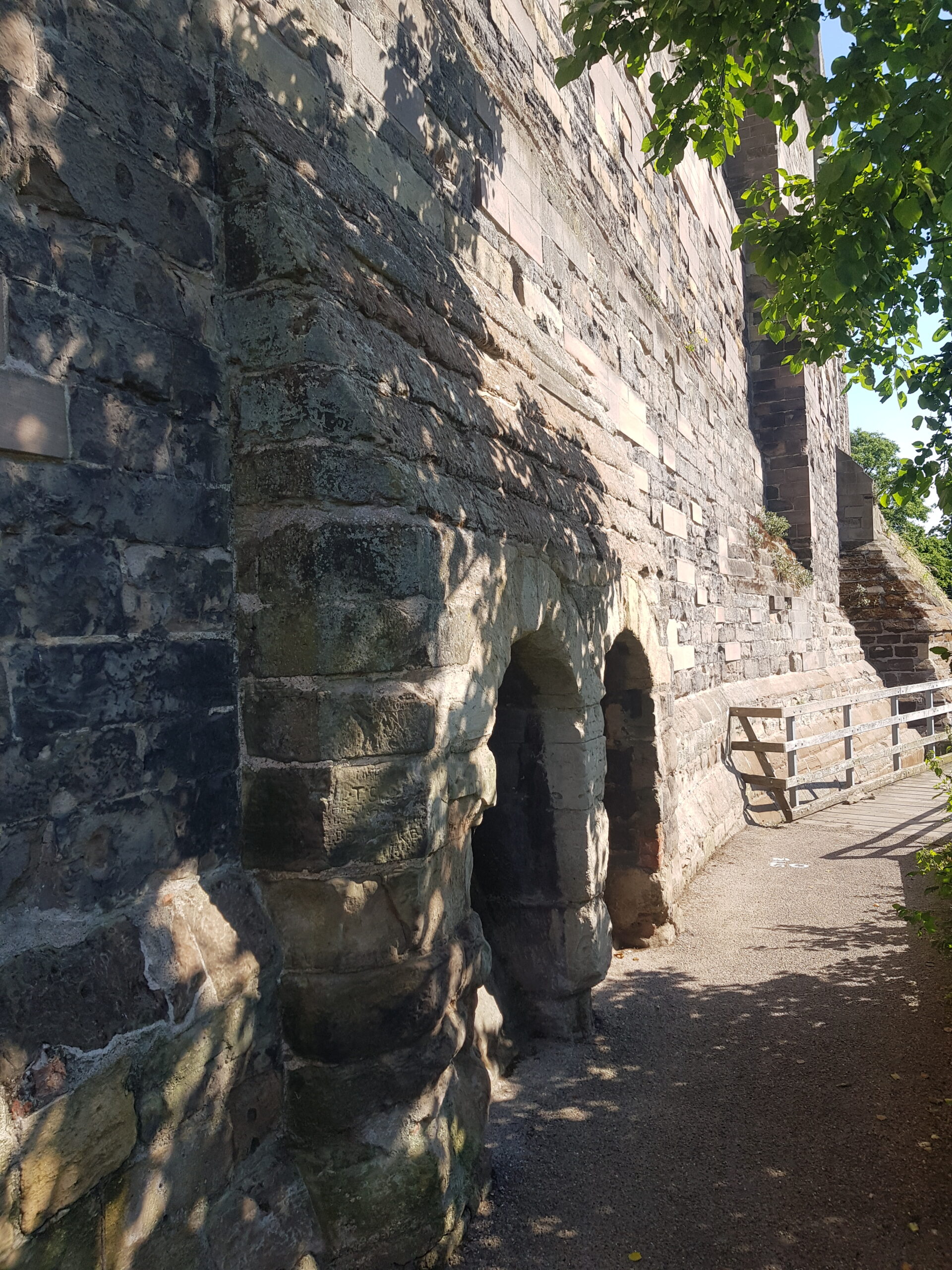
Partially destroyed in 1646 at the end of the English Civil War, Newark Castle has remained roofless ever since. Despite centuries of weathering, many remarkable features survive, including the Mountney Room, Lady Elizabeth’s bedroom, the gatehouse, dungeon, undercroft and the iconic bandstand within Newark Castle Gardens. The undercroft, once used for storing food and munitions, is now a unique venue for weddings and community events beneath dramatic medieval stone arches.
Given the castle’s immense historical significance, a carefully considered conservation-led approach was essential throughout the restoration programme. UK Restoration Services was proud to be appointed by Newark & Sherwood District Council to undertake vital preservation works to this nationally important monument. The project commenced in May 2024 and focused on stabilising and conserving the curtain walls, towers and associated historic masonry.
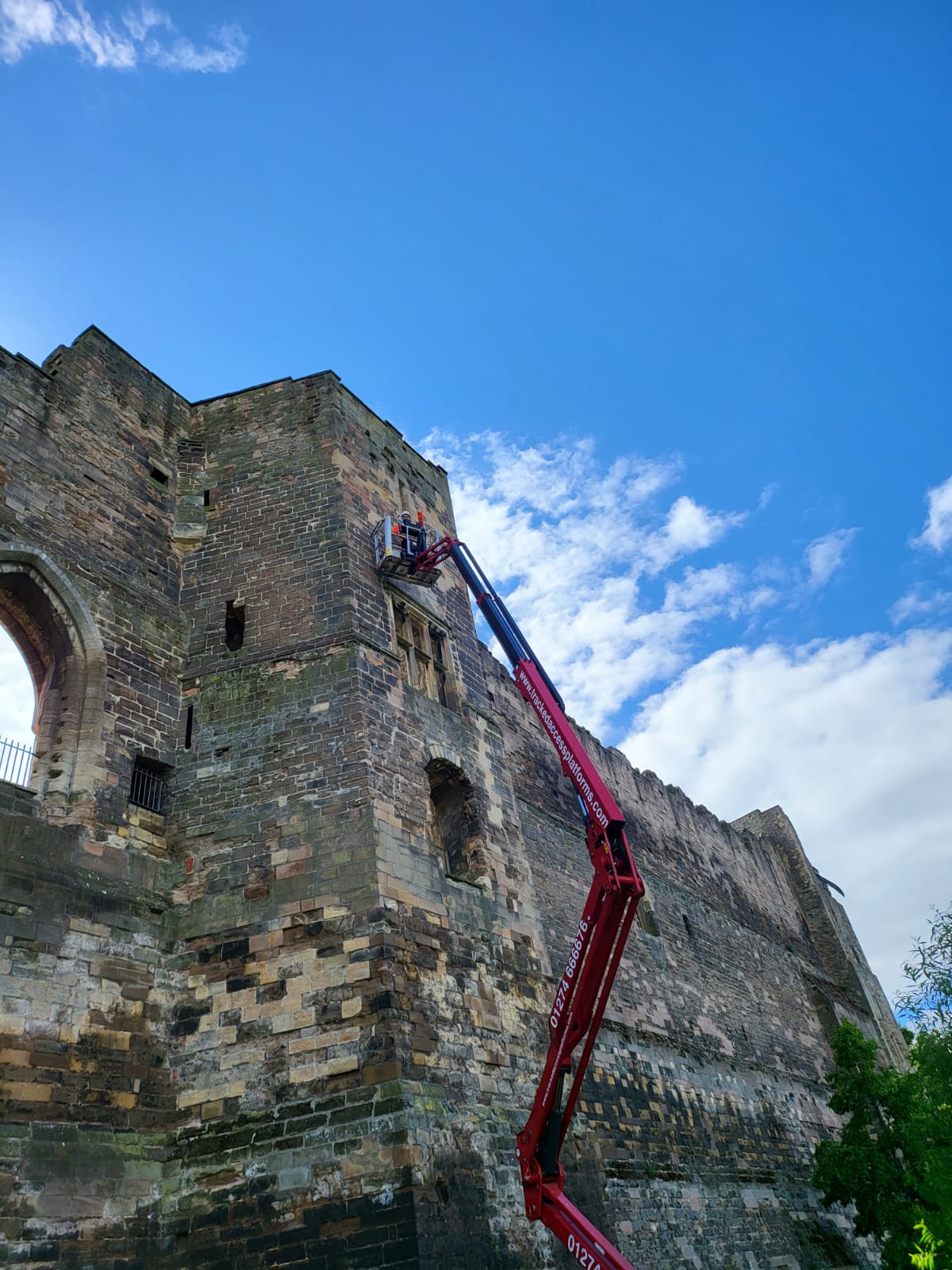
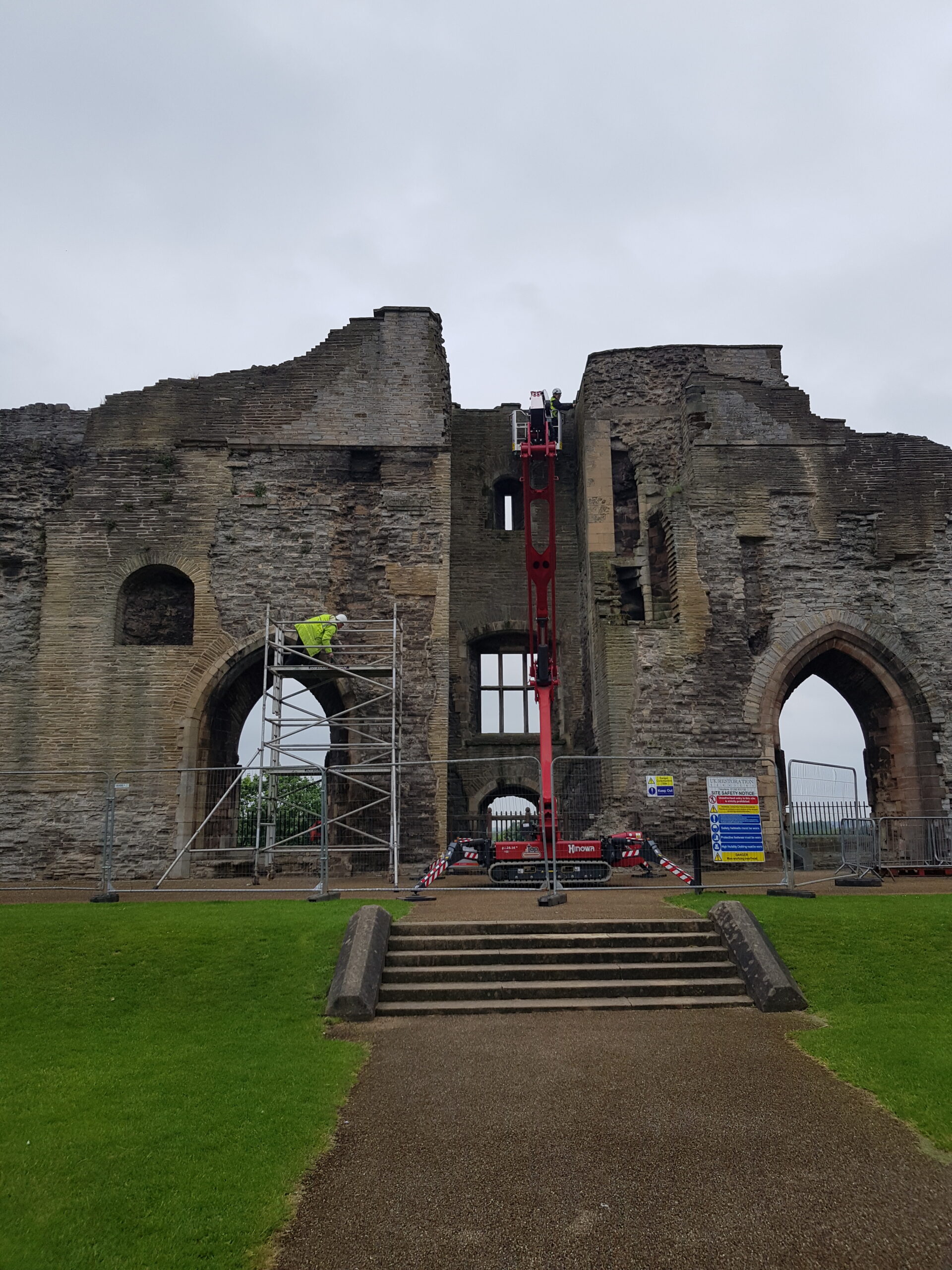
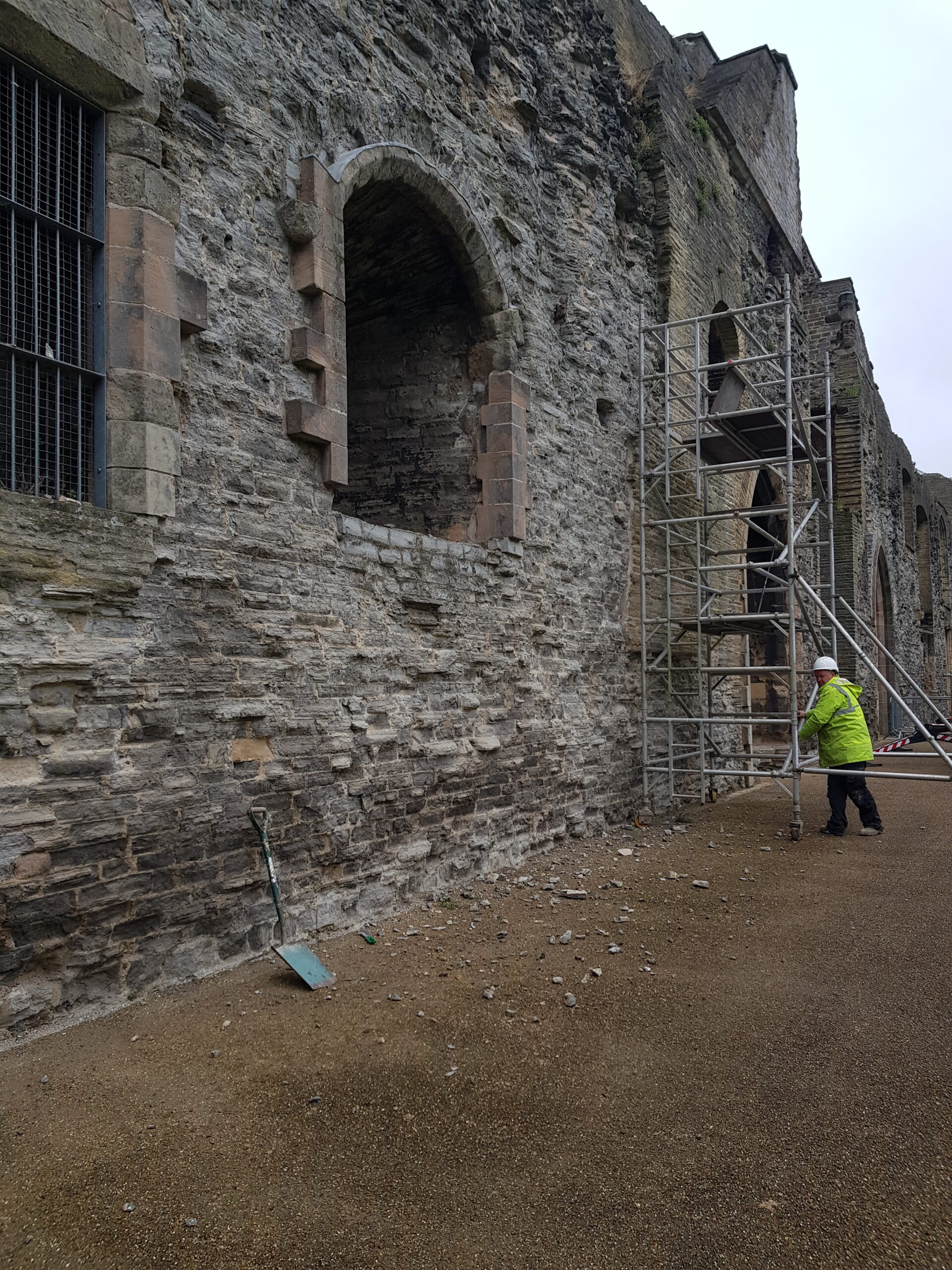
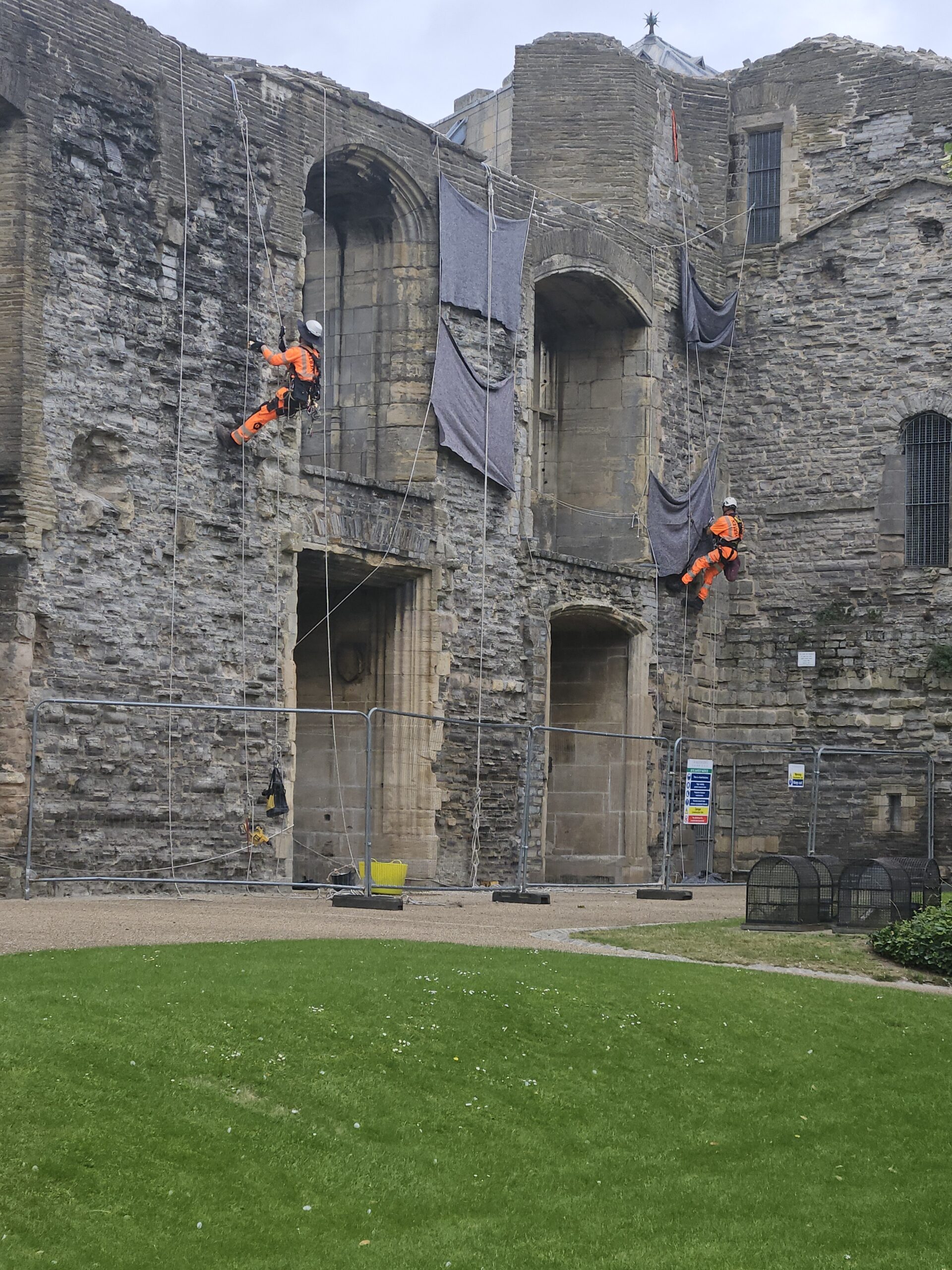
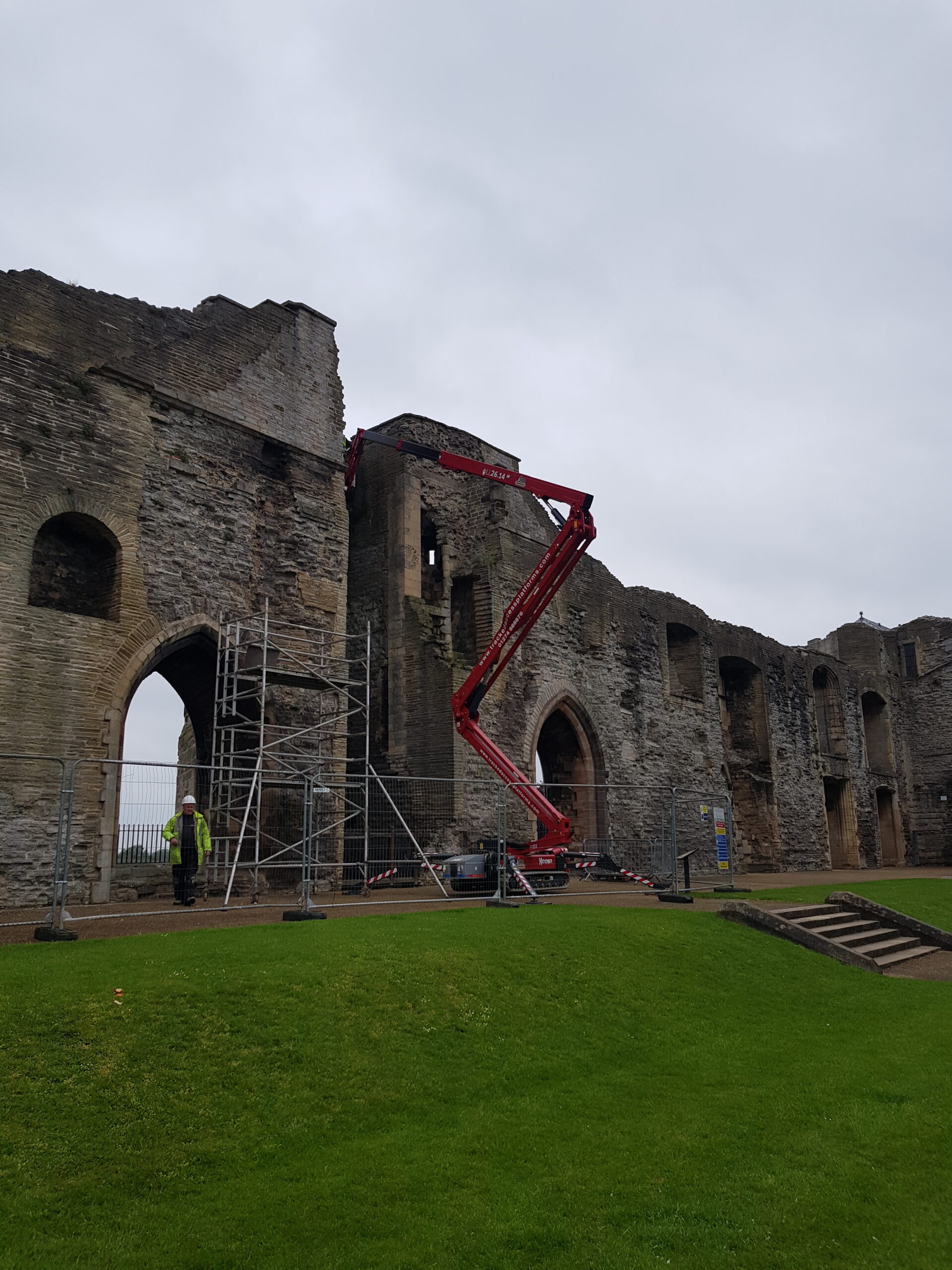
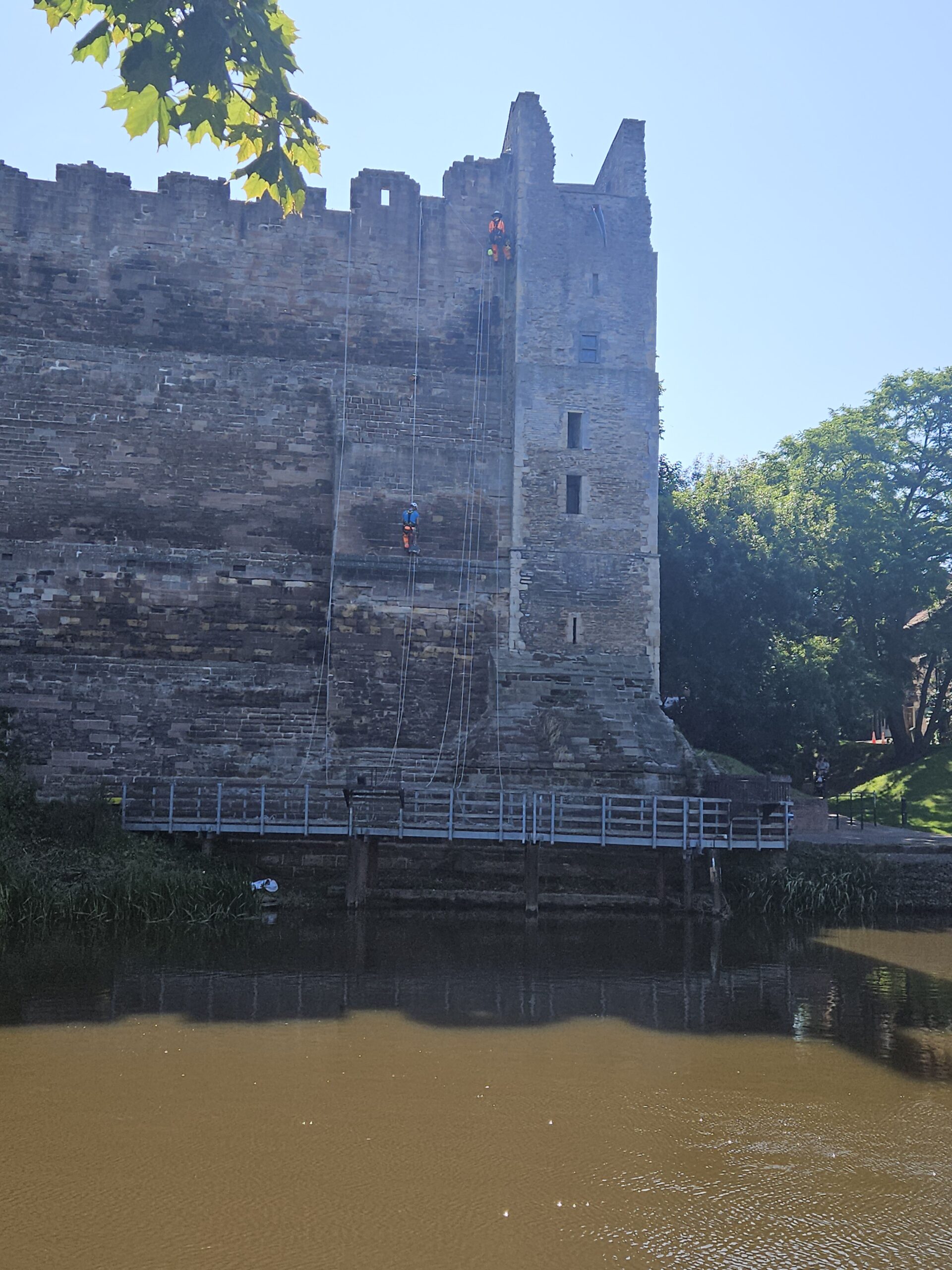
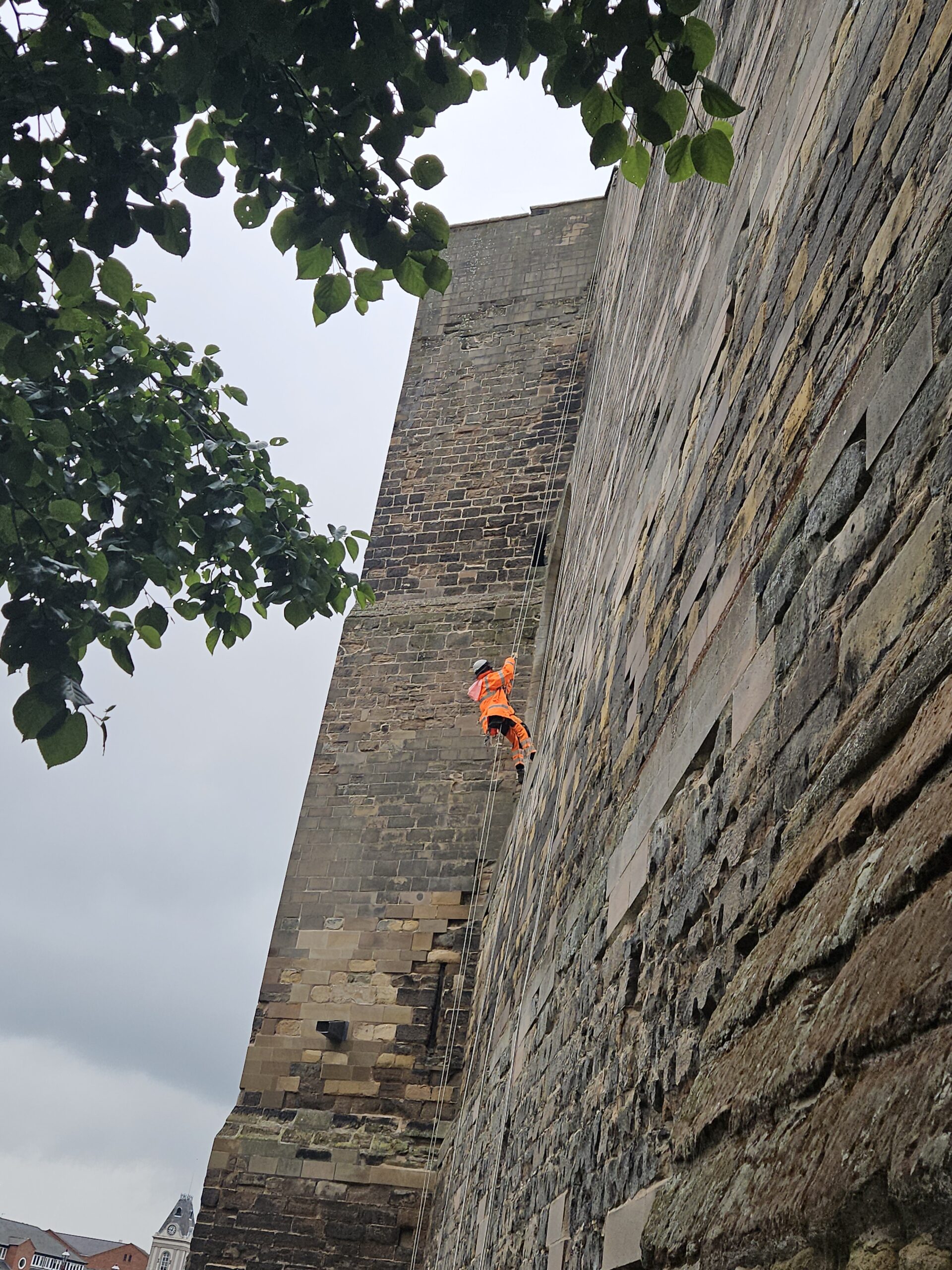
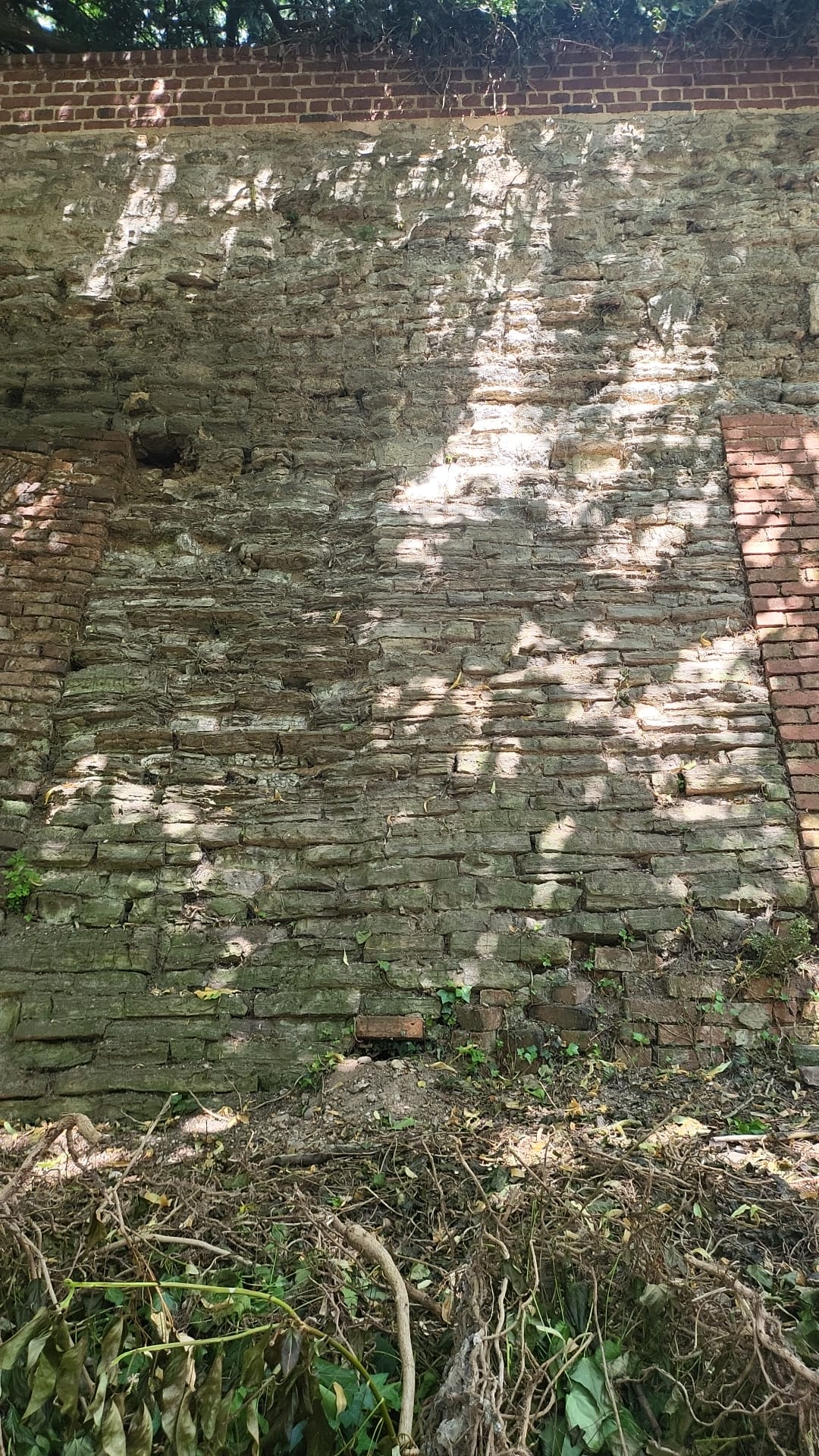
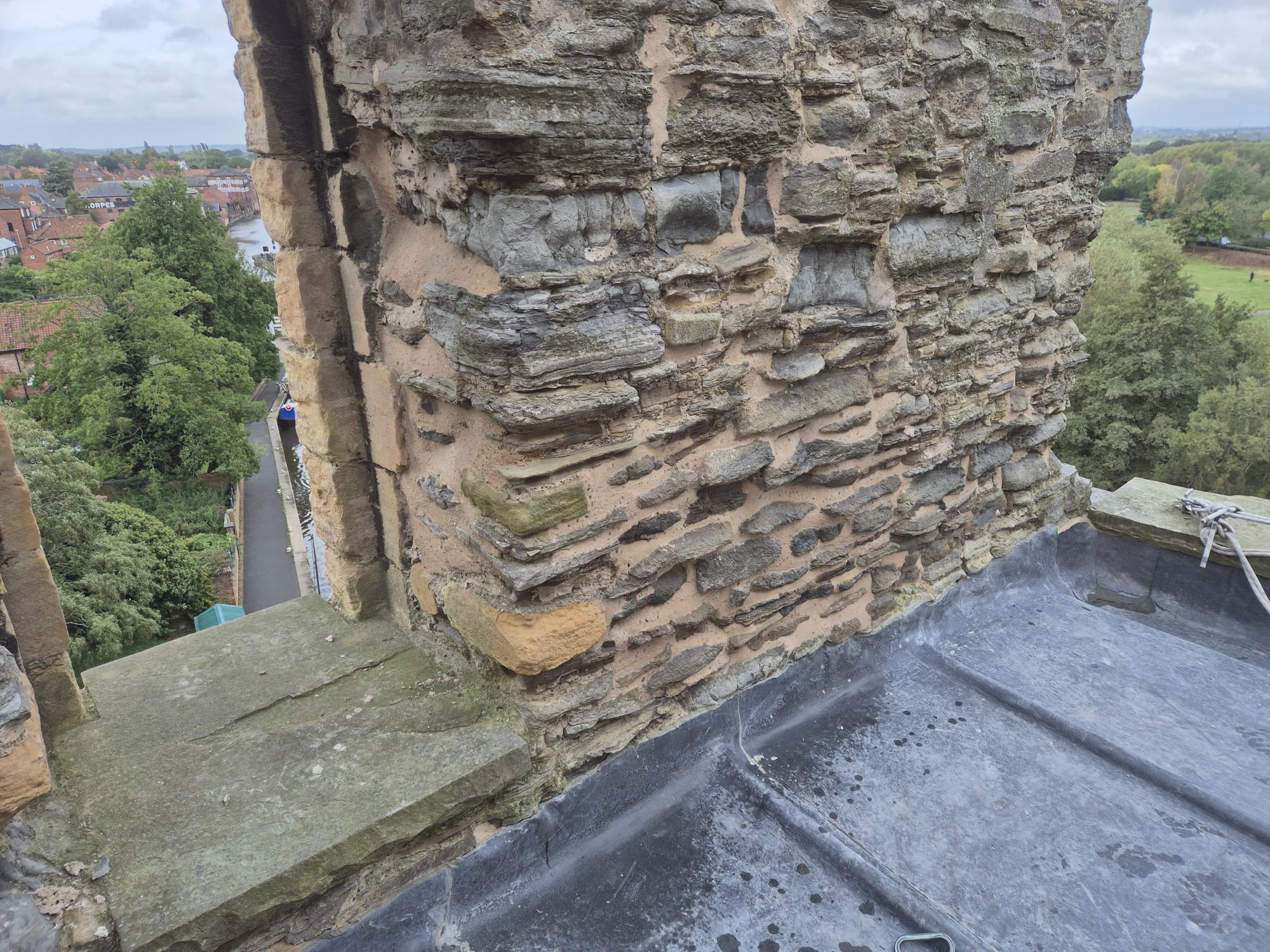
Works began on the east side of the curtain wall and the south tower, where extensive defrassing, vegetation removal and lime mortar repointing were carried out. Due to restricted loading capacities above the undercroft, a combination of aluminium scaffold towers, spider MEWPs and rope access techniques were required to safely complete the works. Vegetation embedded deep within the masonry was carefully treated with herbicide before removal, ensuring as much of the root system as possible was extracted to prevent future growth and deterioration.
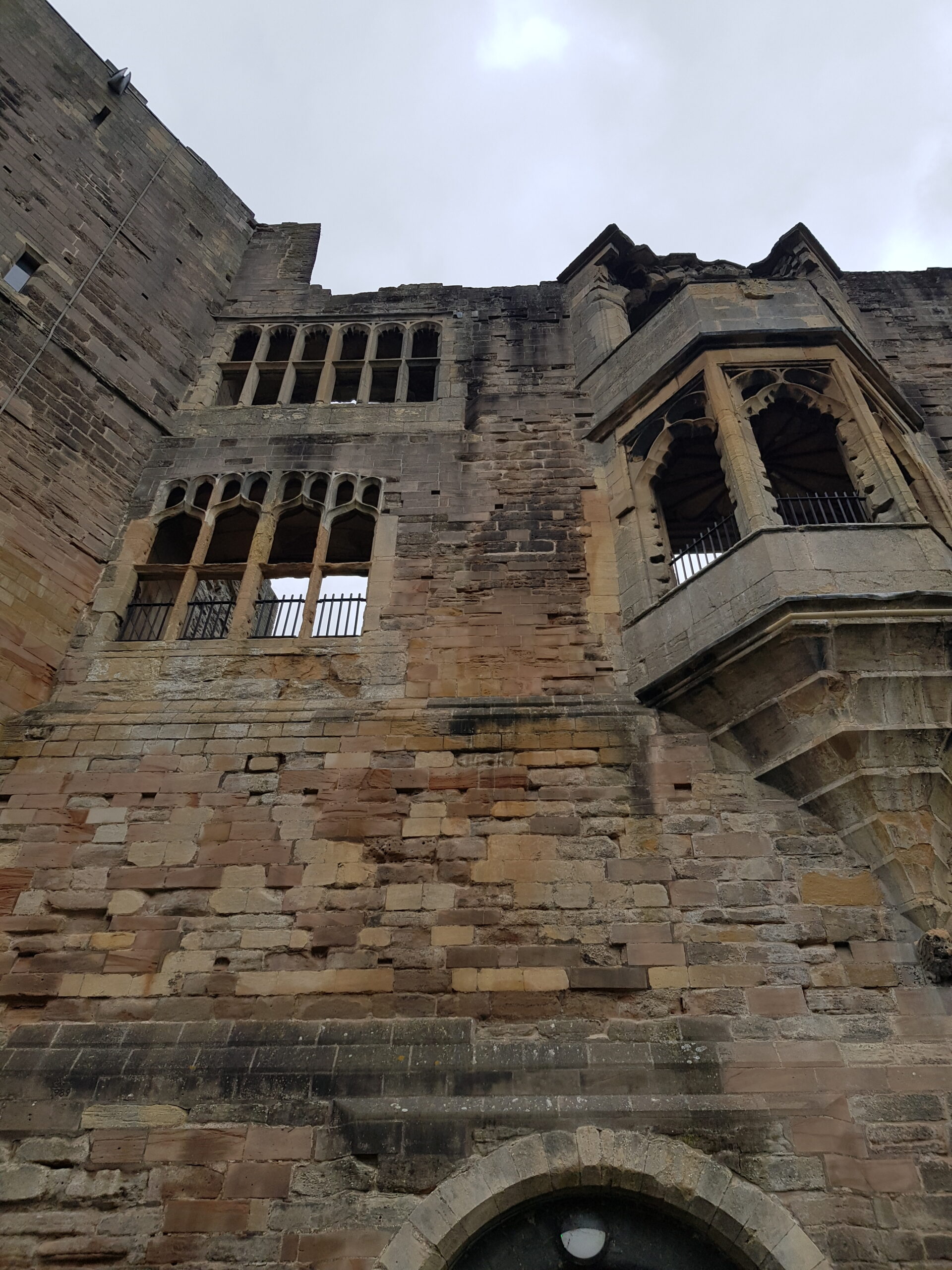
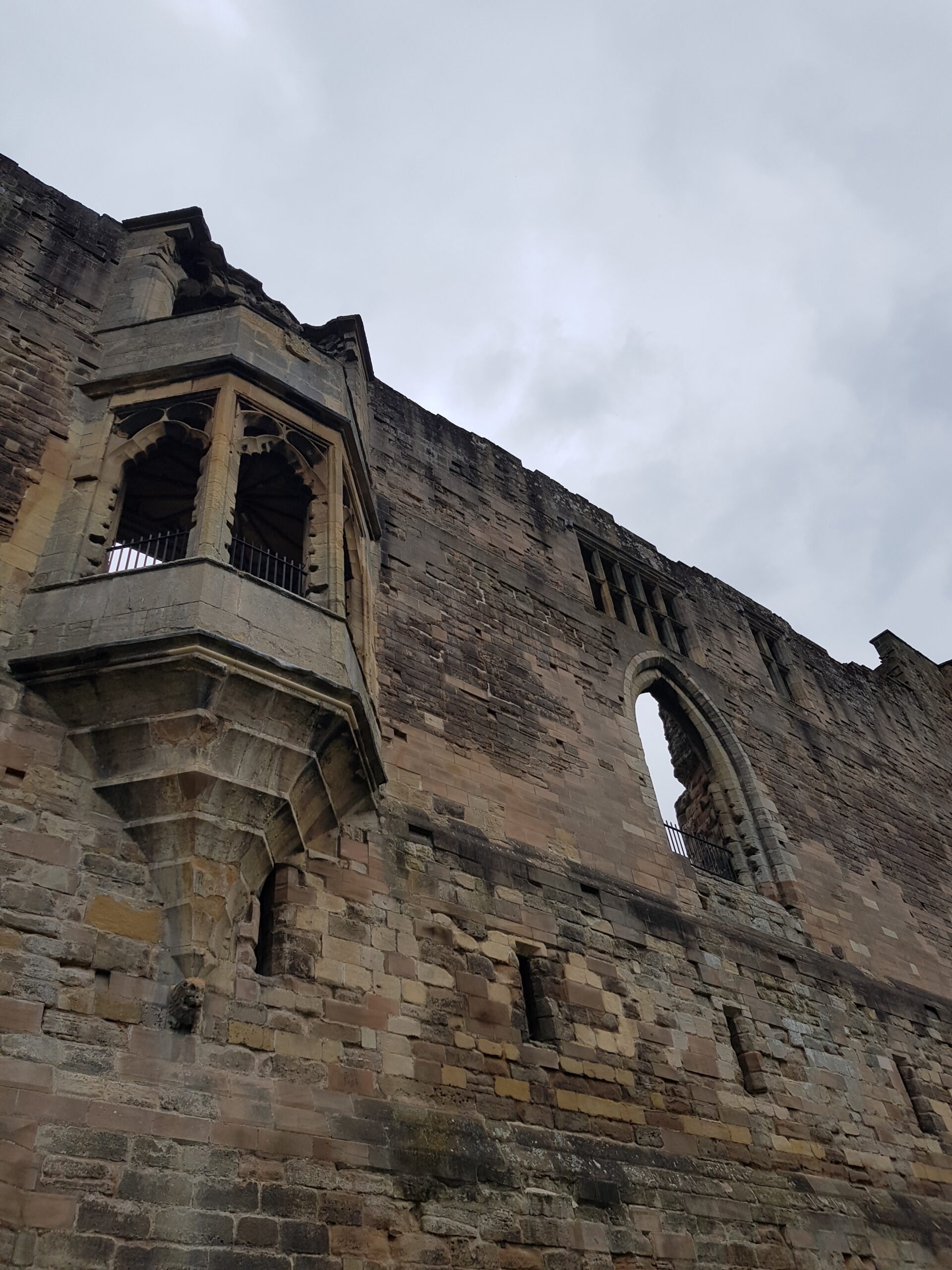
Historic cement-based repairs were carefully removed by hand to avoid damaging the surviving stonework, particularly around the northern 16-light window surround and the Oriel window. All deeply recessed joints were repointed using NHL2 lime mortar, specified and approved following extensive testing in collaboration with Historic England and the project architect to ensure compatibility with the castle’s original materials. The project highlighted the importance of using traditional materials and techniques, as many previous repairs had contributed to accelerated stone decay.
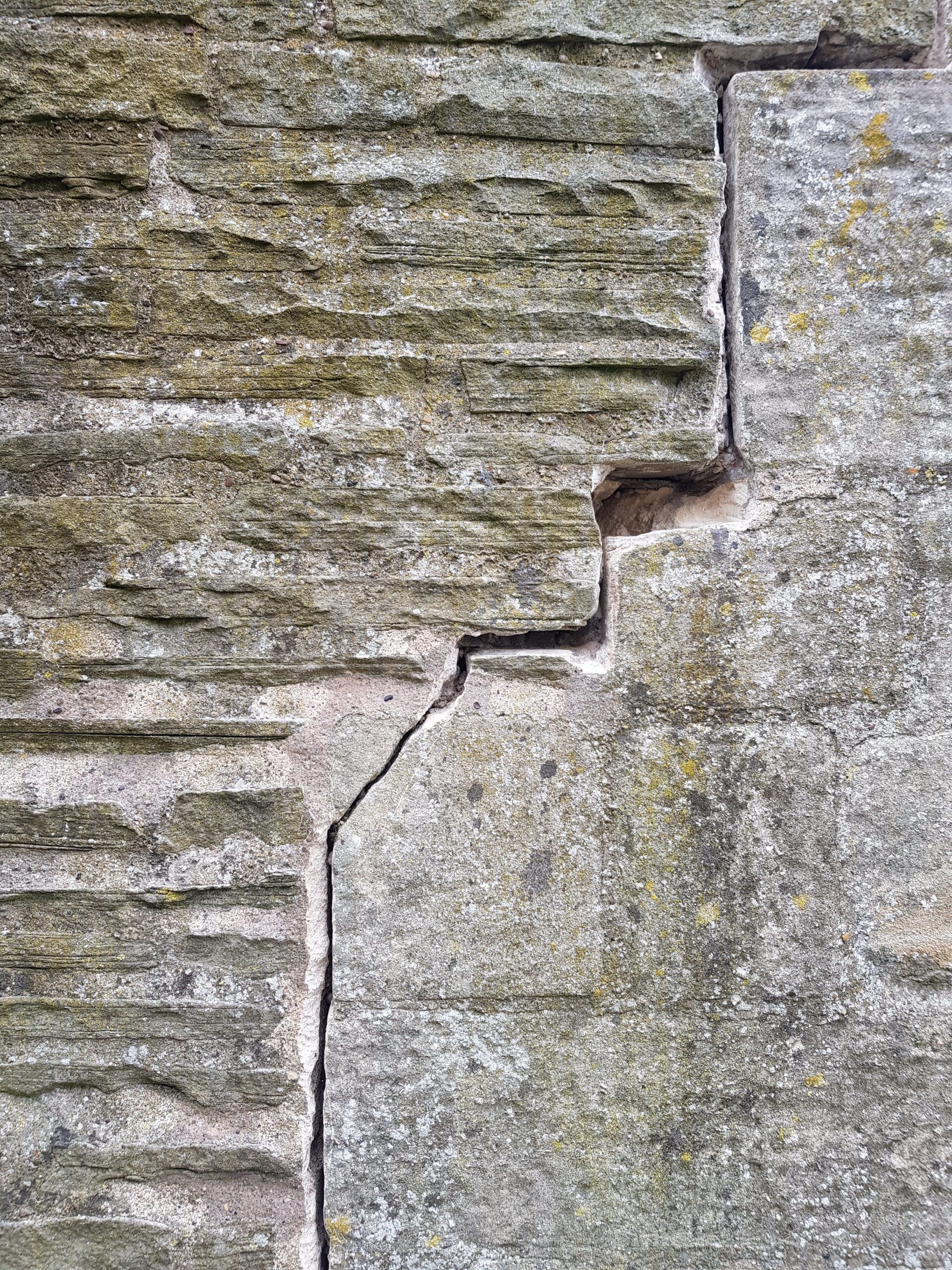
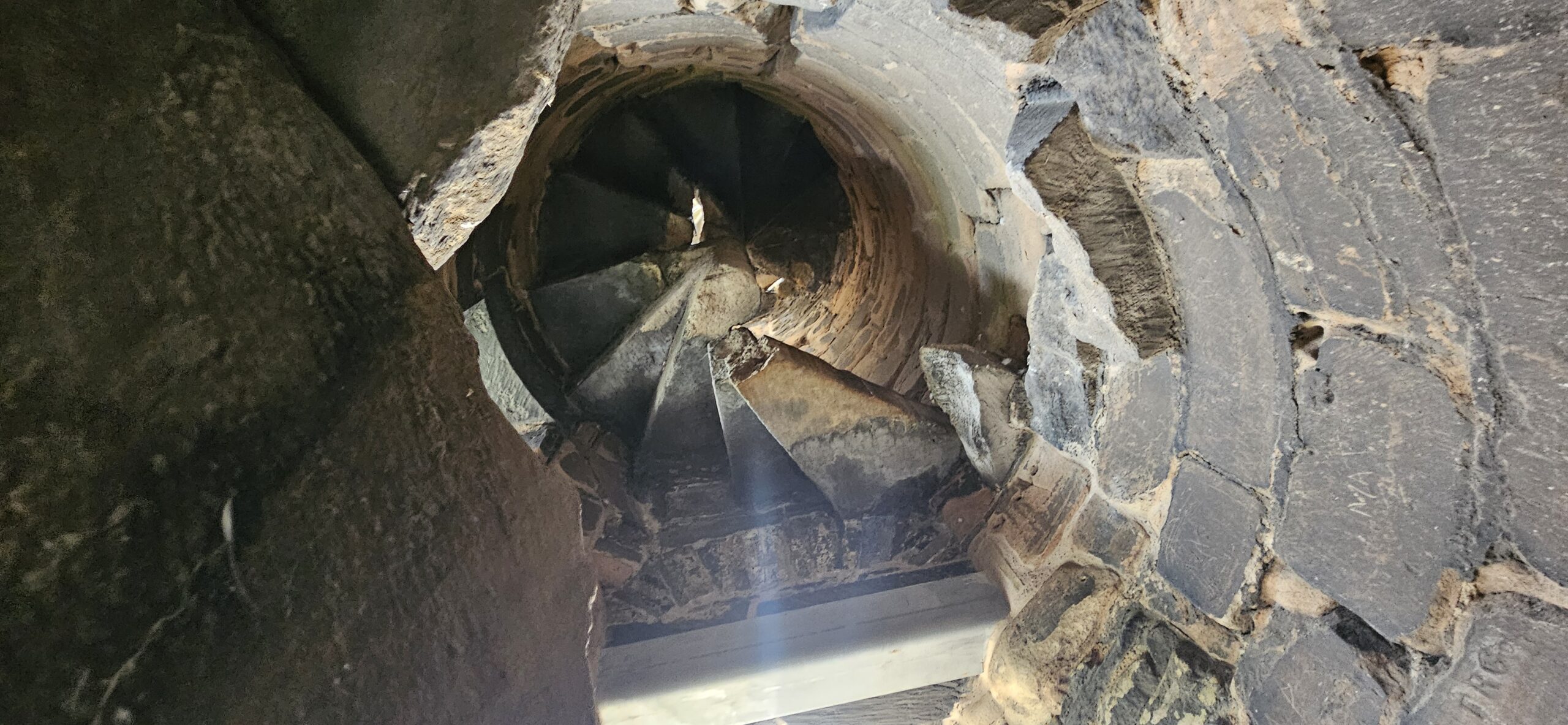
Further conservation works were undertaken across the middle tower and the north, south and east elevations, including the removal of fractured and unstable stone faces, re-bedding loose masonry and repairing structural fractures. Crack monitoring systems were introduced to enable Newark & Sherwood District Council to remotely monitor any future movement within the structure. The castle’s spiral staircase was also cleared of debris and nesting materials to facilitate a full structural inspection.
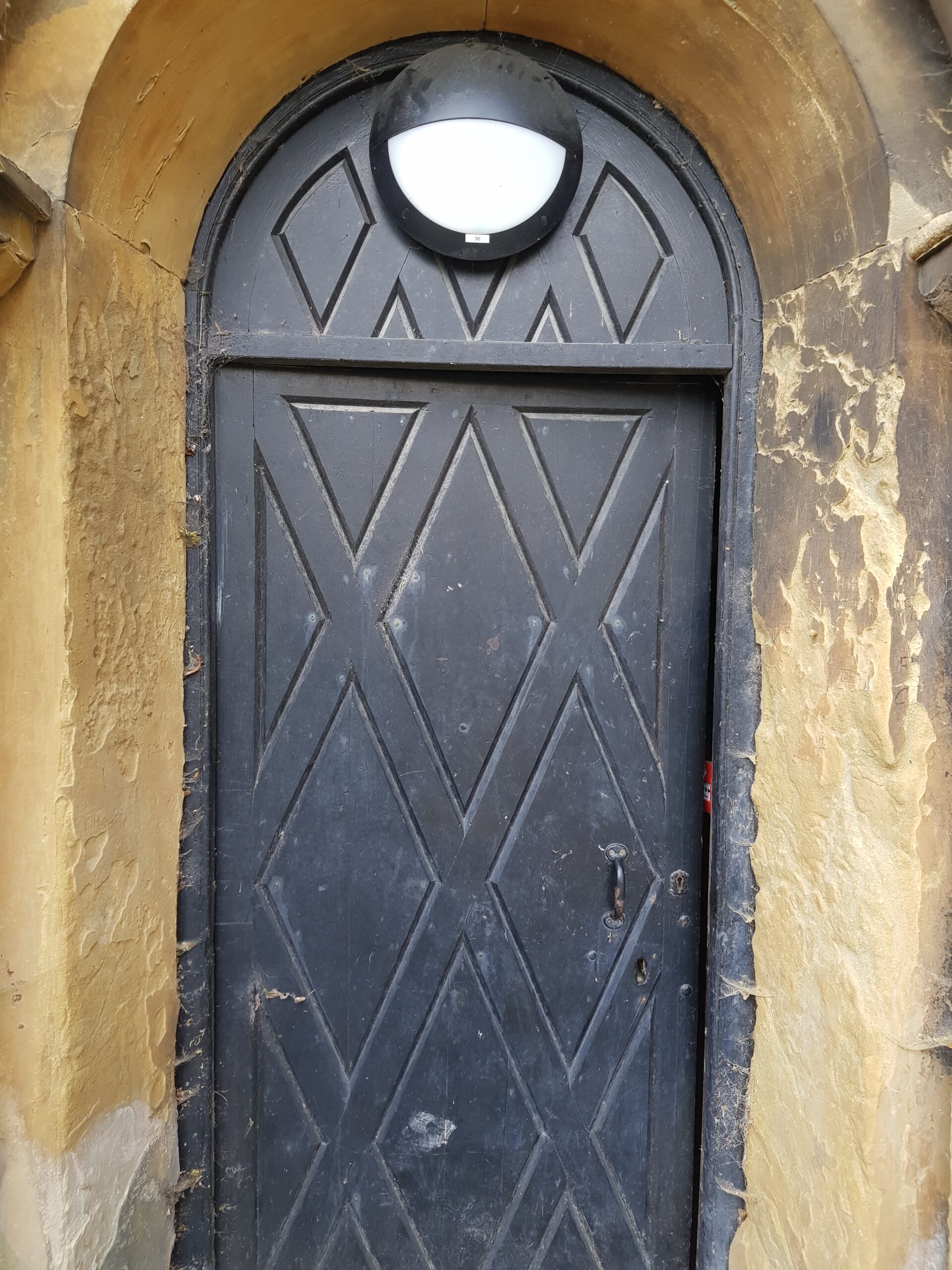
Access to the riverside elevations of the south tower was only possible via rope access techniques. Here, the team completed extensive masonry repairs alongside restoration works to timber windows, shutters and ironmongery using traditional linseed oil coatings and specialist architectural paints. Structural stabilisation works were also carried out to support weakened lintels where historic mortar had deteriorated over time.
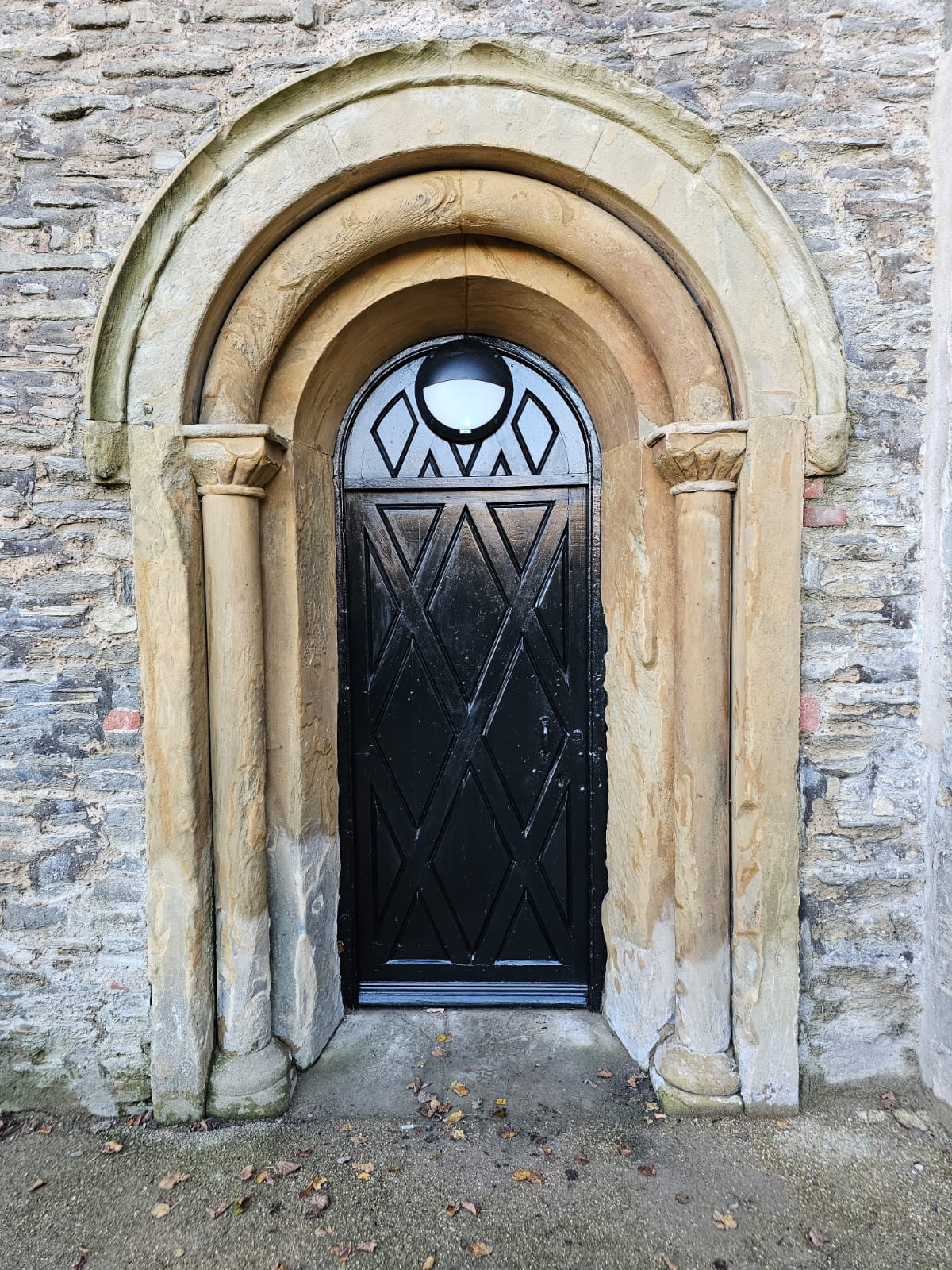
Specialist conservation works were completed to the Romanesque archway of the Mountney Room entrance by Skillington’s Historic Building Repair & Restoration. Cleaning trials identified Nd:YAG laser cleaning and ammonium carbonate poultices as the most suitable methods for removing heavy sulphation deposits while preserving the stone’s historic patina. Additional lime mortar grouting and careful repointing ensured the long-term stability and preservation of the feature.
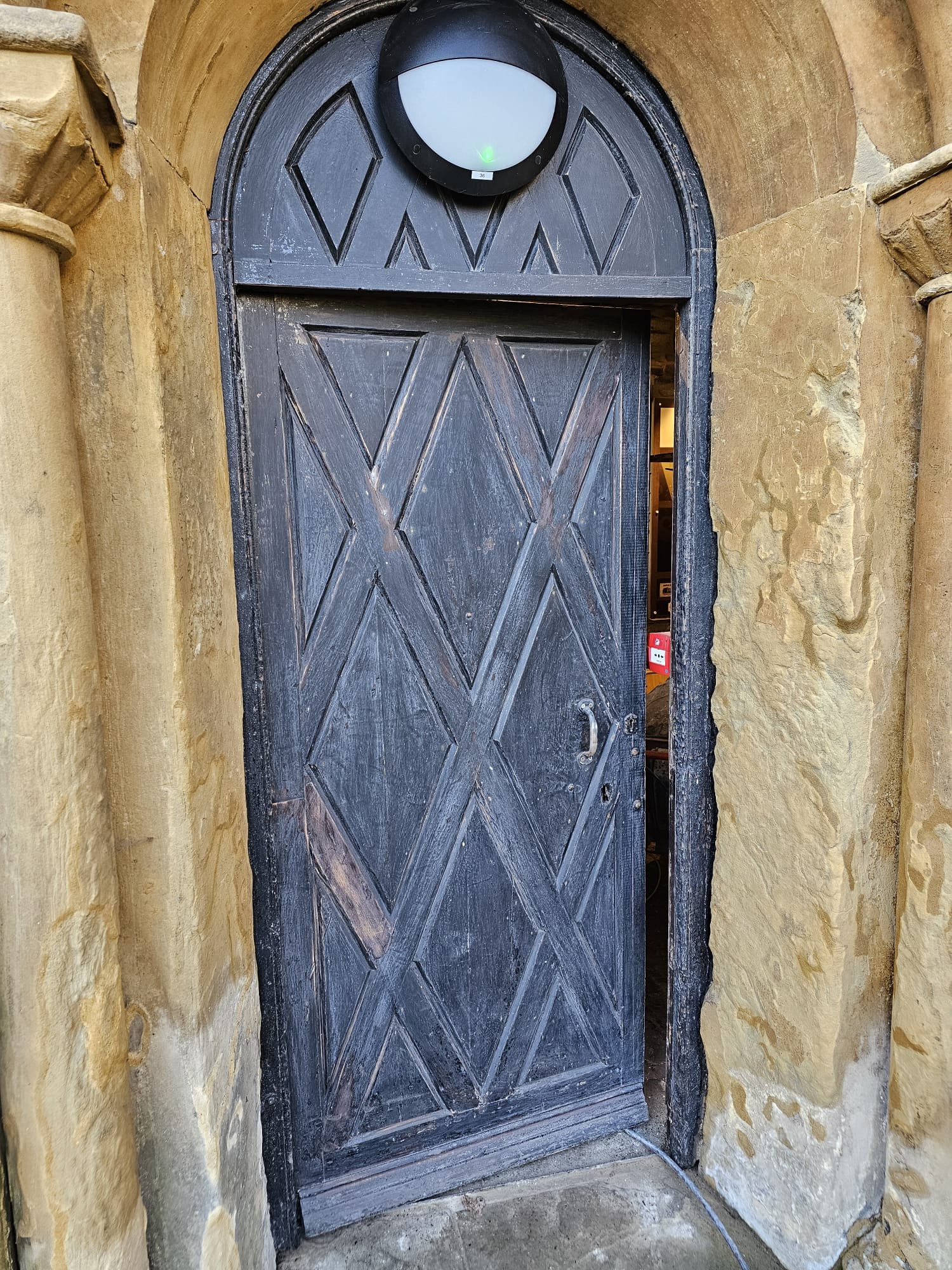
Within the undercroft, extensive repointing works were carried out to deeply recessed joints within the vaulted stone ceilings and walls. Due to the cool and enclosed environment, the lime mortar required a prolonged curing period to ensure a durable and sympathetic finish. Elsewhere, the timber bridge walkway was restored using multiple coats of boiled linseed oil, while a new timber gate was handcrafted by the company’s in-house joinery team to replicate the original design.
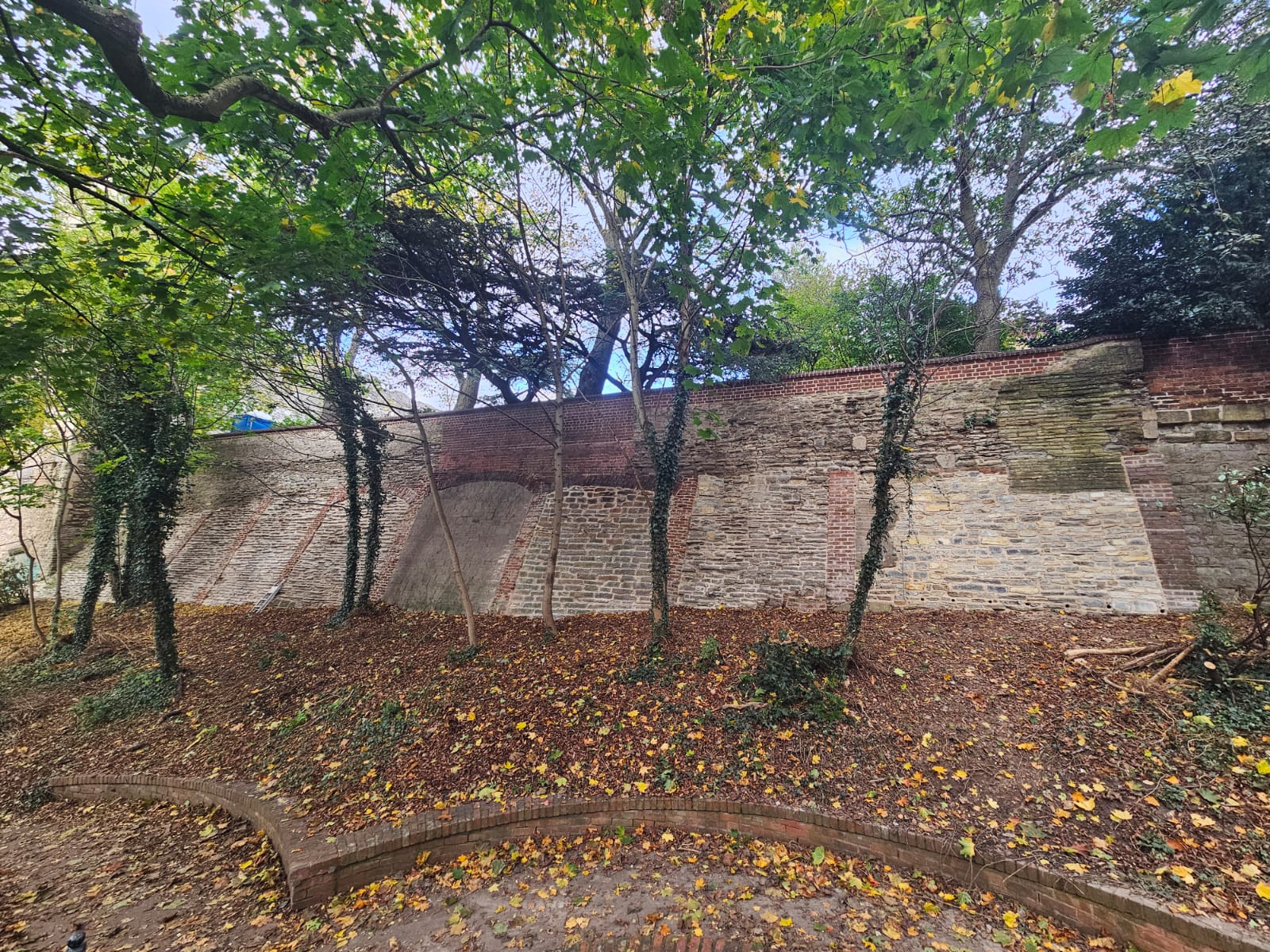
Environmental considerations formed an important part of the project due to the castle’s proximity to the River Trent. Appropriate permits were obtained from the Environment Agency for the safe use of herbicides near the river, and all operatives were fully trained and certified to undertake the works responsibly. Planned repairs to the south river wall were postponed until more favourable spring conditions due to fluctuating river levels during the winter months.
This complex and highly sensitive conservation project demonstrates UK Restoration Services’ expertise in historic building preservation, combining traditional craftsmanship with specialist access solutions and conservation best practice to help safeguard Newark Castle for future generations.