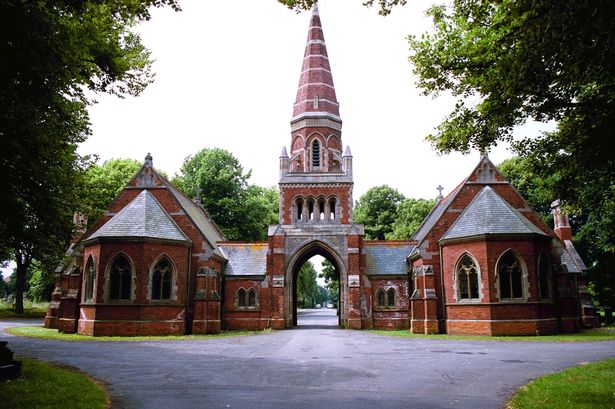
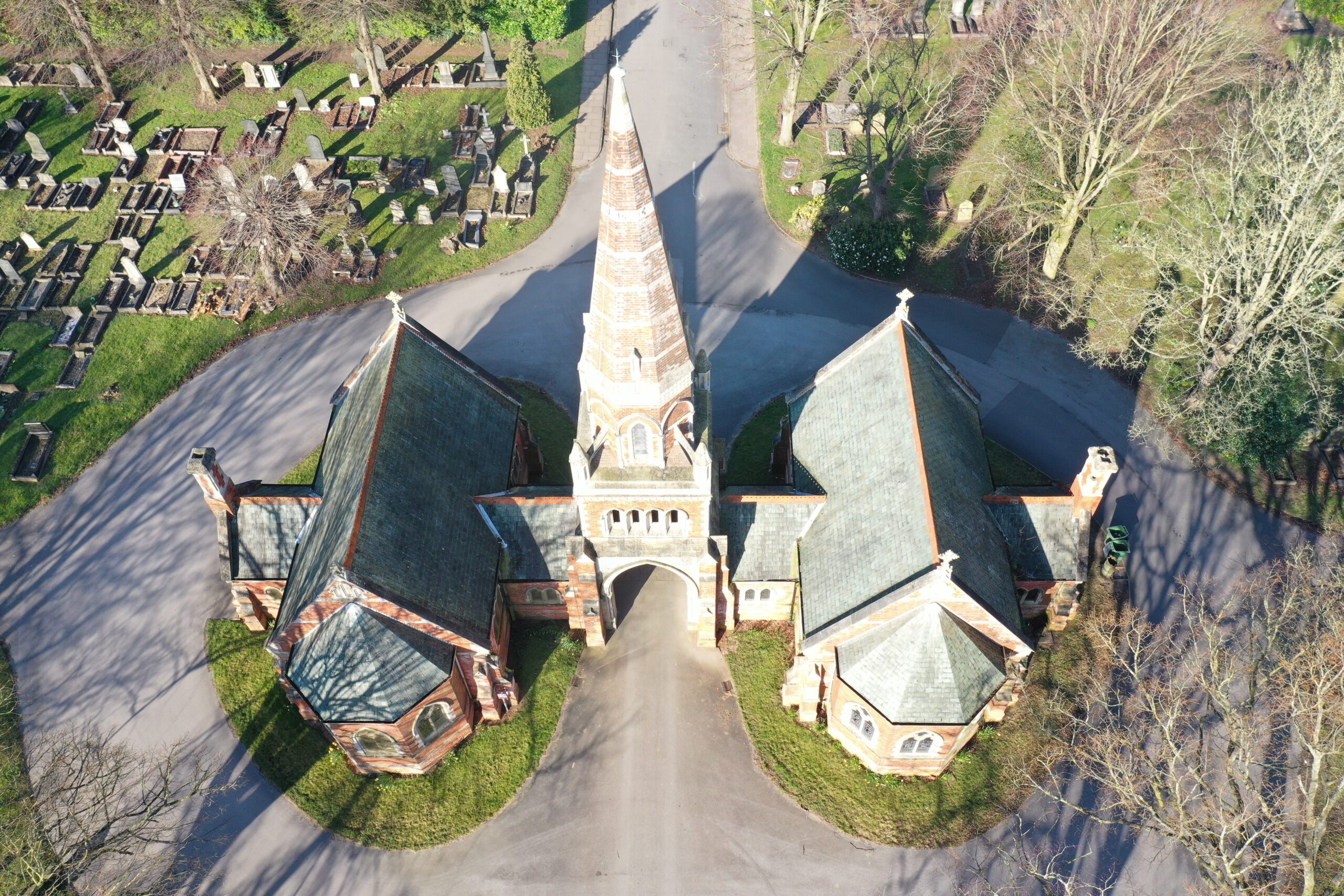
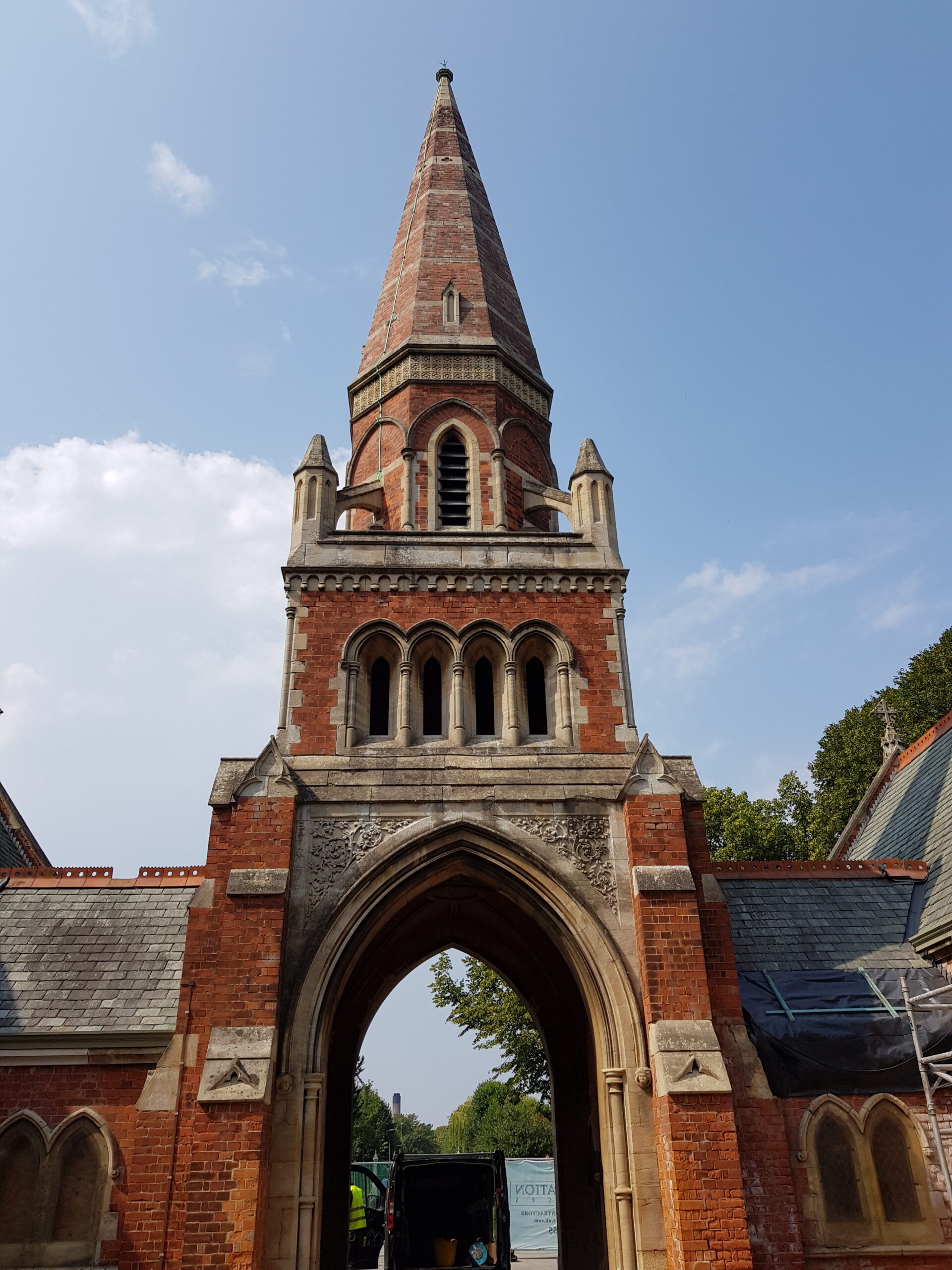
Scartho Cemetery Chapels comprises of Grade-ll-Listed Victorian church buildings built in 1888 in around 26 acres of land housing a large graveyard. Originally known as Grimsby Municipal Cemetery, opened its gates for the first time on the 23rd October 1889. The then 23 acre cemetery was a necessity at the time because the old borough cemetery, which opened in 1855 and only comprised of 8.5 acres, was beginning to run out of burial space. The population of the town was steadily increasing as was the prosperity in the area and the need for additional cemetery space was presented that could not be overlooked. The provision of the cemetery also required the necessity for a number of buildings to be provided on the site to enable a full service to be carried out and as was the Victorian passion for ornamental gardening, the planting of trees and shrubs were provided alongside fencing and gates to allow access and security to the site as well as creating a sense of importance and grandeur upon entering the site.
The cemetery, situated in the coastal seaport town of Grimsby close to the North Sea, contains 281 scattered burials of the First World War, many of them seamen who served with the Auxiliary Patrol which operated out of the town.
During the Second World War boats of the Grimsby fishing fleet were attacked at sea, and the town and port were bombed many times, incurring casualties among servicemen as well as civilians. The cemetery contains 258 Second World War burials, almost 200 of them forming a war graves plot. There are also 17 war burials of other nationalities, many of them German prisoners of war from the camp at nearby Weelsby.
The cemetery currently occupies over 29 hectares and was increased in size from the original 23 acres over the years through the construction of buildings and boundary treatments provided as a full package of works to the site ensured that a suitable procession, service and burial could be undertaken withing an area of tranquillity and natural beauty. The new layout allowed for the procession to travel along an avenue before stopping at the chapels for the service and then leading onto the final resting place at the burial site.
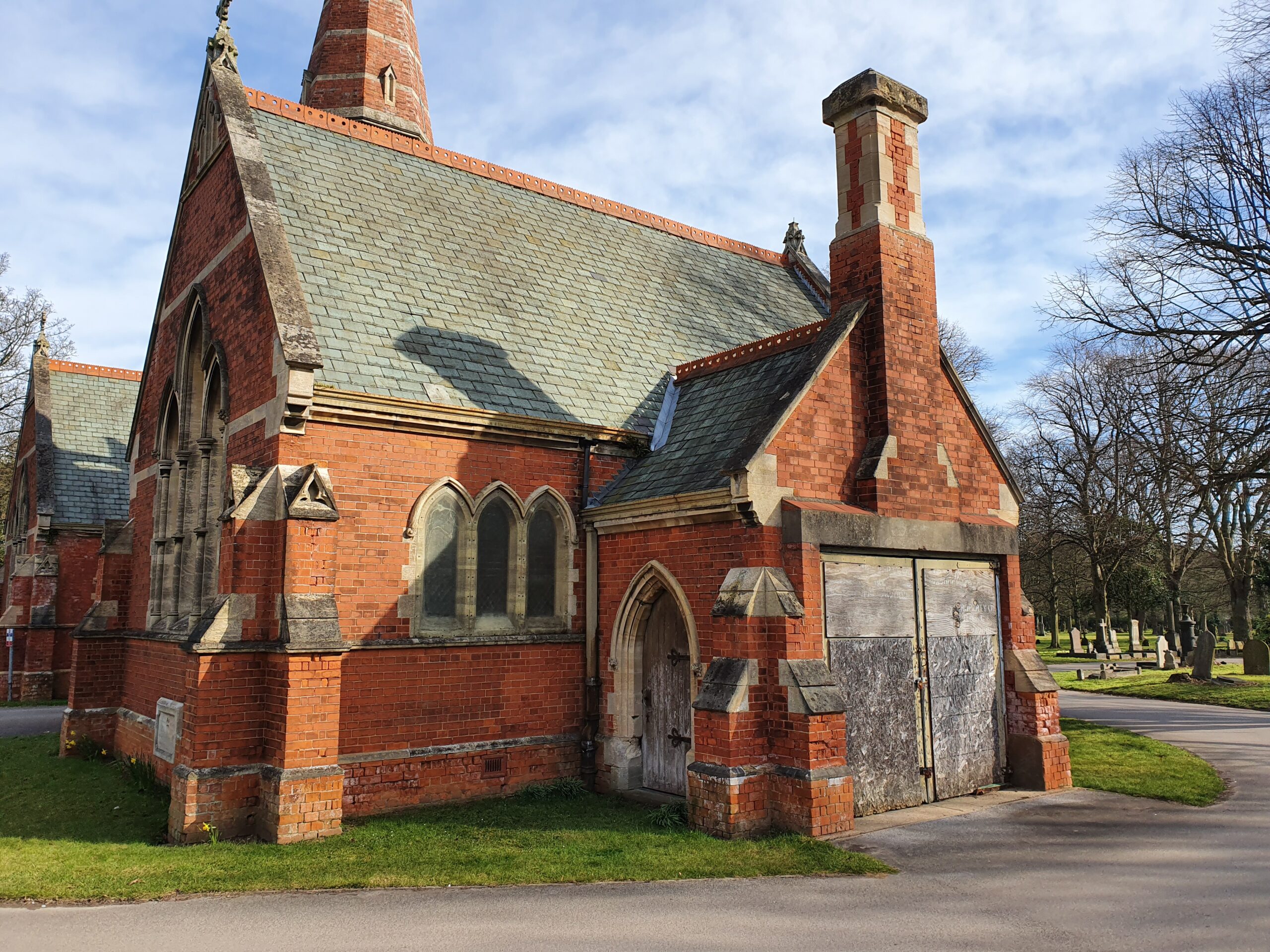
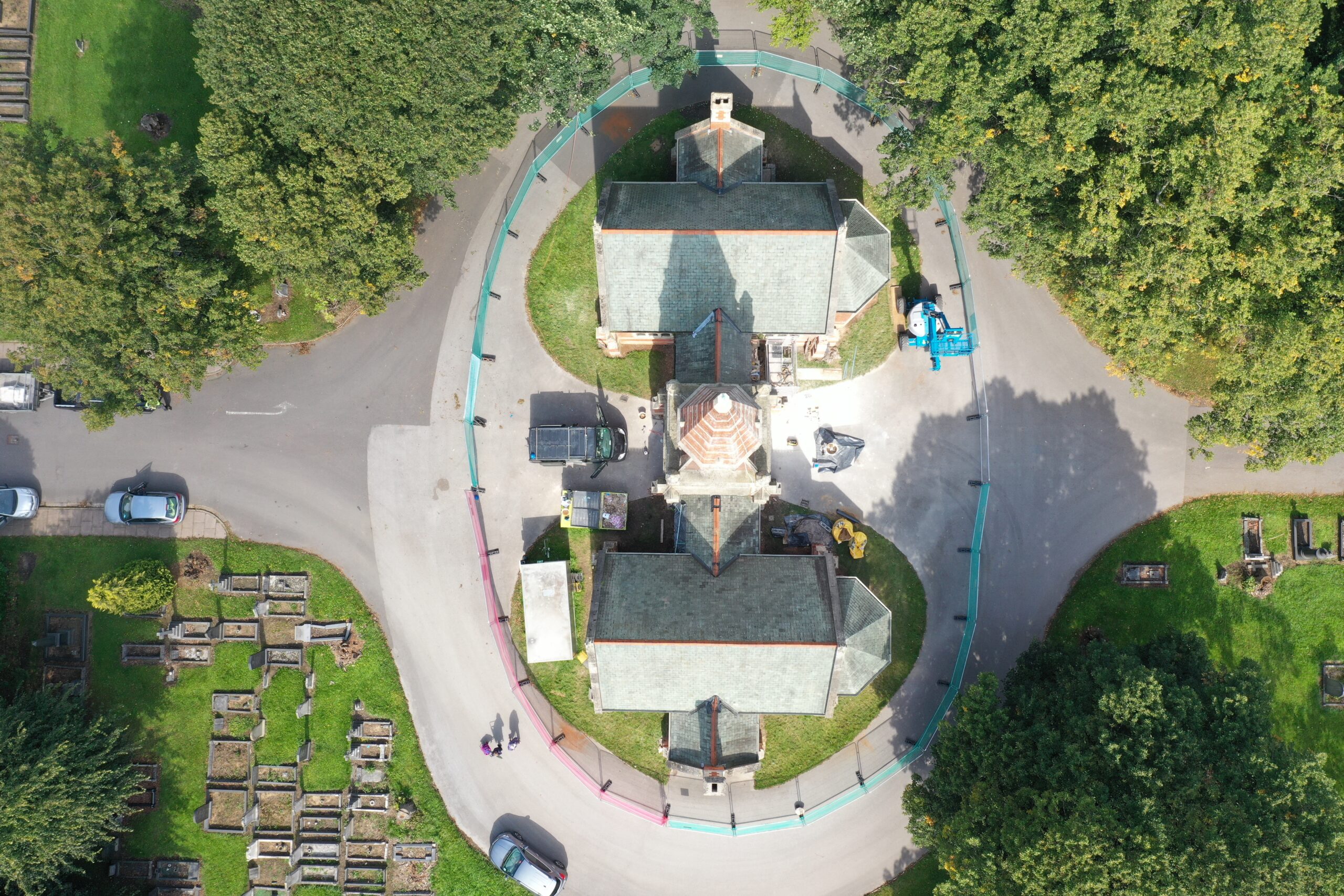
More recently, a new area of the cemetery has been developed to provide a woodland burial site whereby the deceased can be buried in an environmentally friendly manner. The buildings and other features form an important part of the cemetery and dictate the layout of the site. Entry to the site was originally gained from Scartho Road through a large gated entrance with ornate railings fixed to large carved stone pillars, the procession followed a 520 foot road way which reached the secondary entrance containing equally impressive large iron columns and gates, when entering the cemetery a lodge building is located on the right hand side with a smaller waiting room area to the left, the most striking feature when turning into the entrance from Scartho Road is the cemetery chapel buildings which are connected via a central tower which reached a pinnacle at 80 feet from the ground and to this day never loses its visual appeal.
We were delighted to be awarded the contract of remedial works to the North and South chapels and adjoining bell tower. Works comprised of stonemasonry and brickwork repairs, mortar replacement and repointing, roofing repairs, re-instatement of rainwater goods, installation of external door-set and additional associated works.
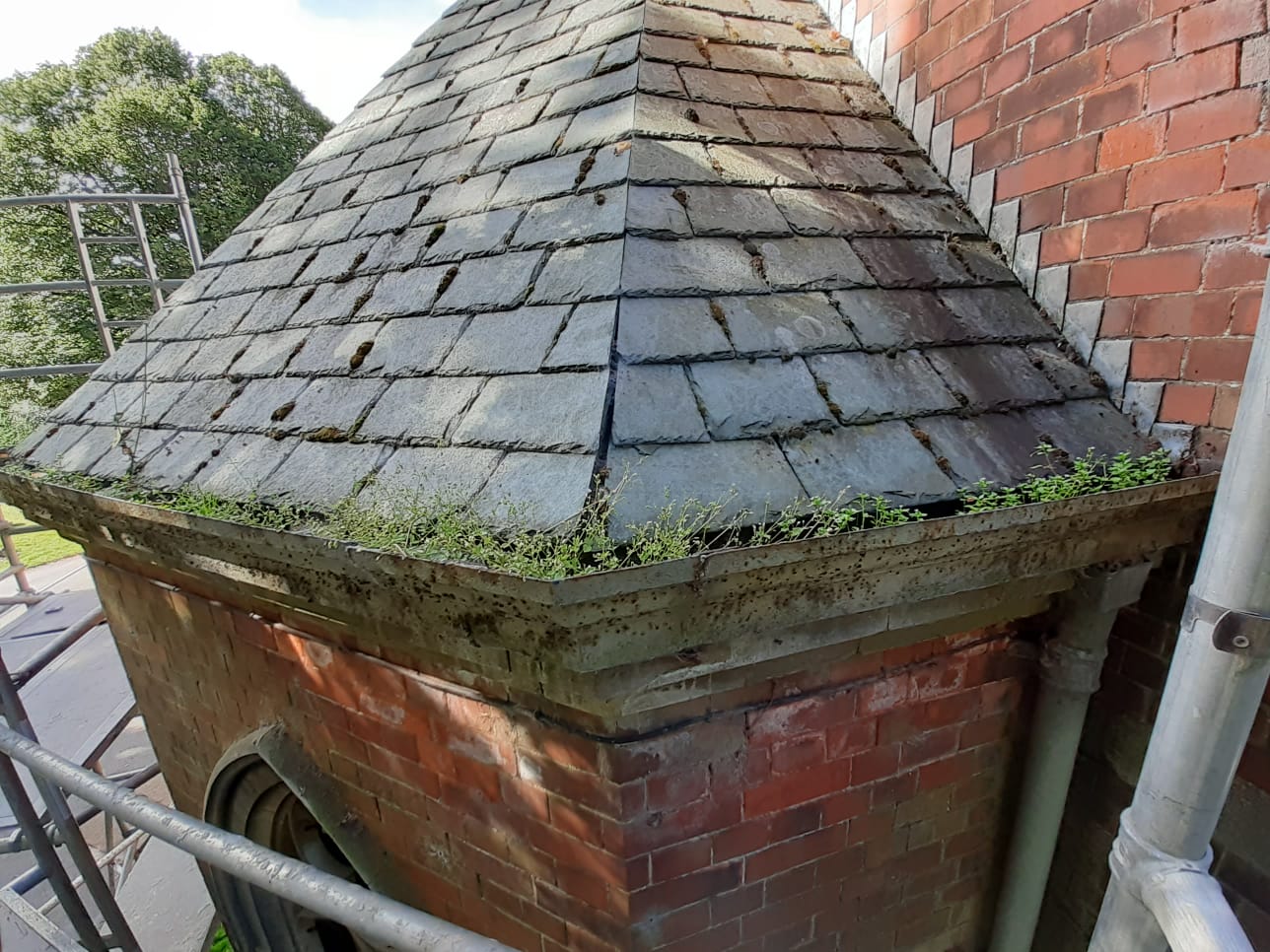
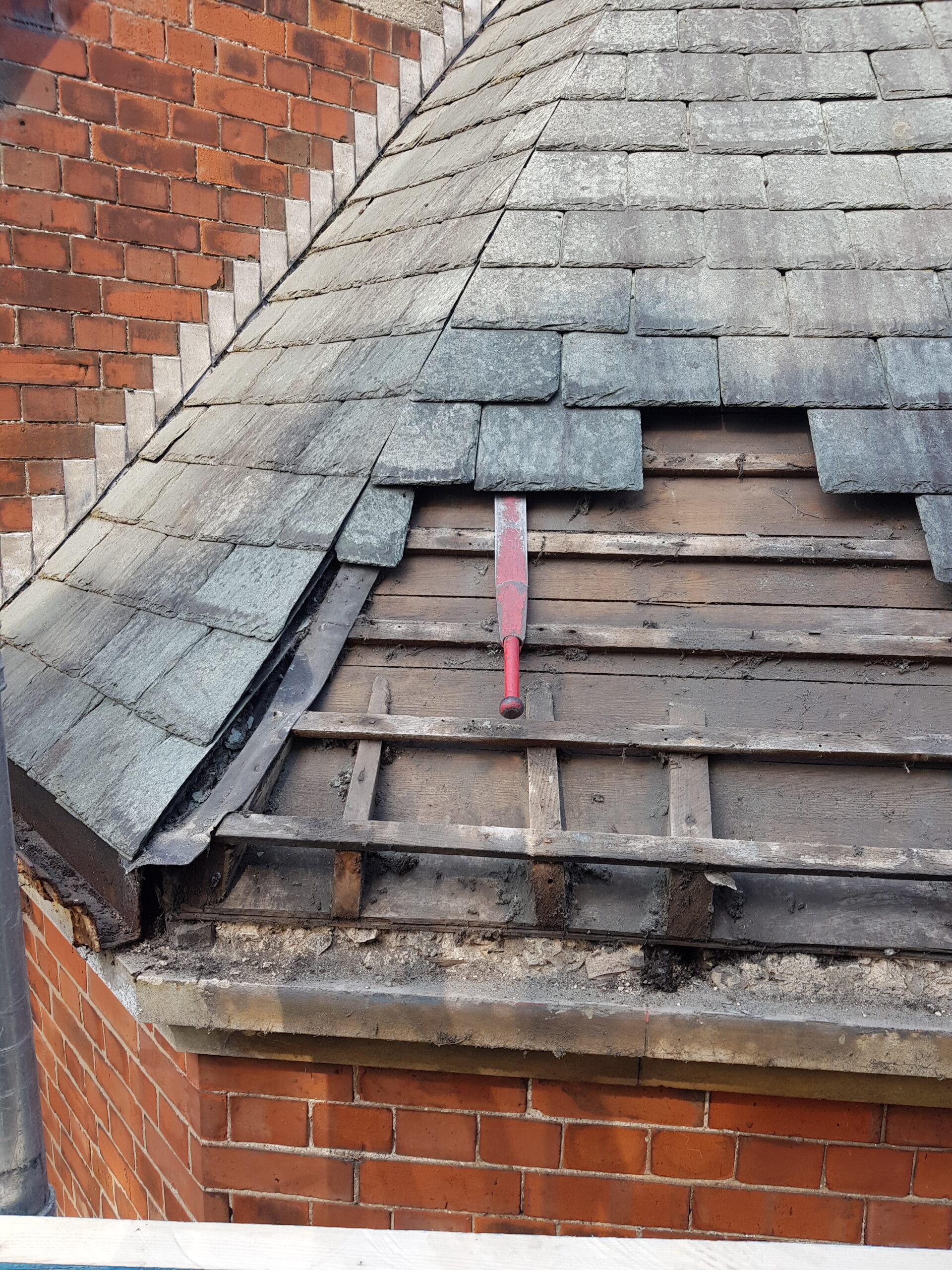
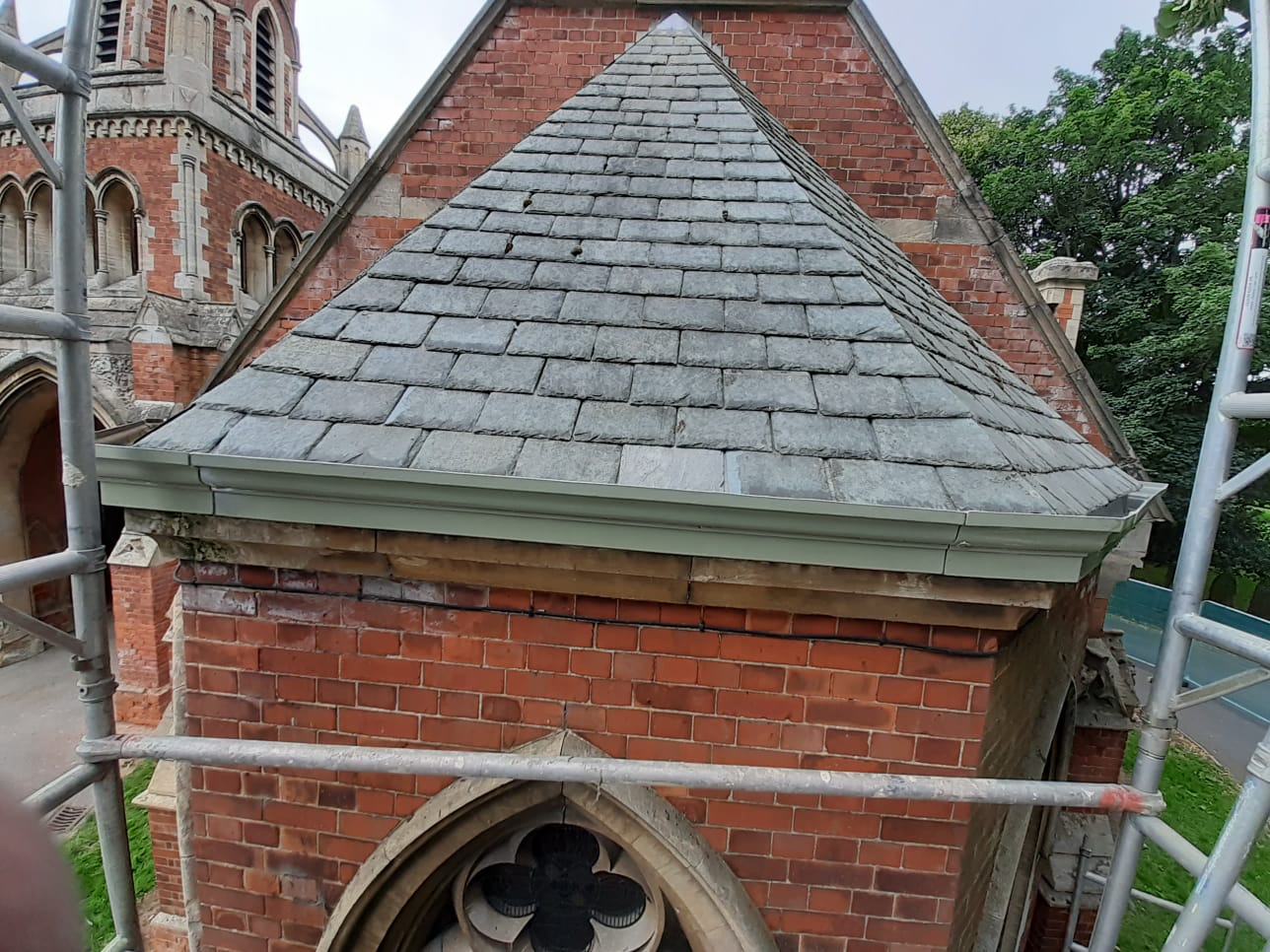
Roofing works began with the removal of the lower three courses of slate to allow the removal of the existing rainwater goods, new cast iron gutters were then installed. Any slates that were found to be of an incorrect type were removed and reclaimed Westmorland Green slates were installed in their place.
An inspection was then undertaken to the 8 lead valleys to determine the level of works required, it was found that all 8 valleys required replacement. Works commenced with the surrounding slates requiring removal, new Code 5 Lead was then formed to the required sizes and installed. The replacement of a number of custom made ridge tiles completed the roofing works.
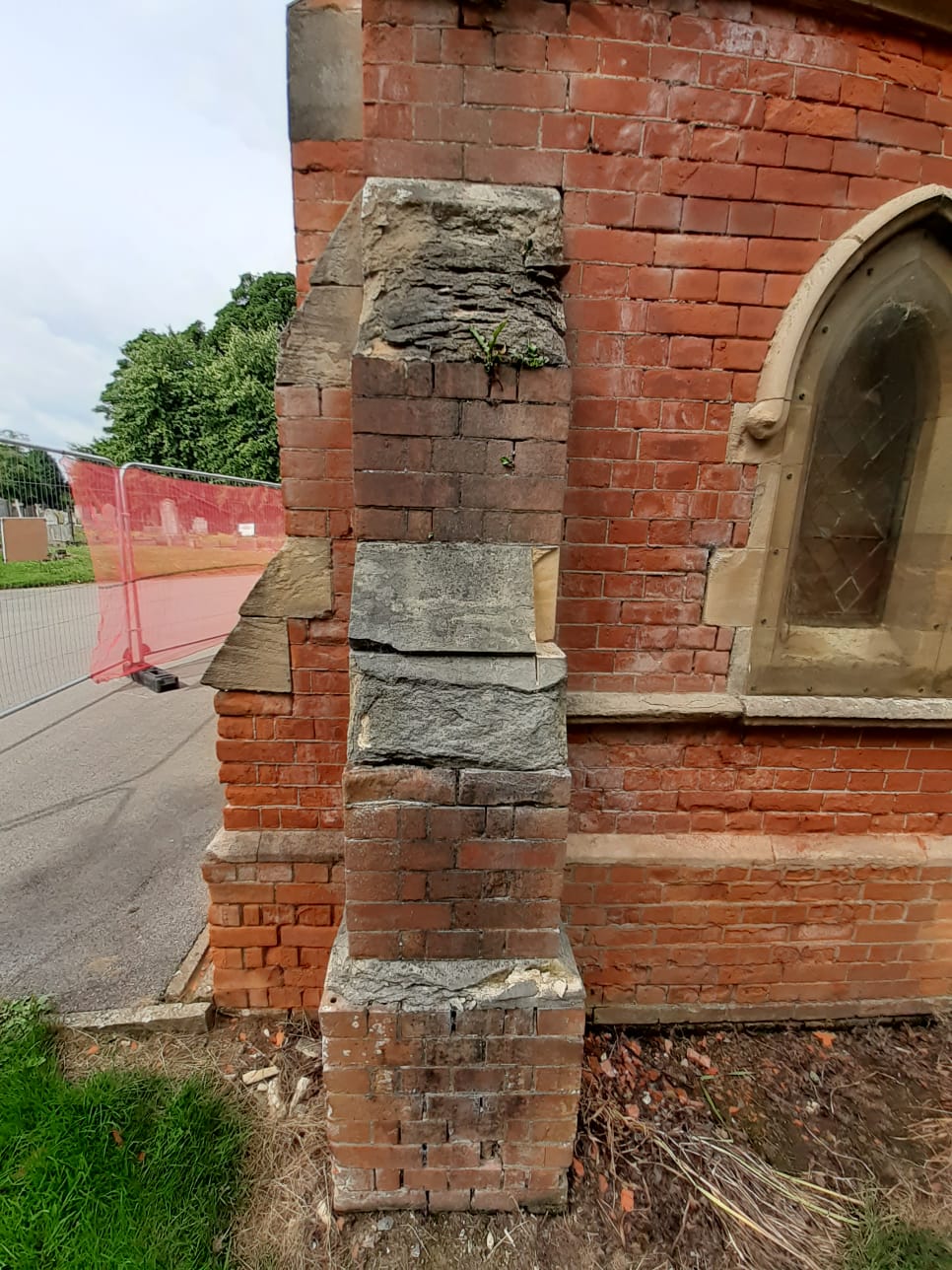
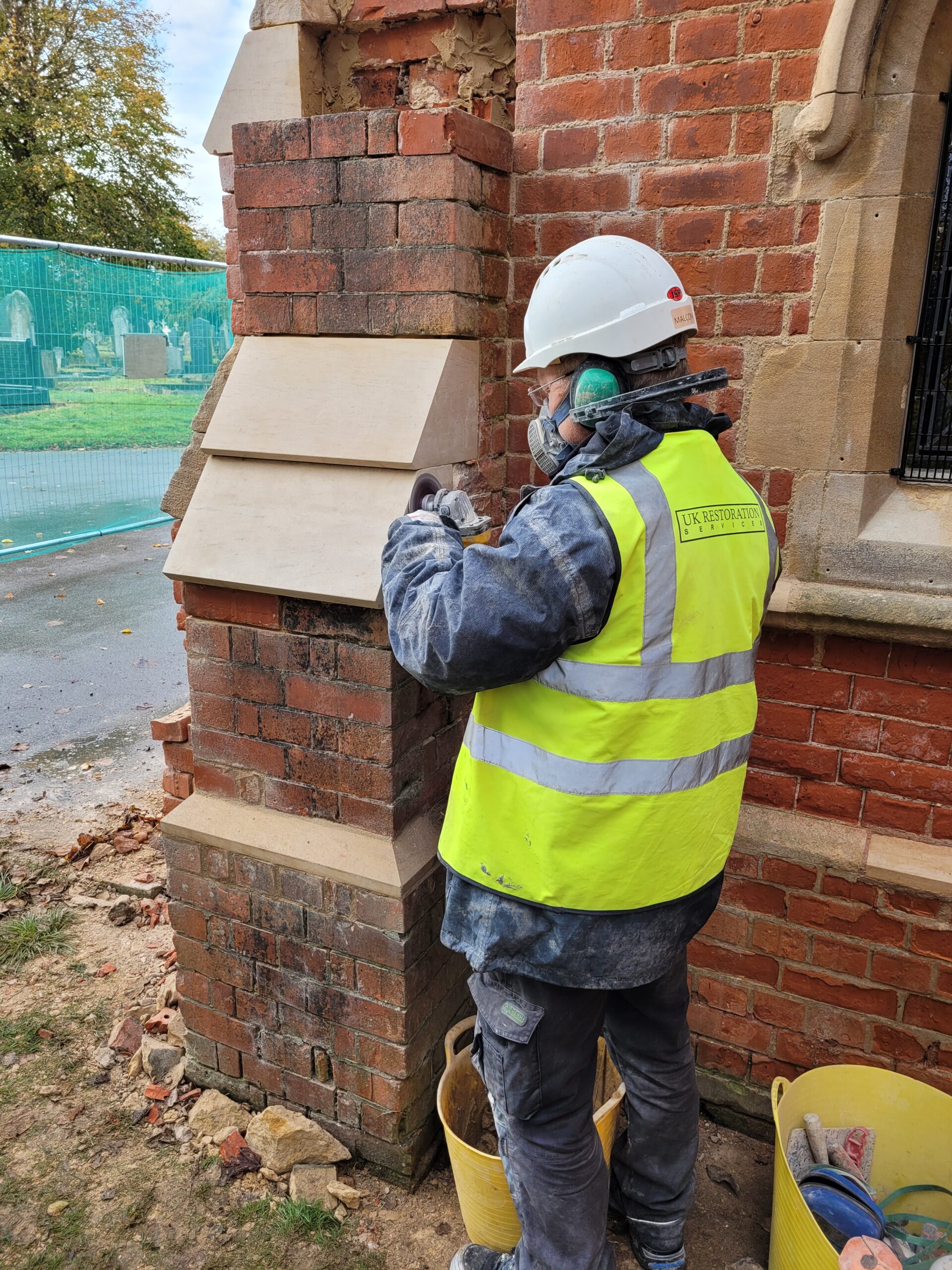
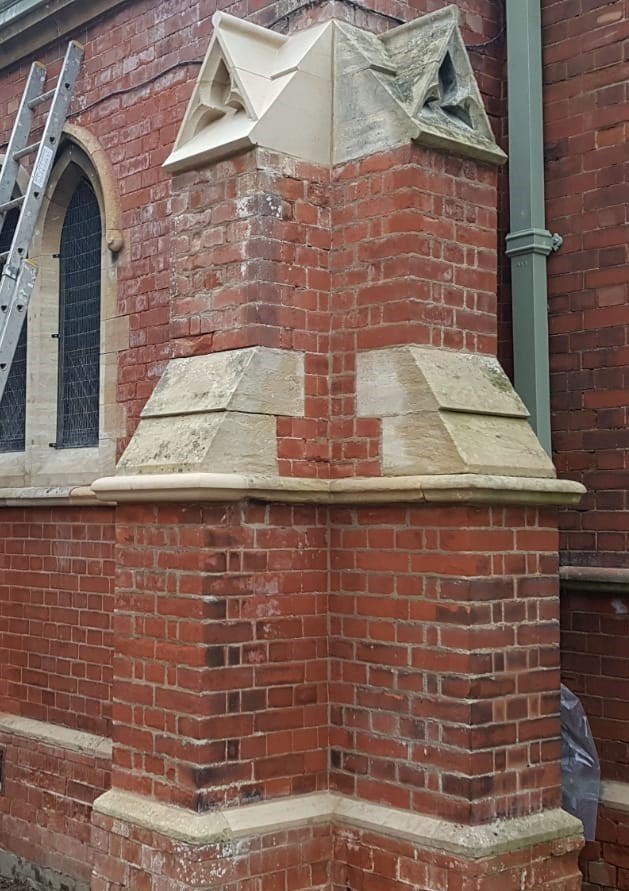
Masonry works followed after an inspection which identified a number of additional units requiring replacement, we removed a number of bricks for assessment of reuse and it was discovered that some areas had been constructed of half bricks. Due to this an order was placed for the production of 500 custom sized bricks. Re-pointing in lime mortar was carried out in localised areas on both buildings.
Internal works commenced with the paint stripping of the areas worst affected by the peeling paint, using Kling-strip paste allowing one weeks dwelling time. This was followed by our in-house cleaning team utilising our DOFF system incorporating Doff Recovery System to clean the walls.
A number of leaded glazed windows on both chapels had suffered significant damage due to vandalism, the damaged sections requiring restoring were carefully removed from the building and transported to Lincolnshire Stained Glass Studio for refurbishment. New powder coated grilles were installed to protect the windows from future vandalism and deterioration.
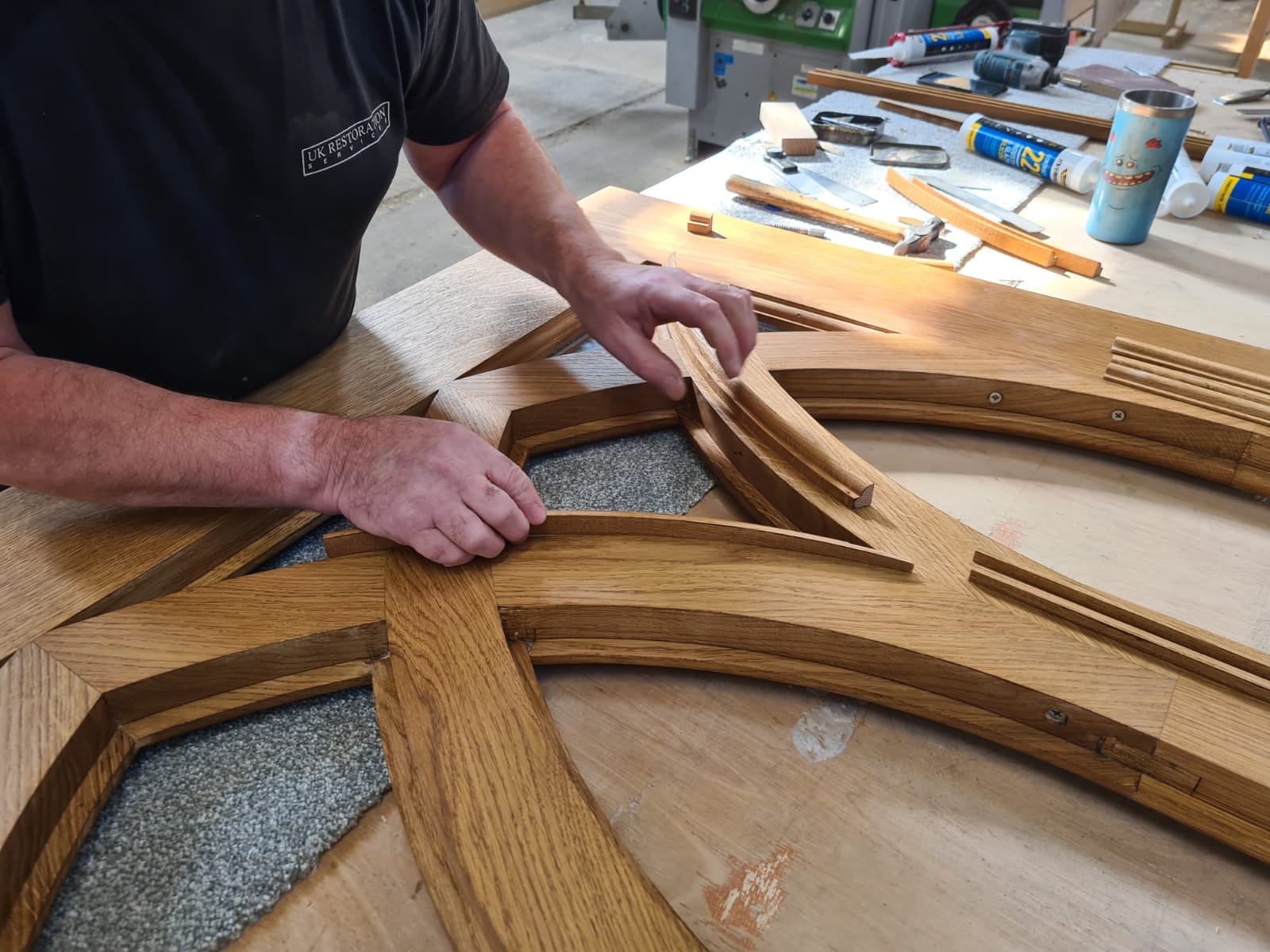
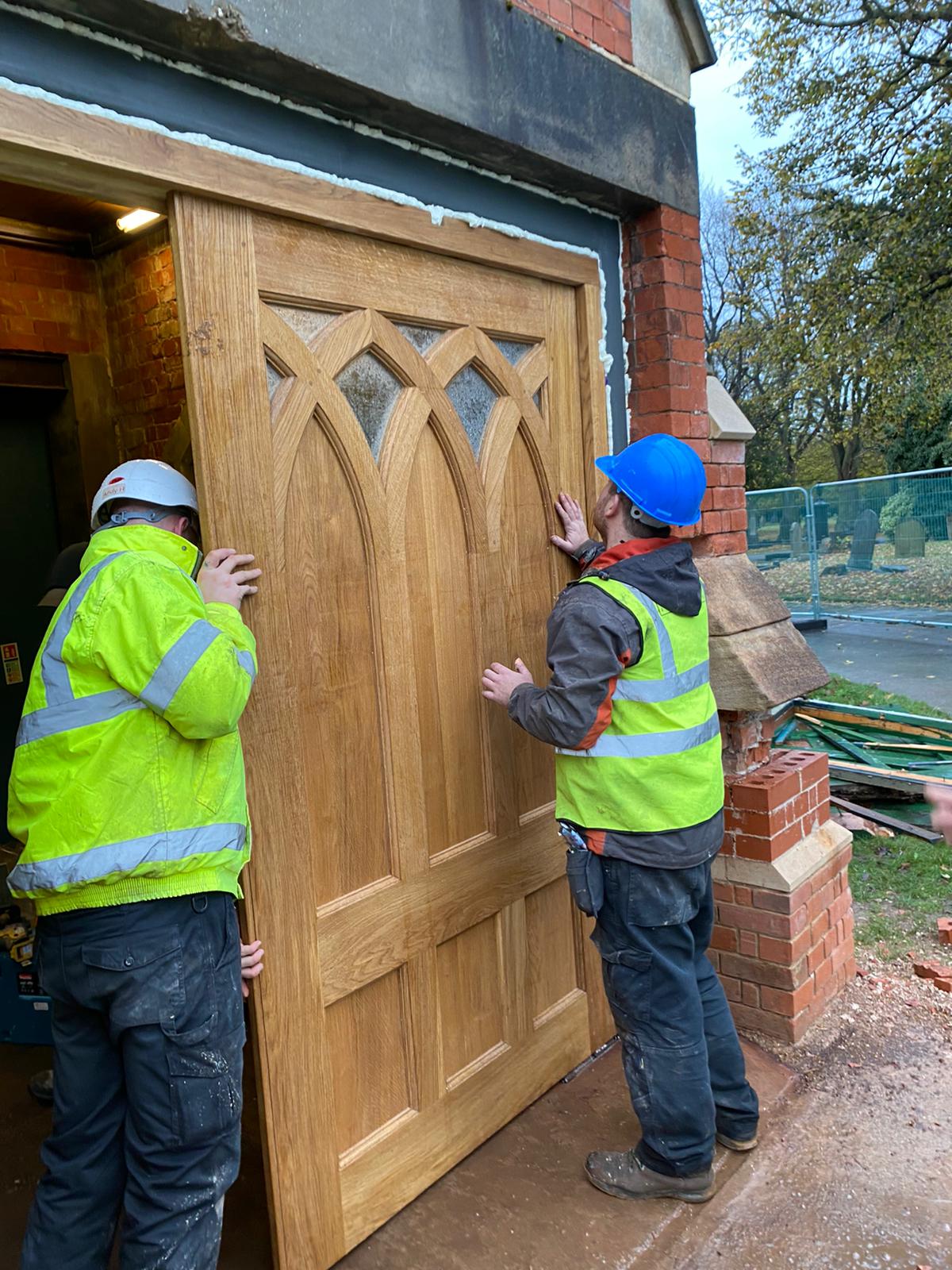
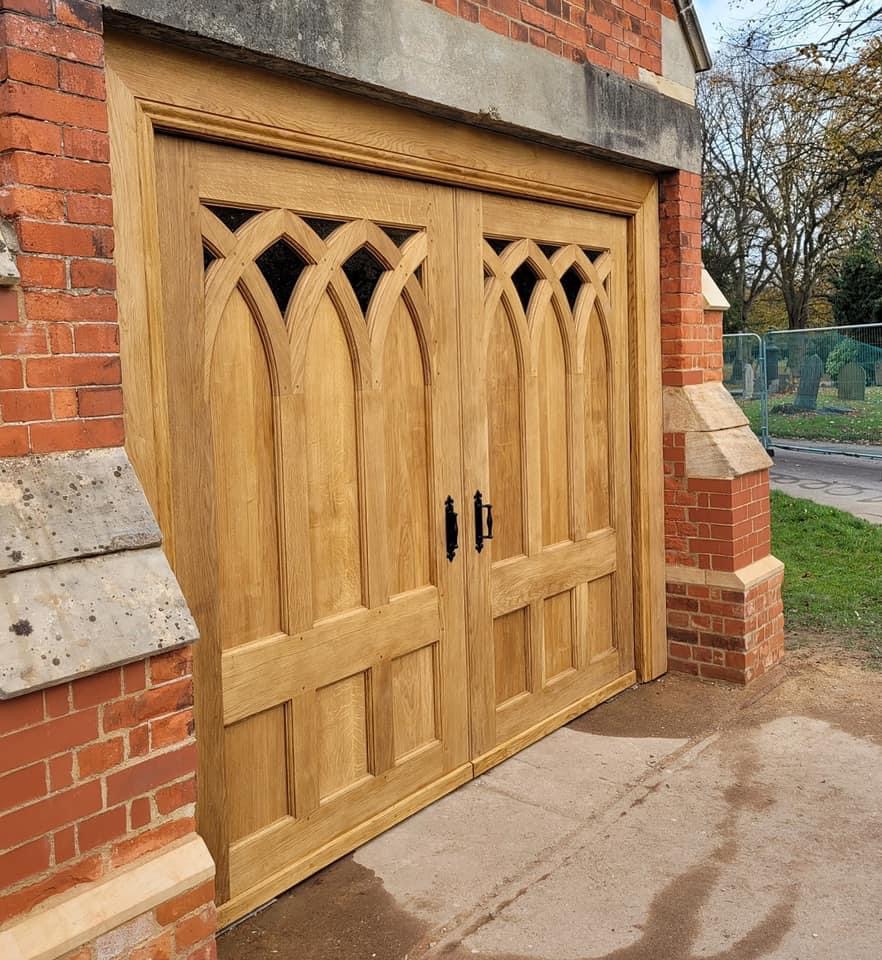
External joinery works required the removal and replacement of a timber door-set on the south chapel which was in a poor condition as a result of vandalism and general deterioration. Our in-house specialist joinery team constructed a new Kiln-dried Oak door-set In our workshop complete with Kirkpatrick Ironmongery door handles. On the Eastern elevation each chapel has a set of original timber arched braced and ledged doors that were well weathered, these were carefully removed and refurbished on site along with new iron cramps. Works completed with new external drainage installation.
Our restoration operatives thoroughly enjoyed works on the Scartho Cemetery Chapels and learning of the sites heritage. Works took place throughout the Covid-19 pandemic which resulted in some delays in materials from suppliers , but our operatives along with the Project Manager ensured minimal disruption to schedules. Operatives also resided in the local coastal towns of Grimsby and Cleethorpes during works.