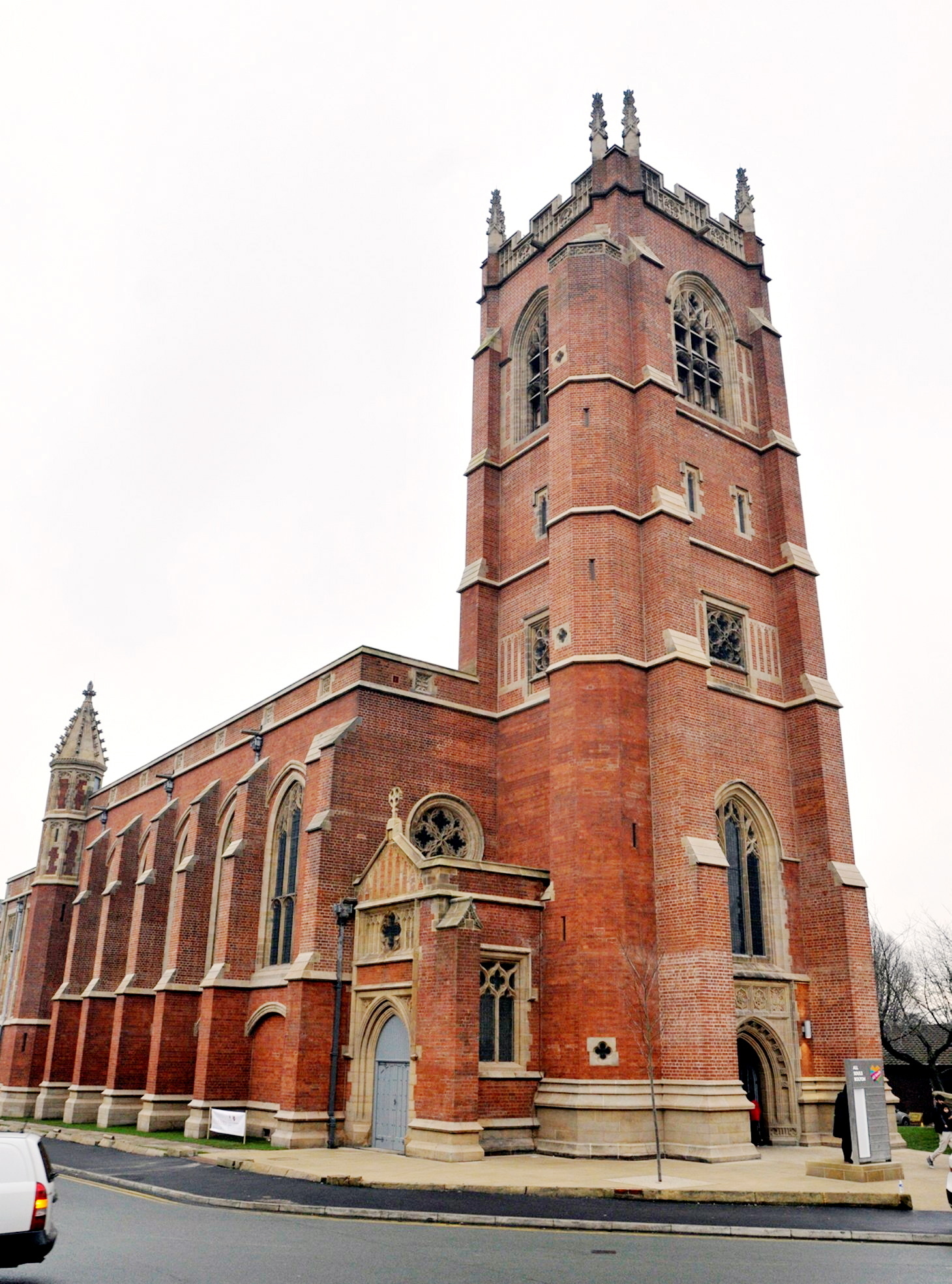
All Souls Church in Bolton is one of Lancashire’s most significant Victorian ecclesiastical buildings. Designed by renowned architects Paley & Austin and completed in 1881, the Grade II* listed church is now cared for by the Churches Conservation Trust and has been successfully adapted to provide flexible community facilities, offices and meeting spaces.
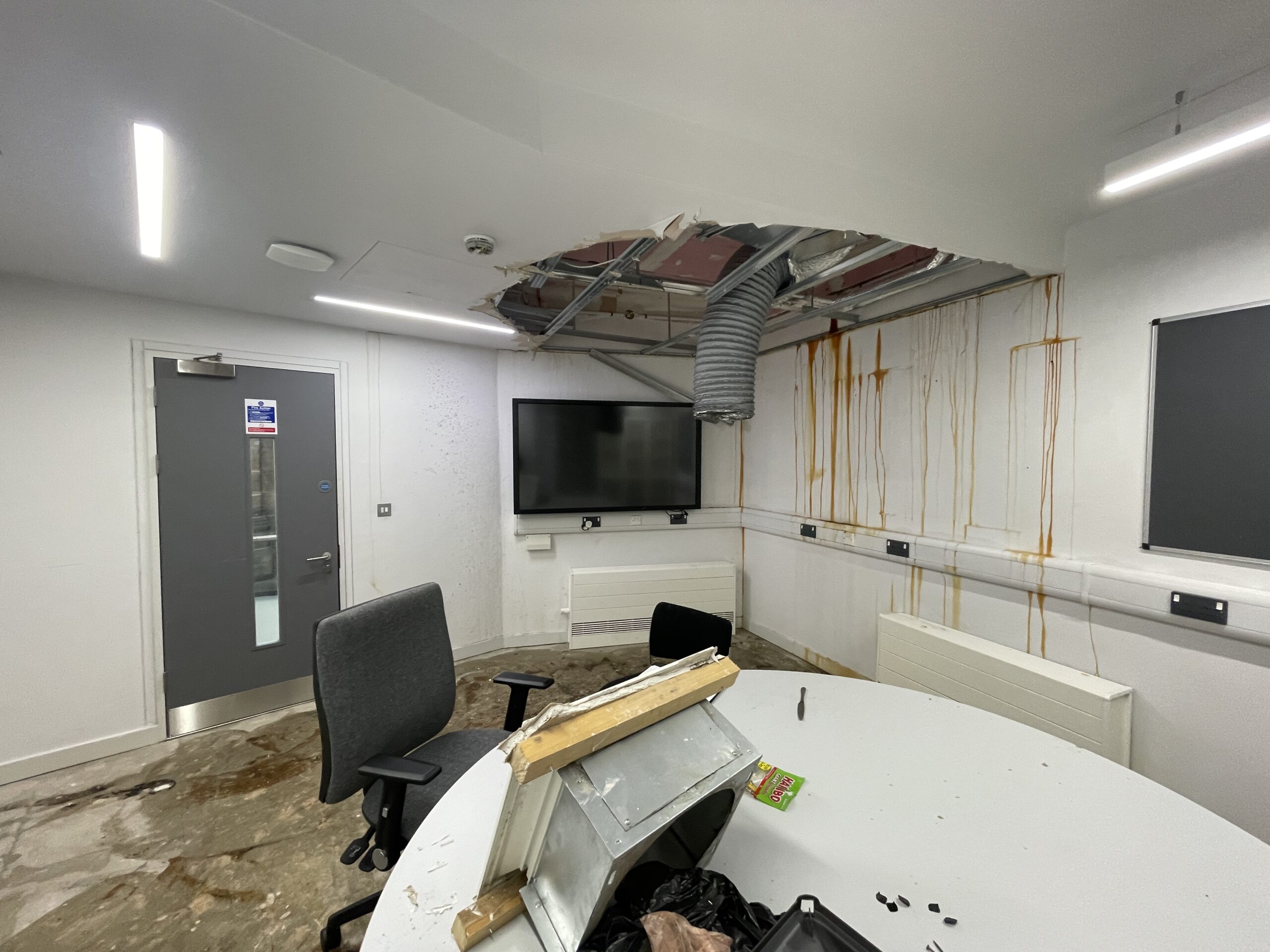
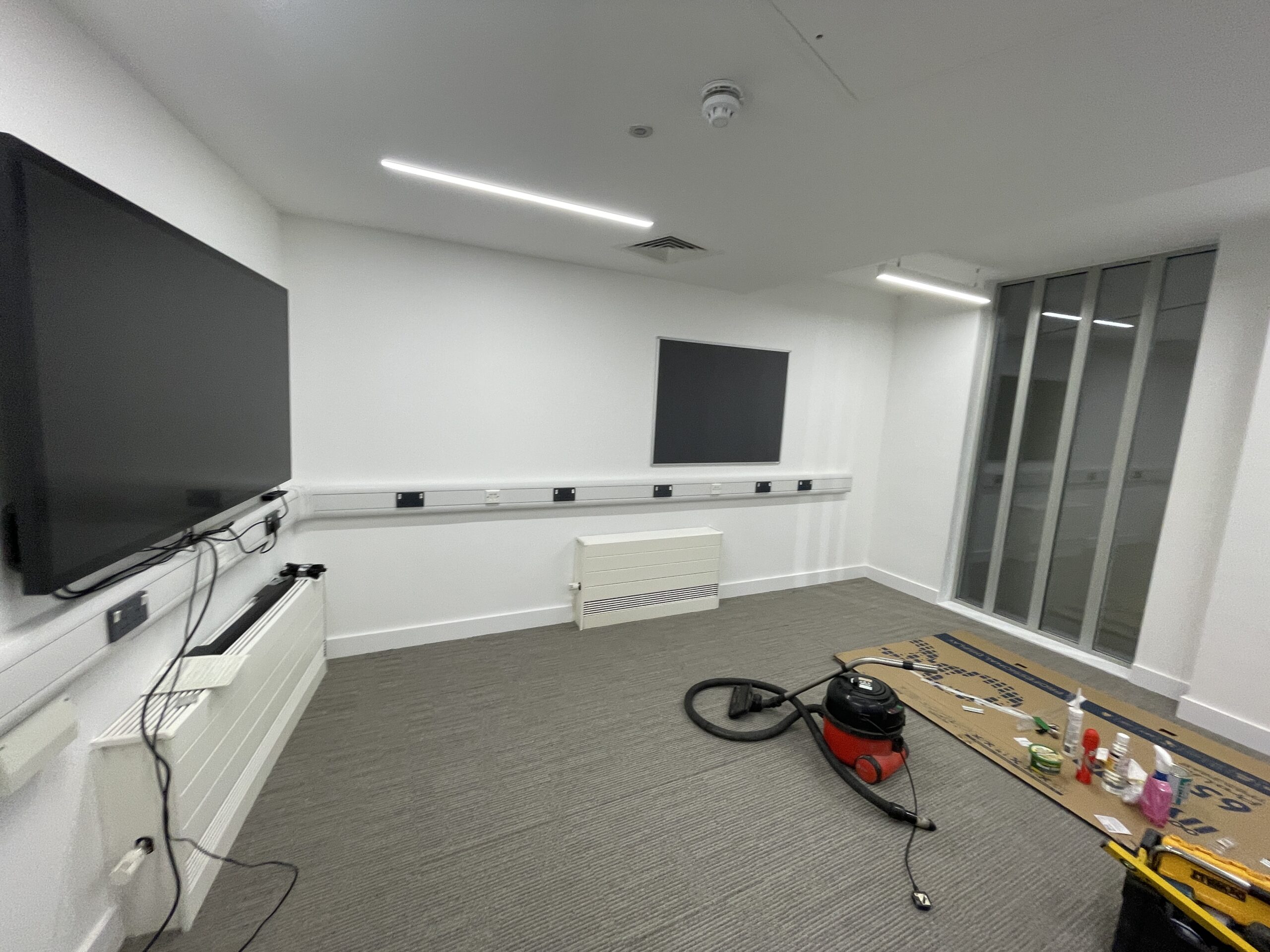
In November 2023, a leak within the building’s heating system pipework caused significant water damage to the Sharpe Room, a first-floor office and meeting space within the former church. The escape of water from pipework concealed above the suspended ceiling affected wall linings, ceiling finishes, flooring, electrical installations, fixtures and fittings, requiring a comprehensive programme of reinstatement works.
UK Restoration Services was appointed to undertake the repair works, delivering a carefully managed restoration programme that reinstated the damaged room while respecting the requirements of the Grade II* listed building and ensuring the continued operation of the wider site.
Assessing the Damage
Following investigations by specialist assessors and consultation with the project team, it was confirmed that the leak had originated within the heating system pipework located above the suspended ceiling. Water penetration affected a substantial proportion of the room’s finishes and fittings, including plasterboard linings, suspended ceilings, floor construction, electrical installations and decorative finishes.
As the building is listed, all works were carefully developed in consultation with the Churches Conservation Trust, conservation specialists to ensure that repair works respected the historic significance of the building while restoring the room to full functionality.
Careful Removal and Preparation Works
The project commenced with extensive protection measures to safeguard historic finishes and maintain safe access through the operational building. Temporary floor protection and carefully controlled working areas were established before the removal phase began.
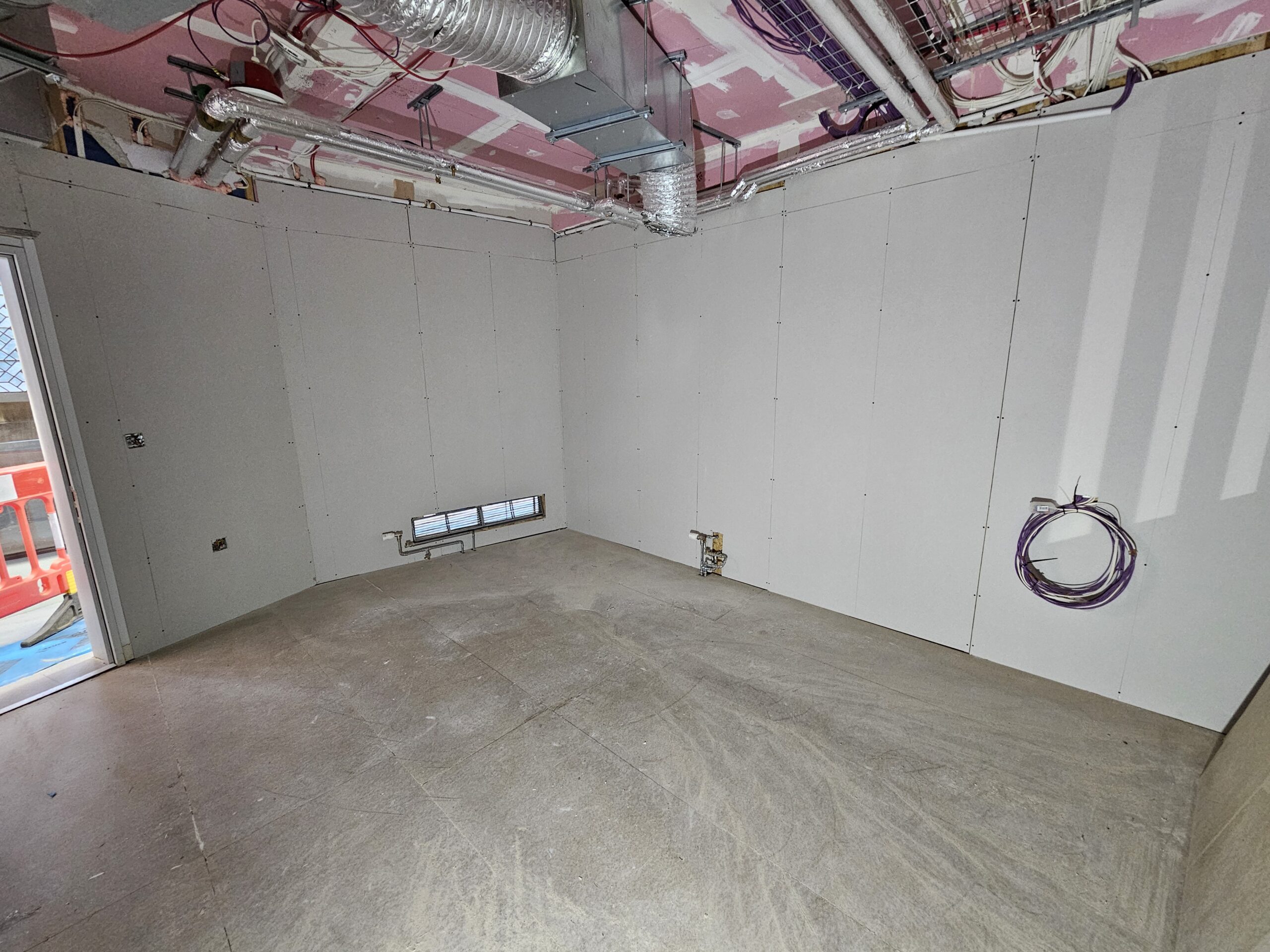
Damaged components were then systematically removed, including:
- Water-damaged suspended ceiling systems.
- Affected plasterboard wall linings.
- Distorted chipboard floor decking.
- Timber skirting boards.
- Damaged electrical fittings and services.
- Wall-mounted fixtures including display boards and audiovisual equipment.
Throughout the process, reusable items were carefully retained for reinstatement wherever possible, reducing waste and preserving existing building components.
Renewal of Internal Wall Linings
Significant sections of the room’s internal wall construction had been affected by prolonged moisture exposure.
To ensure a durable and consistent repair, damaged plasterboard linings were removed and replaced in full rather than relying on localised patch repairs. New 12.5mm plasterboard linings were mechanically fixed to the existing structural framework before receiving a high-quality skim plaster finish.
Particular attention was given to ensuring secure fixing locations for future fixtures and fittings, while maintaining fire performance through the installation of appropriate perimeter seals and fire-stopping measures.
The completed wall surfaces were finished to provide a seamless appearance between existing and replacement construction.
Flooring Repairs and Replacement
The water ingress had also affected the room’s floor construction, causing ridging and deformation within the chipboard deck.
Damaged floor sections were carefully removed and replaced with new tongue-and-groove chipboard flooring fixed back to the supporting structure. Once a sound substrate had been established, new carpet tile finishes were installed throughout the room to match the existing specification used elsewhere within the building.
The flooring package included the installation of Interface Equilibrium carpet tiles laid in a quarter-turn pattern, ensuring a high-quality finish while maintaining visual consistency with adjacent spaces.
Mechanical and Heating System Reinstatement
Given that the original damage resulted from the heating system, careful attention was paid to the reinstatement and testing of all mechanical services.
Existing radiators were removed to facilitate repairs and subsequently reinstated in their original positions following completion of the wall and floor works. Additional ventilation improvements included the installation of a new ceiling diffuser above the suspended ceiling to improve air circulation within the room.
Upon completion, the heating system underwent comprehensive testing and validation to ensure reliable operation and to confirm that all services were functioning correctly.
Electrical and Lighting Improvements
The leak had caused damage to several electrical installations, requiring extensive reinstatement works.
The electrical package included:
- Installation of replacement LED lighting.
- Rewiring and reinstatement of retained light fittings.
- Replacement and testing of power outlets.
- Reinstatement of data and telecommunications connections.
- Renewal of damaged perimeter trunking.
- Reinstallation of Wi-Fi and fire detection equipment.
All electrical works were fully tested and certified upon completion, ensuring compliance with current standards and restoring the room’s functionality as a modern office and meeting environment.
Decoration and Interior Finishes
To ensure a consistent appearance throughout the room, comprehensive redecoration works were undertaken following completion of the repairs.
Walls and ceilings received new primer, mist coats and full decorative finishes, while replacement joinery elements including skirting boards and door linings were decorated to match the existing colour schemes and finishes.
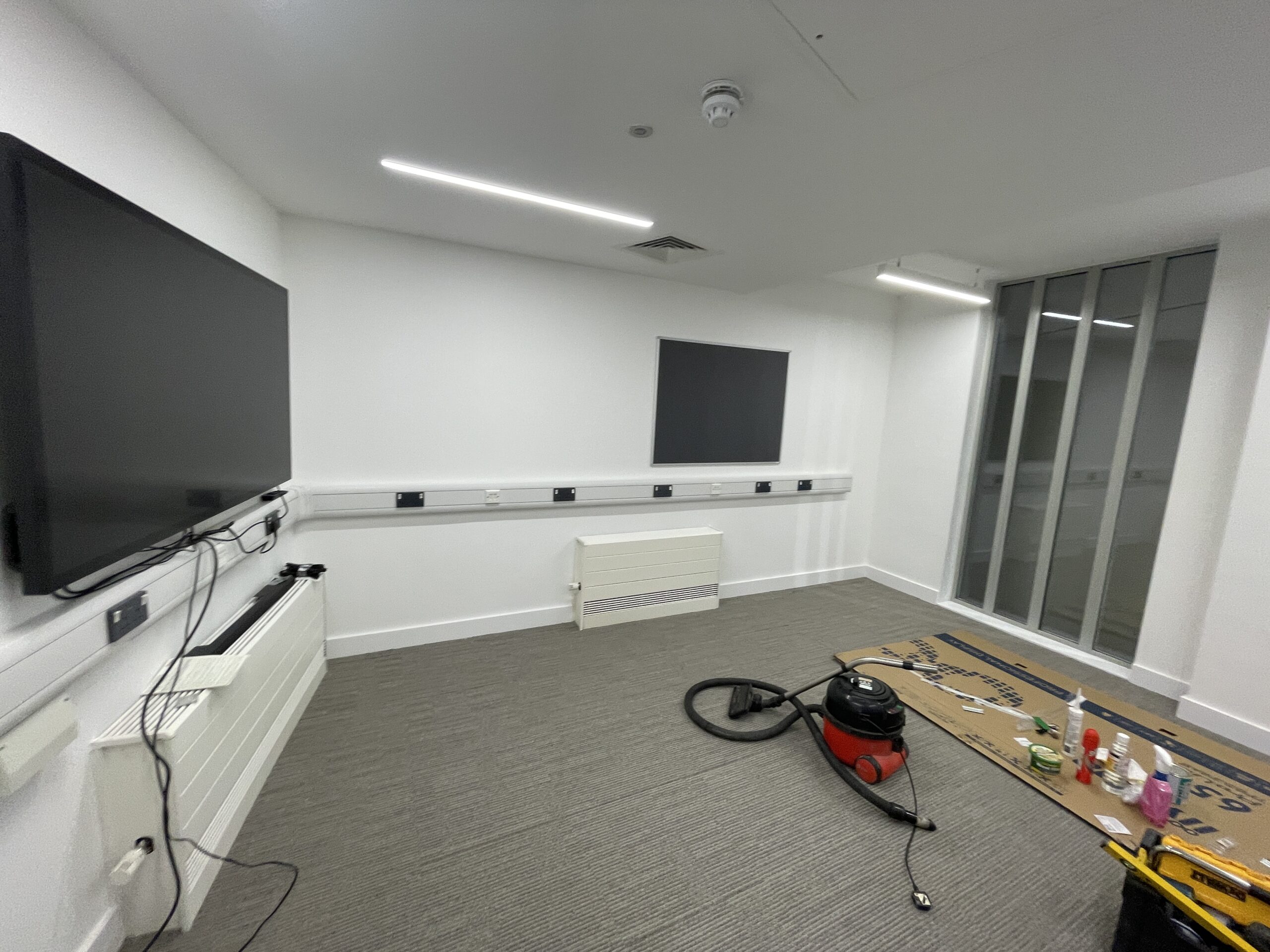
The result was a fully refurbished interior that concealed evidence of the previous water damage and restored the Sharpe Room to a high standard of presentation.
Fixtures, Fittings and Technology Upgrades
The final phase of the project focused on reinstating the room’s fixtures and equipment.
New whiteboards, noticeboards and a replacement digital display system were installed, restoring the room’s functionality as a flexible workspace and meeting facility. A new iiyama interactive display was incorporated as part of the final fit-out, enhancing the room’s capabilities for presentations, training and community use.
These improvements ensured the room was not only reinstated but enhanced for future users.
Delivering Repairs Within a Historic Building
Working within a Grade II* listed church required a sensitive approach throughout the project. Although the repairs focused primarily on modern interventions introduced during the building’s conversion, every stage of the works had to be carefully managed to avoid damage to historic fabric and significant architectural features.
Detailed protection measures, careful sequencing of works and close collaboration with the project architect and Churches Conservation Trust ensured that the repairs were delivered successfully while maintaining the integrity of this important heritage asset.
Returning the Sharpe Room to Full Use
Completed in August 2025, the Sharpe Room repair project successfully restored a valuable community and office space following significant water damage. Through careful reinstatement of internal finishes, mechanical and electrical systems, flooring and fixtures, the project returned the room to full operational use while respecting the historic importance of All Souls Church.
The completed works demonstrate how specialist restoration and refurbishment can successfully address modern building failures within heritage settings, ensuring that important historic buildings continue to serve contemporary community needs for years to come.