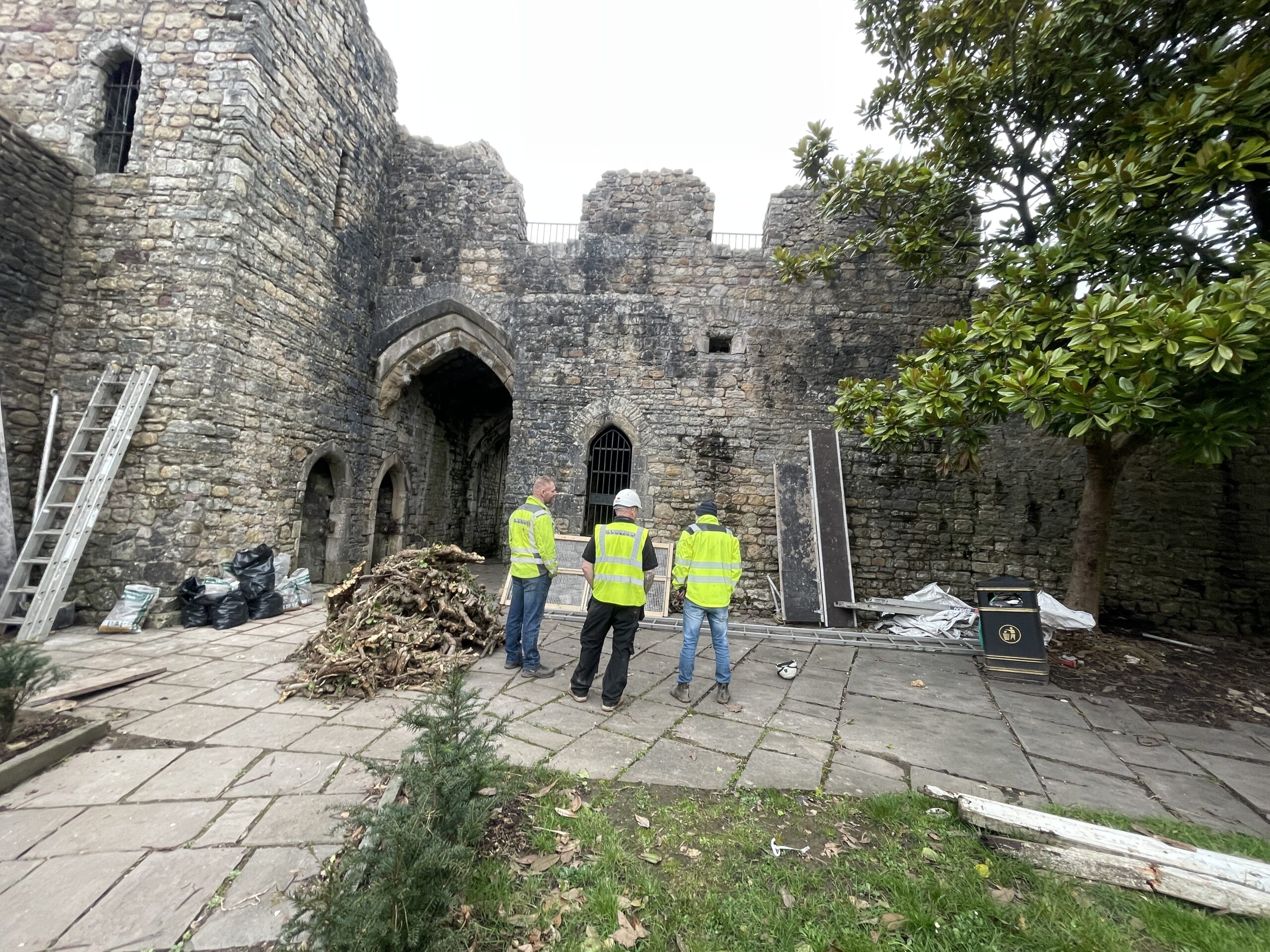
UK Restoration Services was appointed to undertake specialist conservation, masonry restoration and structural repair works at the historic Bishops Palace in Llandaff, Cardiff. As one of South Wales’ most significant medieval monuments, the Grade I Listed and Scheduled Ancient Monument required a carefully considered programme of conservation-led interventions to preserve its historic fabric while improving long-term structural stability.
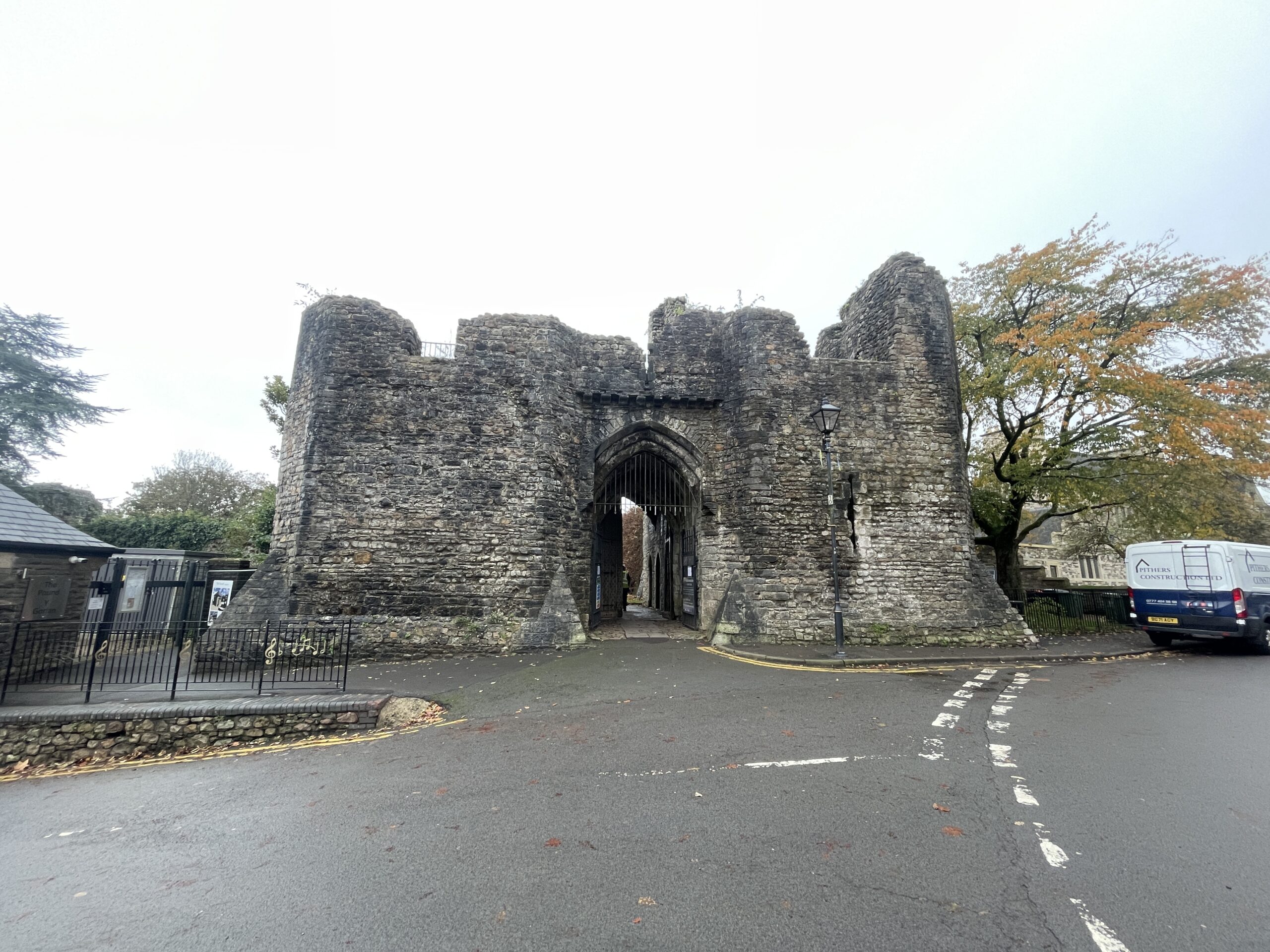
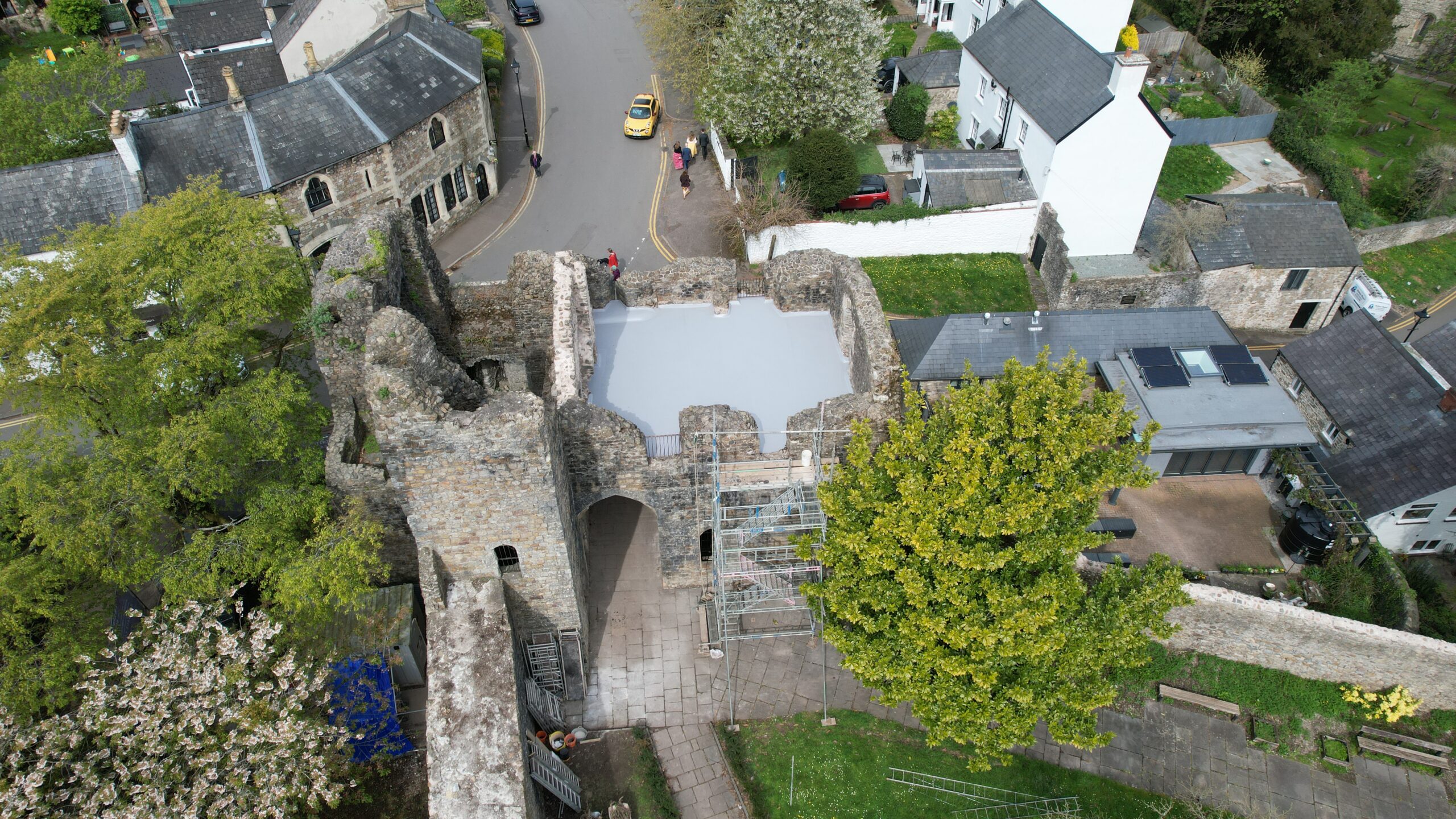
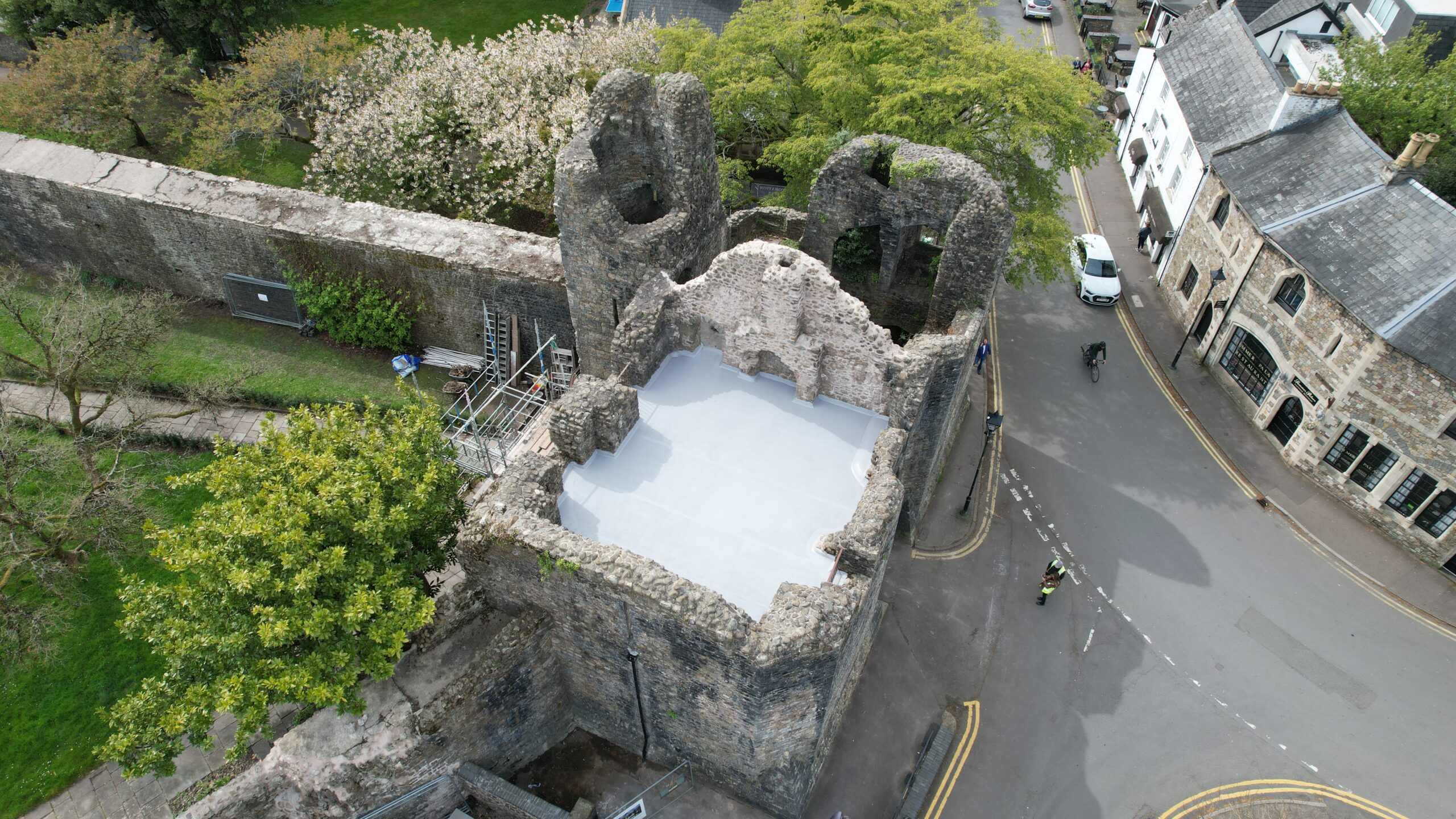
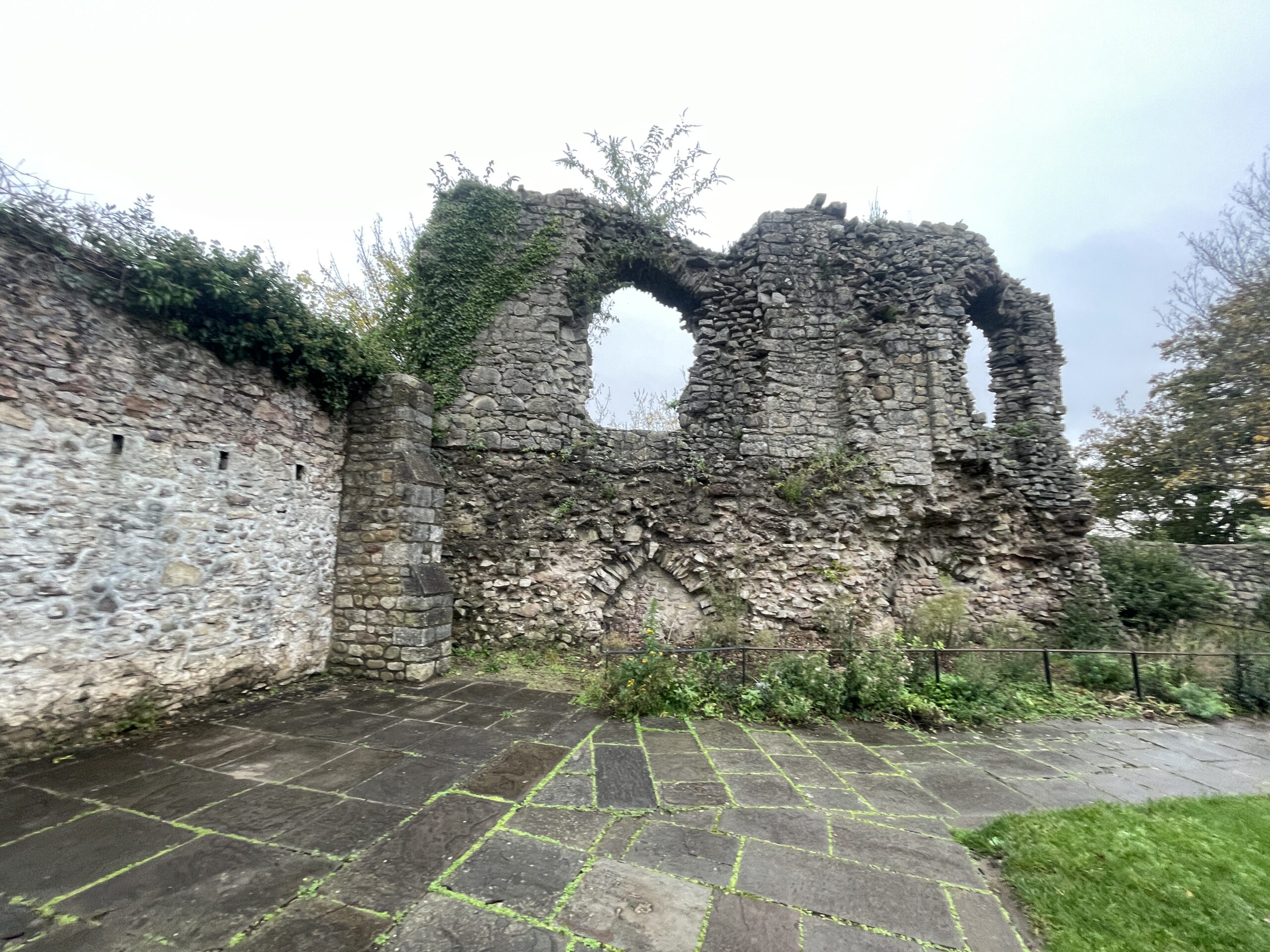
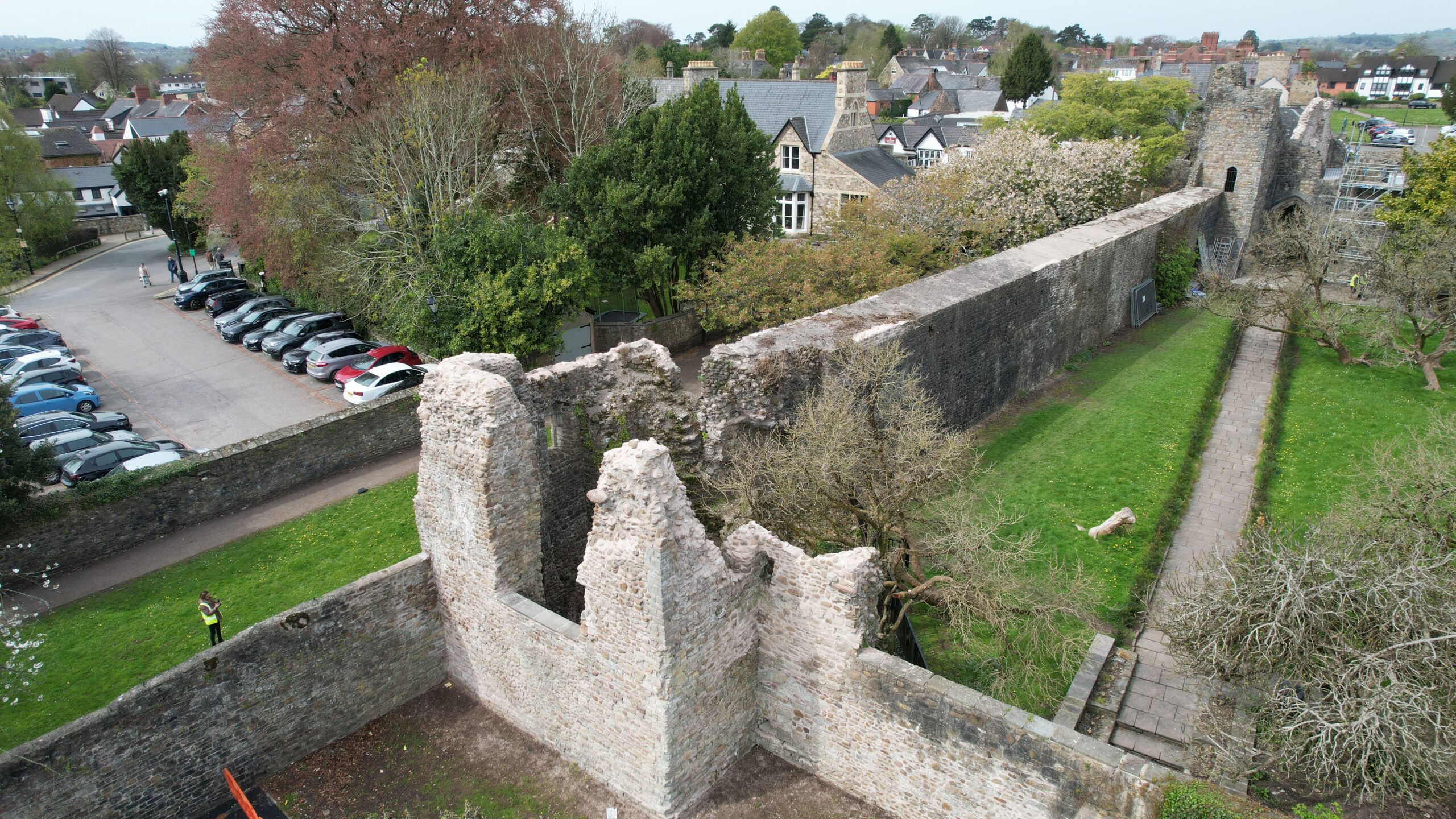
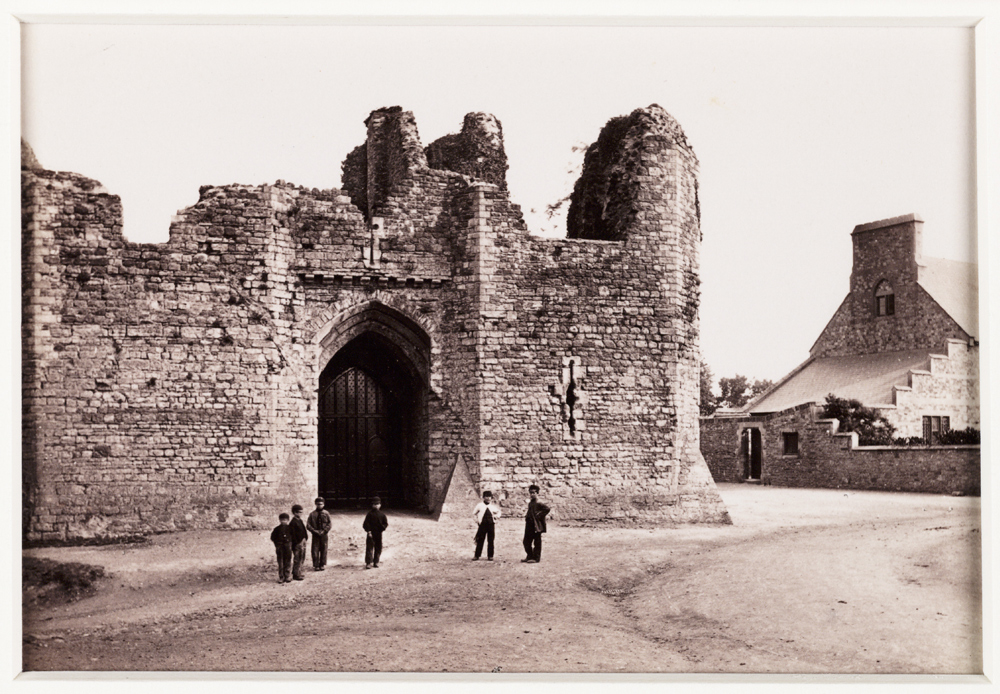
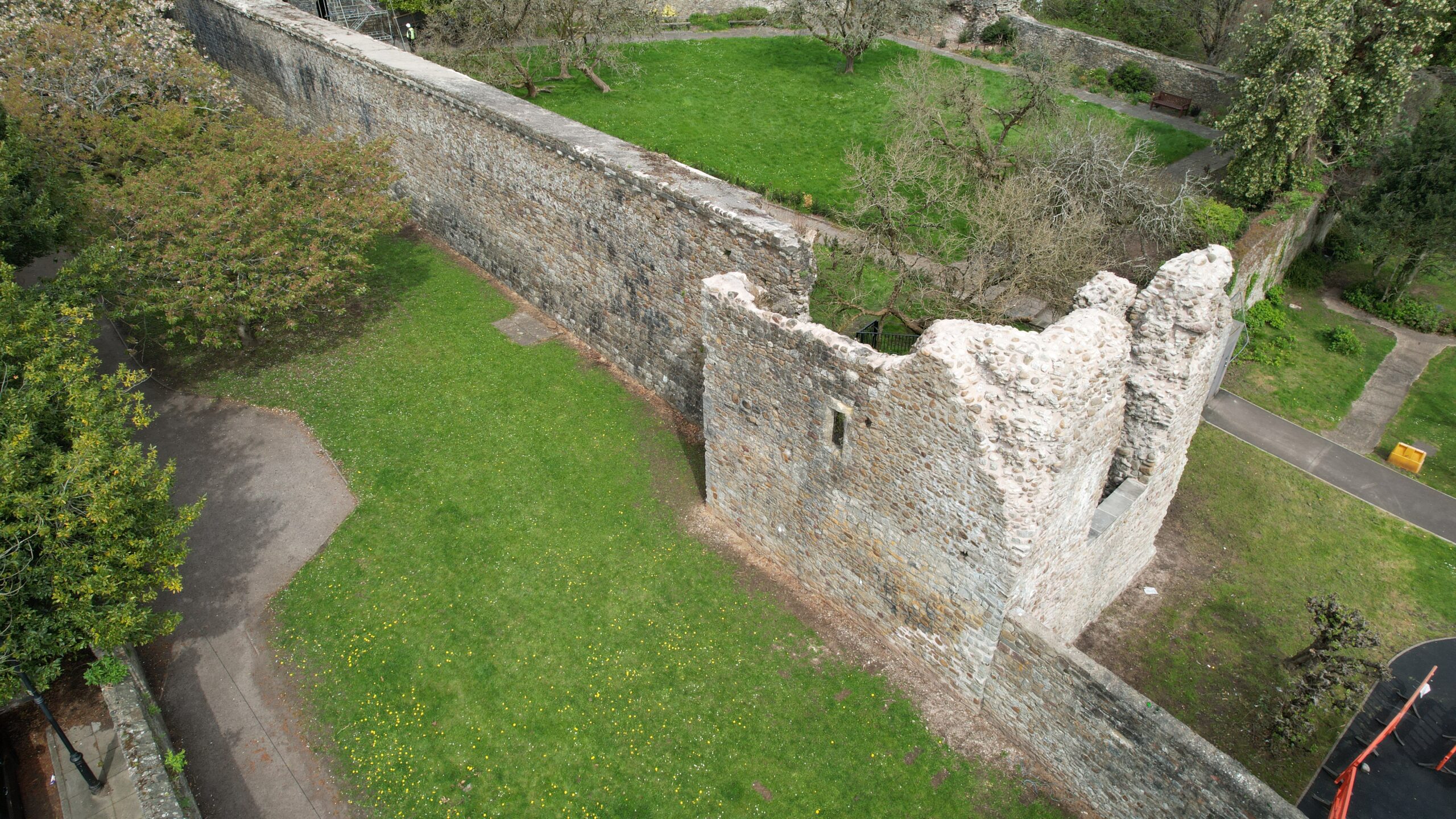
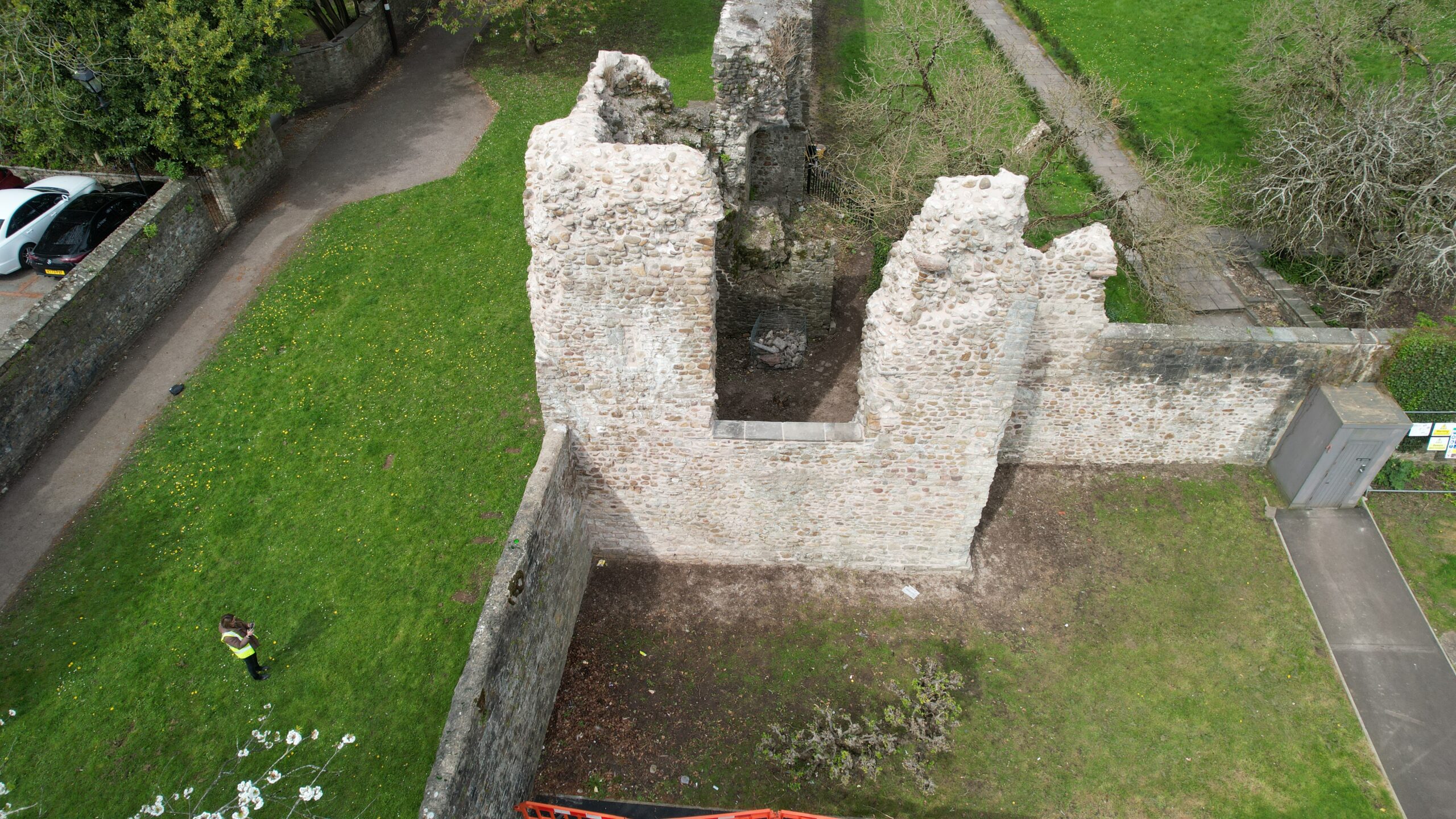
Located within the historic heart of Llandaff and adjacent to Llandaff Cathedral, Bishops Palace is a nationally important heritage asset comprising the remains of a medieval palace, gatehouse, boundary walls and associated structures. The project focused on the repair and conservation of key elements throughout the site, including the gatehouse, Great Hall walls, Well Cottage boundary wall, Cathedral School boundary walls, north and west perimeter walls, and numerous areas of deteriorated historic masonry.
Working within a highly sensitive heritage environment demanded a meticulous approach that balanced conservation best practice with practical construction solutions. Every aspect of the works was designed to protect the monument’s historical significance whilst ensuring its continued preservation for future generations.
Site Constraints and Heritage Considerations
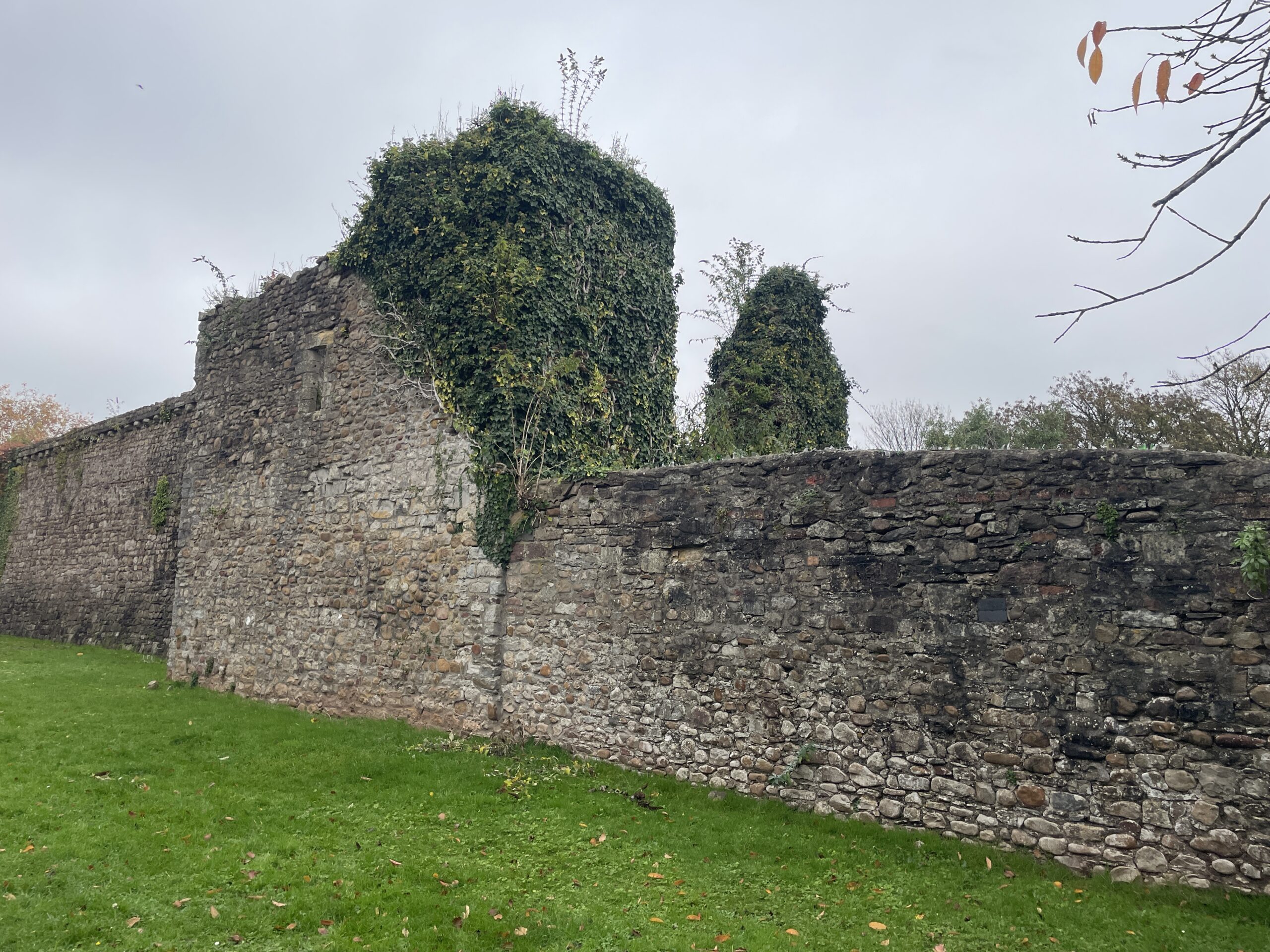
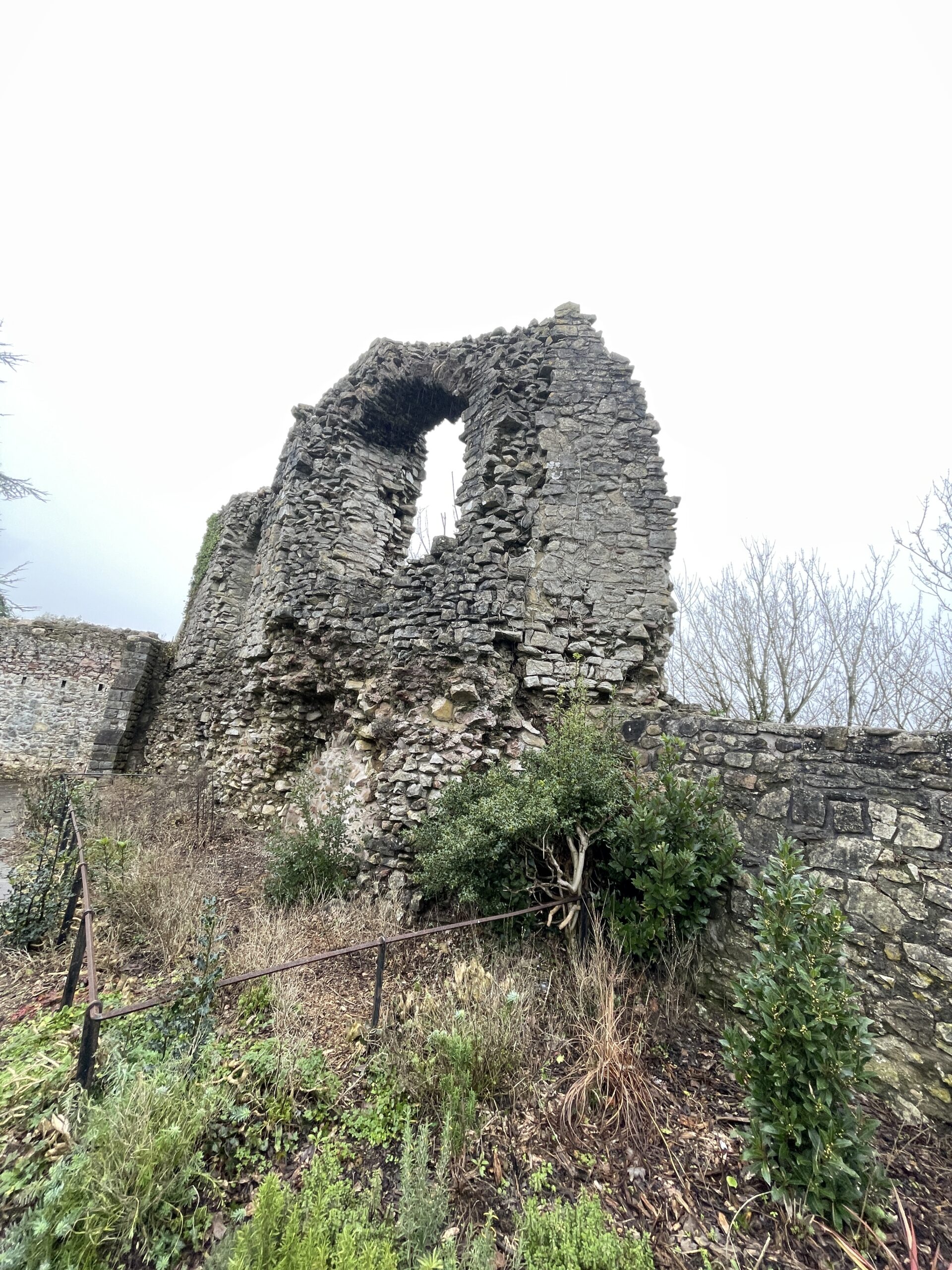
One of the principal challenges of the project was the condition and fragility of the existing medieval masonry. Centuries of weather exposure, biological growth, vegetation ingress and natural deterioration had left sections of the structure vulnerable to further movement and water penetration. Many areas required careful inspection before works could commence, with repair methodologies adapted to suit the condition of the original fabric.
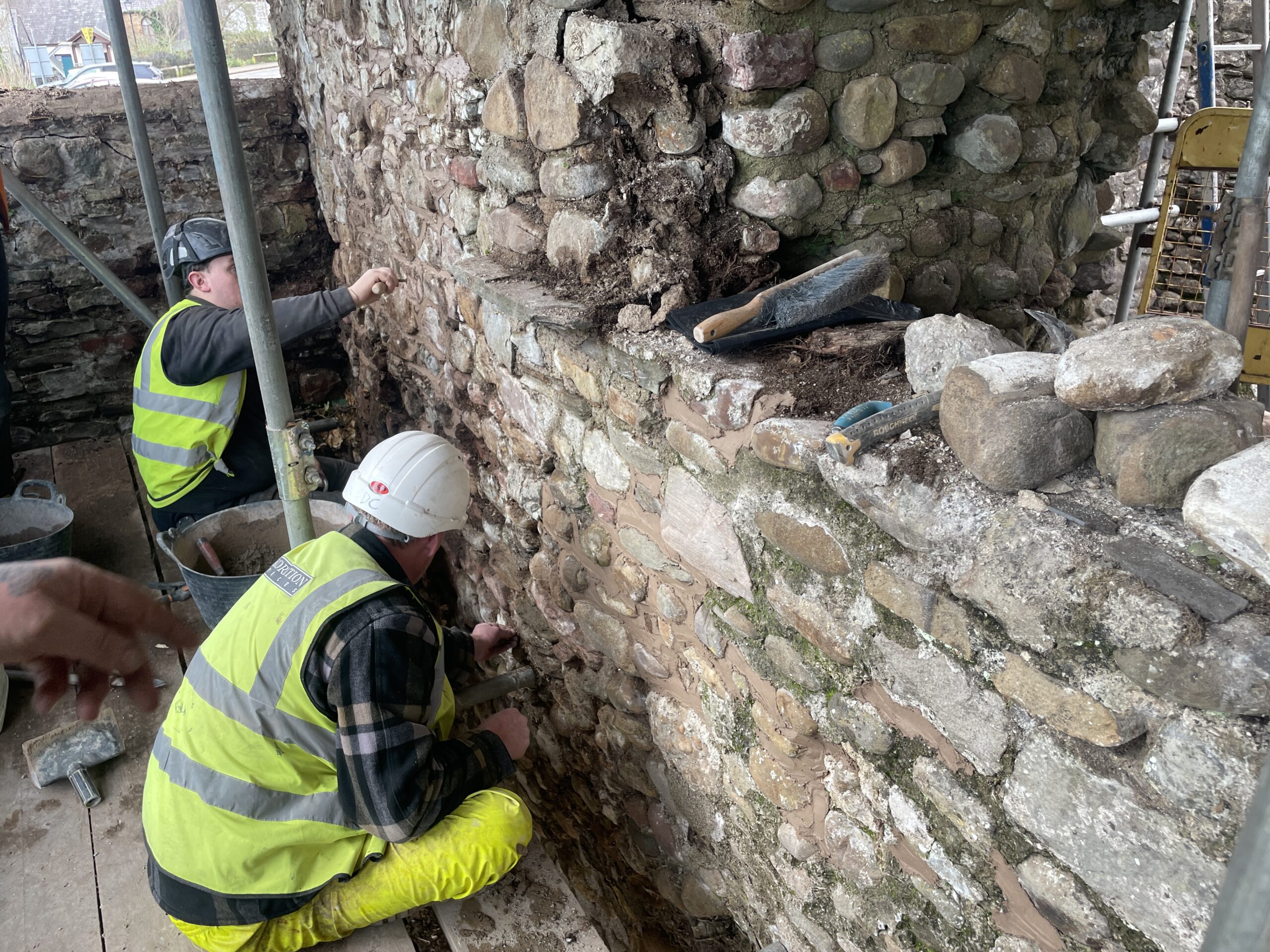
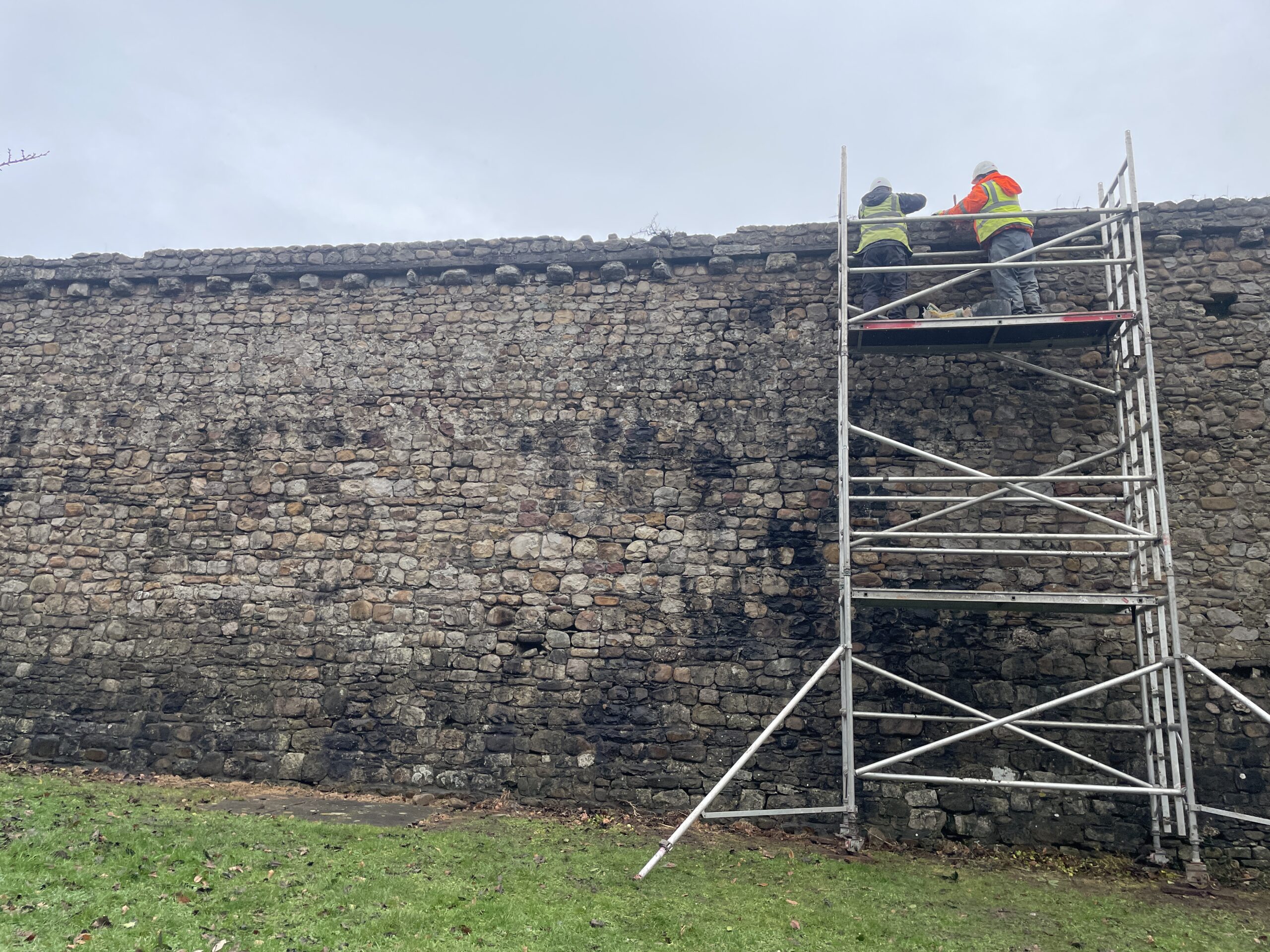
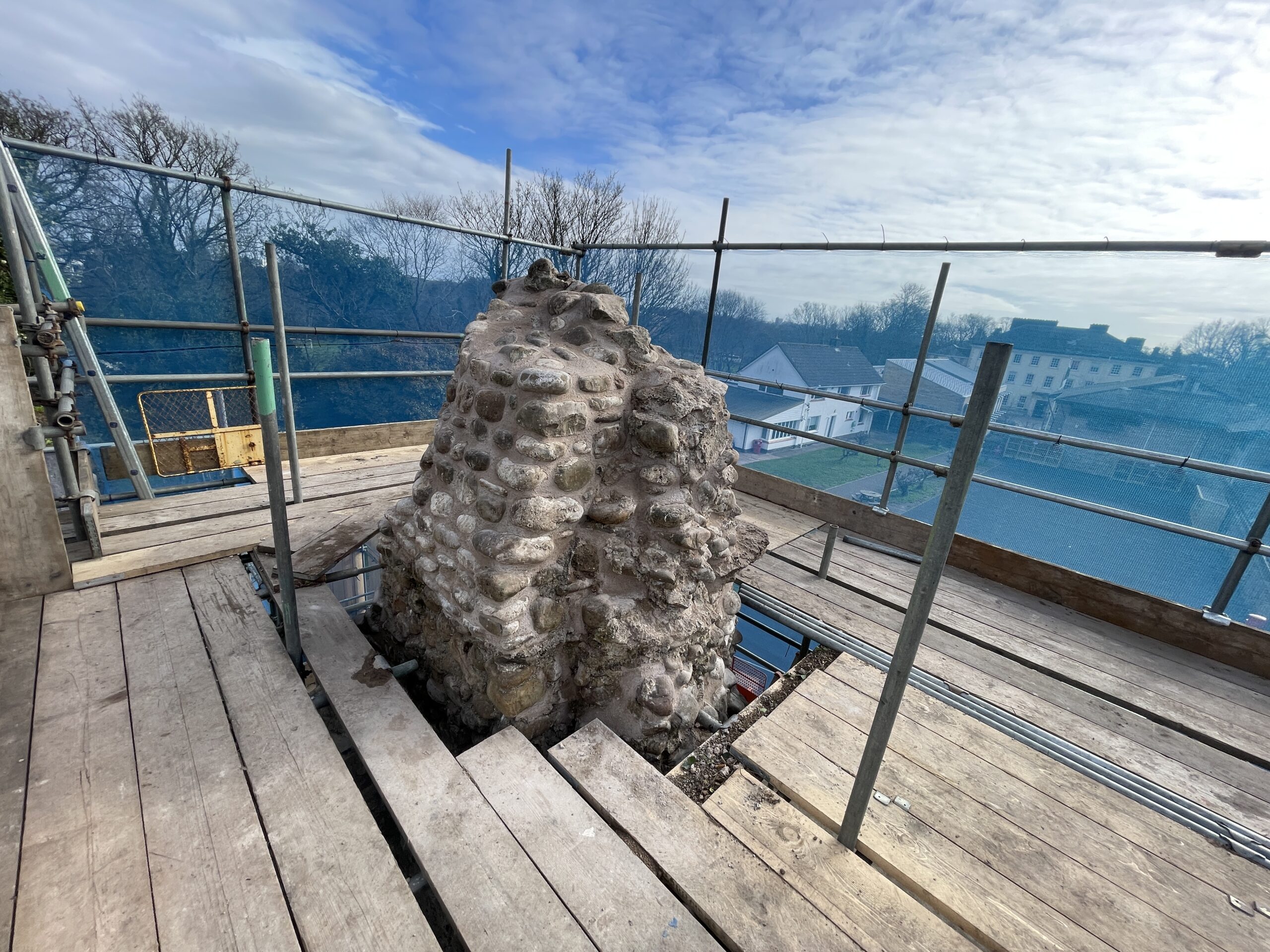
Access to elevated areas of the structure also required specialist consideration. Due to the fragile condition of many historic walls and towers, traditional access methods had to be supplemented with a combination of scaffold systems, mobile access platforms, MEWP’s and specialist rope access techniques. This approach minimised loading on vulnerable structures whilst enabling safe access to difficult-to-reach areas across the monument.
The conservation requirements associated with a Scheduled Ancient Monument meant all repairs needed to be undertaken using appropriate traditional materials and techniques. Modern interventions were carefully avoided wherever possible, with emphasis placed on compatibility, reversibility and the long-term preservation of original historic fabric.
Scope of Restoration Works
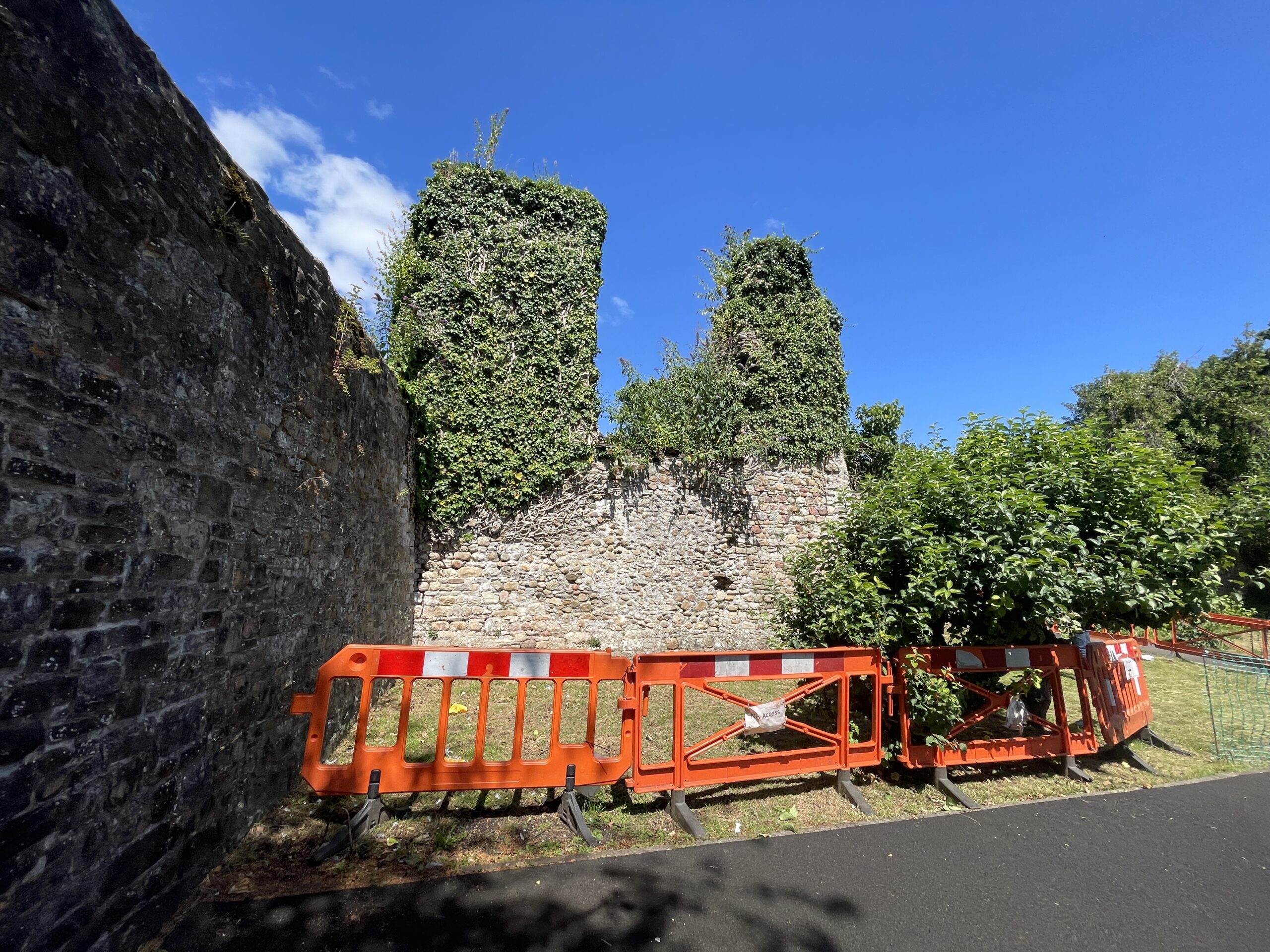
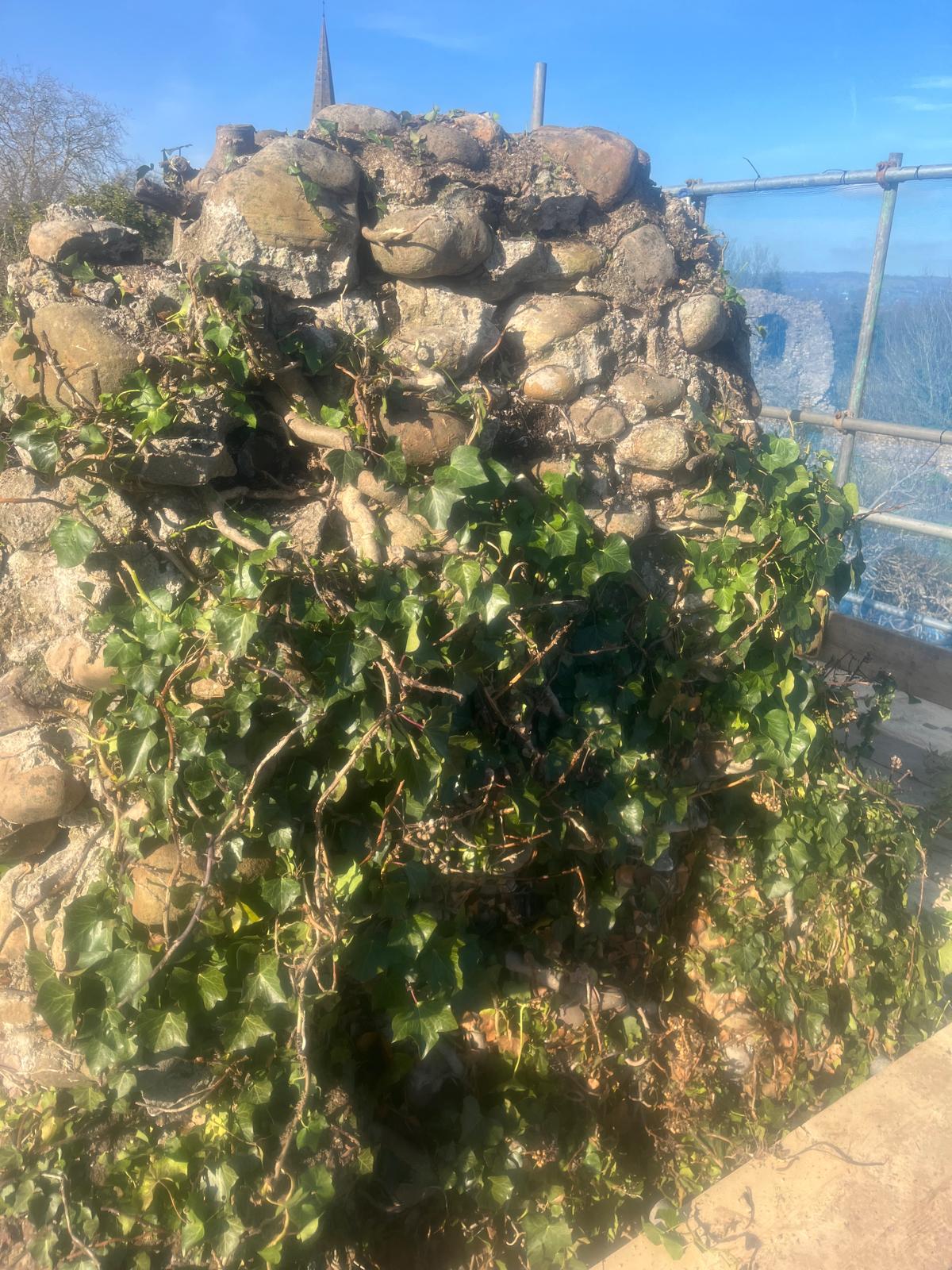
The programme commenced with preparatory works including extensive de-vegetation of the heavily embedded ivy and buddleia and site-wide assessments to identify areas requiring urgent intervention. Extensive masonry conservation works were undertaken throughout the site, focusing on stabilisation, weatherproofing and repair of deteriorated historic structures.
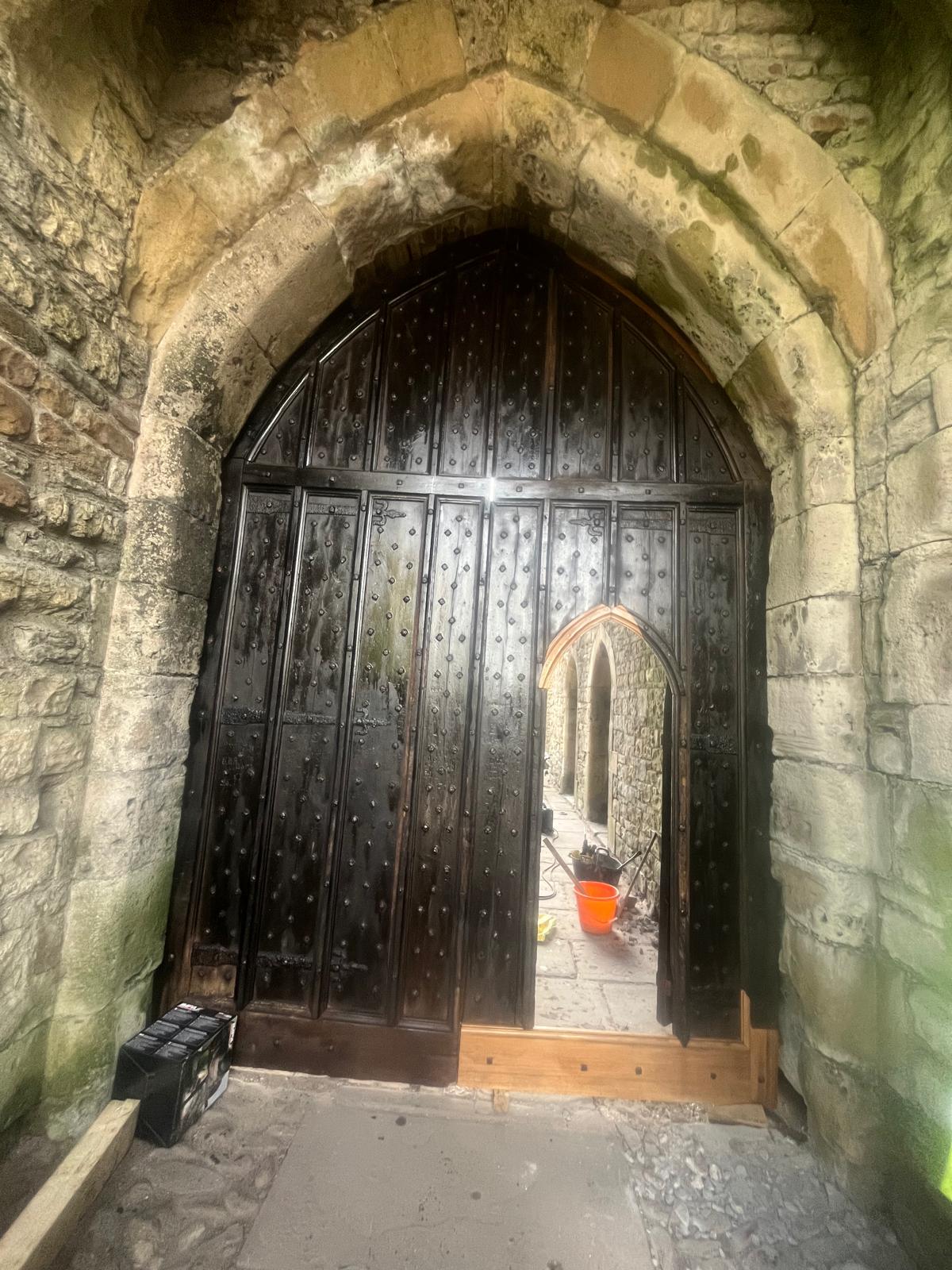
One of the most prominent aspects of the project involved the restoration of the medieval timber gates within the gatehouse. The historic oak gates were carefully removed and transported to our specialist workshop where conservation repairs were undertaken. Damaged timber sections were replaced using air-dried oak to match the original construction, historic detailing was reinstated and security improvements were incorporated without compromising the heritage significance of the gates. Following completion, the restored gates were returned to site and reinstalled within the gatehouse.
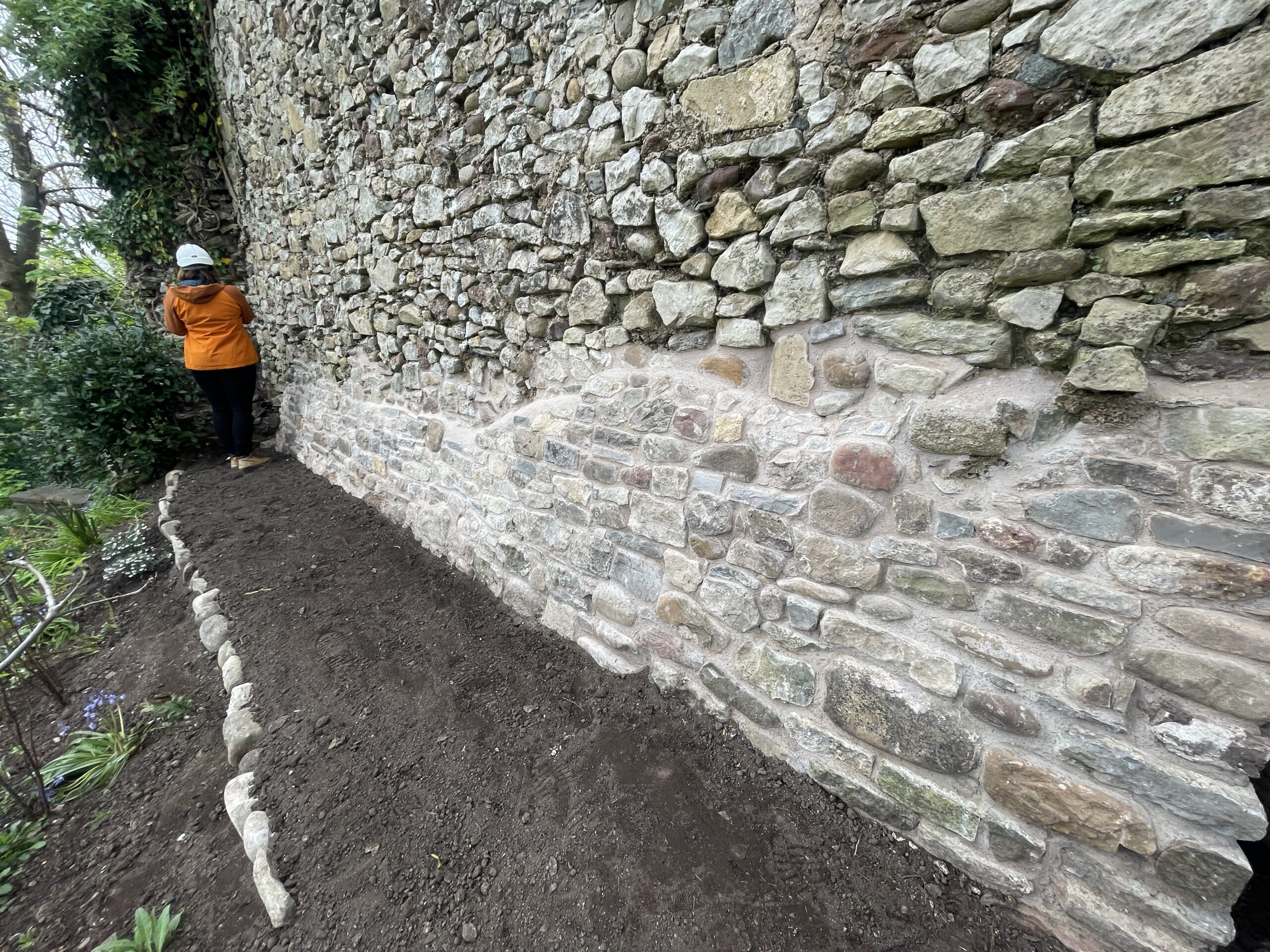
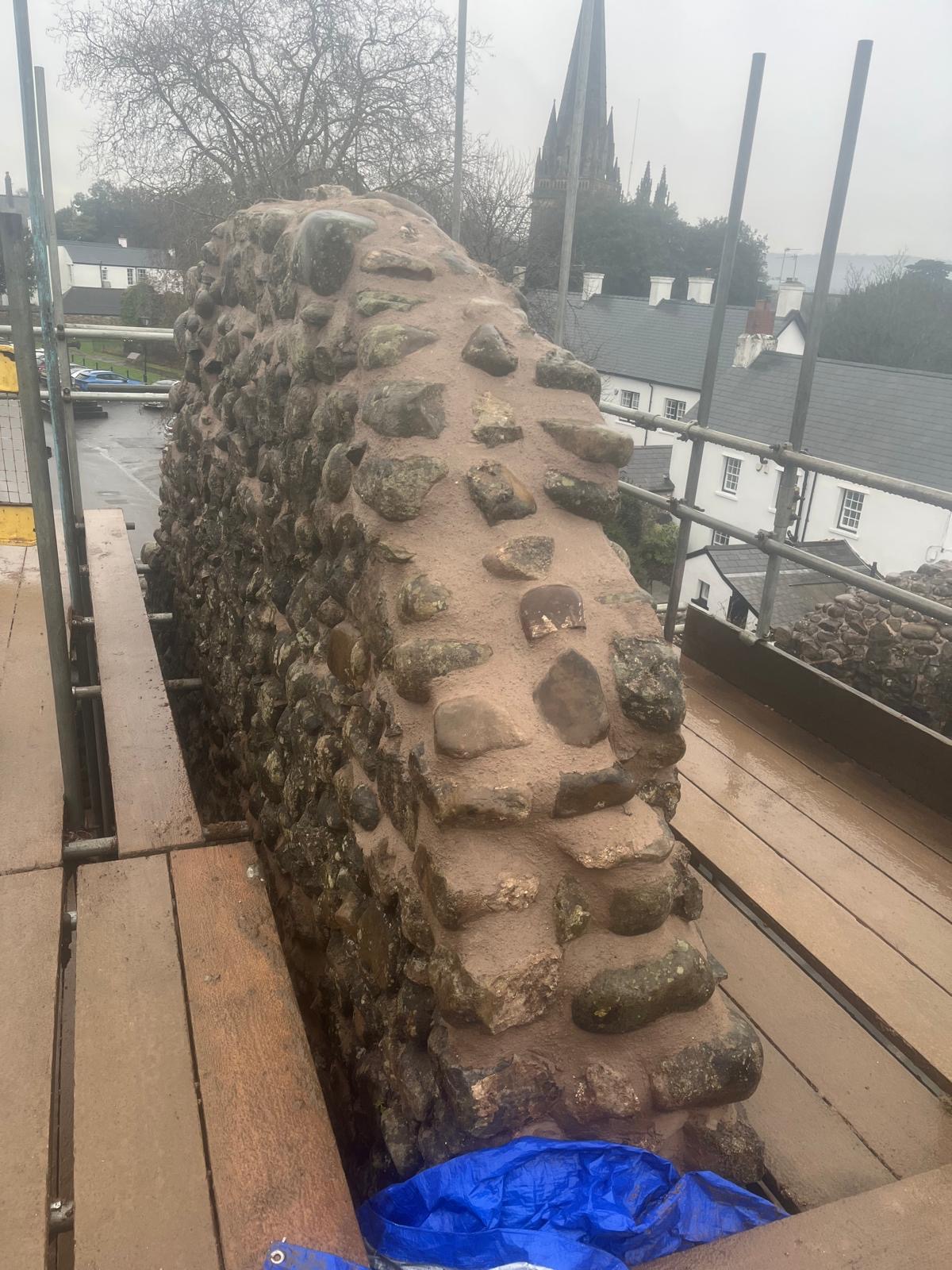
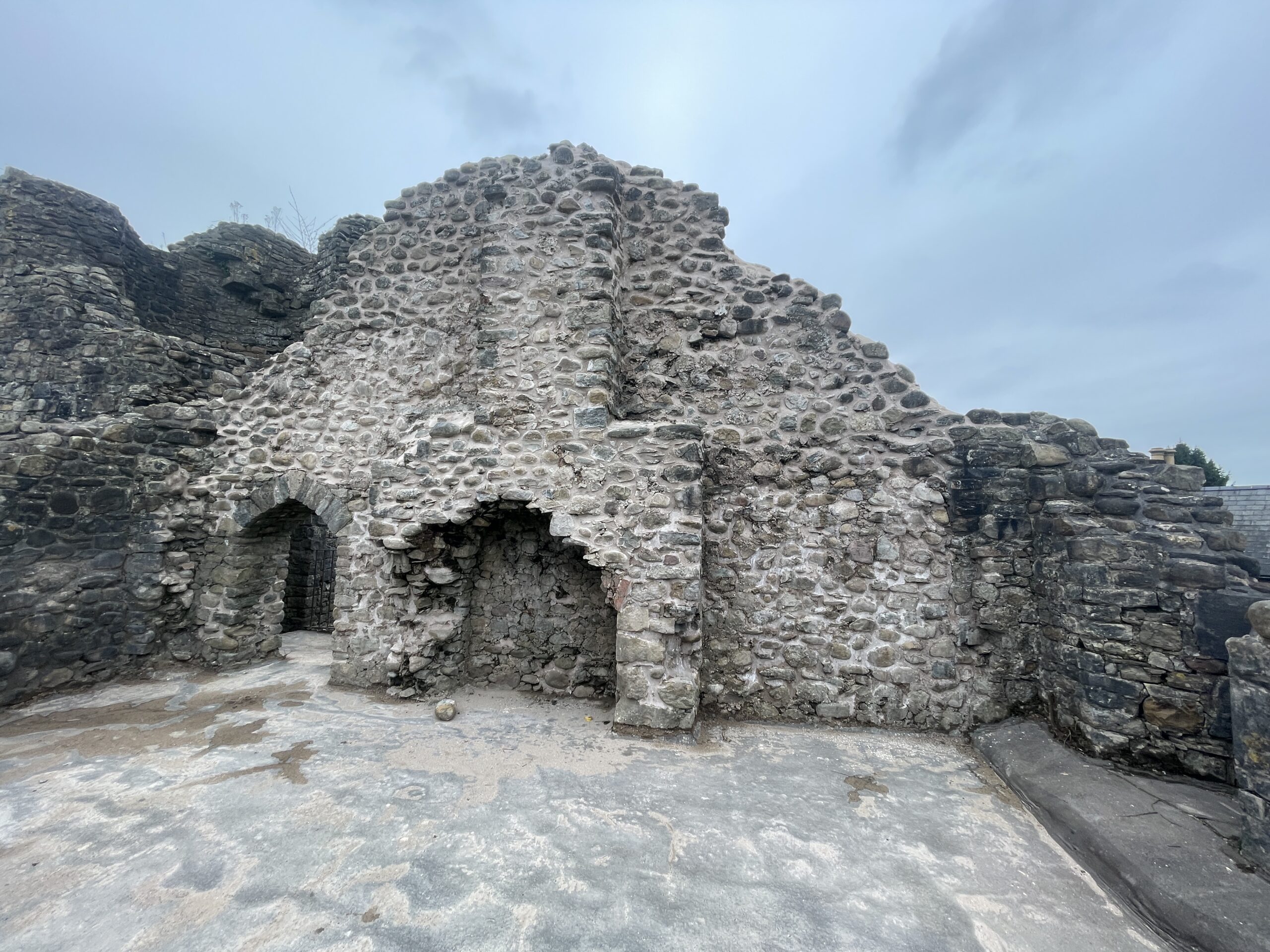
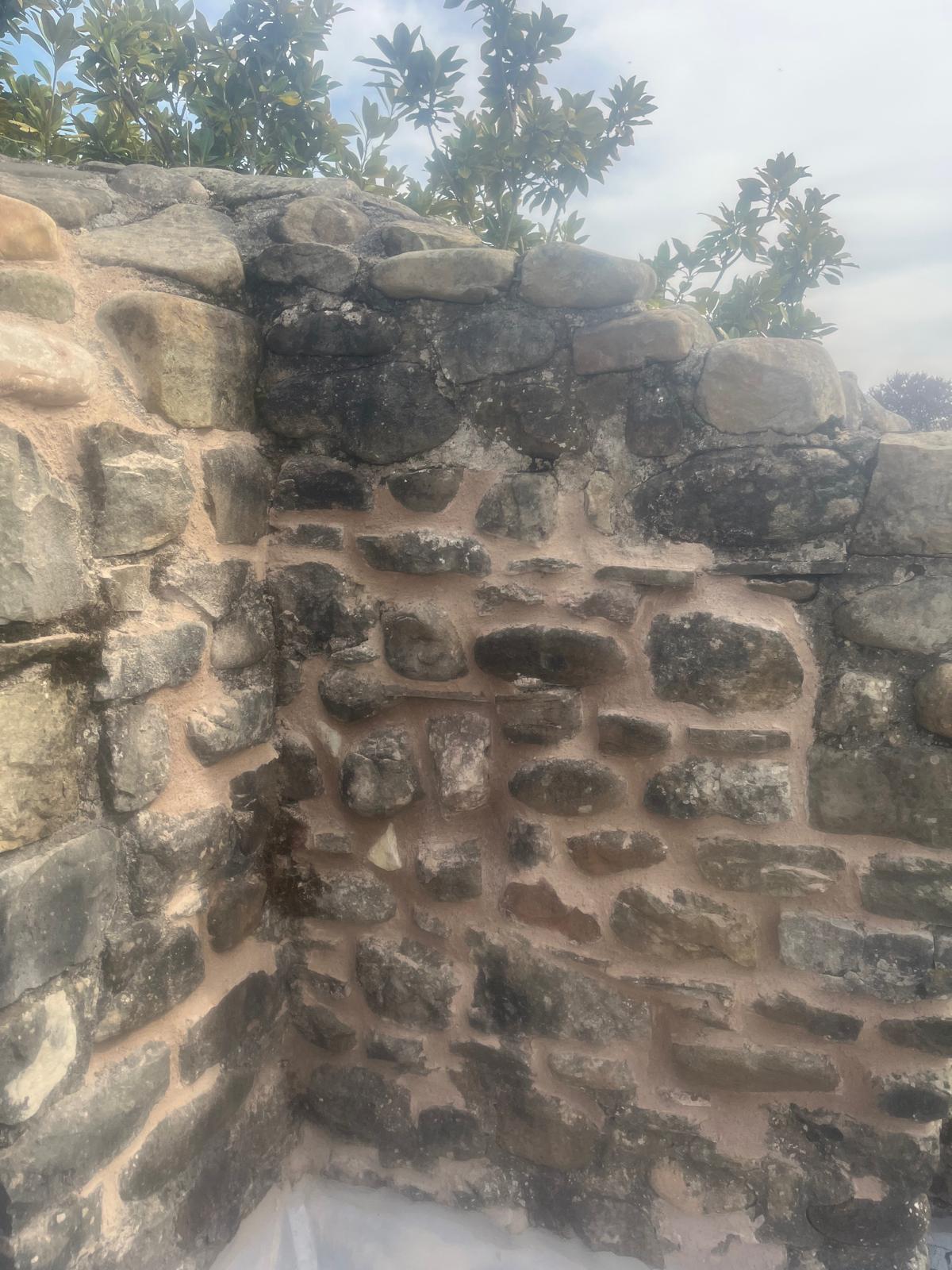
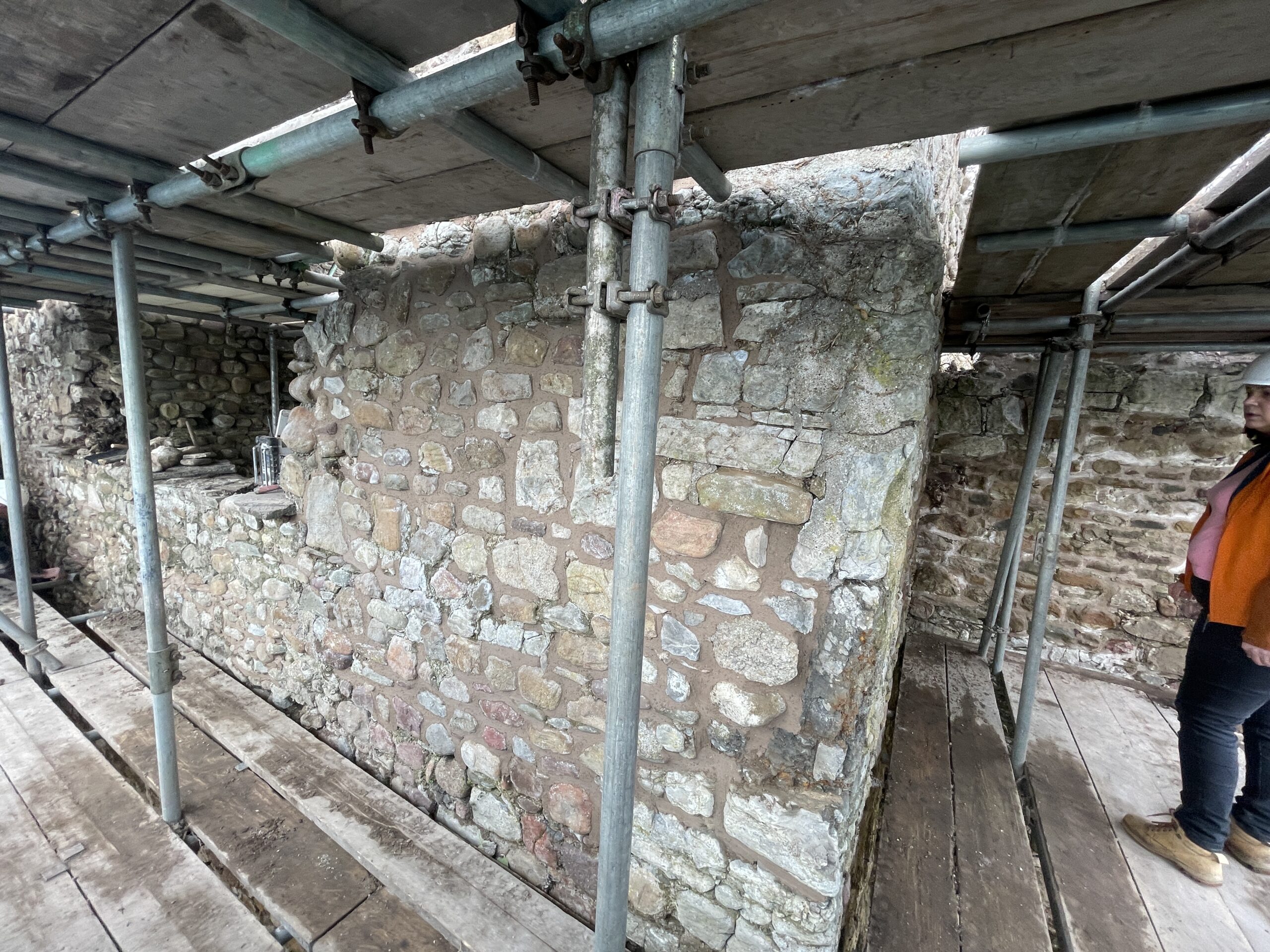
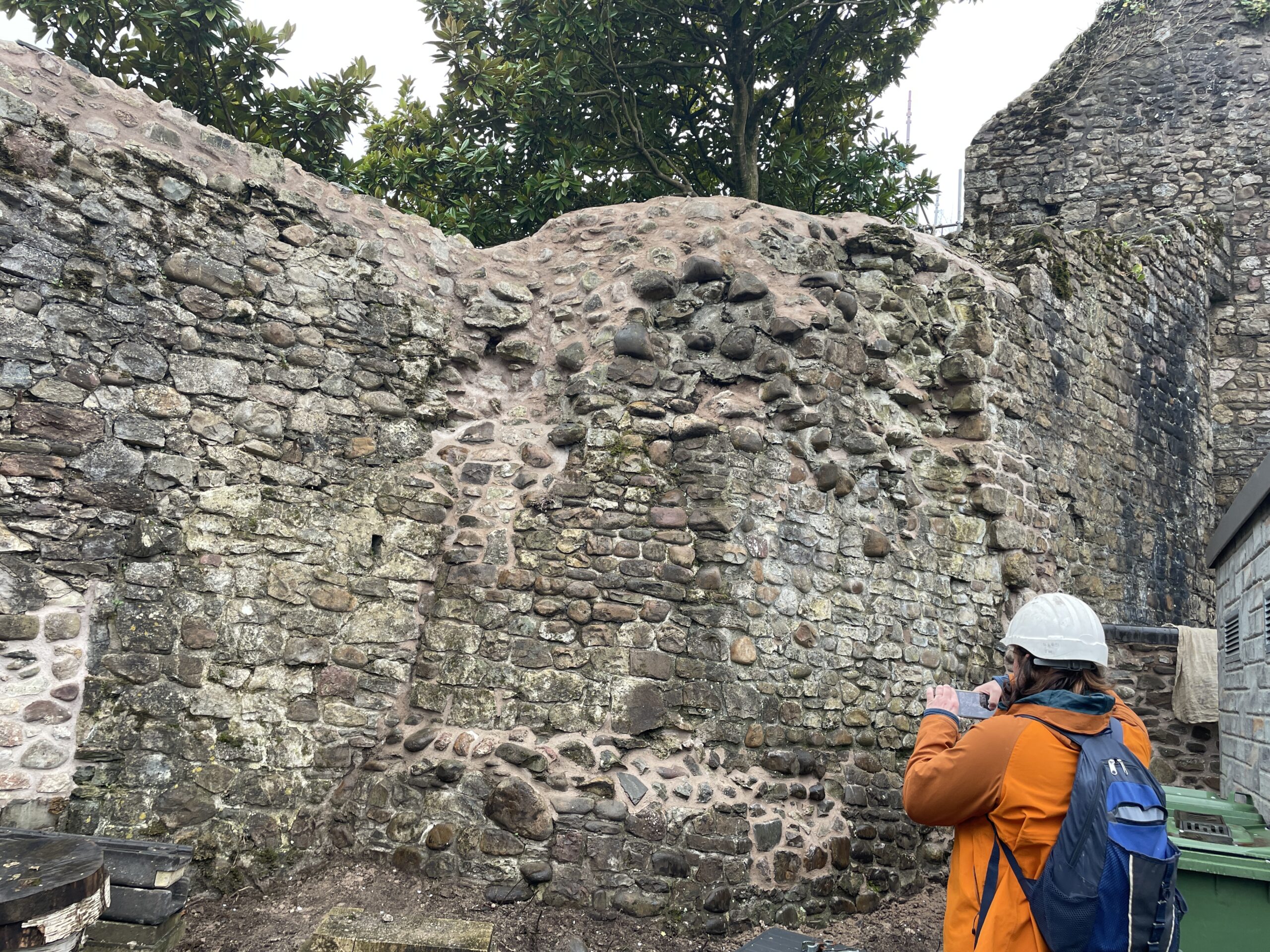
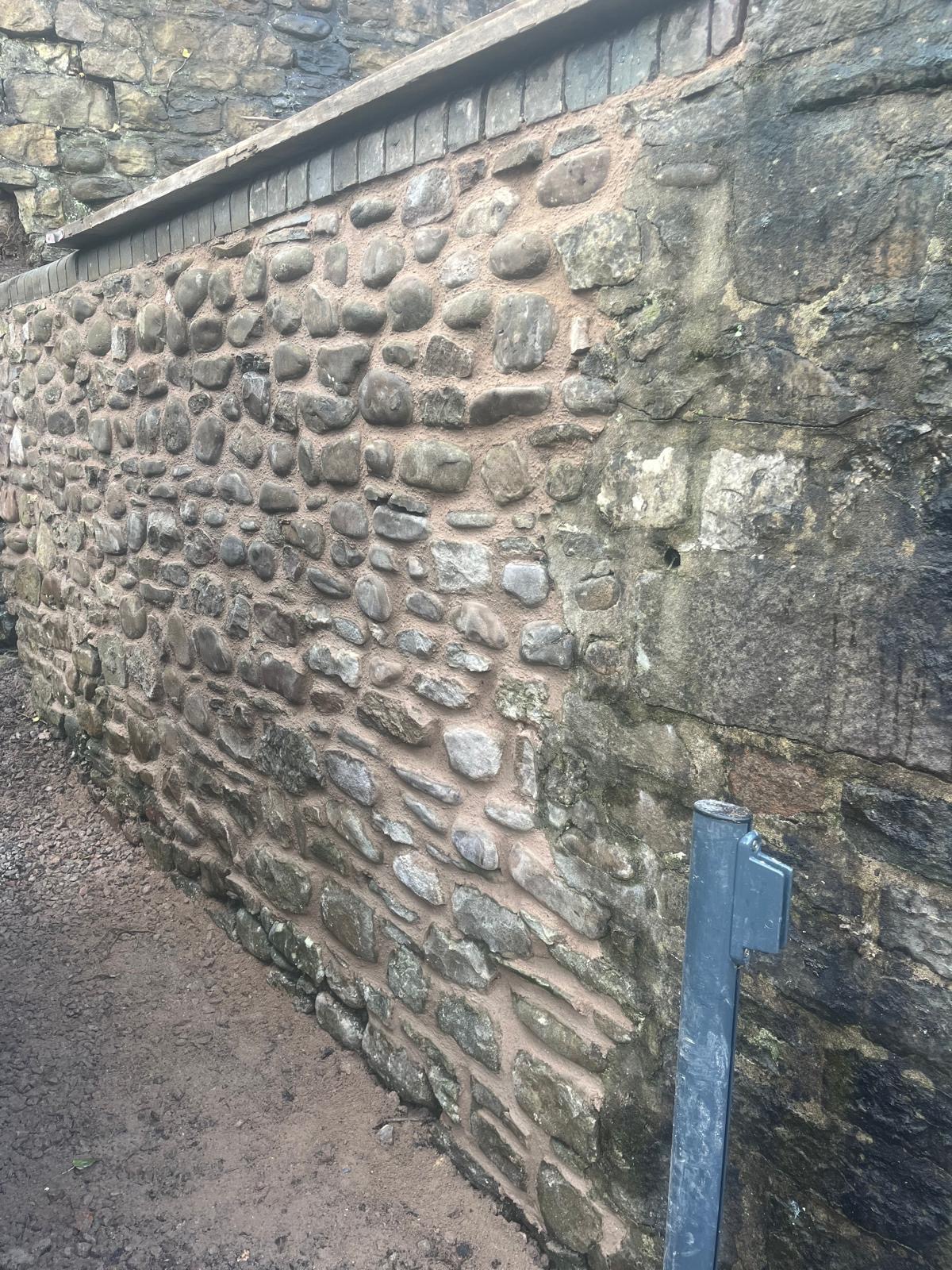
Significant masonry repair and repointing works were carried out across numerous areas of the palace. Existing failed mortar joints were carefully raked out by hand before being repointed using traditional lime mortar. This process restored weather resistance while allowing the historic masonry to remain breathable, an essential requirement for the long-term preservation of ancient stone structures.
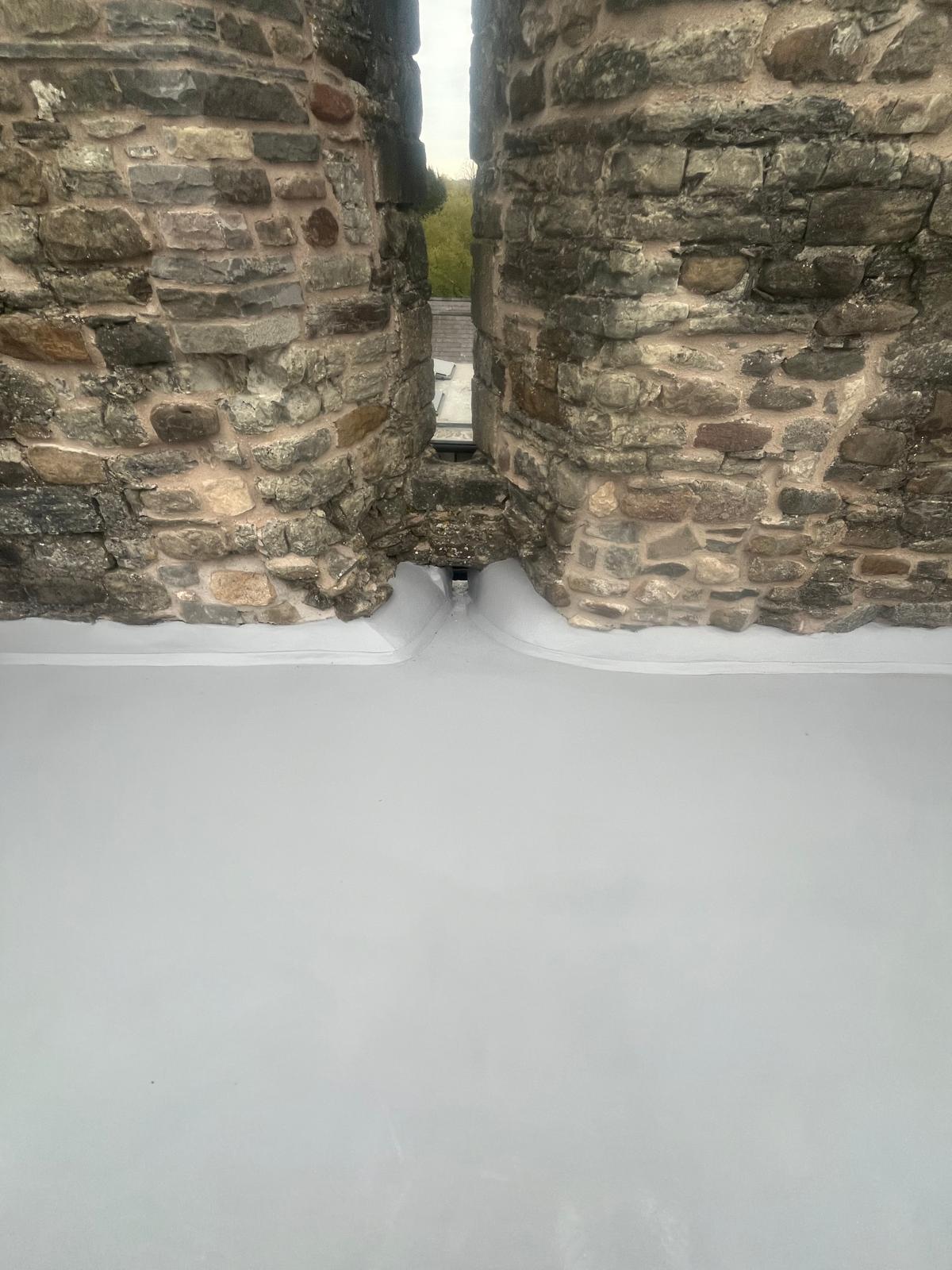
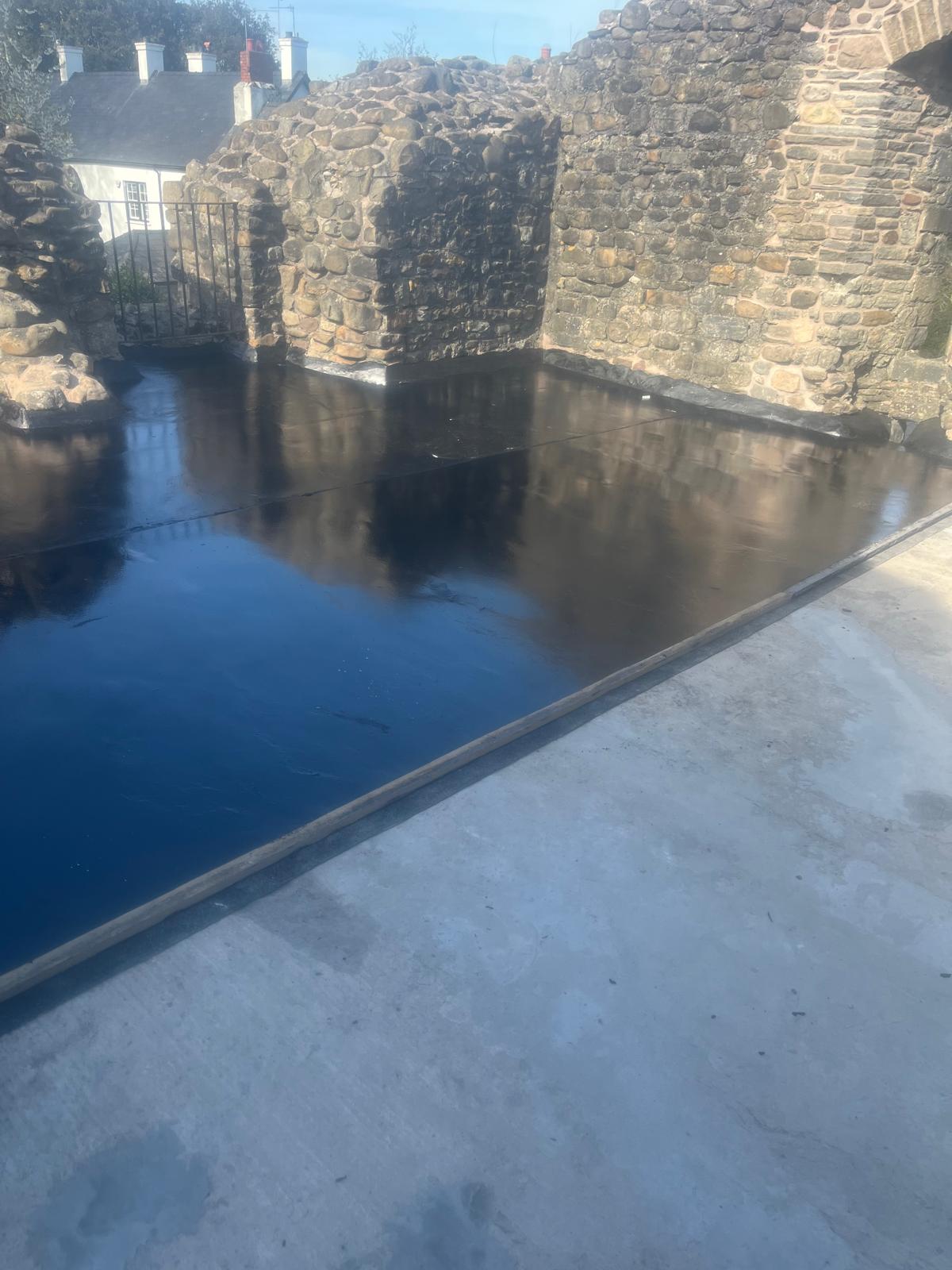
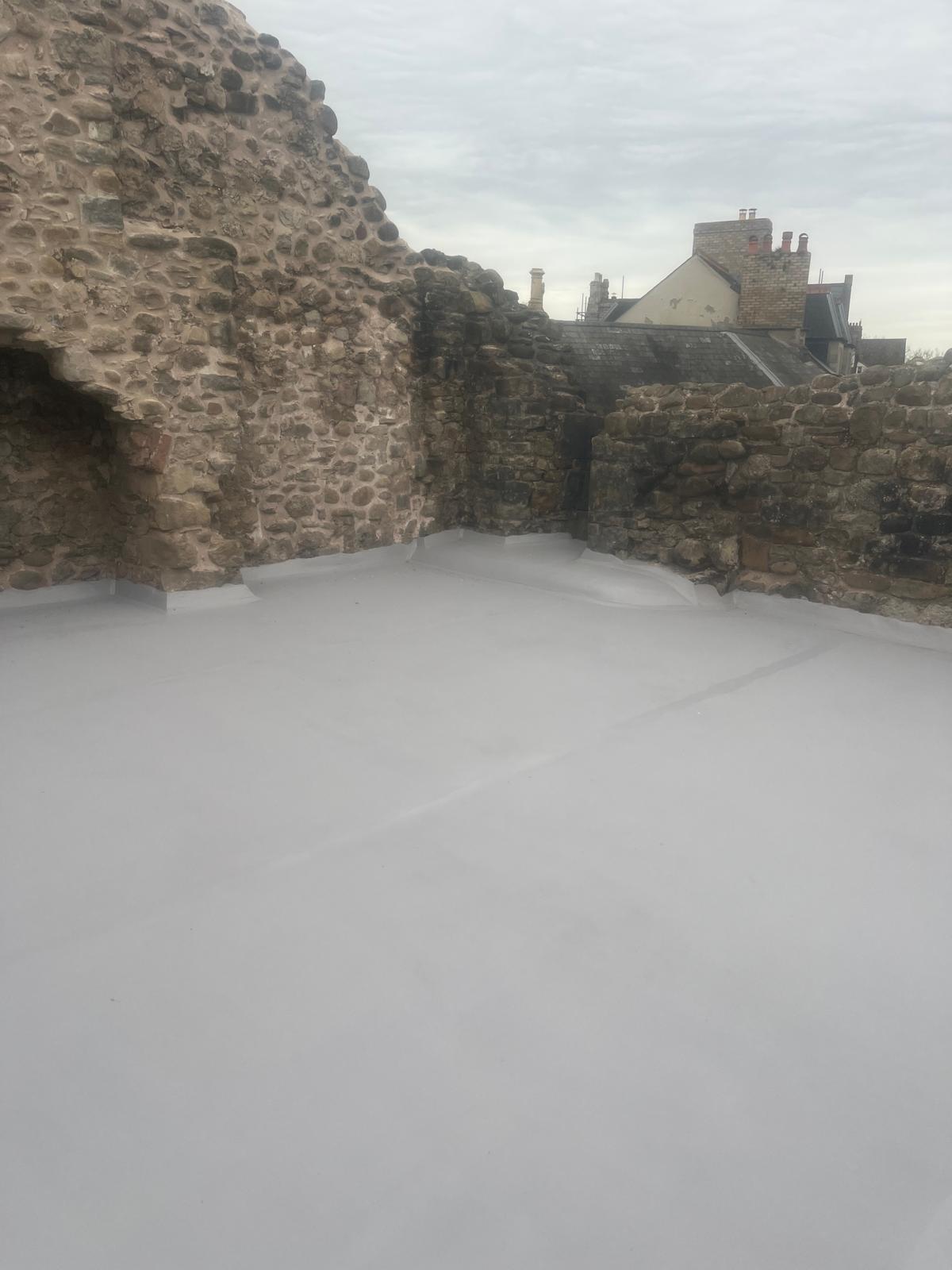
Extensive repairs were also undertaken to the gable wall above the gatehouse. Historic mortar loss and weathering had exposed vulnerable sections of masonry to further deterioration. Specialist lime mortar repointing and hard capping works were completed to protect the wall core and improve resistance to water ingress.
Installation of foundations and additional stone reinstatement works were undertaken to the Well Cottage wall where sections of masonry had become displaced or lost over time. Salvaged stone materials were carefully incorporated wherever possible, maintaining authenticity while reducing the need for replacement materials. Similar conservation repairs were completed to walls adjoining Cathedral School and various perimeter structures throughout the site.
Areas affected by vegetation growth required particular attention. Root systems and self-seeded plants had caused displacement of masonry in several locations, creating structural concerns and accelerating deterioration. Following the careful removal of vegetation, affected stonework was dismantled, rebuilt and stabilised using appropriate traditional materials and methods.
Project Challenges
The condition of the historic structure presented several technical challenges throughout the project. Variations in masonry construction, hidden defects and the effects of long-term weathering required ongoing assessment and adaptation of repair methodologies.
Working on a structure of such historical significance demanded a conservation-first approach at every stage. Decisions relating to material selection, repair techniques and structural interventions were carefully reviewed to ensure minimal impact on original fabric whilst achieving the required conservation outcomes.
Access restrictions created additional complexities, particularly in elevated and confined areas of the monument. The use of multiple access systems enabled the project team to safely undertake repairs while reducing the risk of damage to vulnerable sections of masonry.
Environmental factors also played a role, with exposed masonry requiring careful protection during repair and curing periods. Lime-based materials demand specific environmental conditions to achieve optimum performance, requiring close monitoring throughout the construction programme.
Successful Project Outcomes
The completed restoration works have significantly enhanced the condition, stability and resilience of Bishops Palace while preserving its historical integrity. Areas previously affected by water ingress, vegetation damage and mortar failure have been stabilised and protected through carefully executed conservation repairs.
The successful restoration of the medieval gatehouse gates has preserved an important historic feature while improving functionality and security. Comprehensive repointing and masonry repairs throughout the site have reduced ongoing deterioration and improved the monument’s resistance to future weather-related damage.
Importantly, all works were completed using traditional conservation techniques and materials that respect the monument’s historic significance. The project demonstrates UK Restoration Services’ expertise in heritage restoration, conservation masonry, lime mortar repairs and scheduled monument works.
Today, Bishops Palace remains one of Cardiff’s most significant historic landmarks. Through a combination of specialist craftsmanship, sensitive conservation practices and careful project management, the restoration works have helped secure the future of this remarkable medieval monument, ensuring it can continue to be appreciated by visitors and the local community for generations to come.
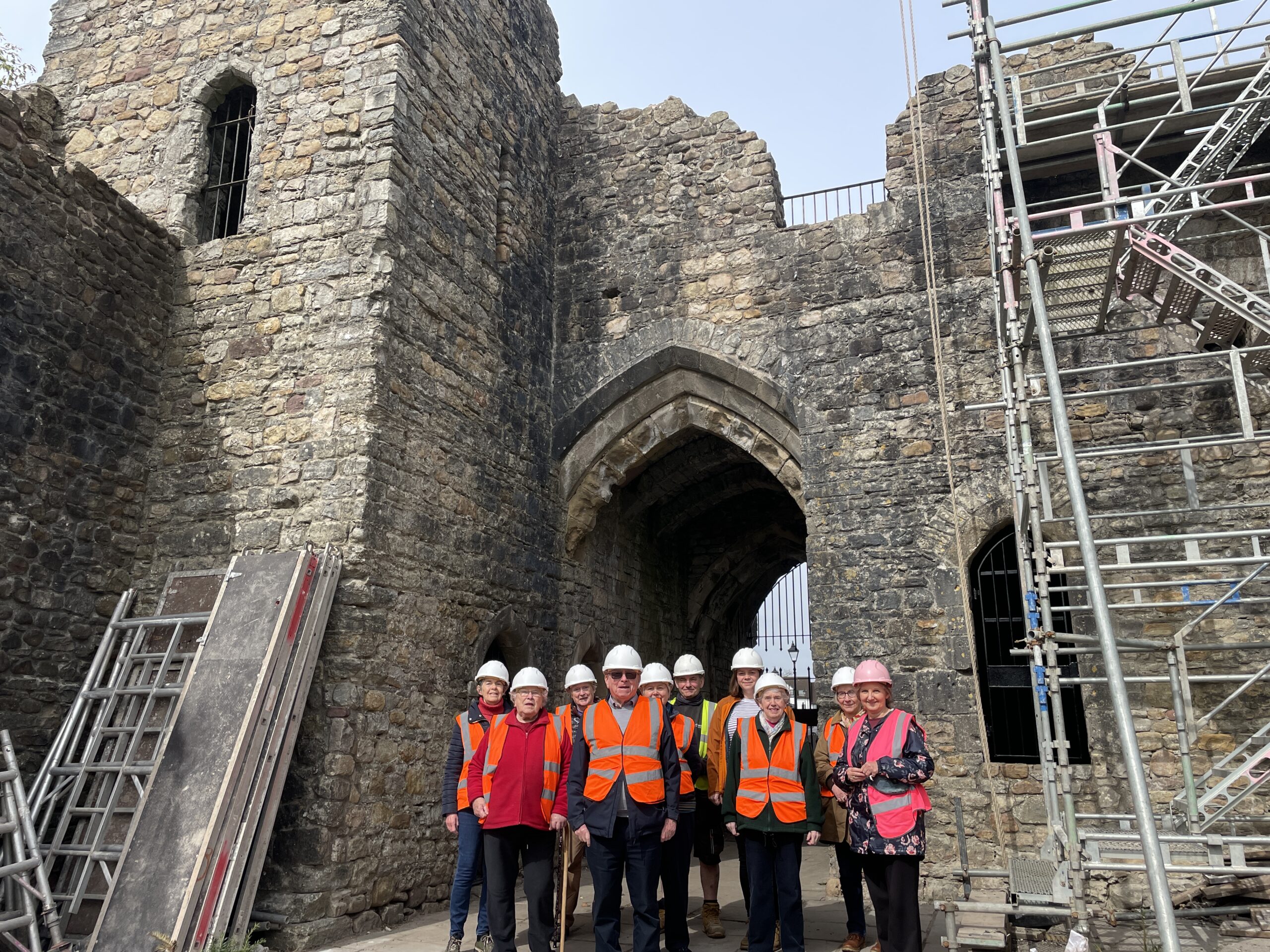
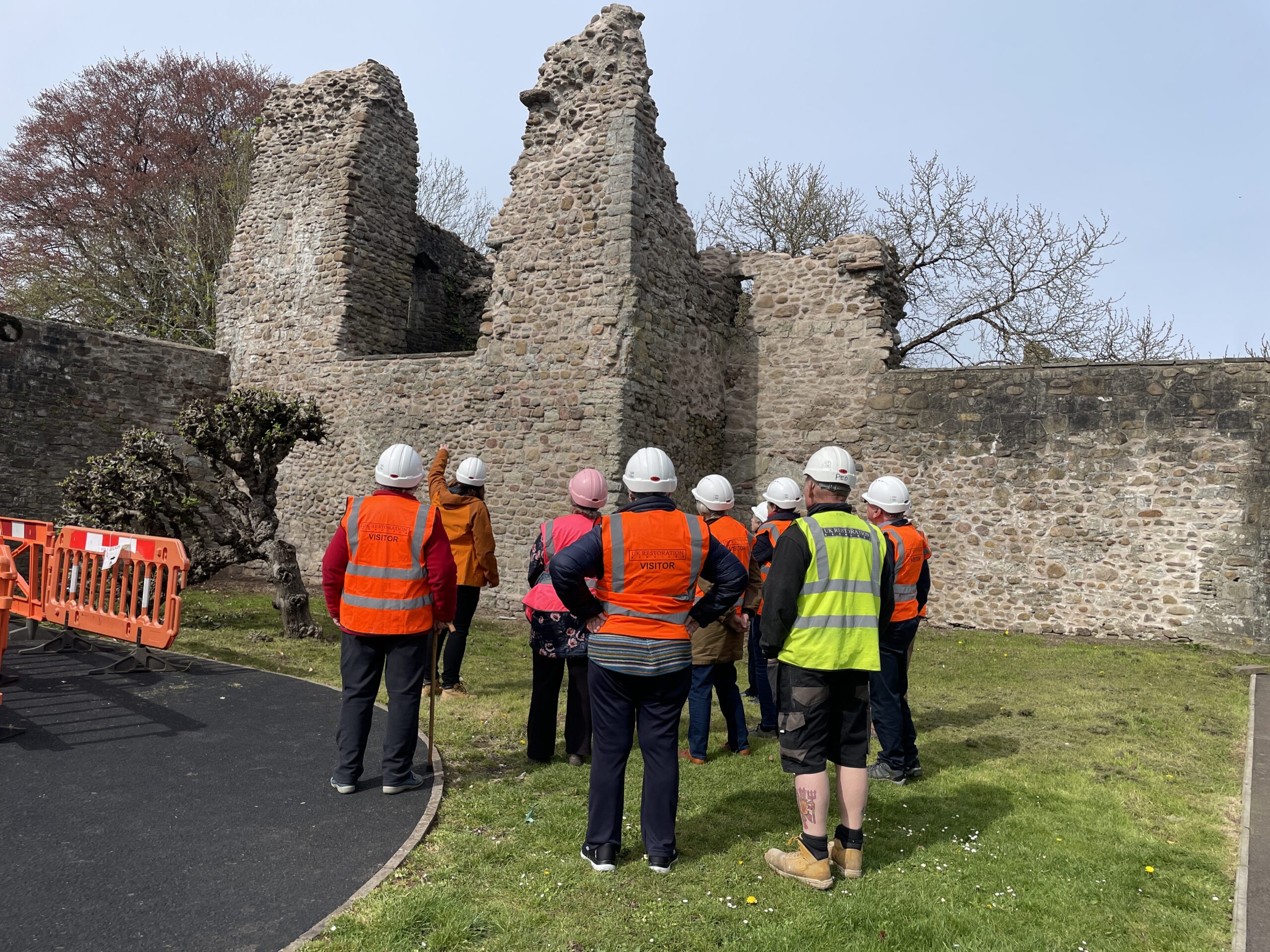
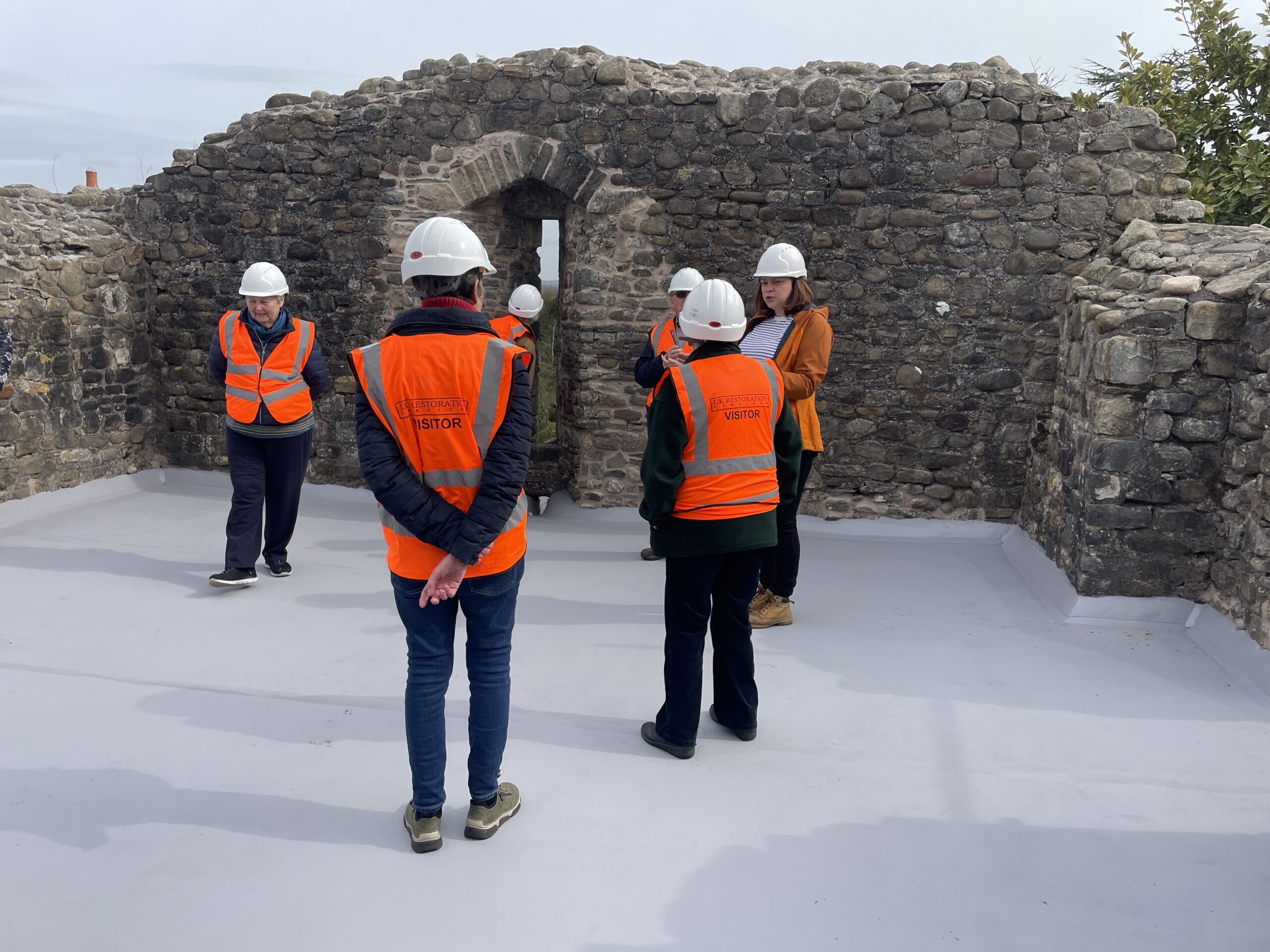
During the project we were delighted to host a site tour to a group from the Llandaff Society over 50’s club, this included a guided tour of the site works by the Site Manager, Contract Co-Ordinator & the Structural Engineer.
The project was kindly funded by Cardiff County Council and CADW under Conservation works to safeguard the monument and facilitate public access.