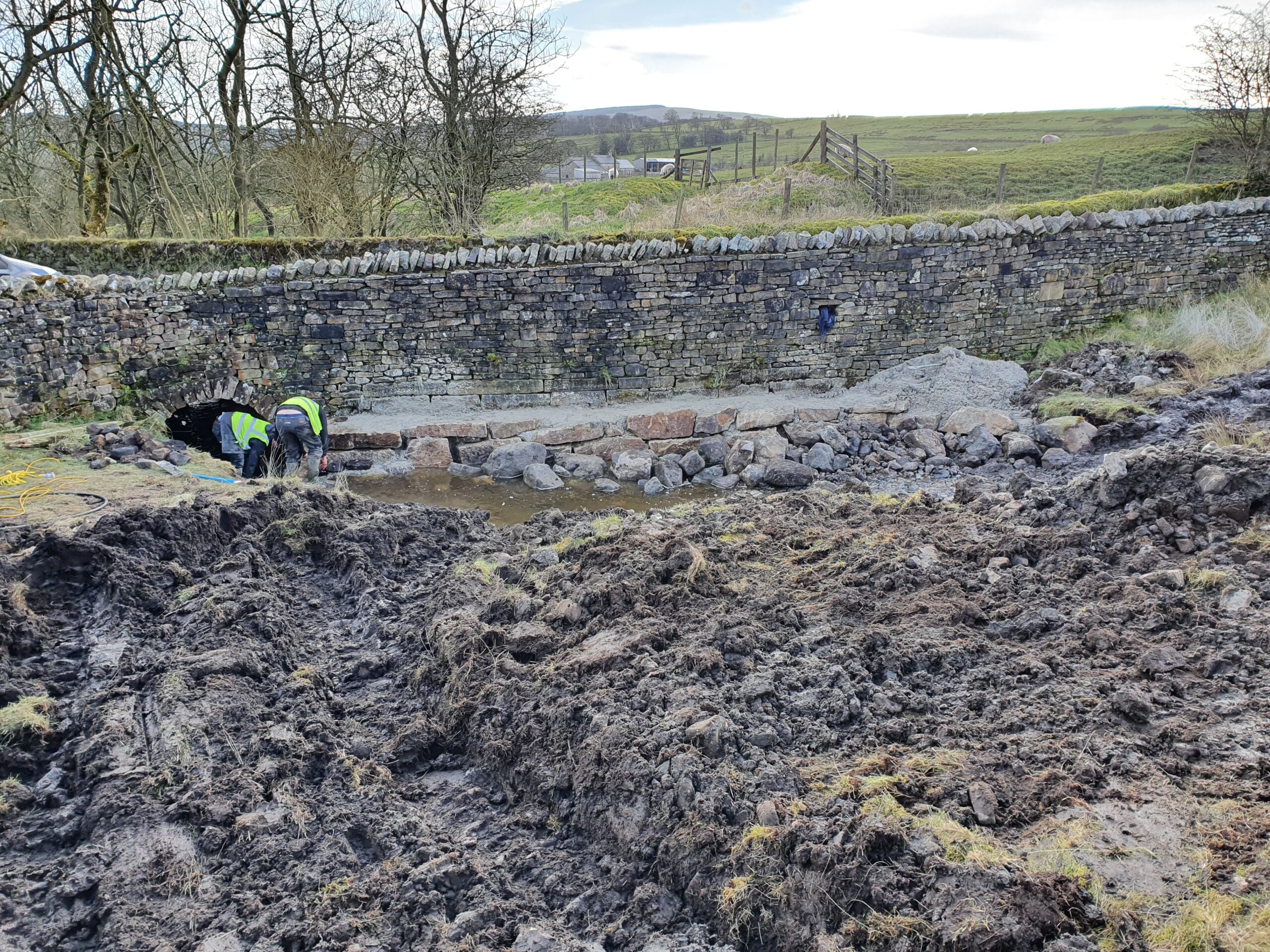
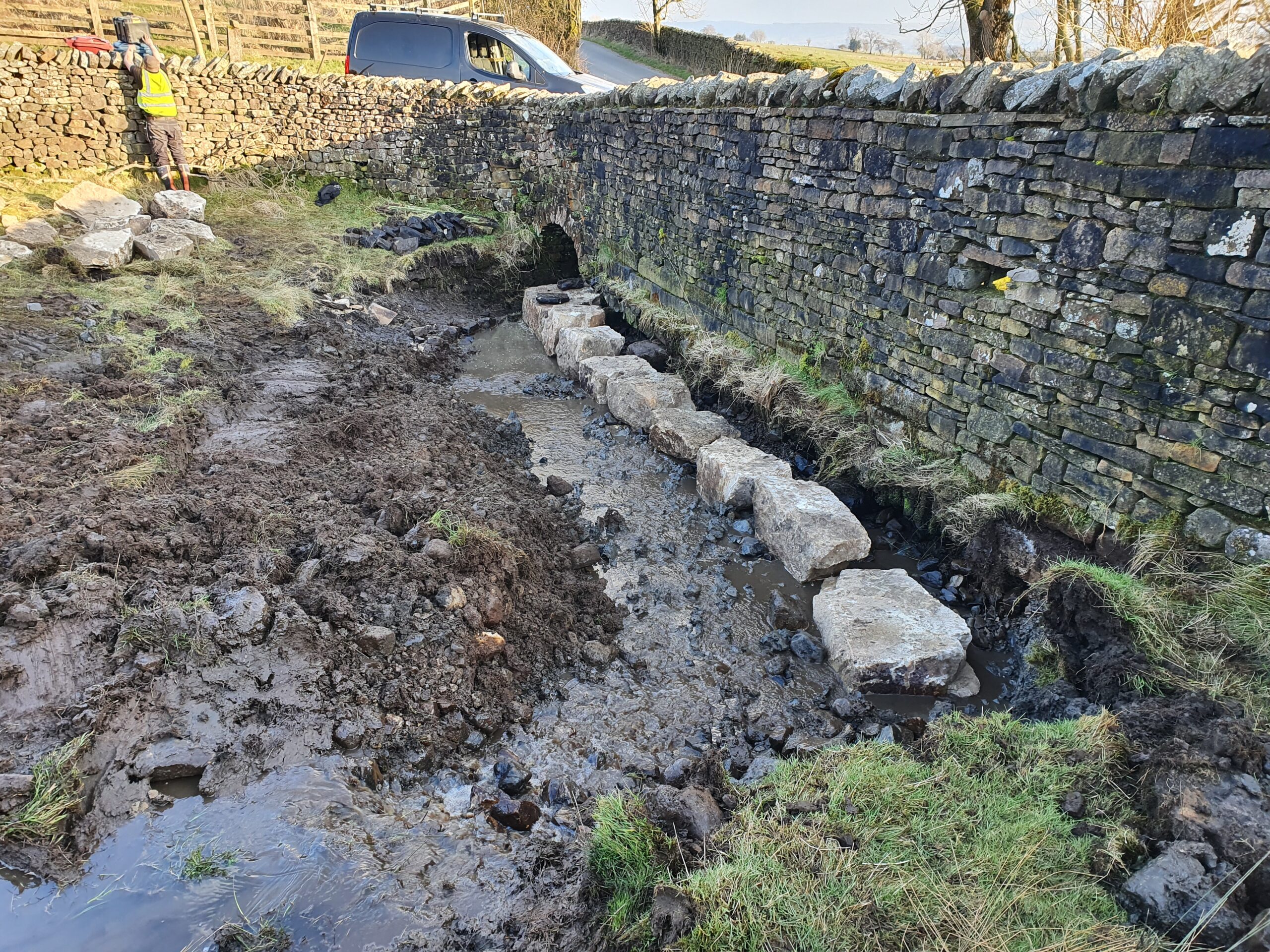
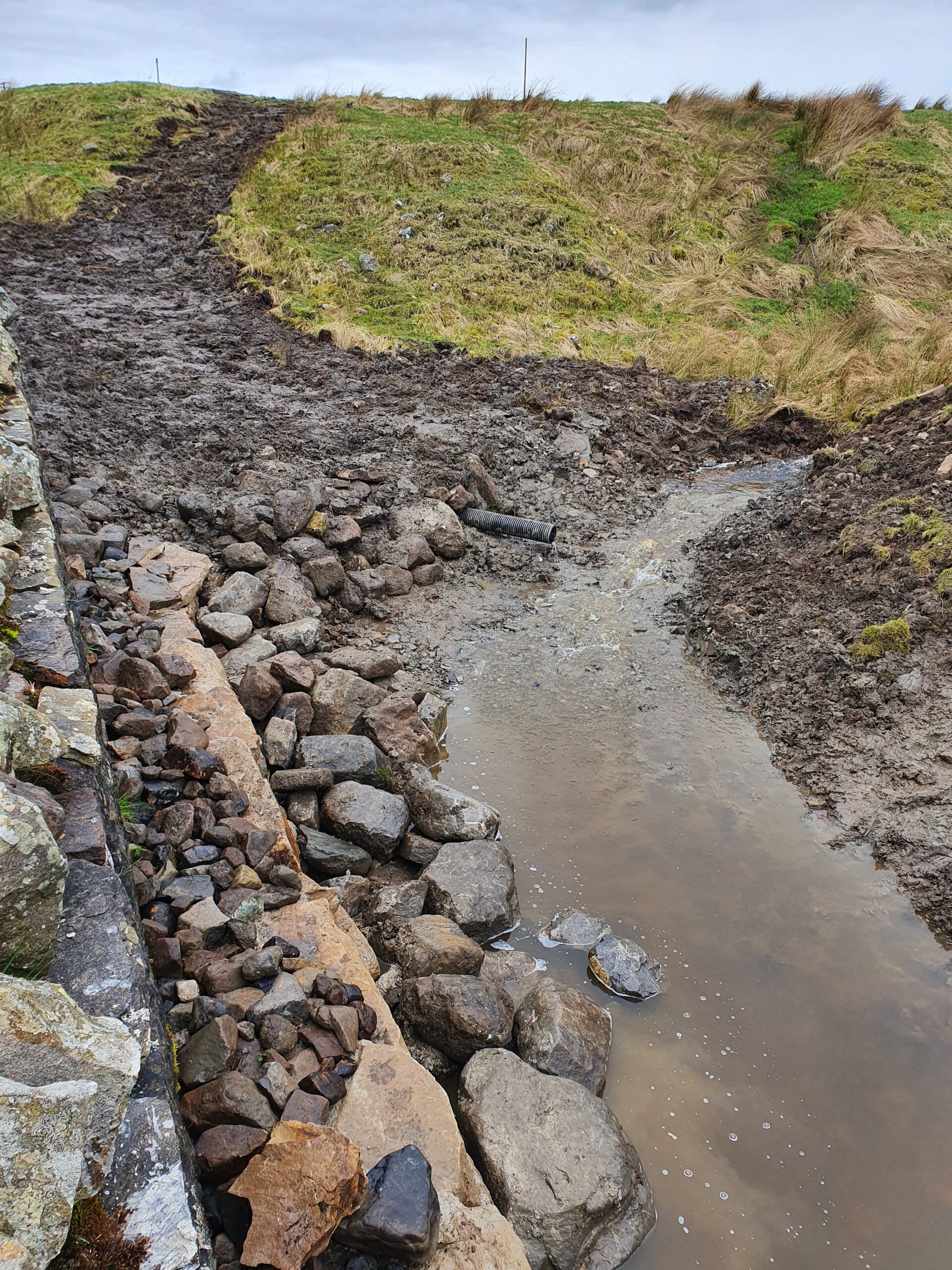
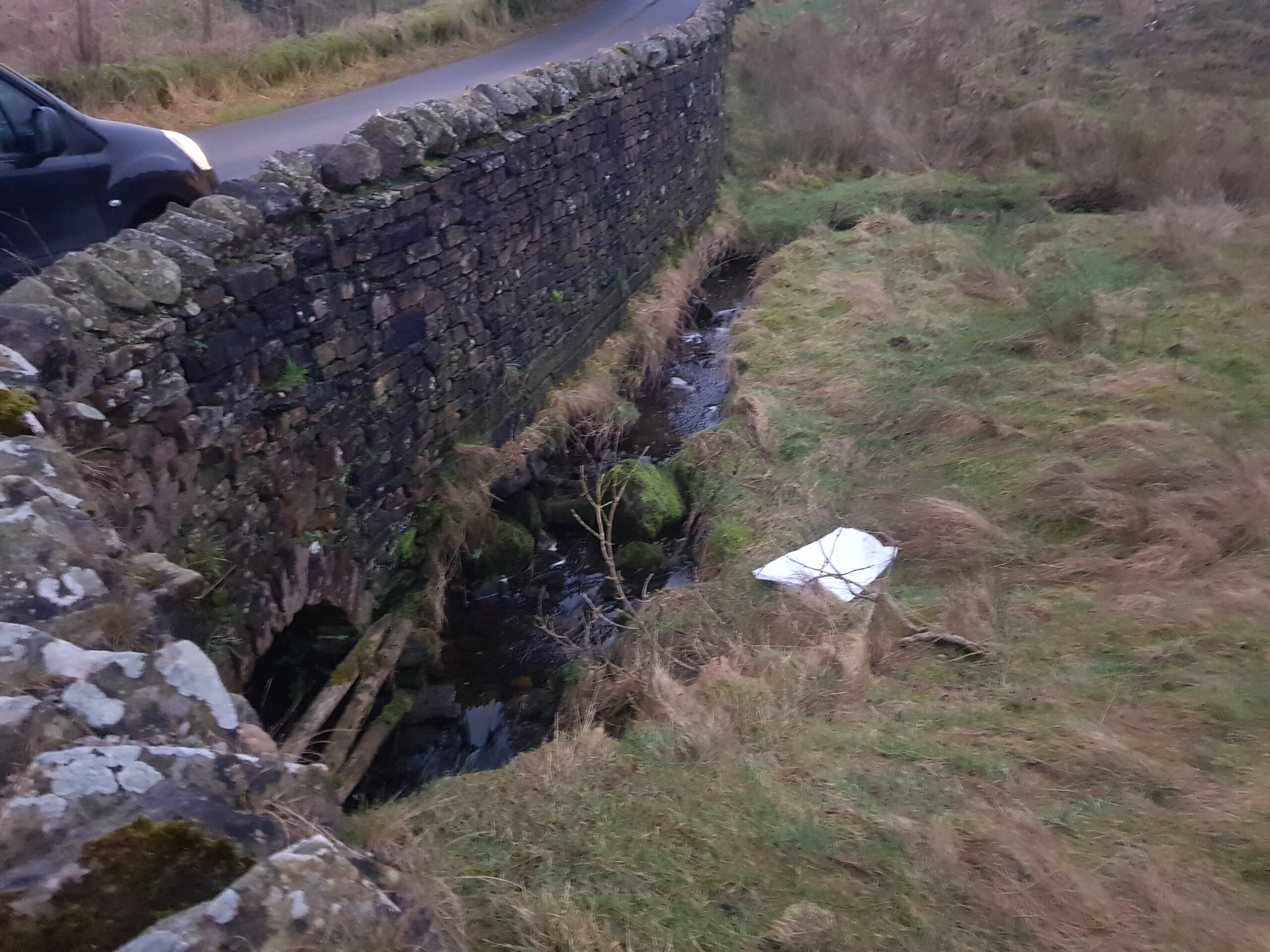
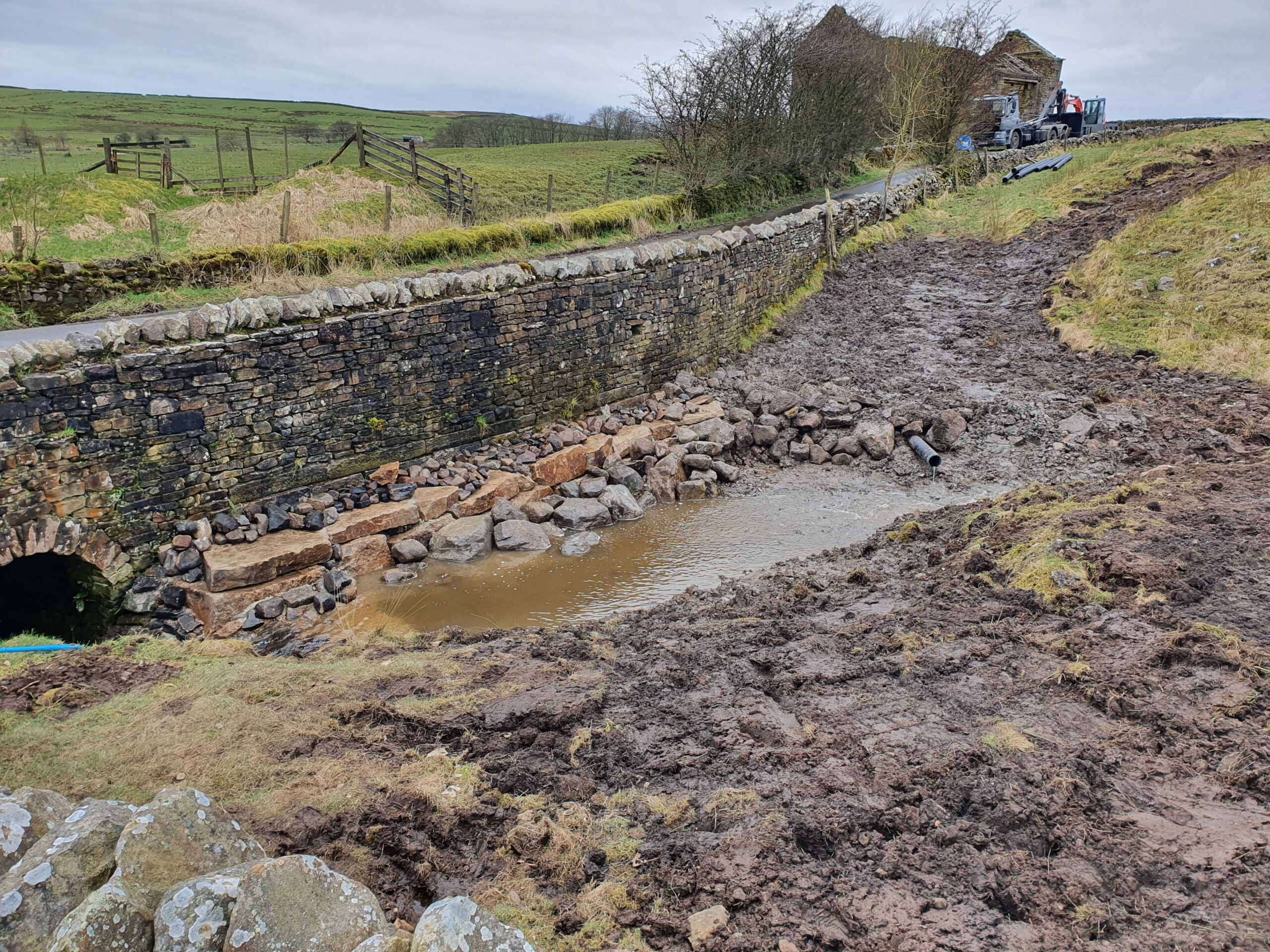
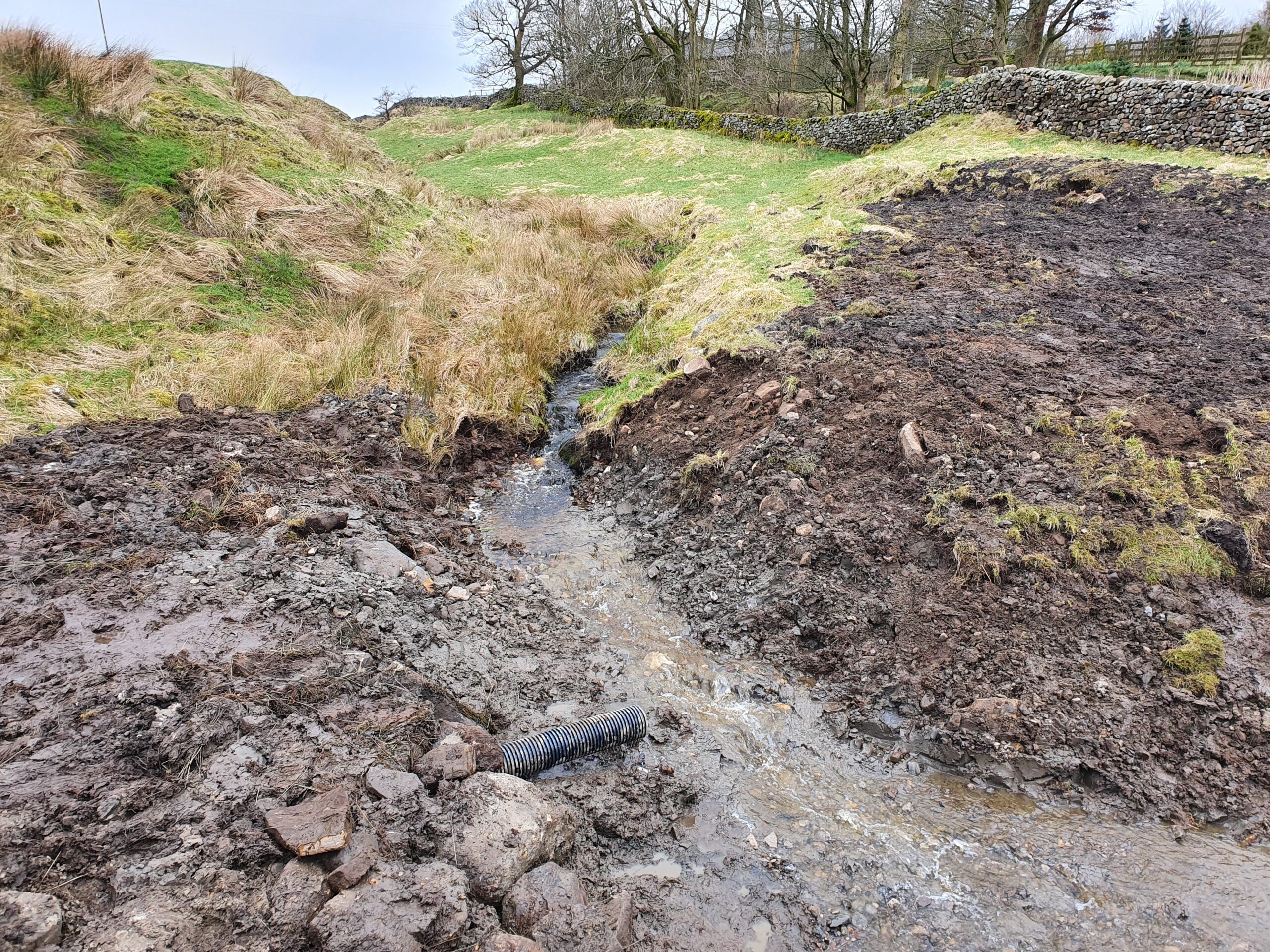
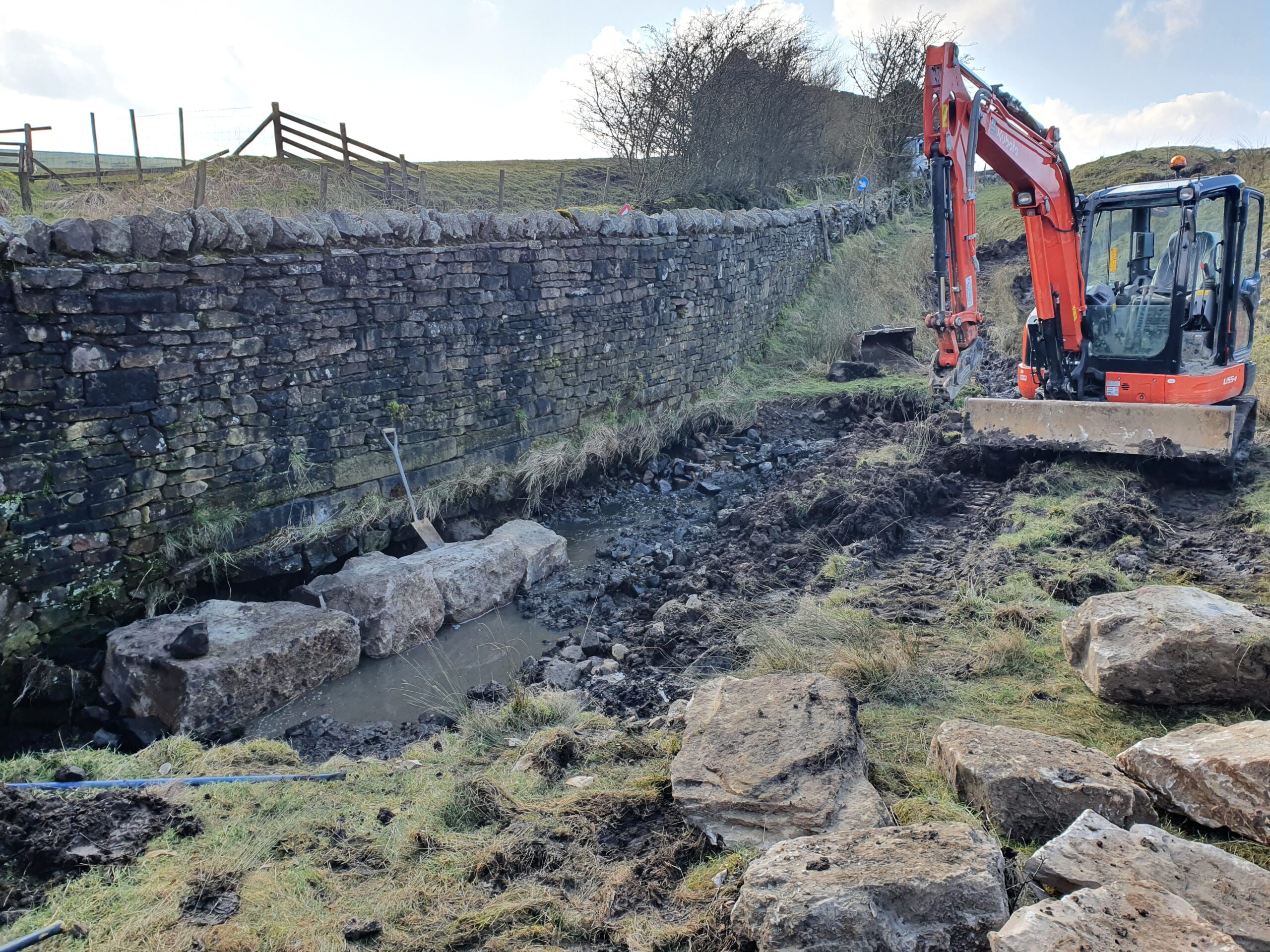
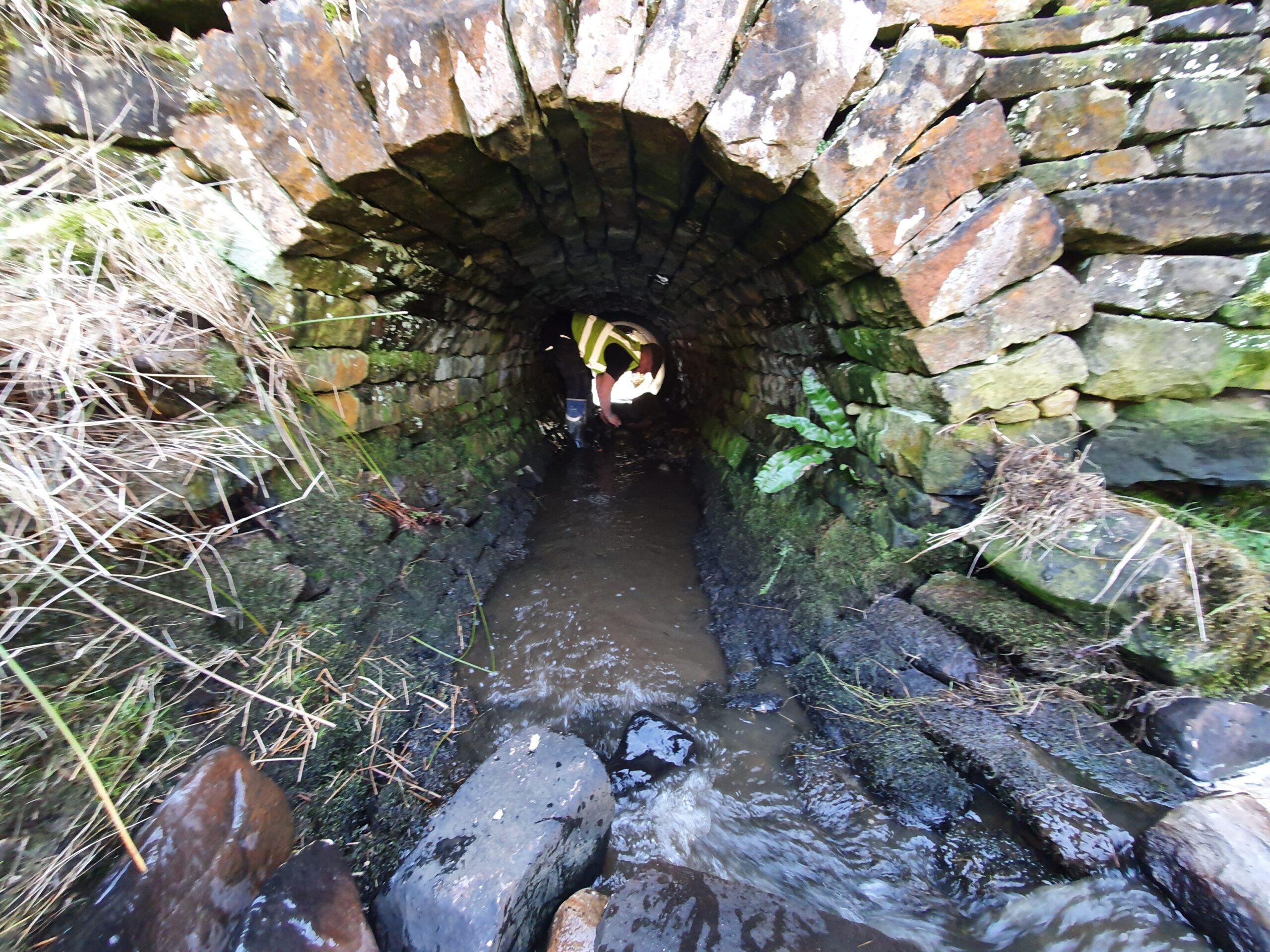
Lancashire County Council awarded the contract for the stabilization works to a retaining wall in Threap Green, Lancashire. The project involved diverting a small stream that due to recent flooding over the past years, had changed its path to flow alongside a highway retaining wall. This was causing the water flow to undermine the walls foundations.
We opened dialect with the local land owner to understand the river conditions when in flood and also how the stream had changed over the years.
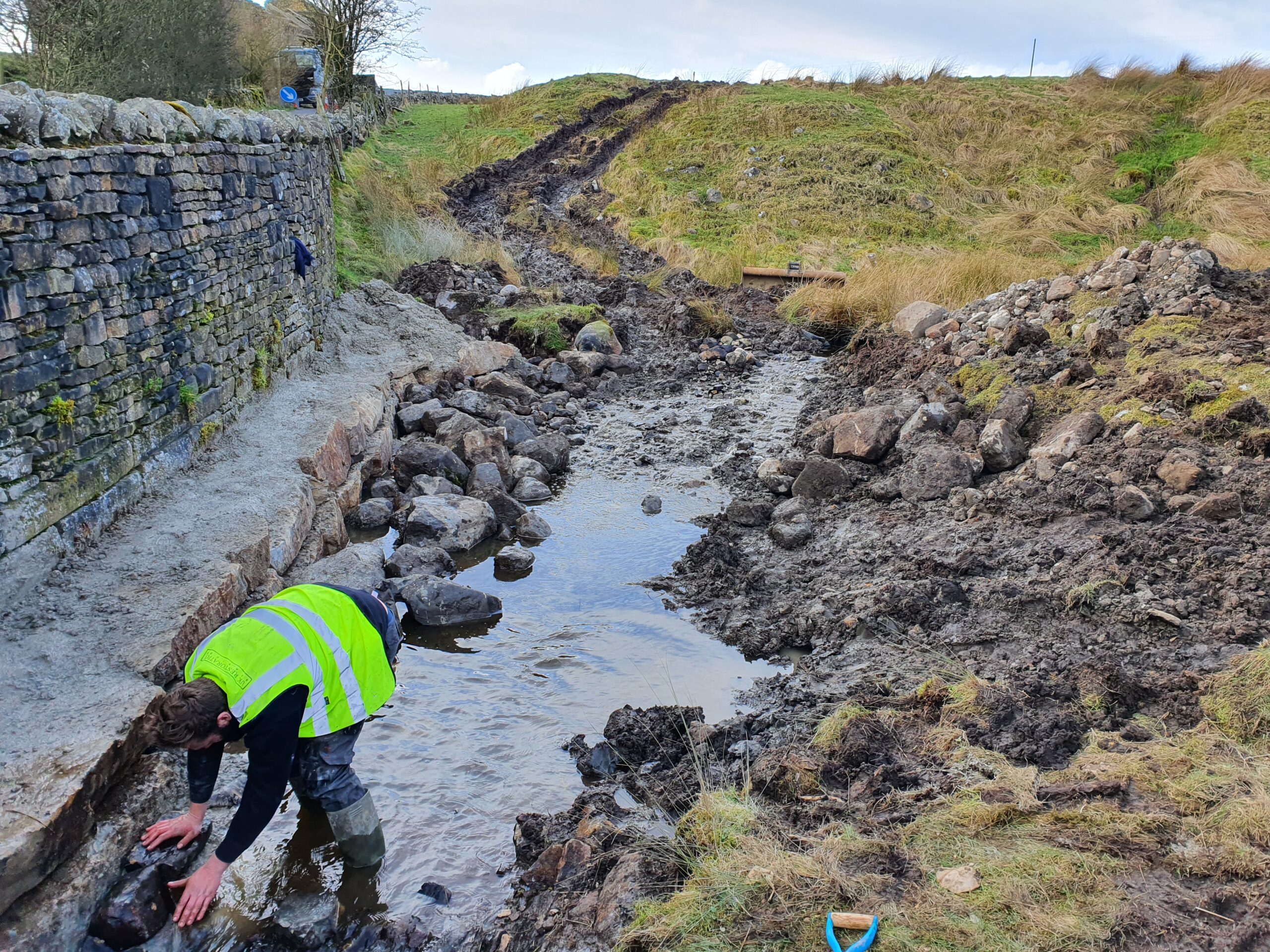
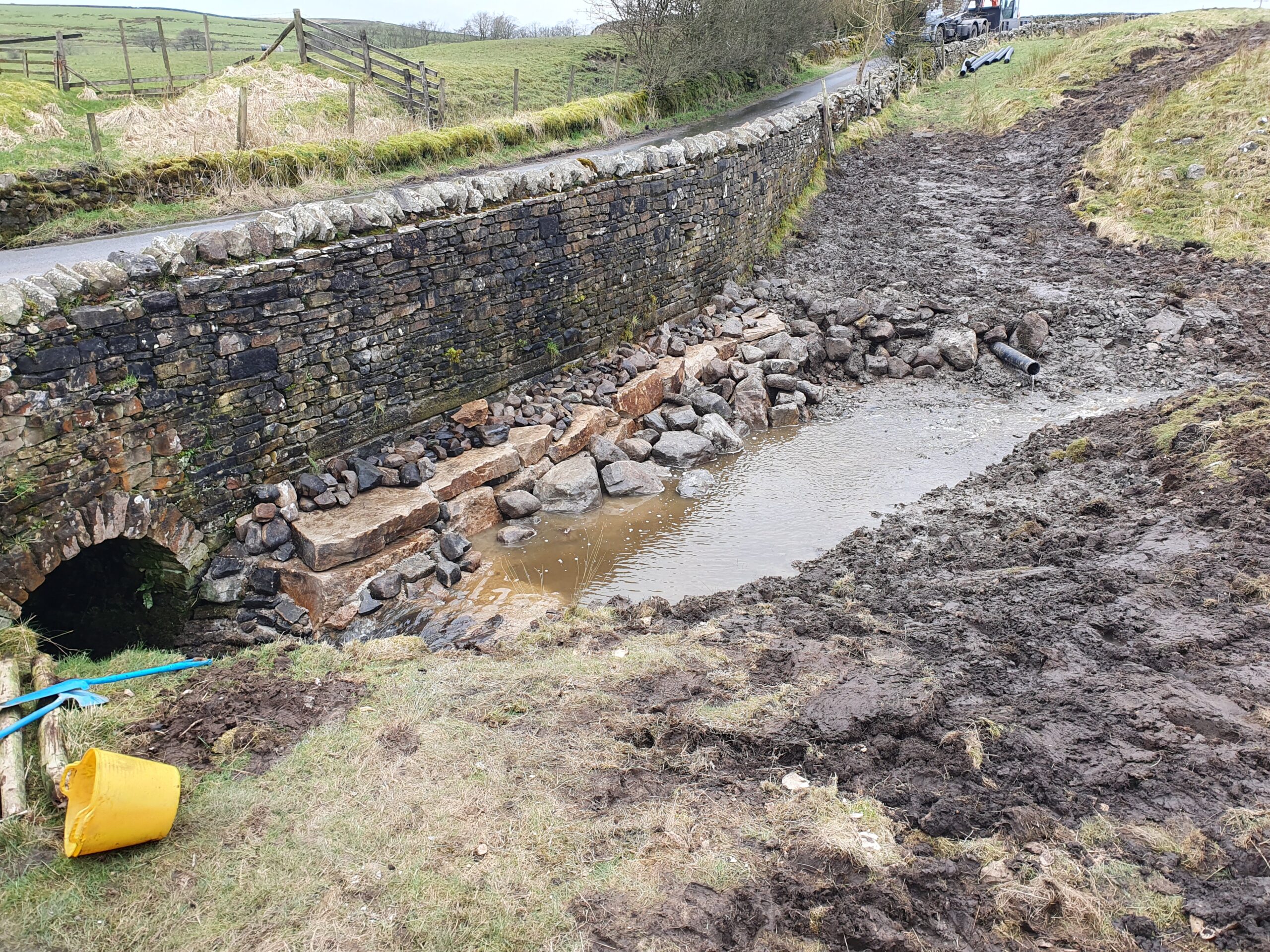
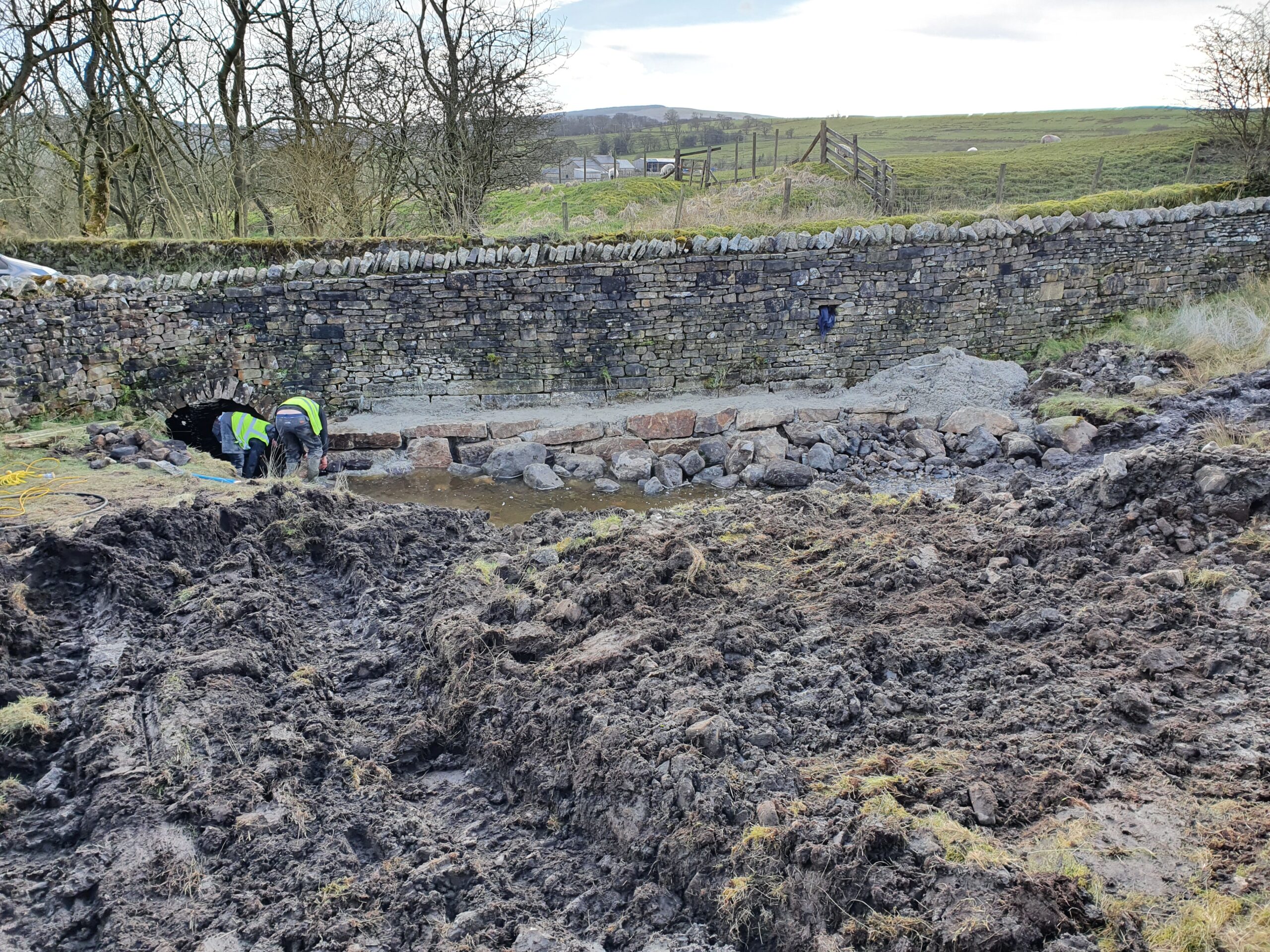
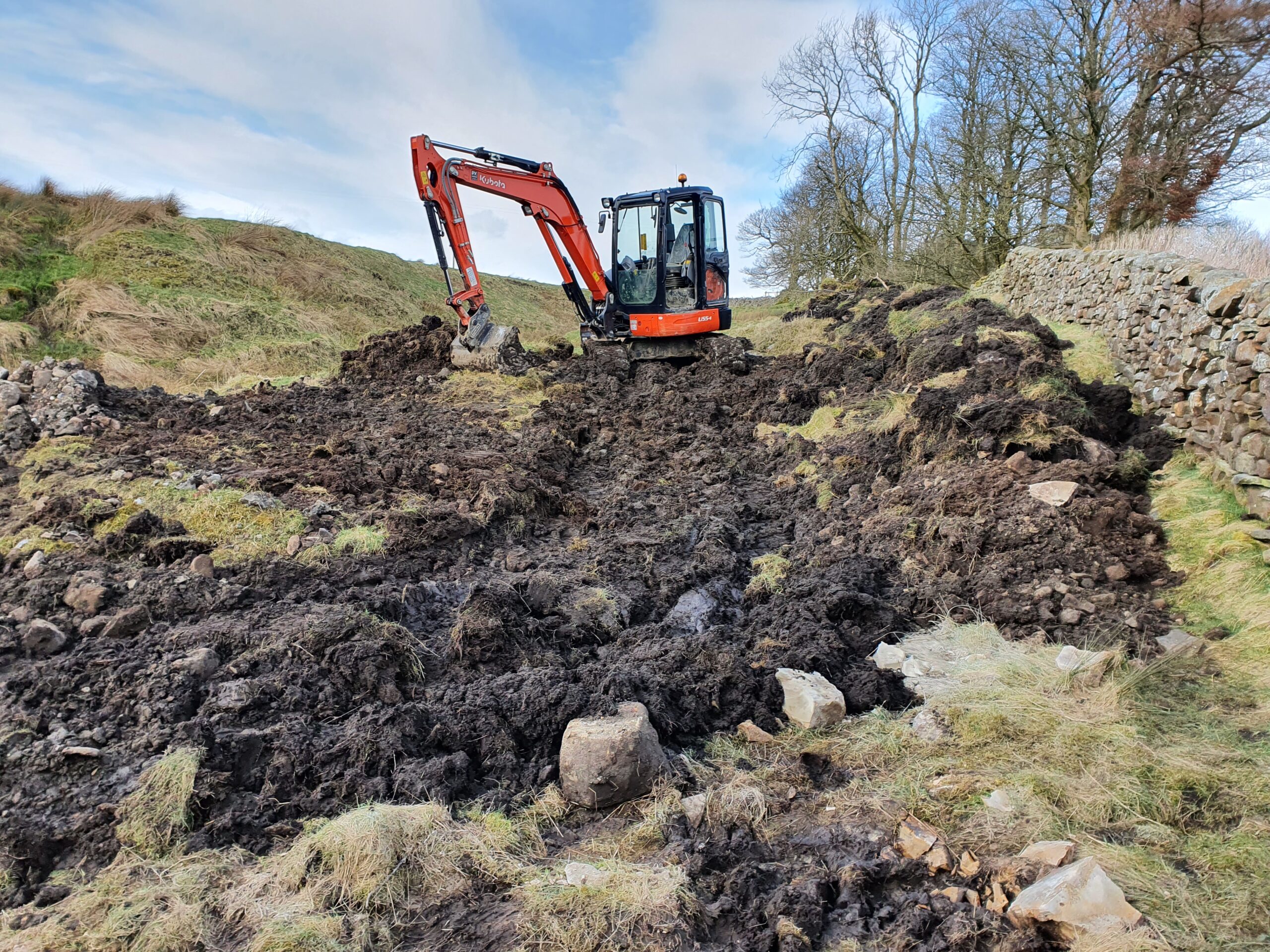
Worked started using our 5 ton excavator to remove the grass and top soil for the work area. This was stored for reuse later on in the project. Any large river boulders found during the excavation process were place to one side for re-use as rip rap. We have to remove the river gravel to bedrock, this would act as stable foundation for the imported rock armor. We installed two layers of rock armour to the river bed. The excavator was used to lift the rock armour. Holes were drilled into the rock to enable the use of Lewis Pins so positioning was easier. The rock amour was simply placed dry but carefully selected to ensure tight joints between the rock armour. This was to ensure no out flow of concrete into stream. We installed 5 cubic metre of concrete behind the rock armour. A concrete poker was used to ensure the concrete flowed under the washed out foundation of the retaining wall.
We installed the salvaged rip rap to the front of the rock amour. A collapsed stone field drain was also causing issues to the banking. We traced the drain from the river back to the collapsed section and replaced with new plastic pipe.
The area was landscaped and salvaged top soil was used to cover the excavated areas. As the project was undertaken in March the field was still very wet from winter. On the removal of the excavator we had to make goods the track marks in the field.
We have since returned to the site and spoken with the local land owner to ensure the works undertaken are working correctly. All reports are the project was a success.