Specialist Historic Door Restoration at Turton Tower, Greater Manchester
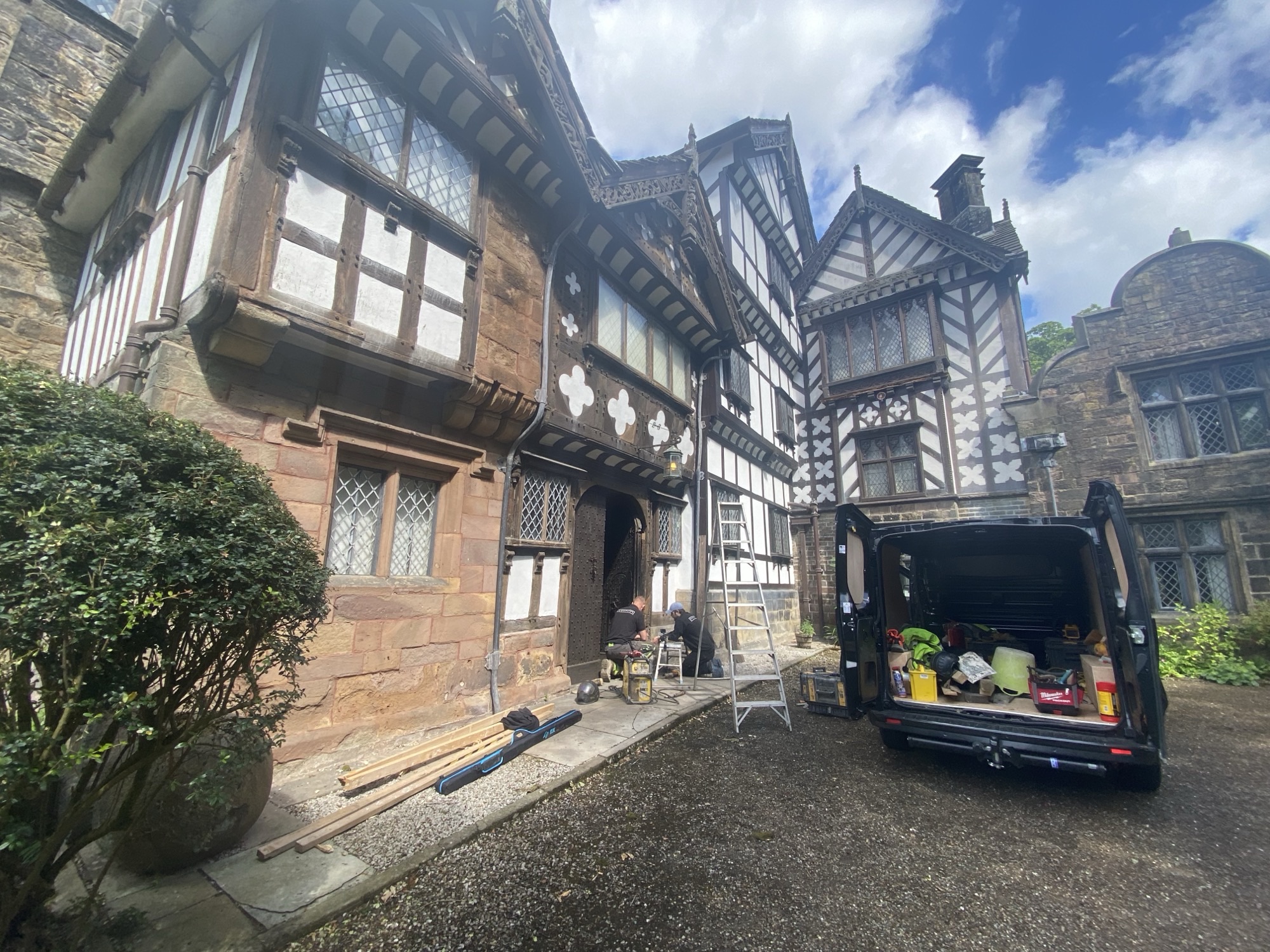
UK Restoration Services was appointed to undertake the careful conservation and refurbishment of the historic timber entrance doors at Turton Tower, one of Greater Manchester’s most significant heritage attractions. The project was delivered on behalf of Blackburn with Darwen Borough Council, which manages and maintains this important heritage asset as part of its wider commitment to preserving the historic built environment across the Blackburn with Darwen area. Located in Chapeltown, near Bolton, Turton Tower is a Grade I Listed building with origins dating back to the medieval period and represents an important part of Lancashire’s built heritage.
As a specialist principal contractor working across the heritage, ecclesiastical and conservation sectors, our role was to preserve the character and functionality of the tower’s historic timber doors while addressing deterioration that had developed through age, weathering and long-term use.
The project required a sensitive conservation-led approach that balanced the need for repair with the retention of as much original historic fabric as possible, ensuring the continued protection and presentation of this important heritage asset.
Understanding the Historic Significance of Turton Tower
Turton Tower sits within extensive woodland grounds on Chapeltown Road, Bolton, and attracts visitors from across Greater Manchester and Lancashire. The building’s architectural development spans several centuries, incorporating medieval stonework alongside later Tudor and Jacobean additions. The historic entrance doors form an integral part of the visitor experience and contribute significantly to the building’s character and authenticity.
Working on a building of this significance requires careful planning, specialist craftsmanship and a thorough understanding of traditional construction methods. As with many historic structures, seemingly minor elements such as doors, hinges and associated joinery can present complex conservation challenges that require bespoke solutions rather than wholesale replacement.
Although situated in Chapeltown near Bolton, Turton Tower is owned and managed by Blackburn with Darwen Borough Council and forms an important part of the borough’s historic and cultural heritage portfolio. As such, the project represented another example of UK Restoration Services supporting local authorities in the conservation and restoration of nationally important heritage assets throughout Blackburn with Darwen, Lancashire and the wider North West.
Project Scope
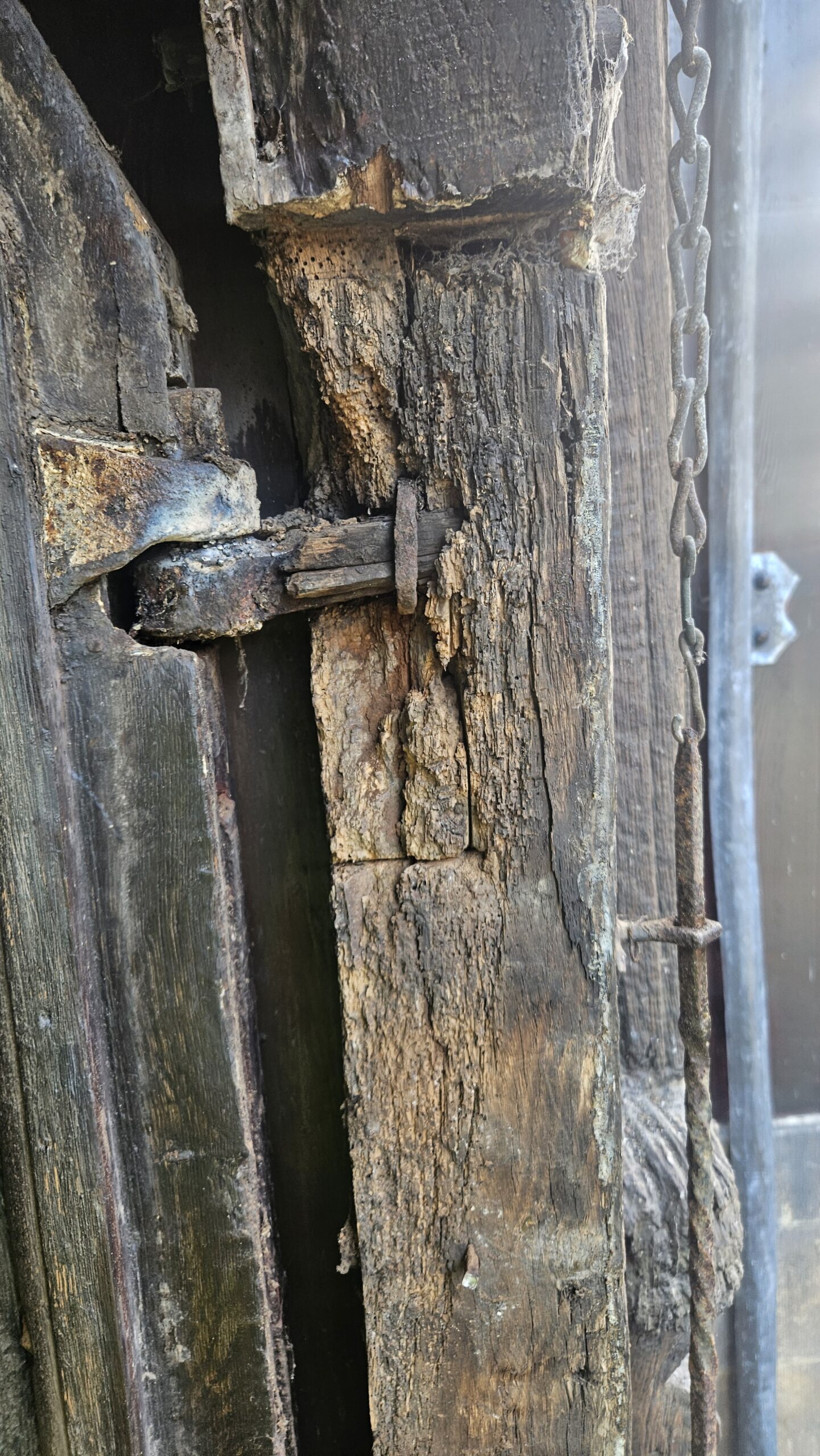
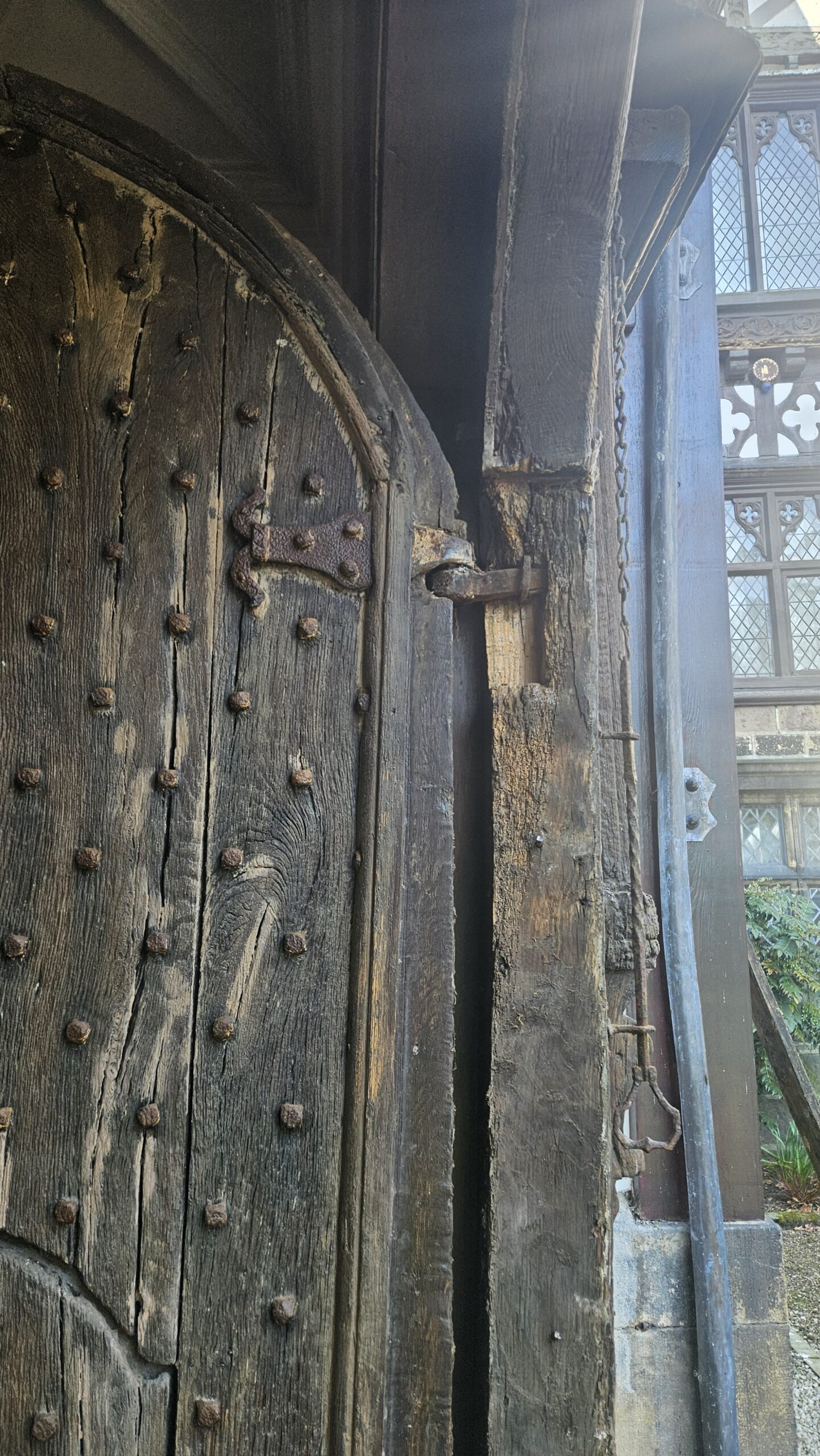
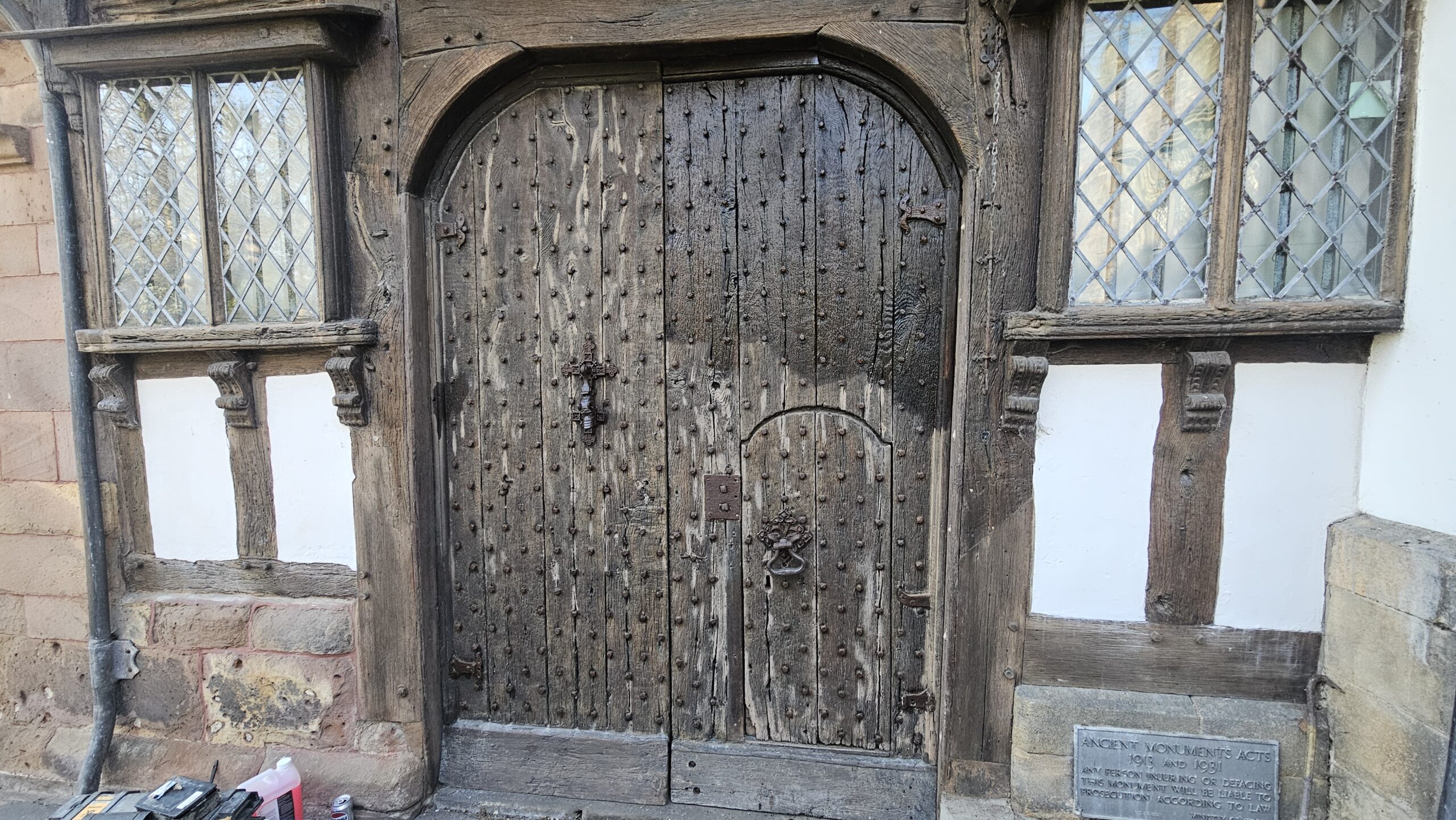
The scope of works focused on the refurbishment and repair of the existing historic timber doors and associated ironmongery. Initial investigations identified deterioration to sections of the timber frame, wear within the original hinge assemblies and areas requiring localised conservation repairs rather than replacement.
The works included:
- Careful removal of door framing boards.
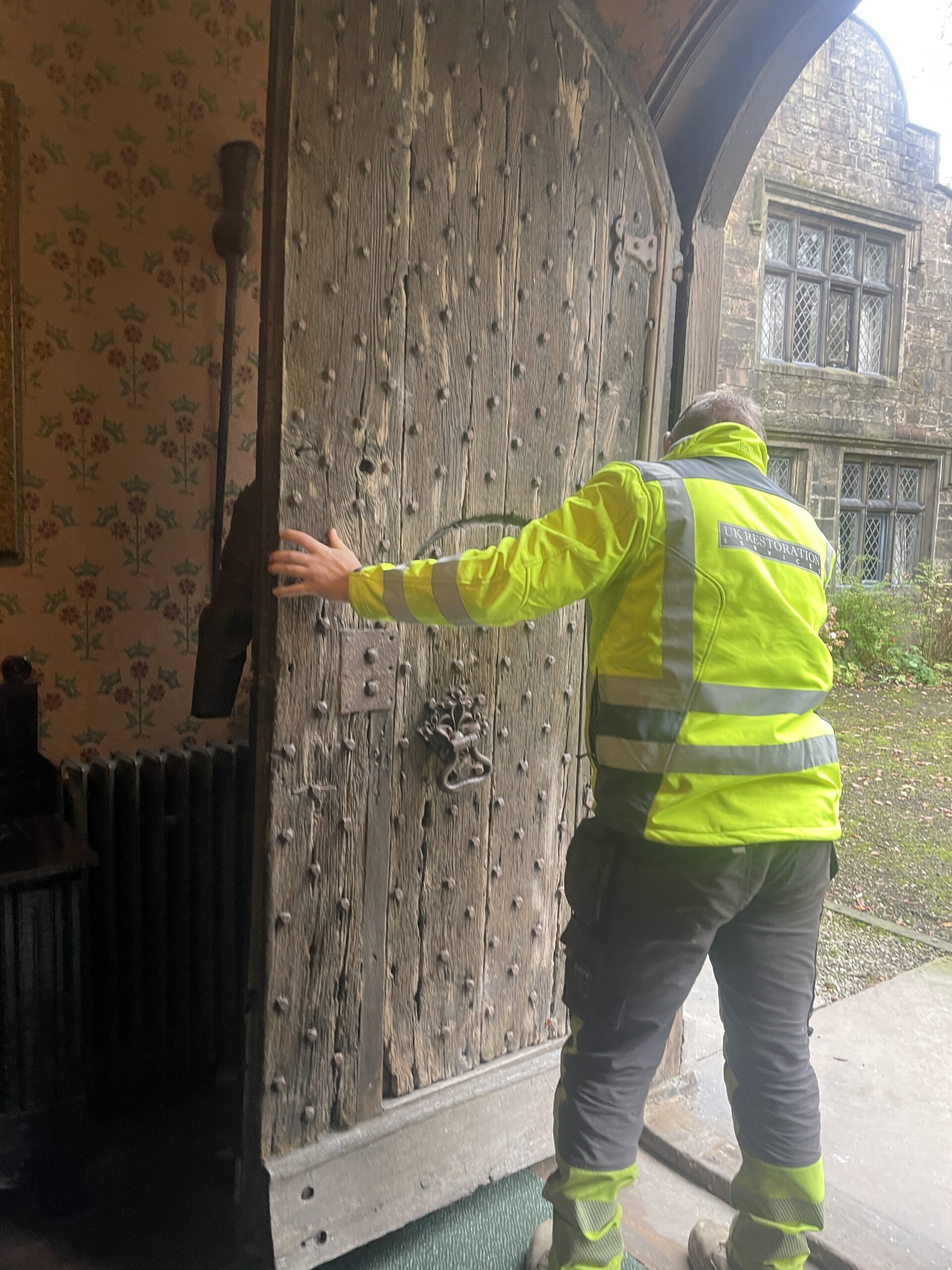
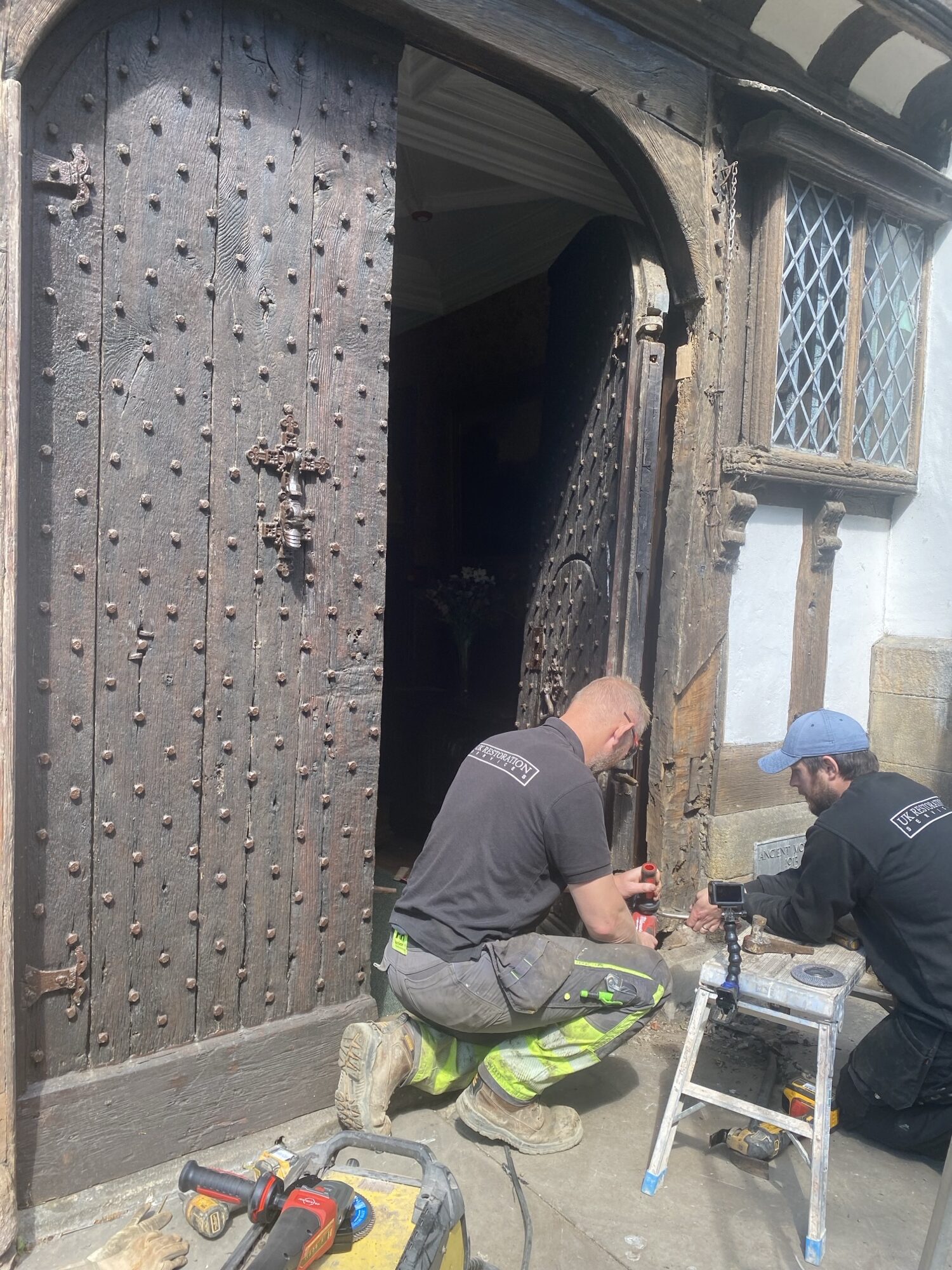
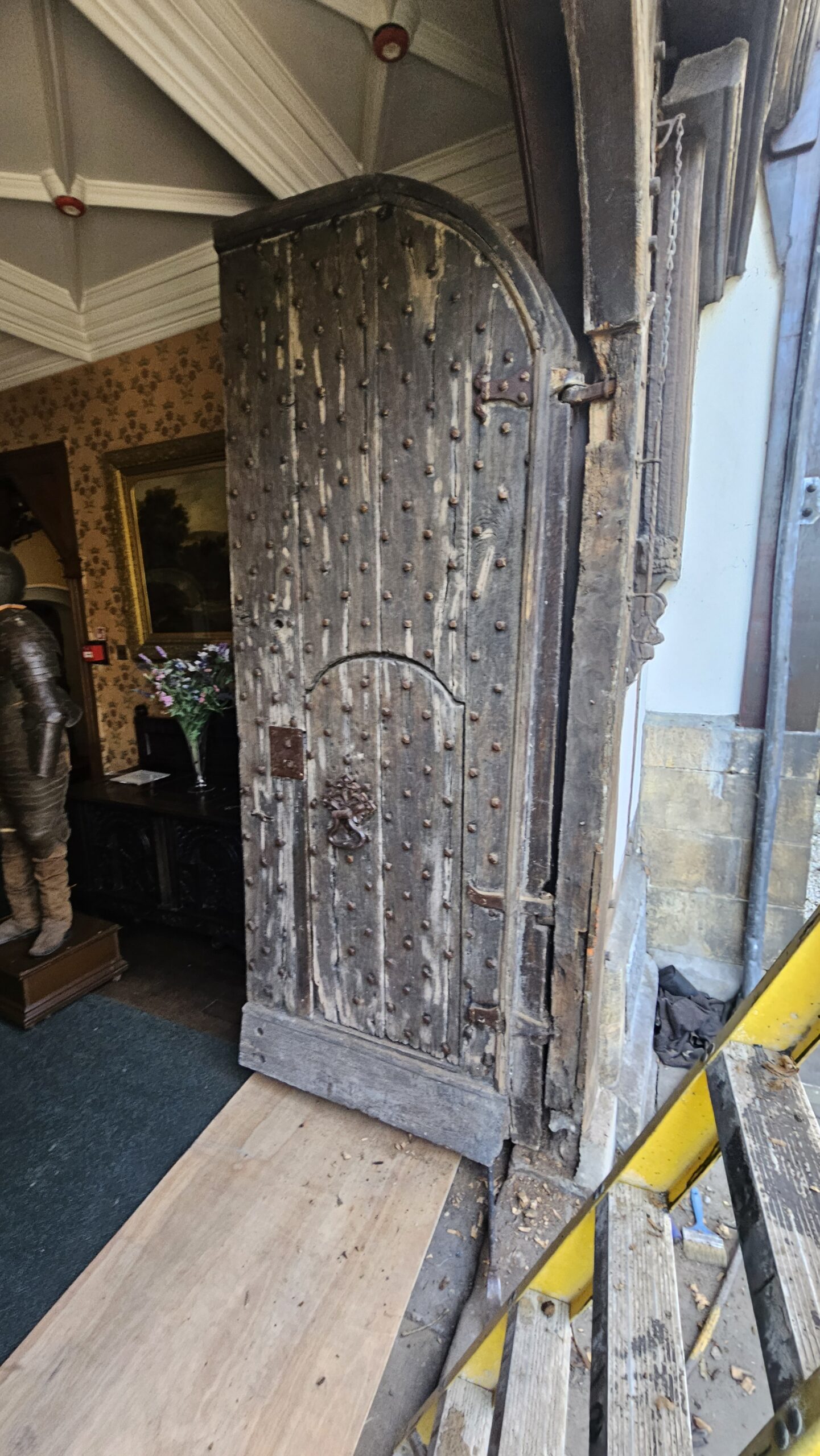
- Removal and temporary support of the historic doors.
- Dismantling and refurbishment of existing hinges.
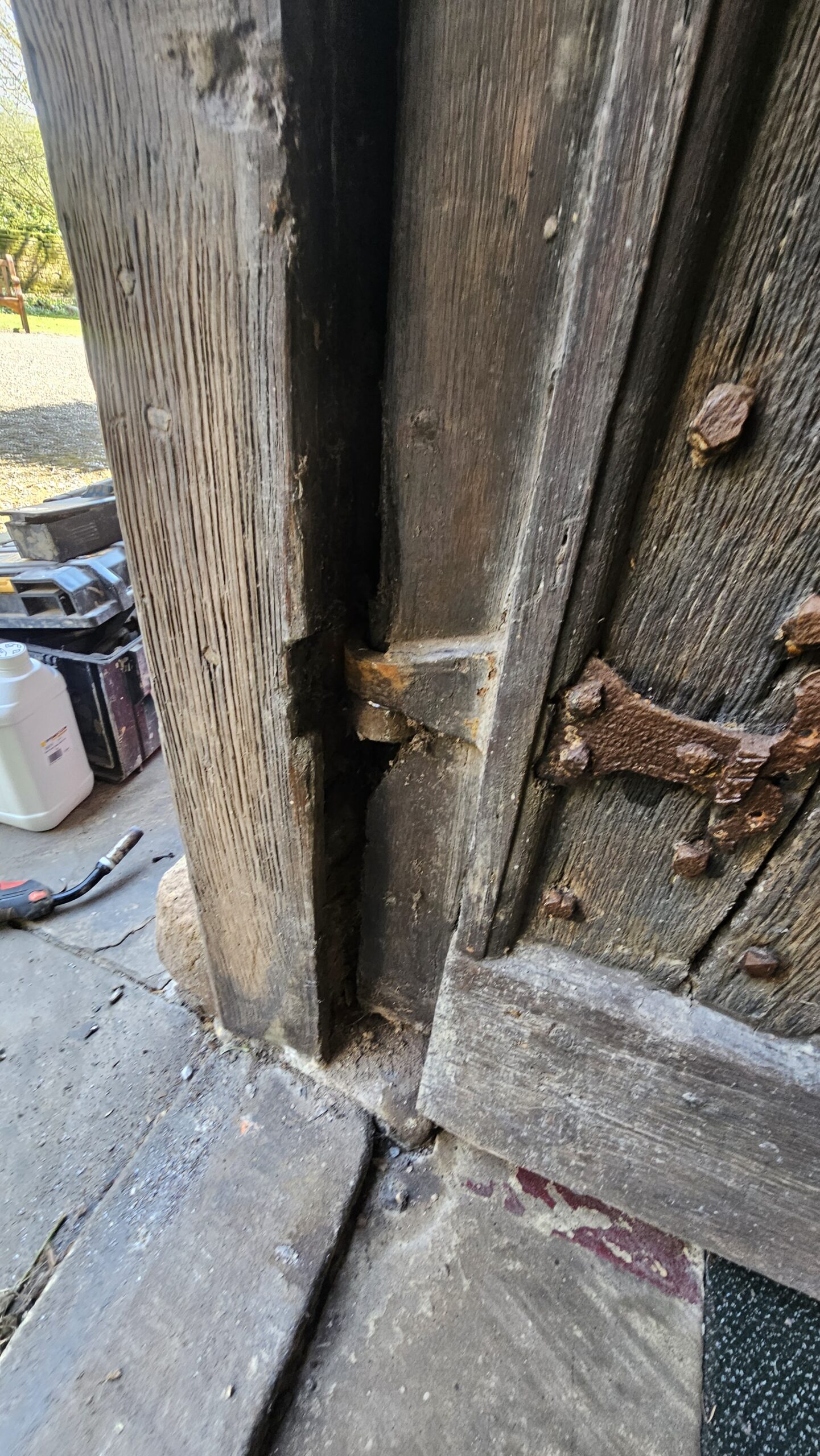
- Fabrication of replacement lower hinges where deterioration had occurred.
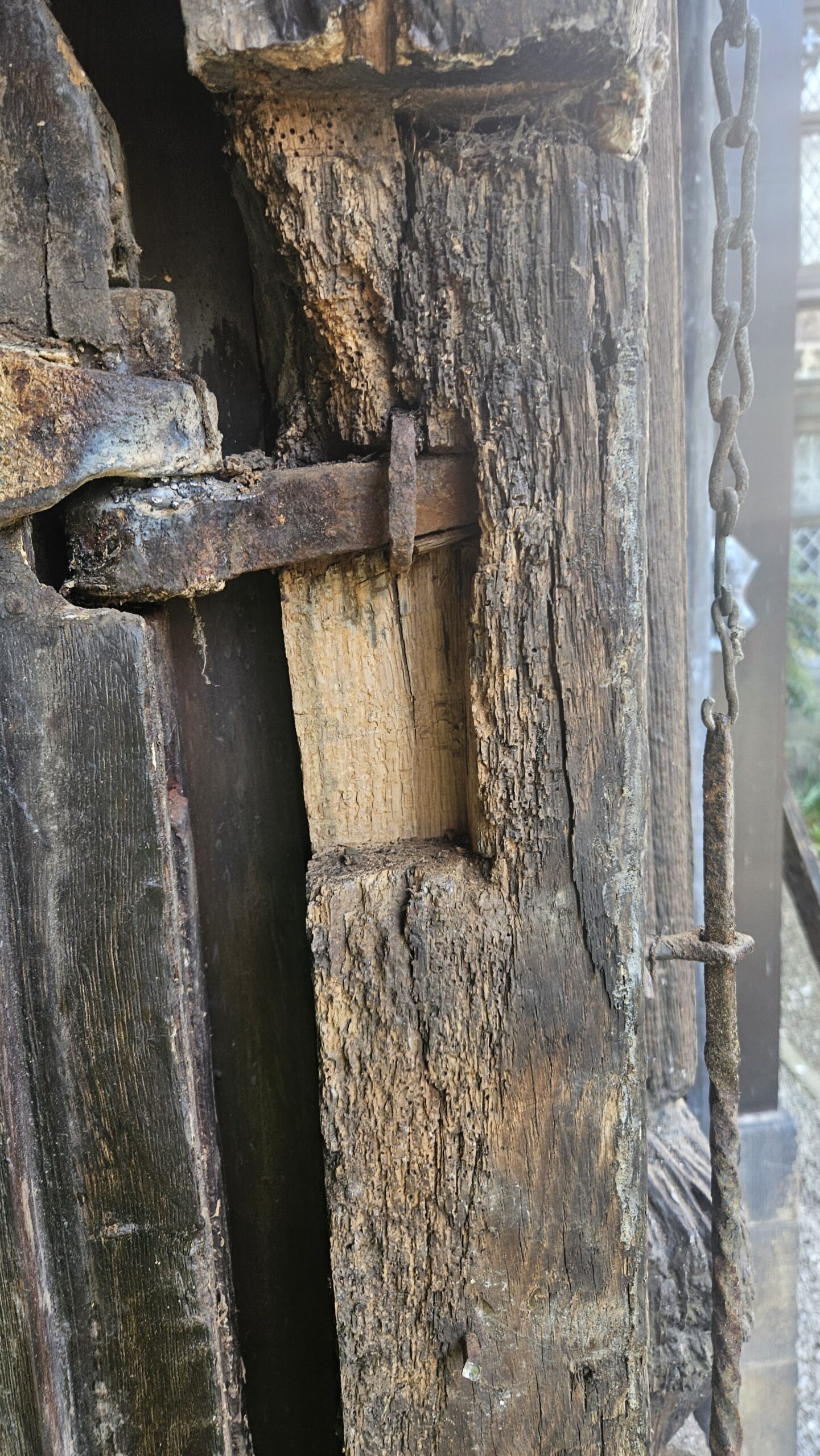
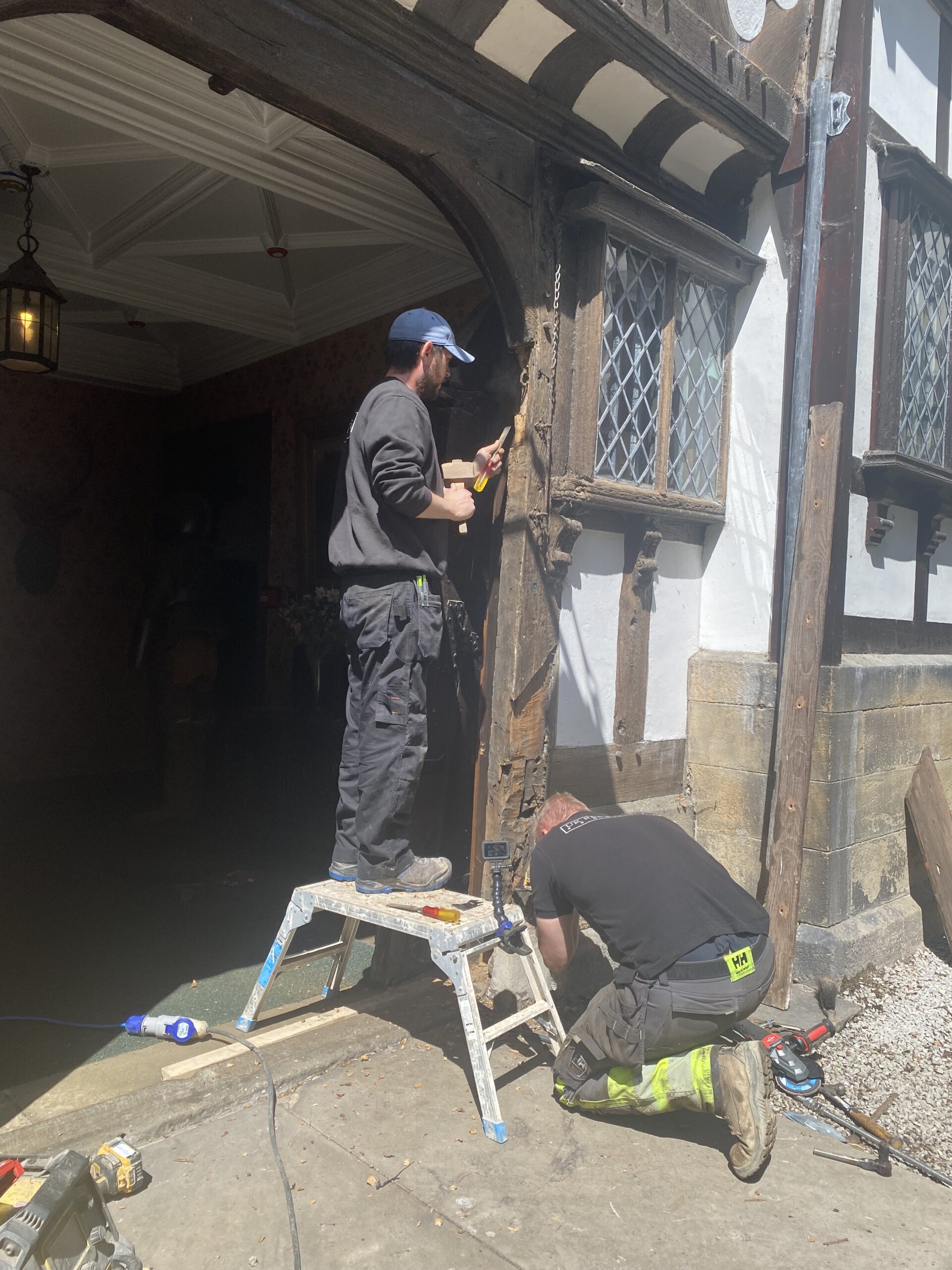
- Localised timber indents to decayed sections of the door frame.
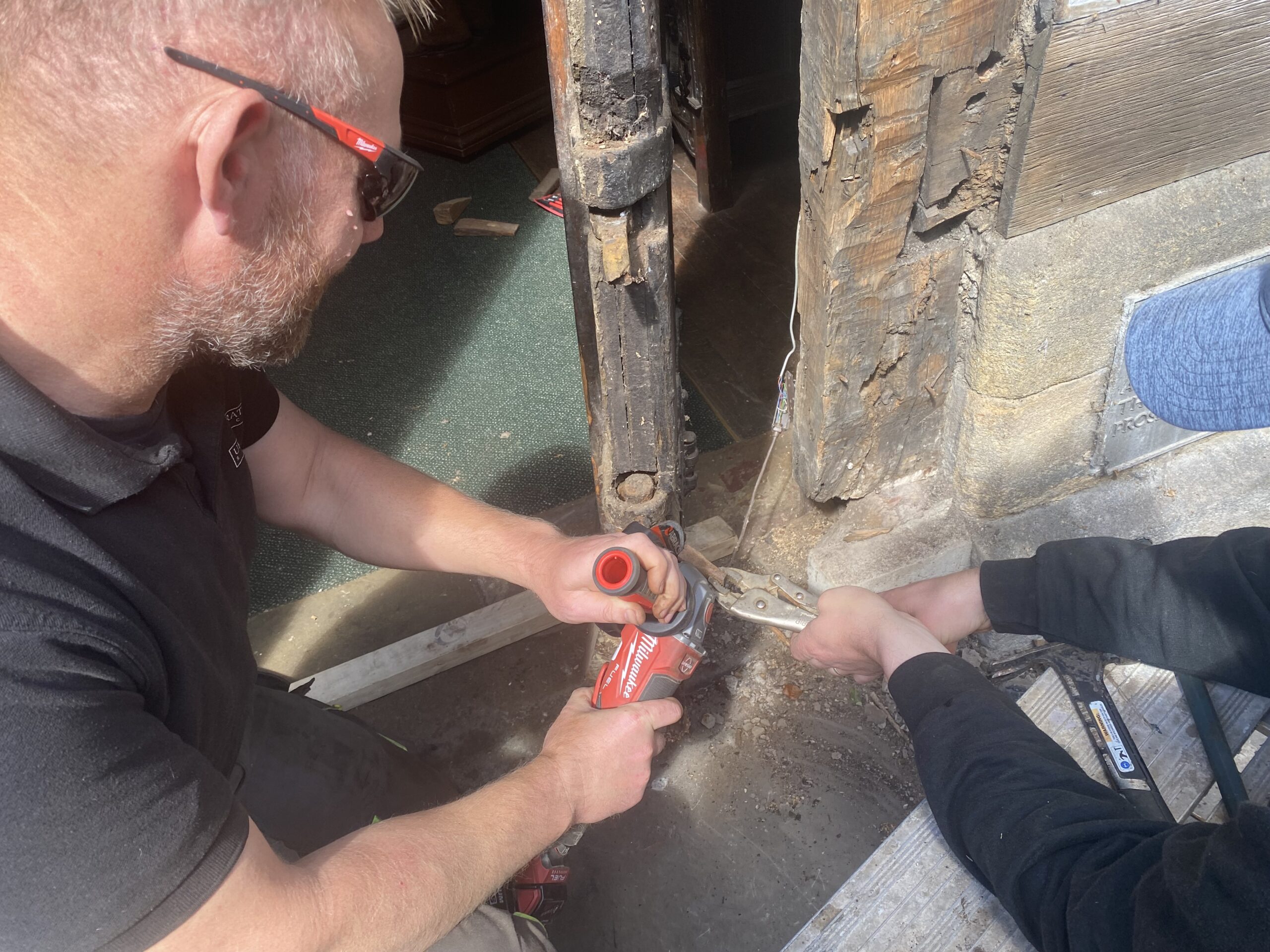
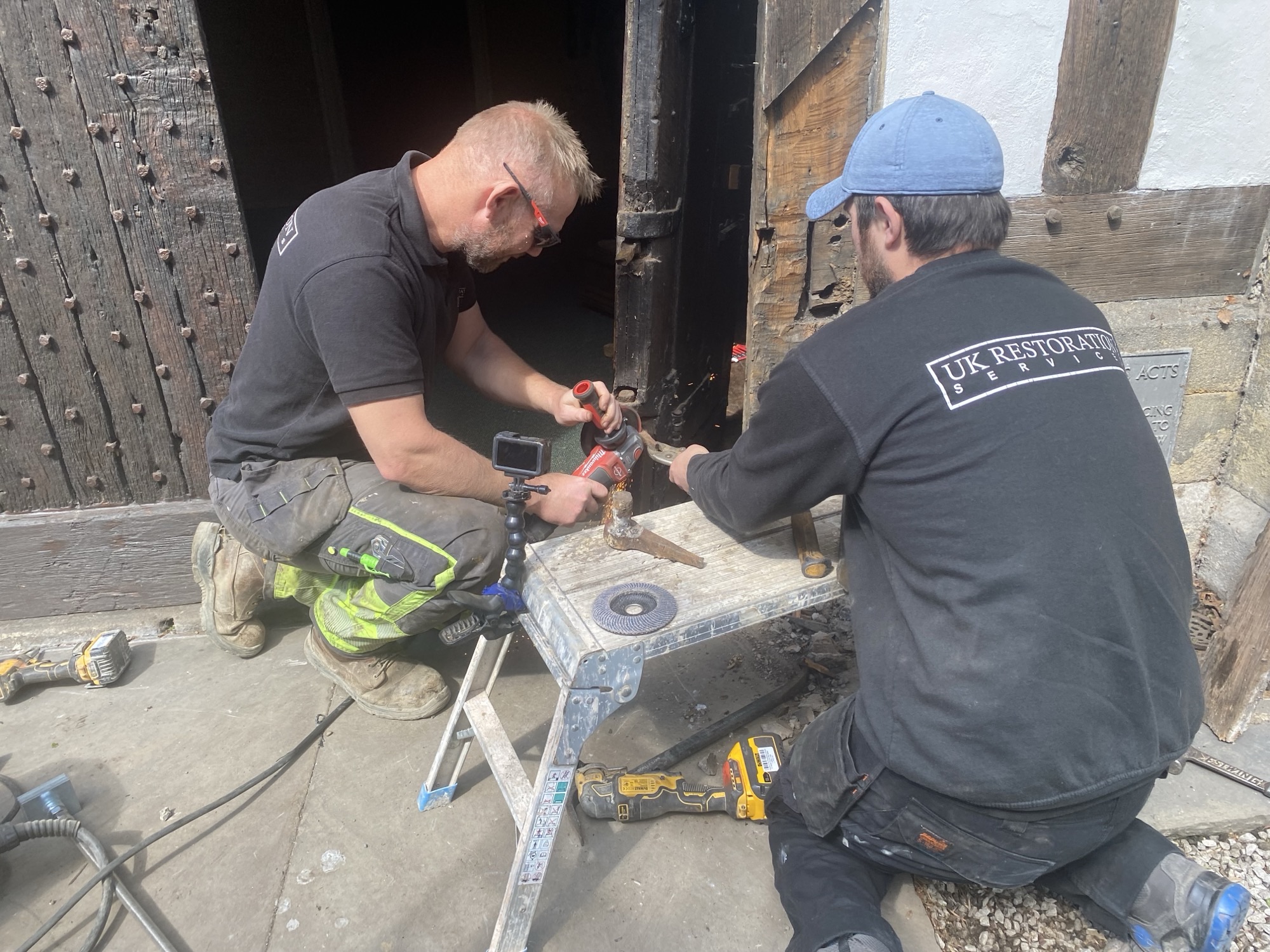
- Repair and welding of worn hinge pins and ironwork.
- Conservation treatment of existing timber surfaces.
- Reinstatement, adjustment and testing of doors upon completion.
- Making good associated seals and surrounding finishes.
By adopting a repair-first approach, the project successfully retained the historic character of the original doors whilst improving functionality and extending their service life.
Heritage Conservation Challenges
Working Within a Grade I Listed Environment
One of the principal challenges was carrying out repair works within a highly significant historic building while ensuring minimal disruption to both the structure and its visitors.
Unlike modern construction projects, heritage conservation requires a thorough understanding of traditional materials and construction techniques. Every intervention must be carefully considered to avoid unnecessary loss of historic fabric and to ensure compatibility between new and existing materials.
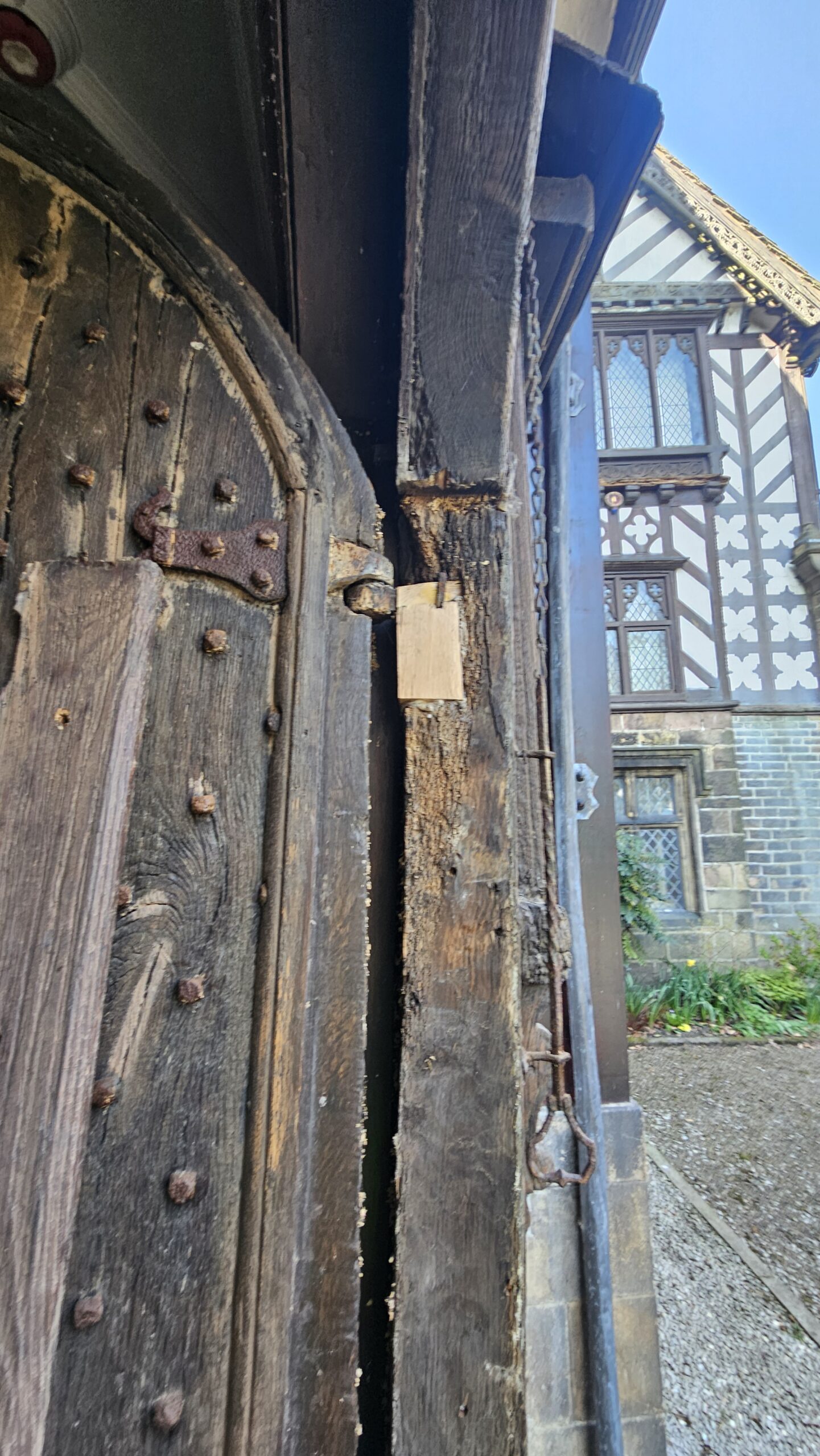
The doors at Turton Tower had been subjected to decades of exposure to weather, movement and repeated use. This had resulted in wear to the hinge mechanisms, localised timber decay and a reduction in operational performance.
Preserving Original Fabric
A key conservation objective was to retain as much original material as possible. Rather than replacing complete door assemblies, UK Restoration Services undertook targeted repairs including timber indents and specialist ironwork restoration.
This approach aligns with best-practice heritage conservation principles and helps preserve the authenticity and significance of listed buildings.
Access and Site Constraints
Turton Tower is situated within extensive woodland surroundings, with visitor access routes and public areas requiring careful management throughout the project. The working area was segregated to maintain public safety while allowing continued operation of the site.
As principal contractor, UK Restoration Services coordinated site activities, health and safety procedures and conservation operations to ensure the project was delivered efficiently and safely within a live heritage environment.
Traditional Conservation Techniques
Timber Conservation and Surface Treatment
Once removed and supported, the doors underwent a programme of careful preparation works. Existing timber surfaces were cleaned and prepared before receiving traditional conservation treatments. The refurbishment process included the application of raw linseed oil and beeswax finishes to nourish, protect and enhance the historic timber.
These traditional materials have long been used in historic building conservation and provide a breathable protective finish that supports the long-term preservation of timber elements.
Ironmongery Repairs
The existing hinges formed an important component of the historic door assembly. Rather than replacing the ironmongery, specialist repairs were undertaken including rust treatment, welding of worn hinge components and the fabrication of replacement lower hinges where necessary.
The hinges were treated using traditional conservation methods before being lubricated and reinstated, ensuring improved performance while retaining the appearance and character of the original ironwork.
Timber Frame Repairs
Localised areas of decay within the door frame were addressed using carefully executed timber indents. This traditional repair technique allows only the affected sections of timber to be replaced while preserving the majority of the original fabric.
The result is a structurally sound repair that remains sympathetic to the historic character of the building.
Masonry and Mortar Repairs at the Door Threshold
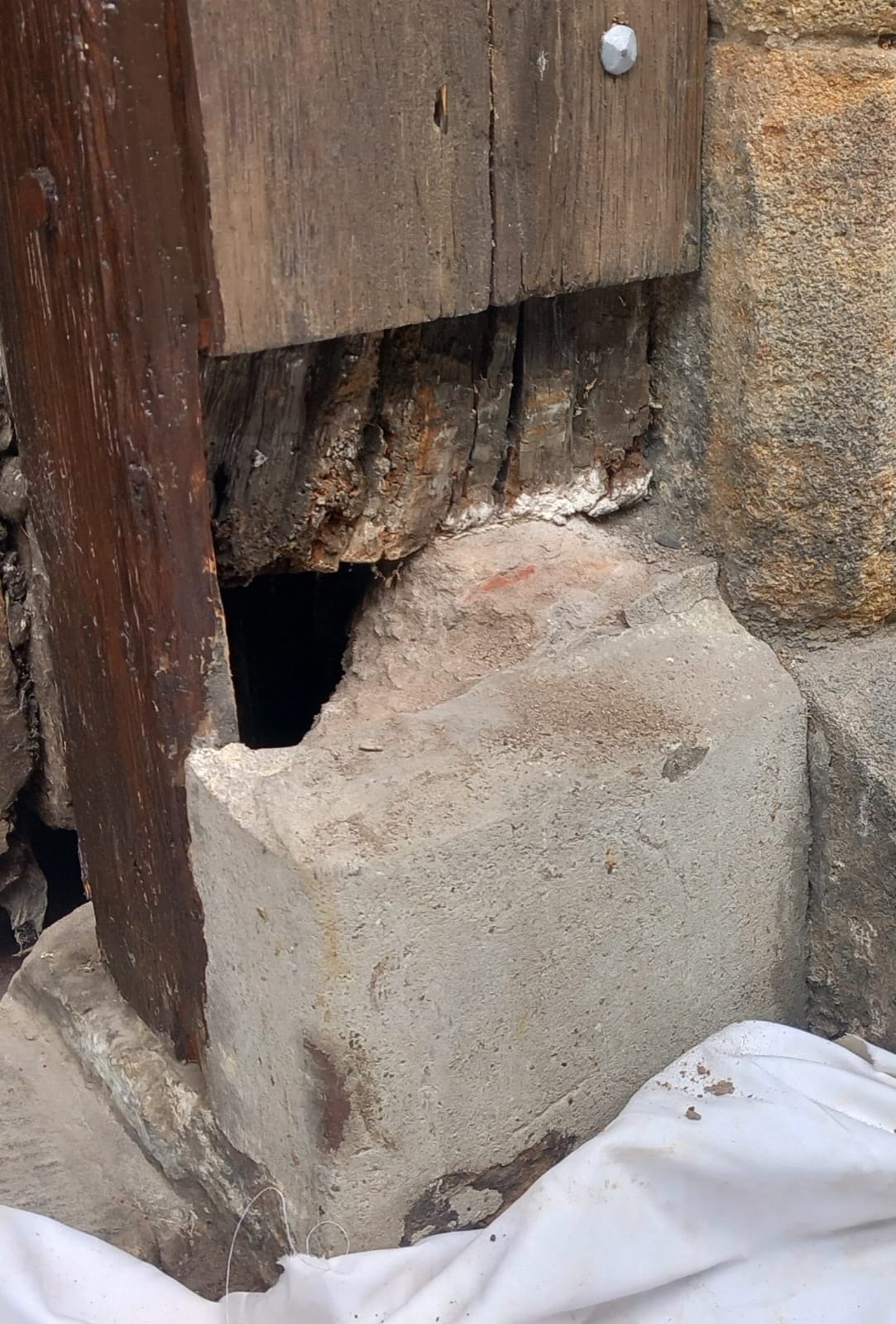
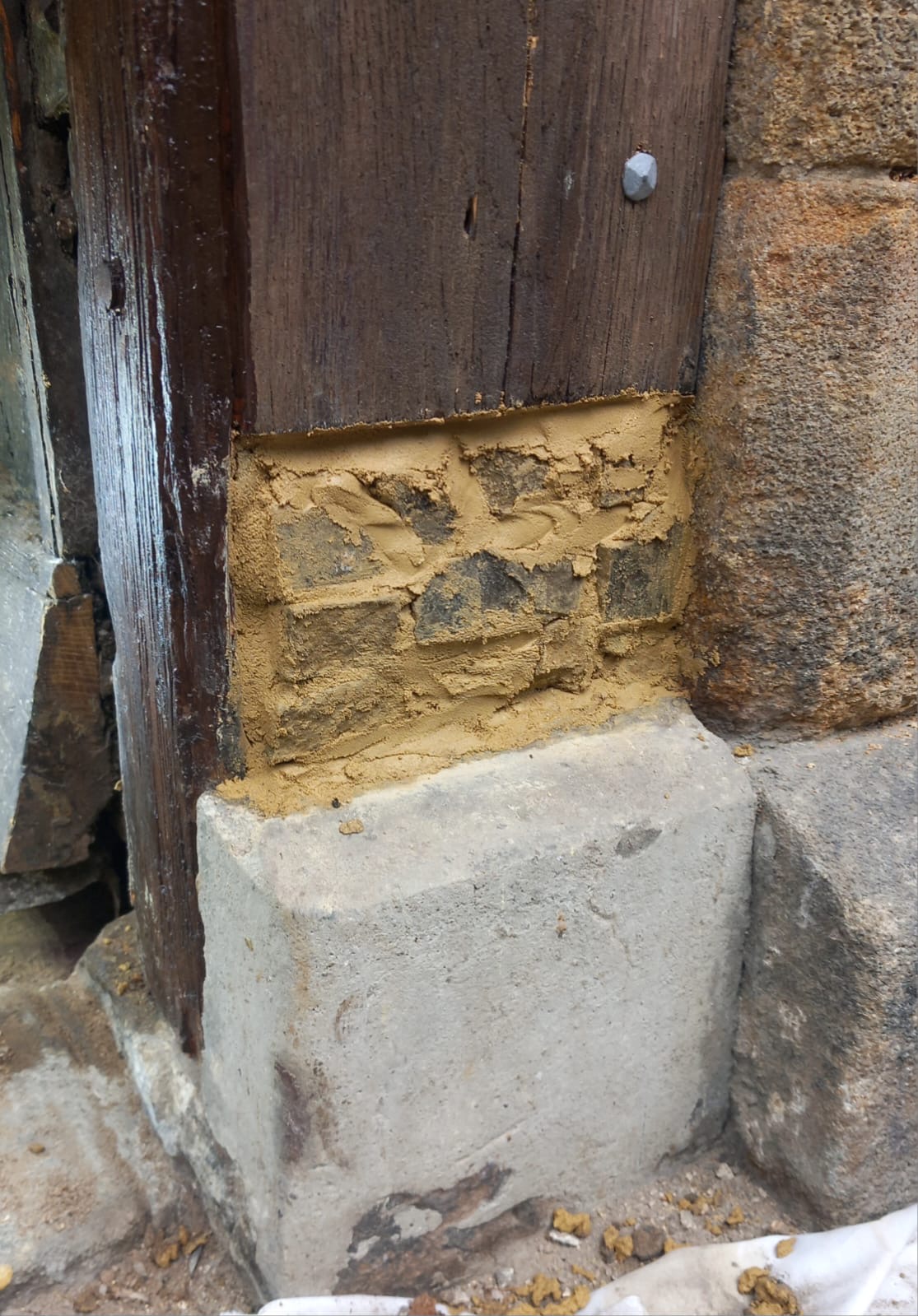
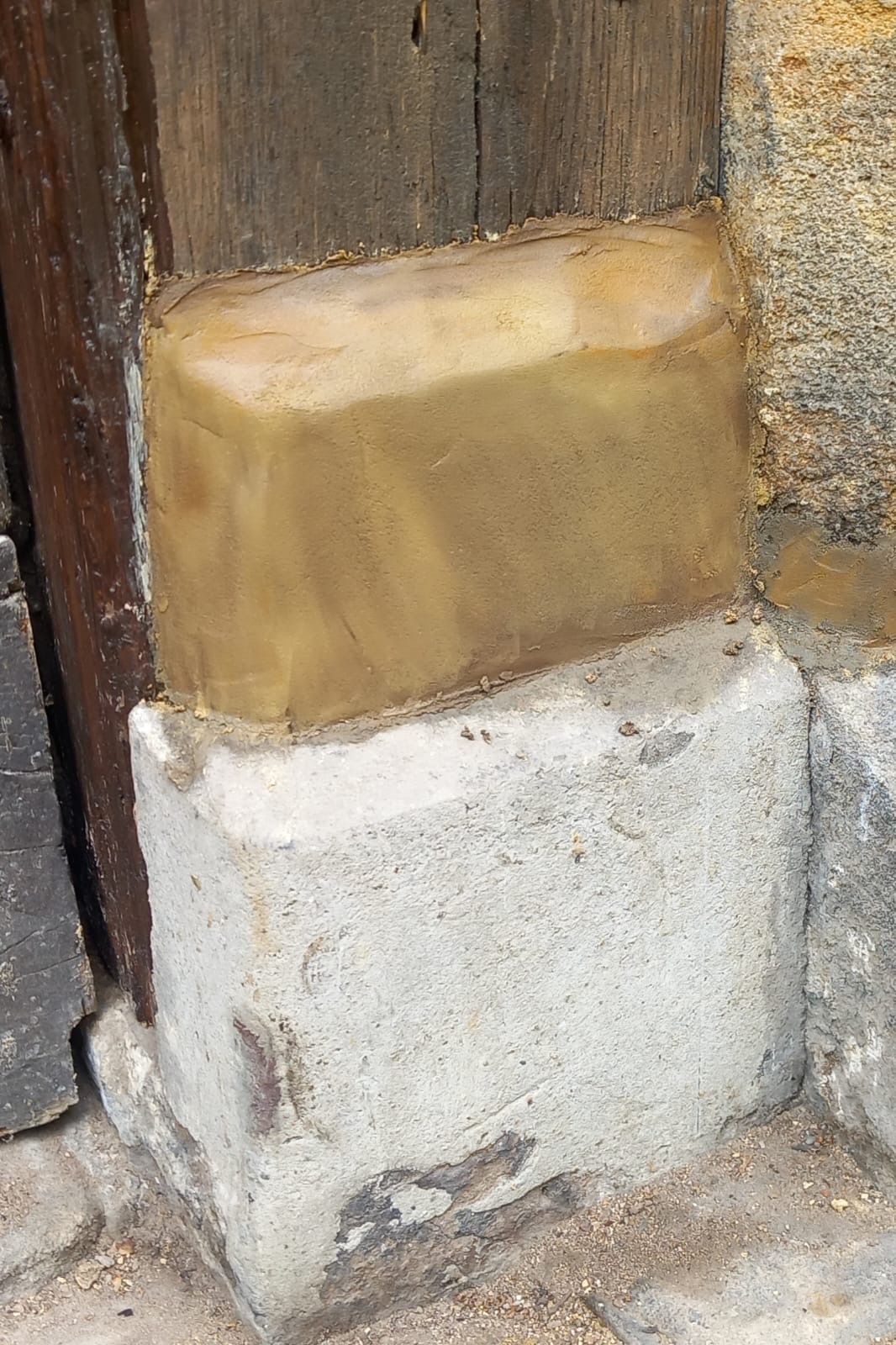
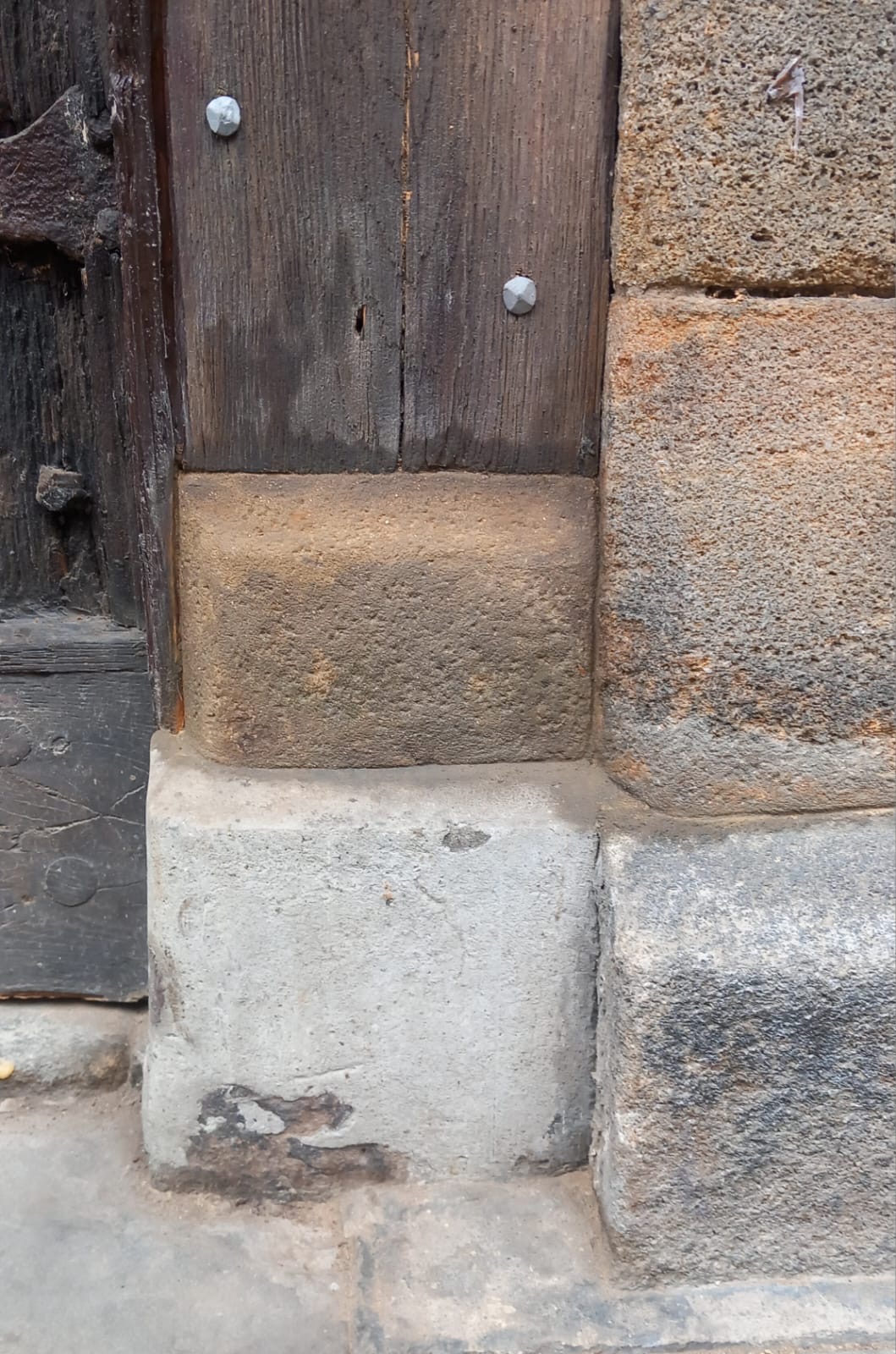
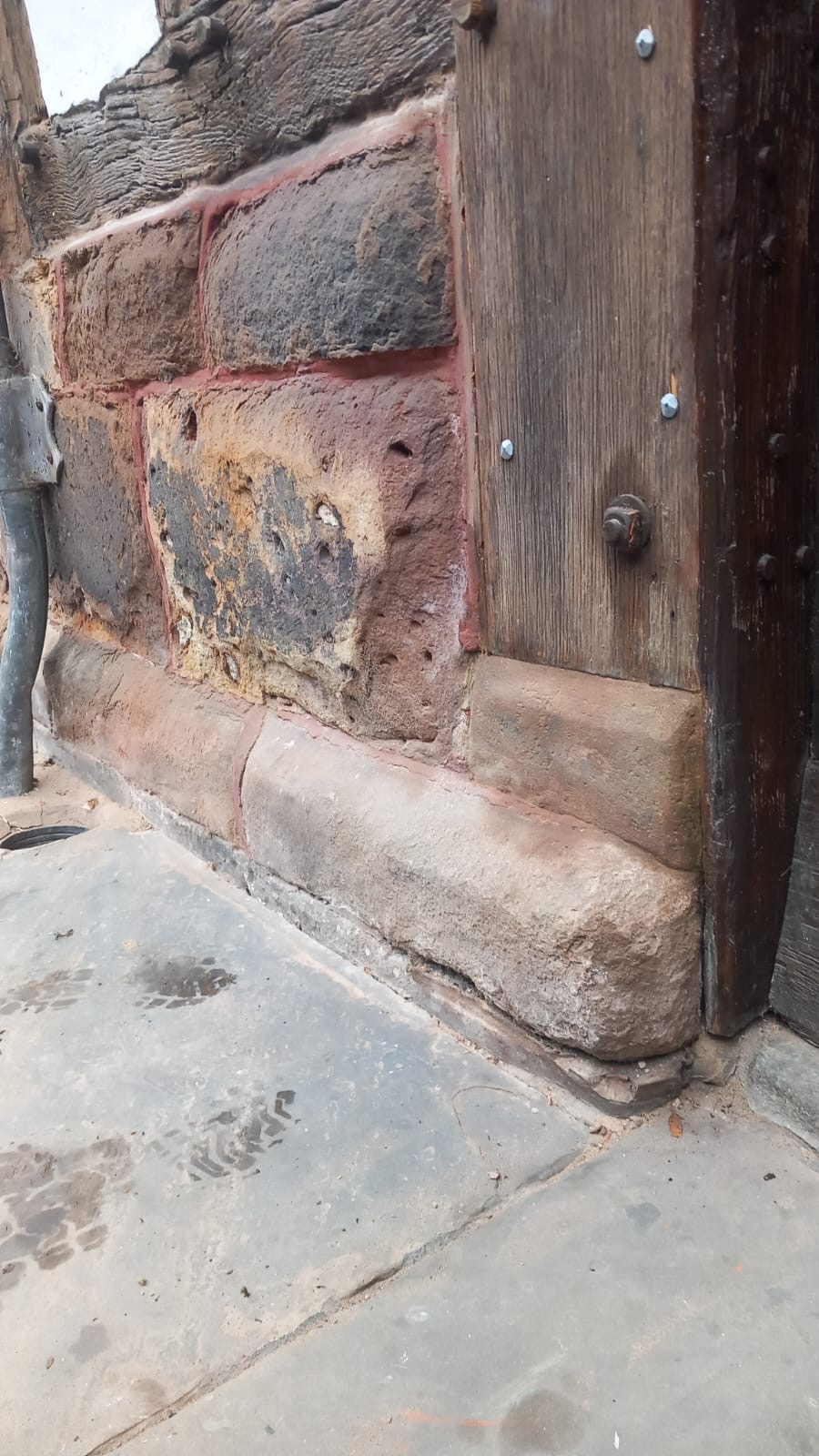
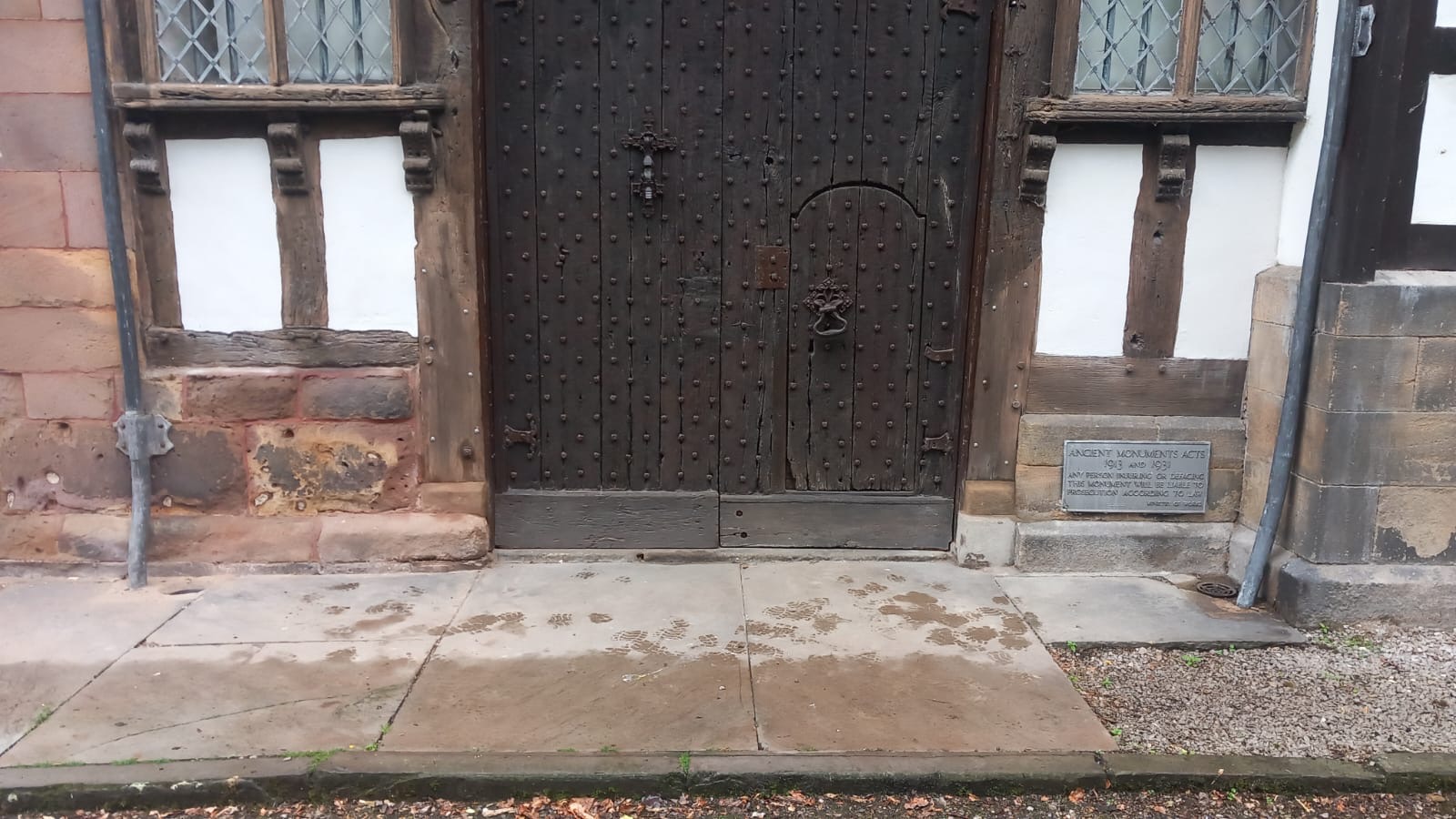
During the refurbishment works, further deterioration was identified at the base of the entrance doorway where historic repairs had failed, leaving voids beneath the timber frame and exposing vulnerable areas to water ingress. As part of our conservation-led approach, these defective sections were carefully opened up and rebuilt using compatible masonry and lime-based repair mortars, reinstating the integrity of the doorway while remaining sympathetic to the historic fabric of Turton Tower.
The repairs involved rebuilding areas of lost backing material, consolidating the threshold junction and reforming the lower plinth detail beneath the timber frame. Particular care was taken to match the texture, profile and appearance of the surrounding historic materials, ensuring that the completed repair blended seamlessly with the existing structure. This intervention not only improved the visual presentation of the entrance but also helped protect the repaired timber frame from future moisture penetration, contributing to the long-term preservation of this important heritage asset.
This additional work demonstrates the value of undertaking detailed condition assessments during historic building restoration projects, where hidden defects often become apparent once deterioration is exposed and conservation repairs commence.
Project Successes
The Turton Tower door refurbishment project successfully achieved several important objectives:
- Retention of significant original historic fabric.
- Conservation-led repair rather than wholesale replacement.
- Restoration of operational performance to the entrance doors.
- Sensitive repair of historic timber and ironmongery.
- Improved protection against future weathering.
- Minimal disruption to visitors and site operations.
- Delivery in accordance with heritage conservation best practice.
The completed works have extended the lifespan of these important historic features while preserving their contribution to the character and significance of Turton Tower.
Specialist Heritage Contractors for Blackburn with Darwen, Bolton and Greater Manchester
The Turton Tower project highlights UK Restoration Services’ expertise in delivering conservation and restoration projects for local authorities, heritage organisations and conservation professionals throughout Blackburn with Darwen, Bolton, Greater Manchester, Lancashire and the wider North West. Working on behalf of Blackburn with Darwen Borough Council, our team successfully preserved an important historic feature within one of the region’s most significant heritage attractions.
Working with architects, conservation officers, heritage consultants, surveyors, local authorities and building owners, we provide specialist principal contractor services for the repair, restoration and preservation of historic structures.
Whether undertaking timber conservation, stone masonry repairs, lime mortar works, roofing restoration or complete heritage refurbishment schemes, our team combines traditional craftsmanship with professional project management to safeguard the UK’s historic built environment for future generations.