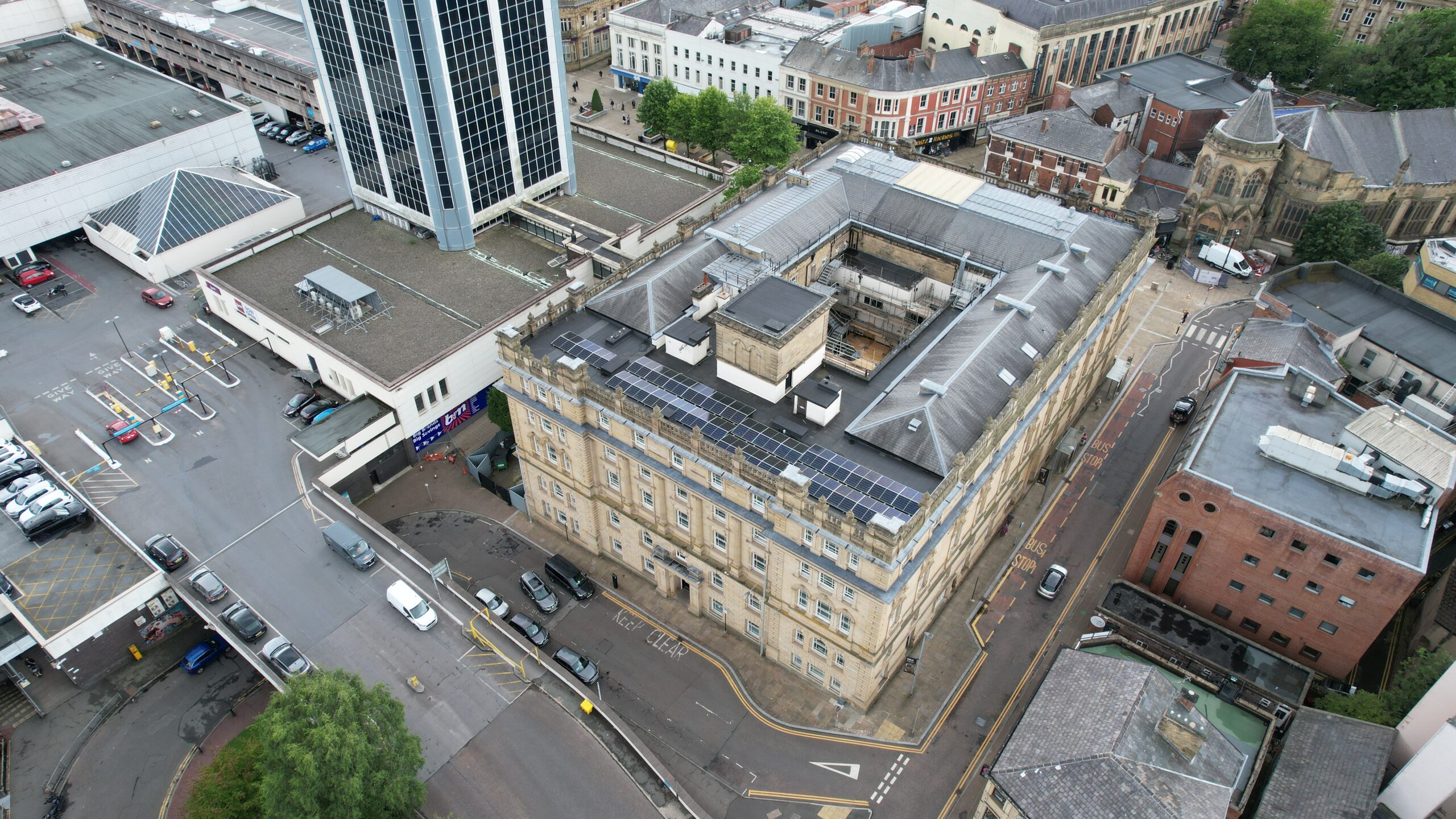
UK Restoration Services was appointed by Blackburn with Darwen Borough Council to undertake extensive heritage restoration of lime rendering works to the historic quadrangle courtyard at Blackburn Town Hall. Situated at the heart of one of Lancashire’s most important civic buildings, the project focused on the careful removal of failing render systems, conservation of the underlying masonry, installation of new sandstone window cills, and the application of a breathable lime render system designed to protect and preserve the building’s historic fabric for decades to come.
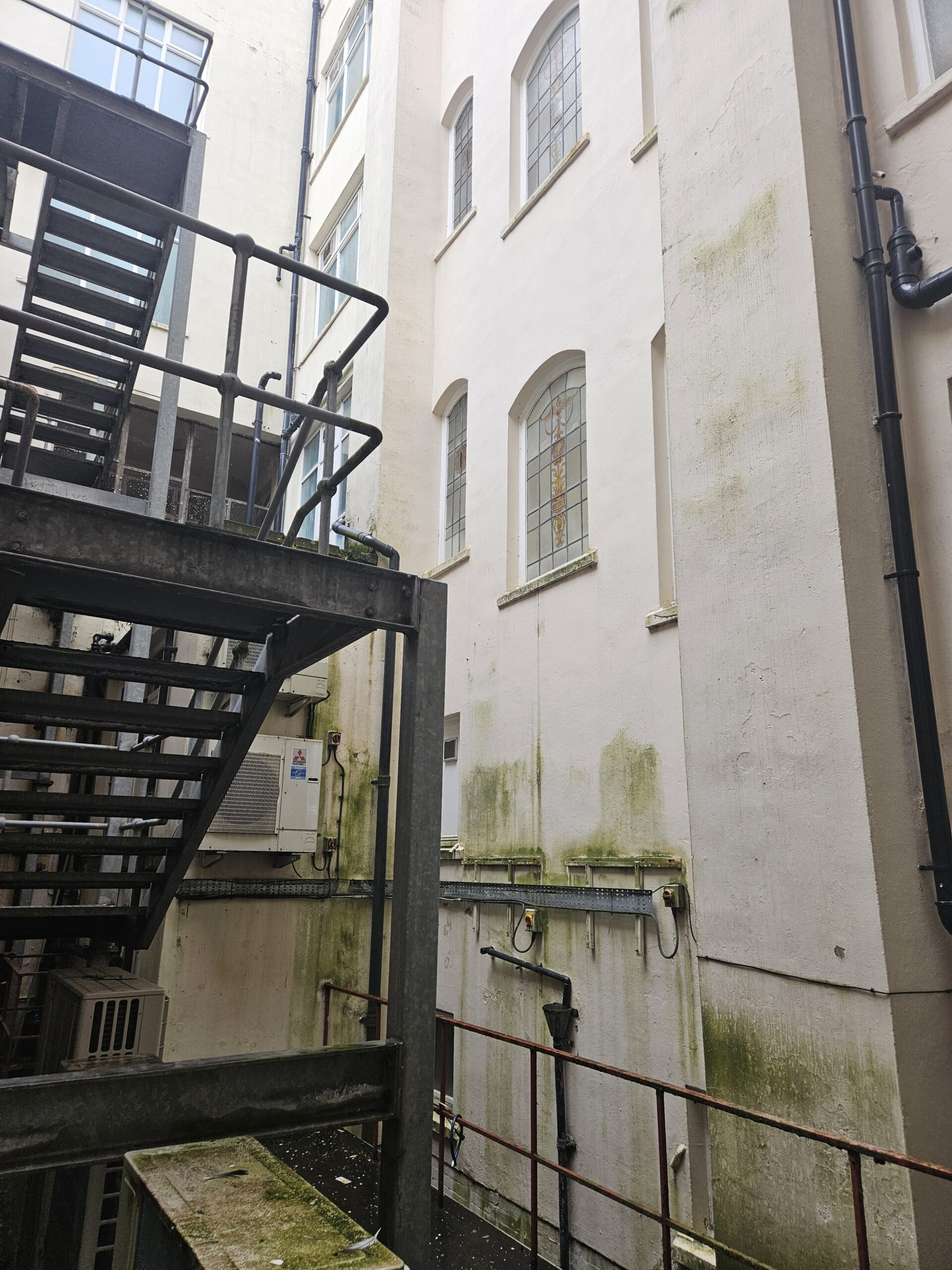
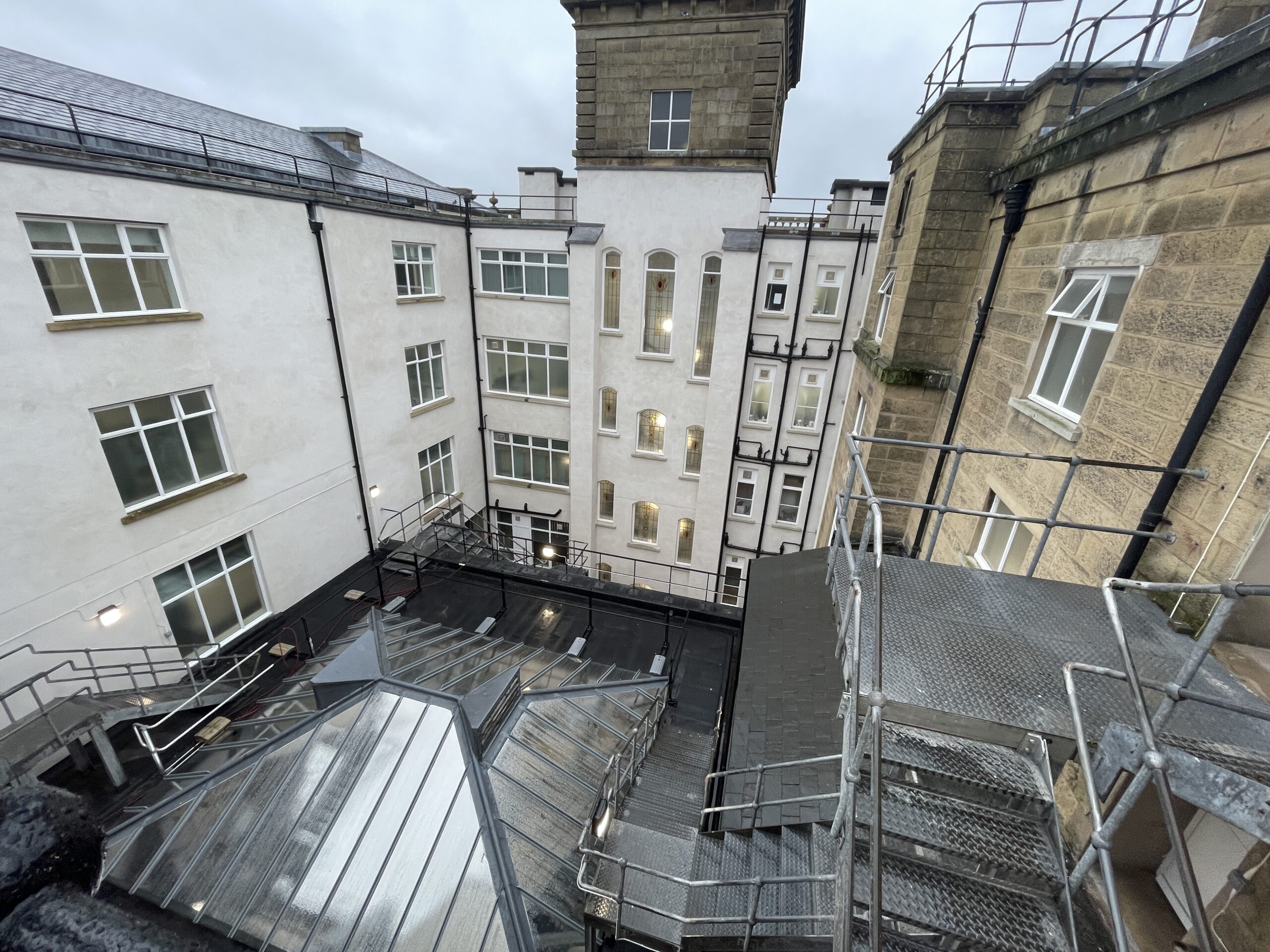
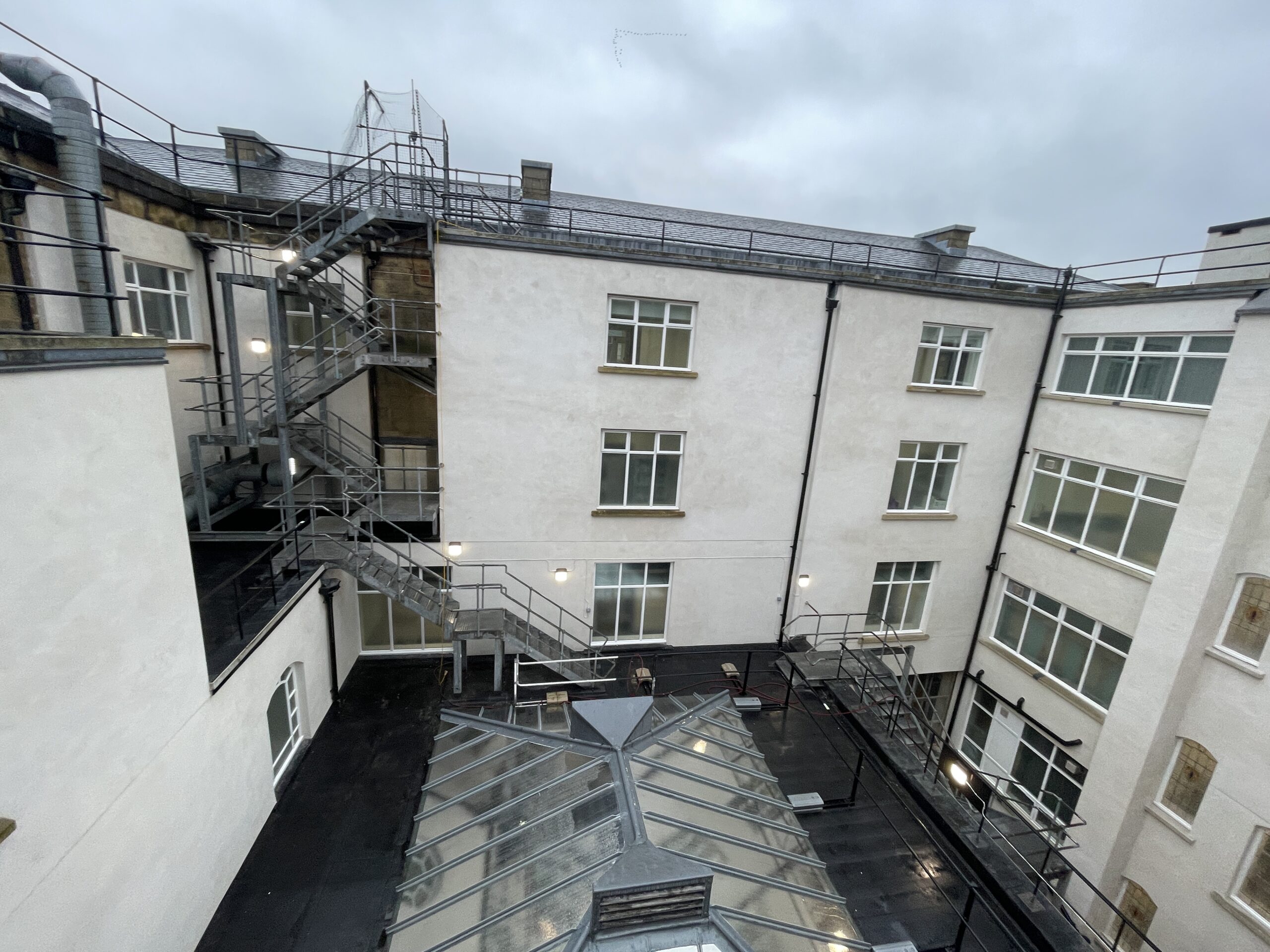
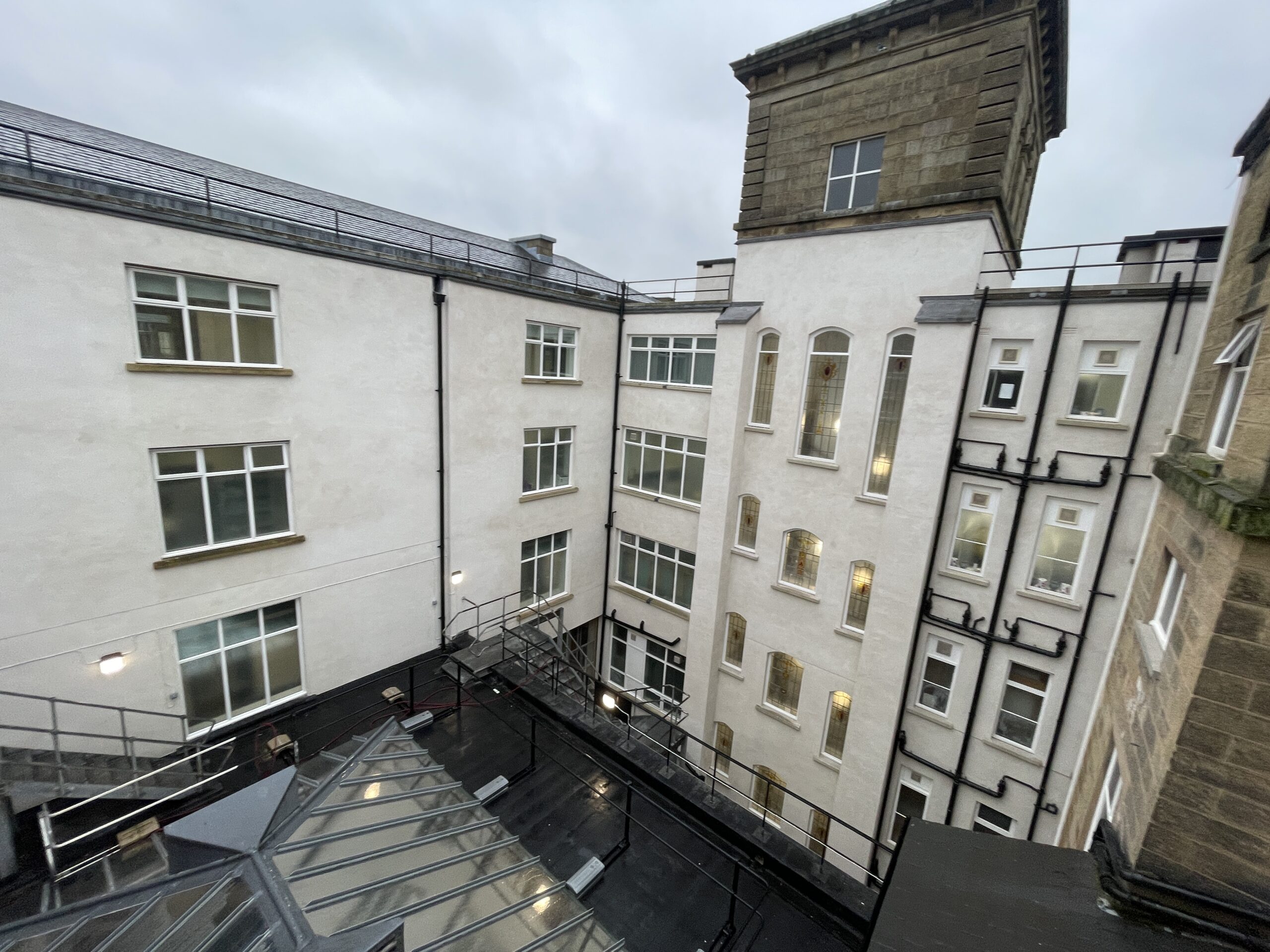
The Blackburn Town Hall Quadrangle is a prominent internal courtyard enclosed by multiple elevations of the landmark municipal building. Years of weather exposure, inappropriate historic repairs and deterioration of previous render systems had resulted in widespread cracking, debonding, moisture ingress and localised structural defects. The project required a comprehensive programme of conservation-led repairs that would not only restore the appearance of the quadrangle but also improve its long-term performance whilst respecting the character of the historic structure.
Site Constraints and Project Challenges
Working within an operational town hall presented numerous logistical and technical challenges. The quadrangle is surrounded by occupied offices, circulation routes and public-facing areas, requiring careful planning to minimise disruption throughout the construction programme.
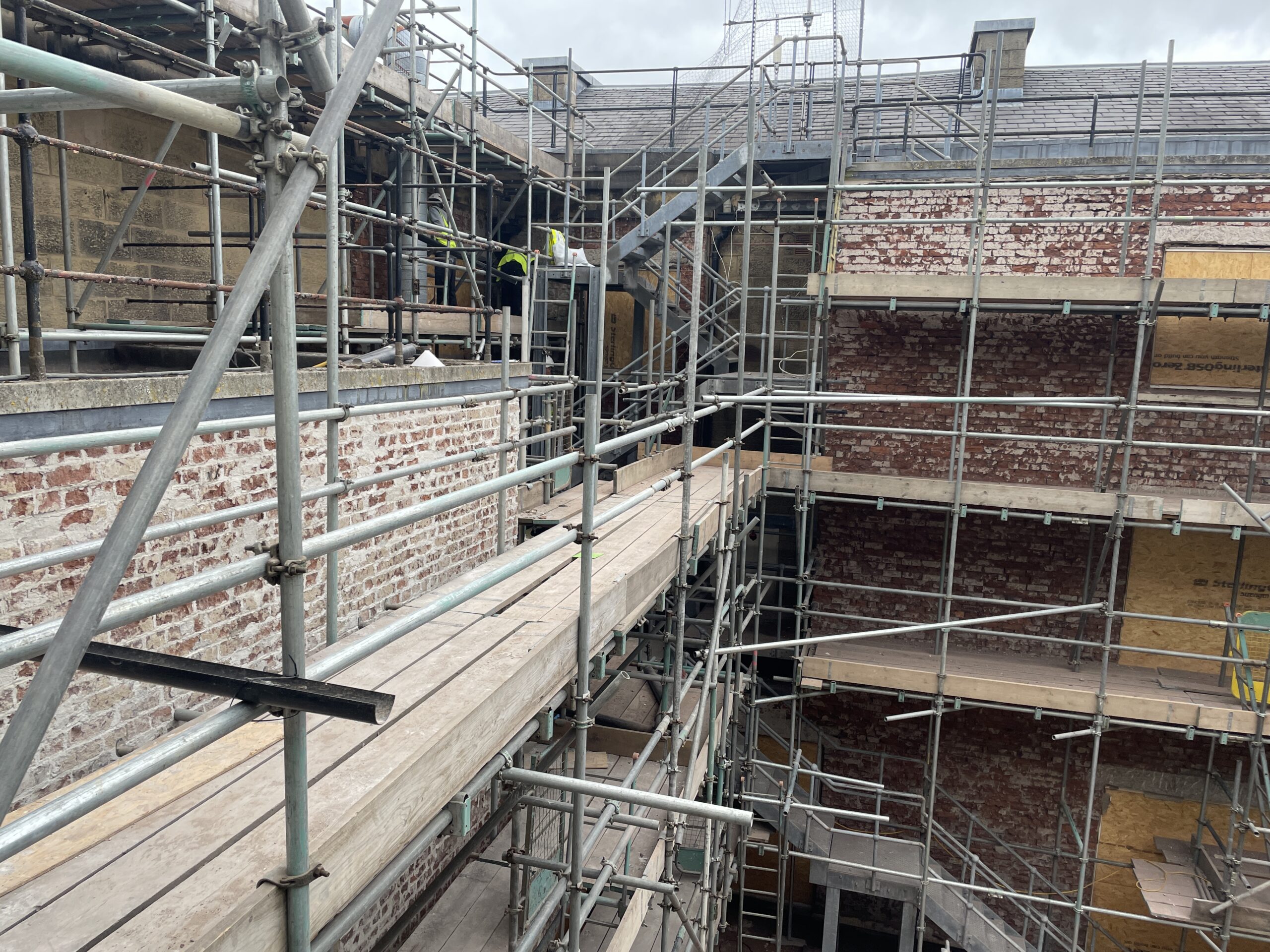
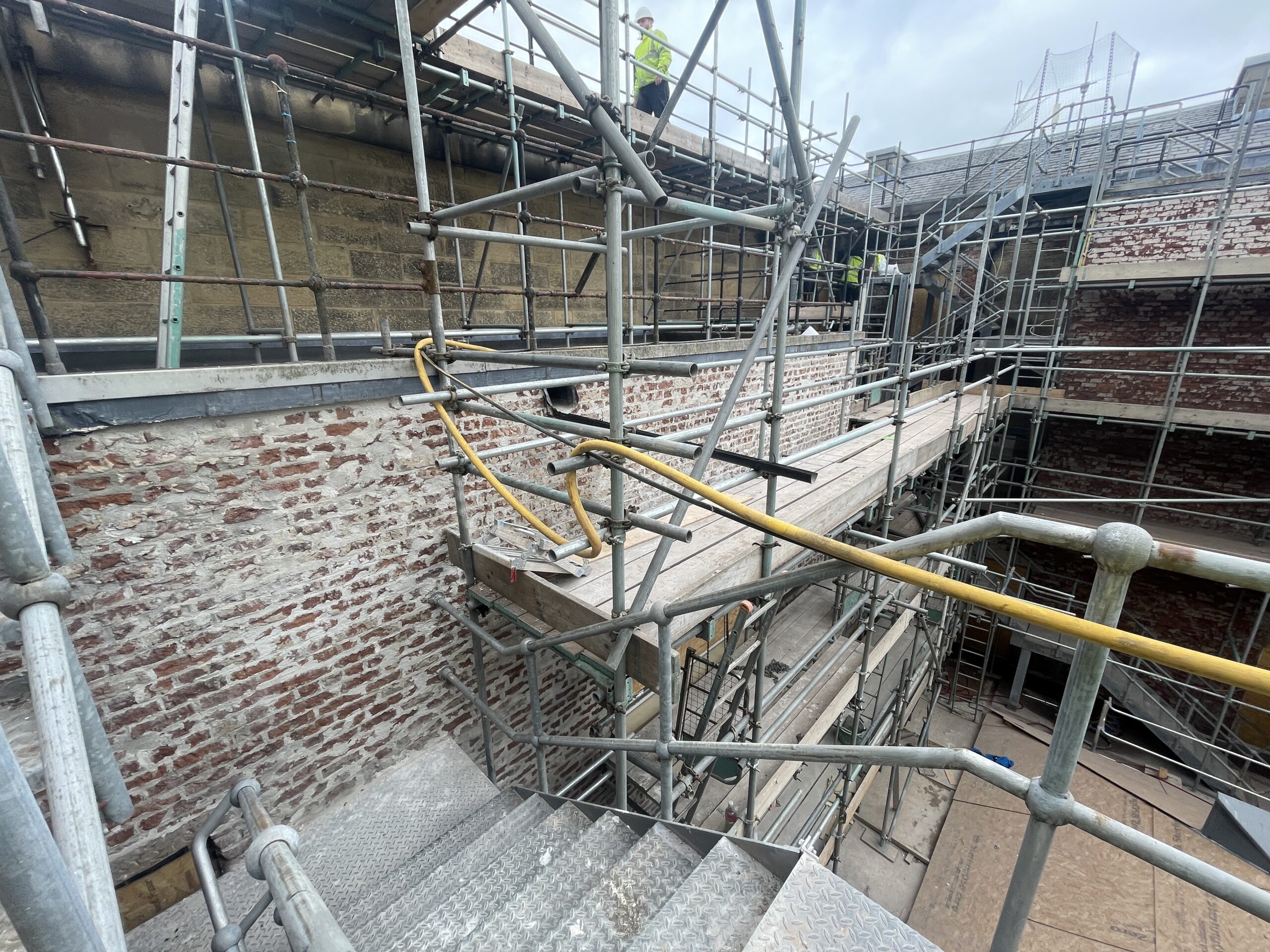
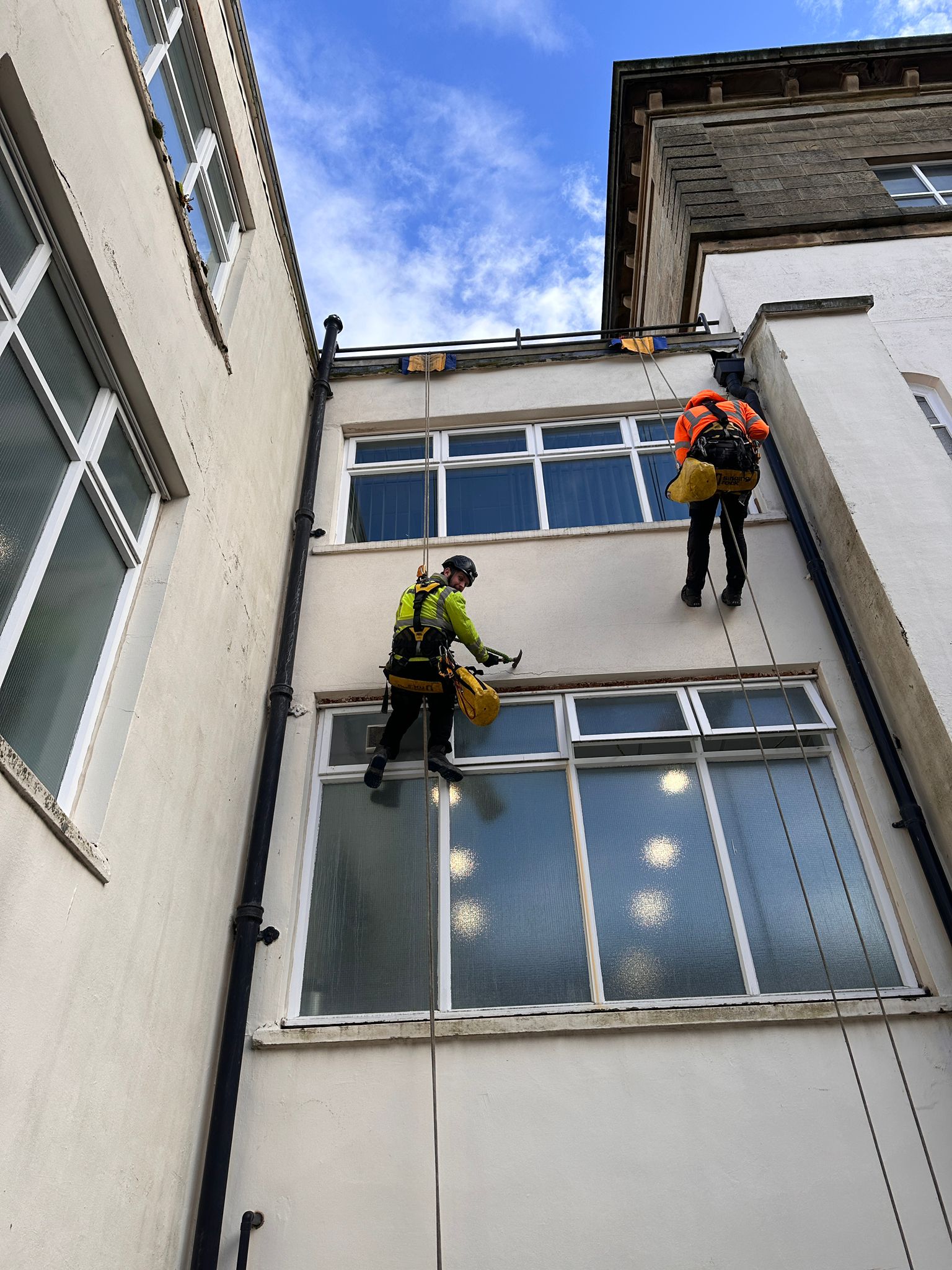
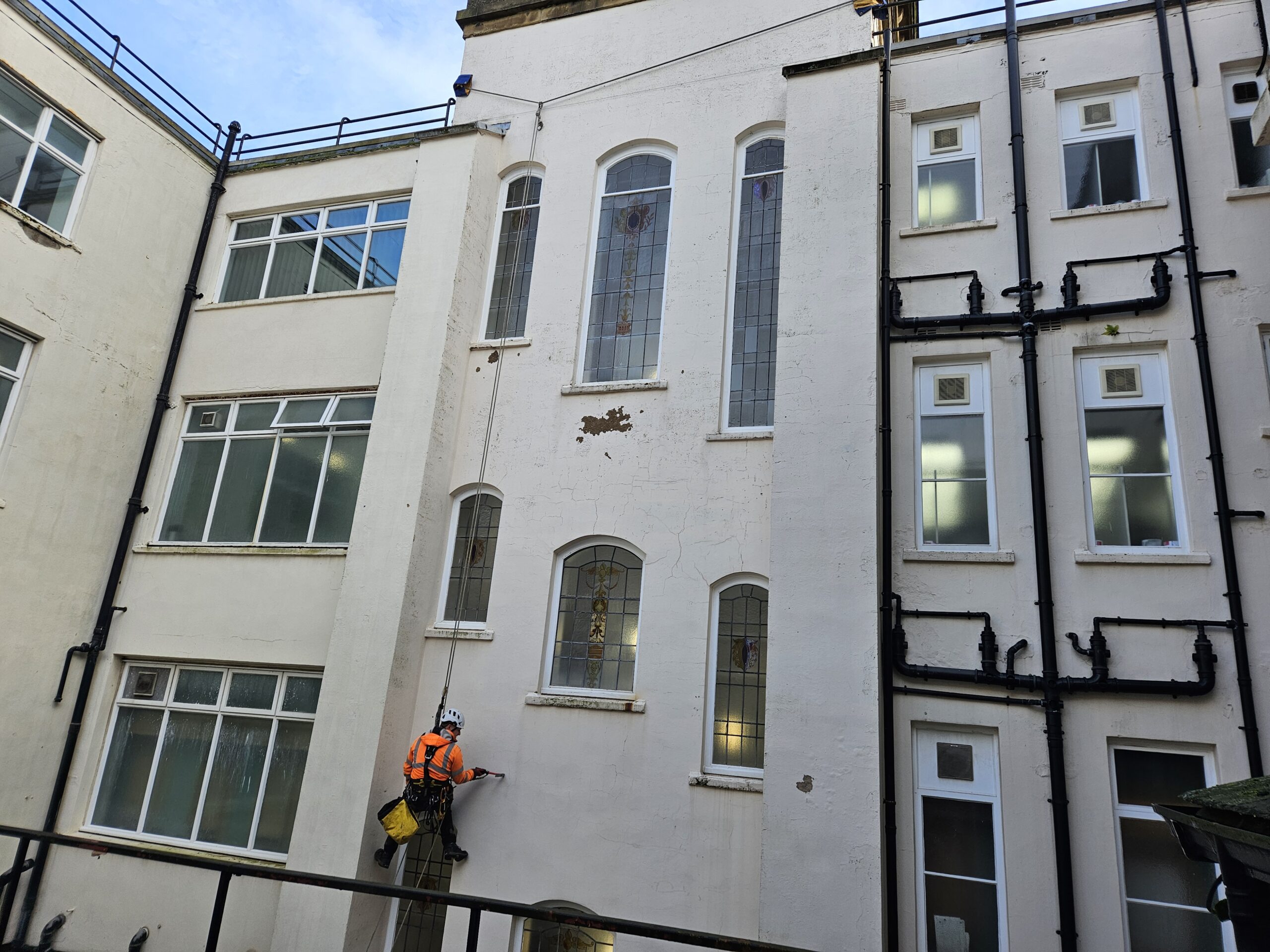
Access was particularly complex due to the enclosed nature of the courtyard and the varying heights of the surrounding elevations. Extensive scaffold systems were required to provide safe access to all elevations while maintaining protection to roofs, windows, services and surrounding building fabric. In several areas, specialist rope access techniques were utilised to undertake high-level pre-works inspections and repairs where traditional access methods were impractical.
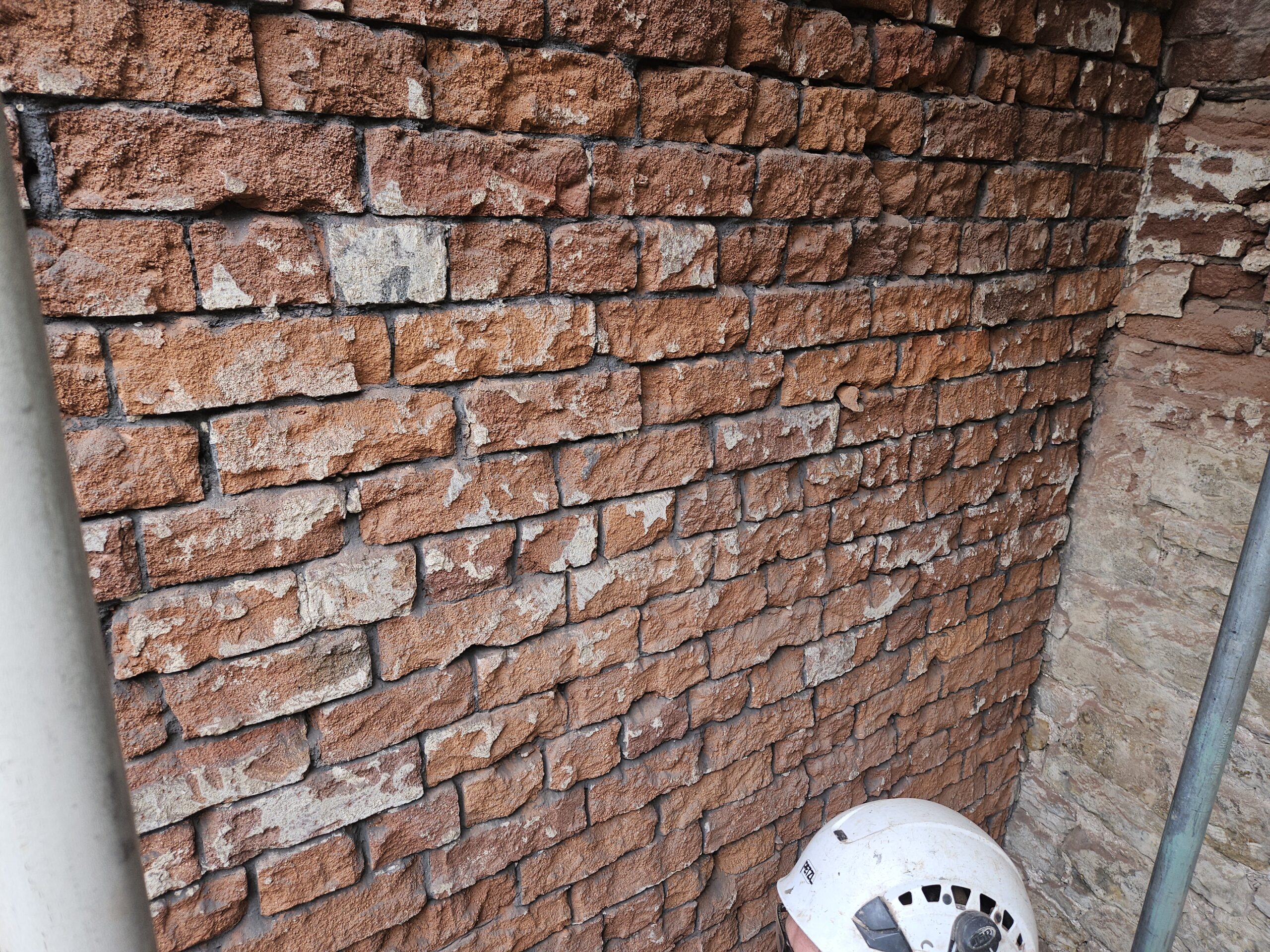
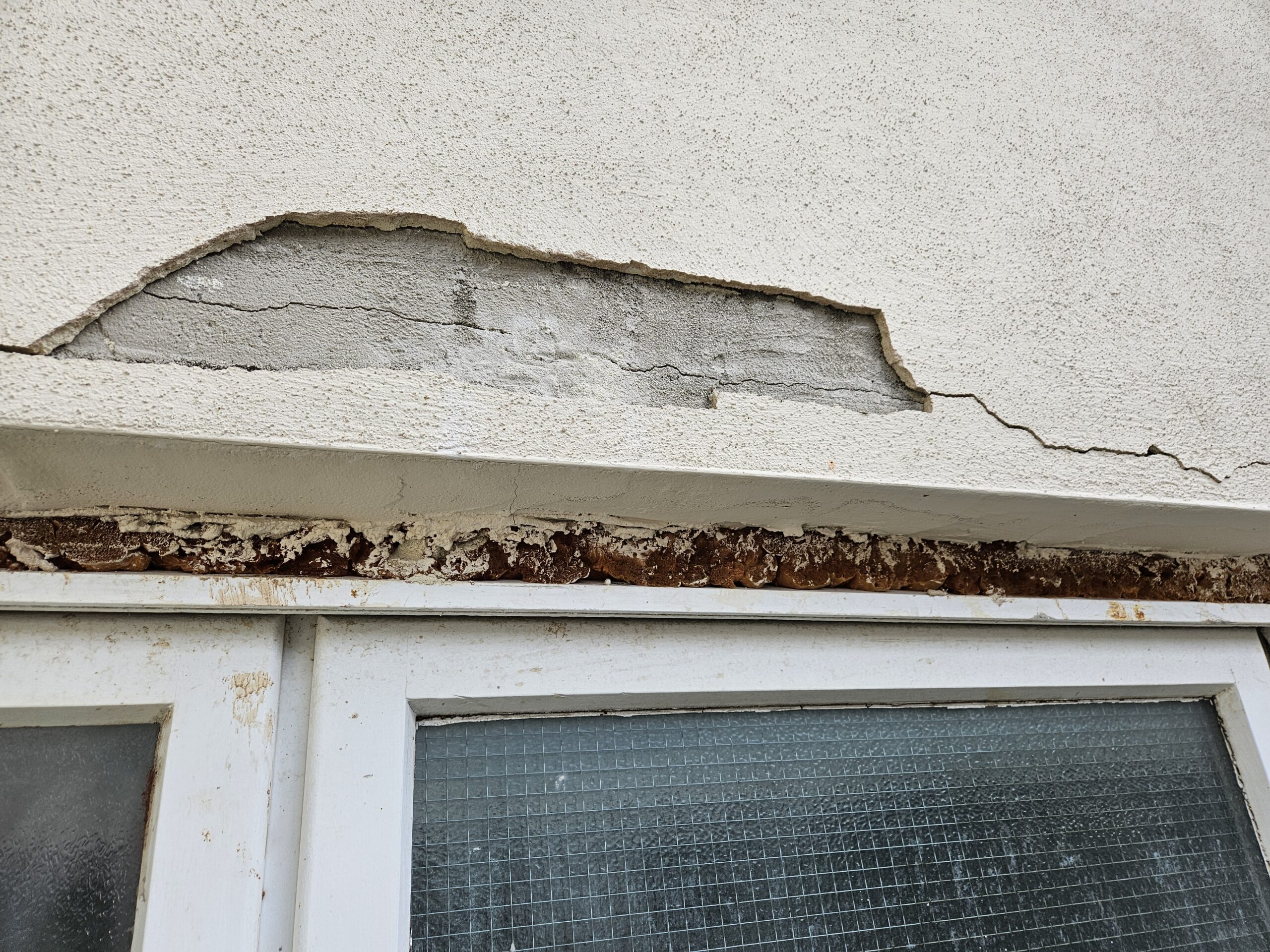
A significant challenge involved the condition of the existing render system. Investigations revealed widespread failure of previous cement-based repairs, trapped moisture, hollow areas and deterioration within the masonry substrate. These modern impermeable materials had prevented the historic walls from breathing naturally, accelerating decay and increasing the risk of ongoing water penetration.
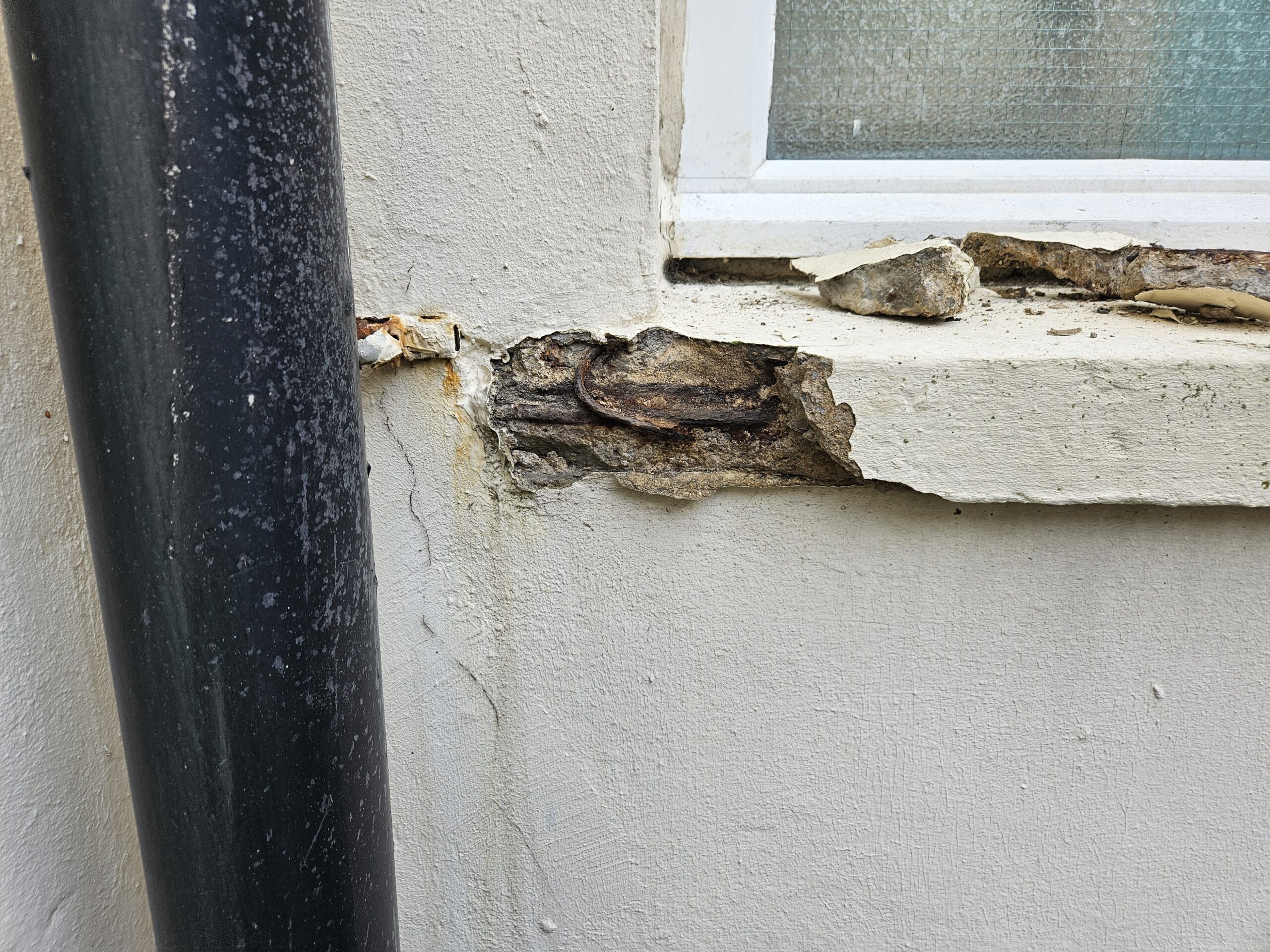
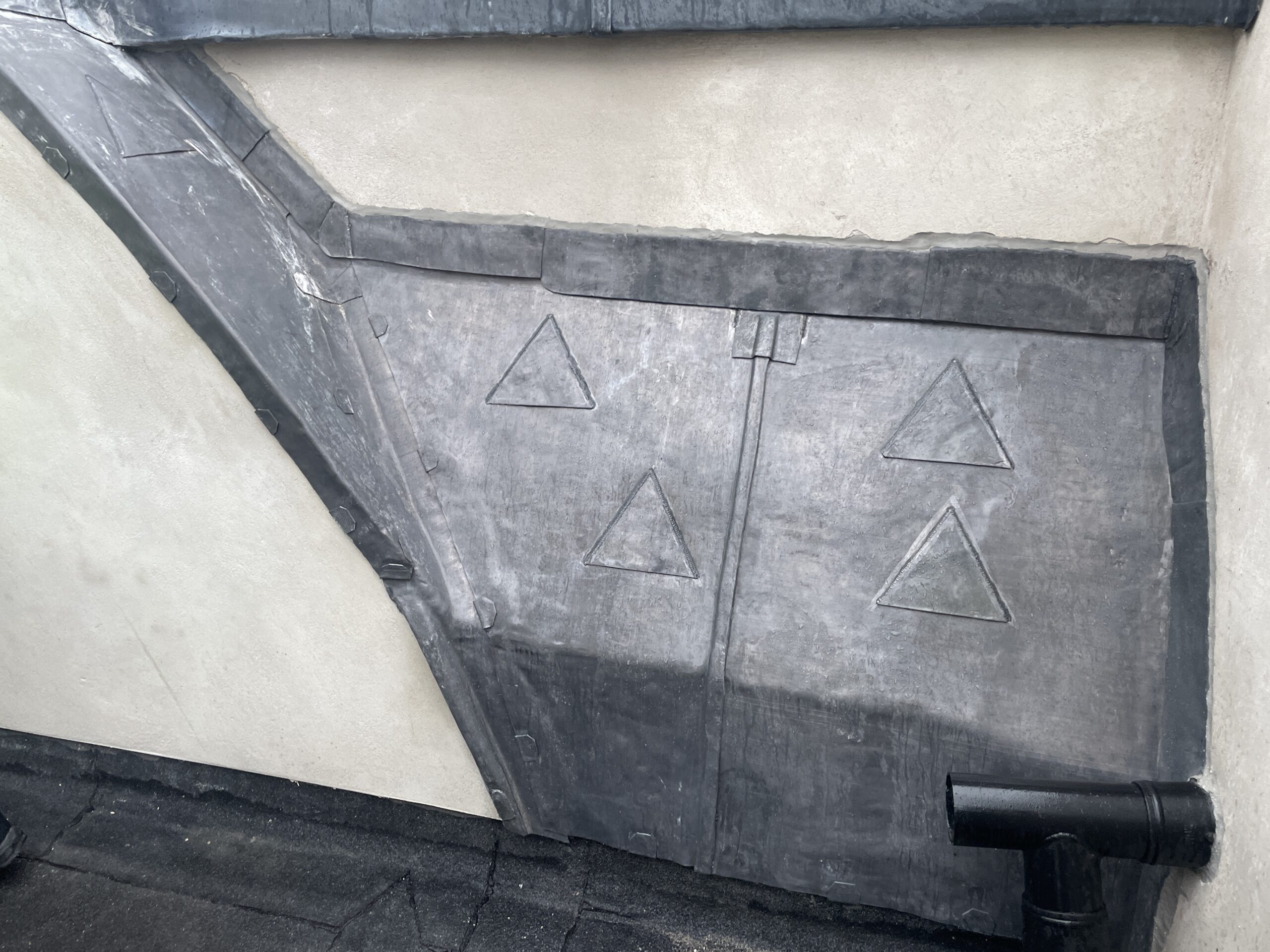
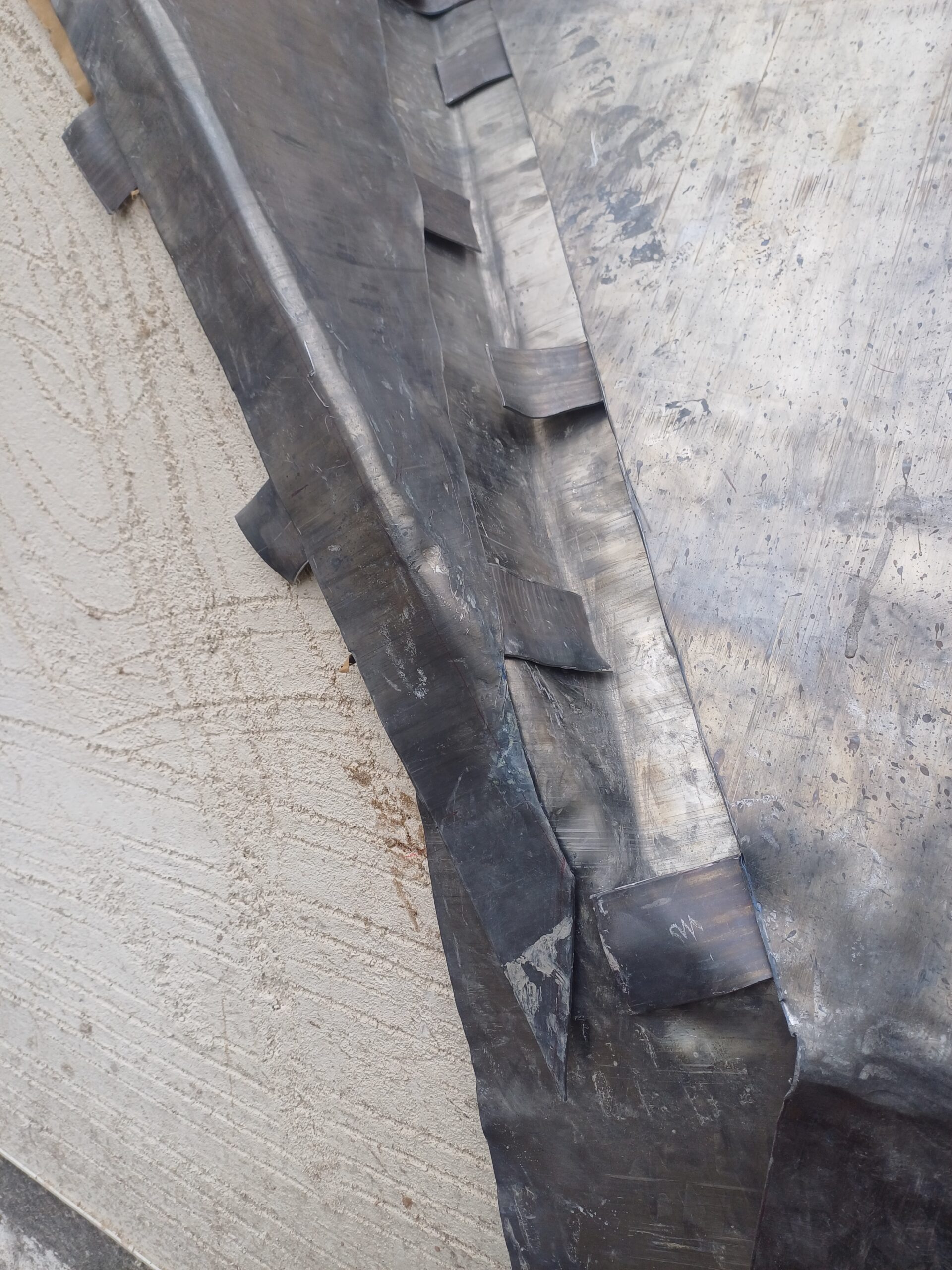
The project team also encountered deteriorated steel window head supports, damaged sandstone cills, defective lead flashings and voided masonry joints hidden beneath the existing render. Each issue required careful assessment and the implementation of bespoke repair solutions to ensure the long-term success of the restoration programme.
Removal of Defective Render Systems
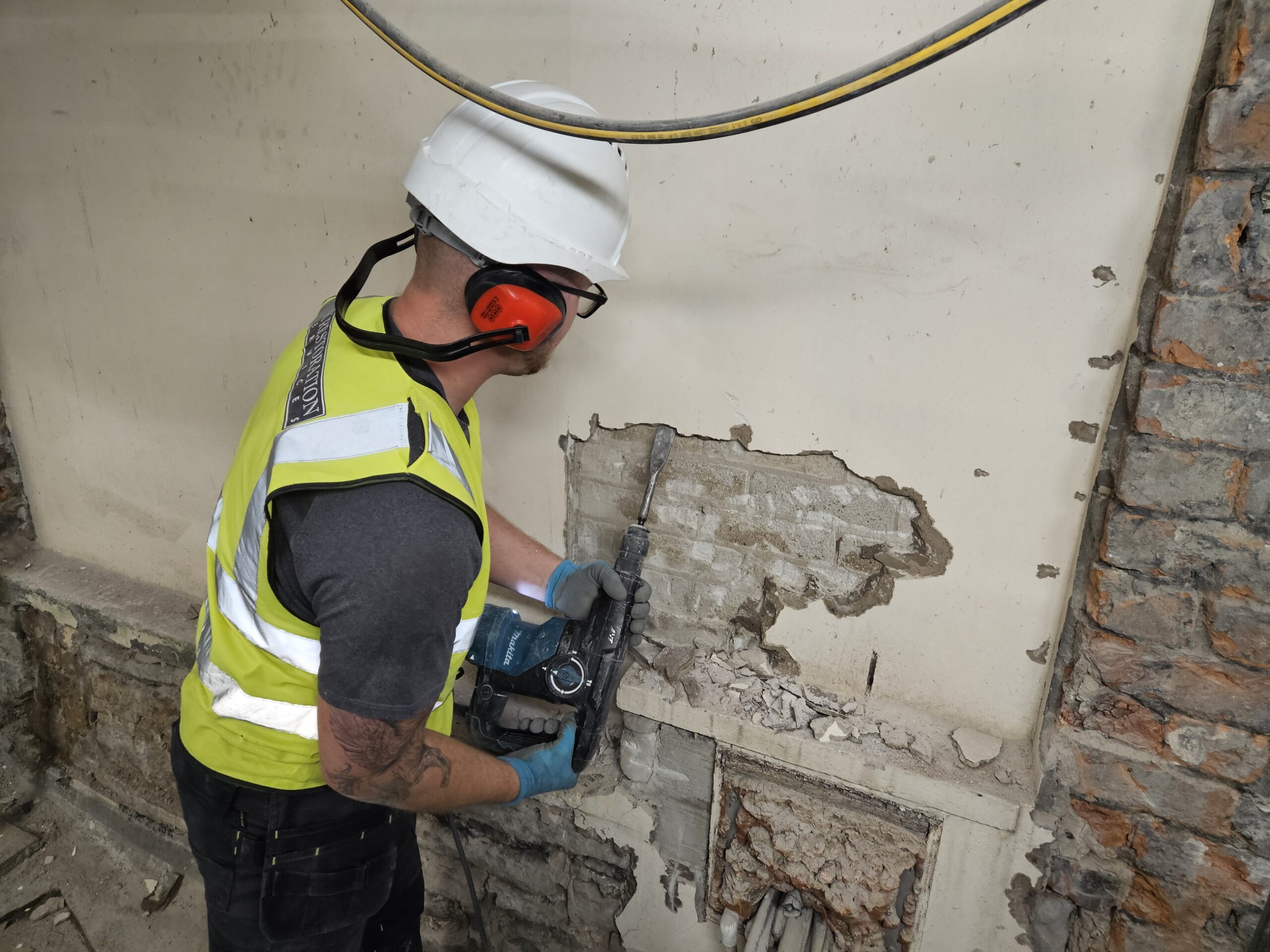
The restoration programme commenced with the careful removal of the existing render across all elevations of the quadrangle. This process exposed the original masonry substrate and allowed a detailed assessment of the condition of the underlying structure.
All cementitious materials were removed from the masonry joints to eliminate trapped moisture and restore breathability to the wall construction. Areas of voided masonry were identified and repaired through specialist lime grouting and deep packing techniques, stabilising the substrate before the application of the new render system.
Where required, cracks and movement joints were reinforced using specialist mesh systems to minimise the risk of future cracking while maintaining compatibility with the historic building fabric.
Specialist Lime Render Installation
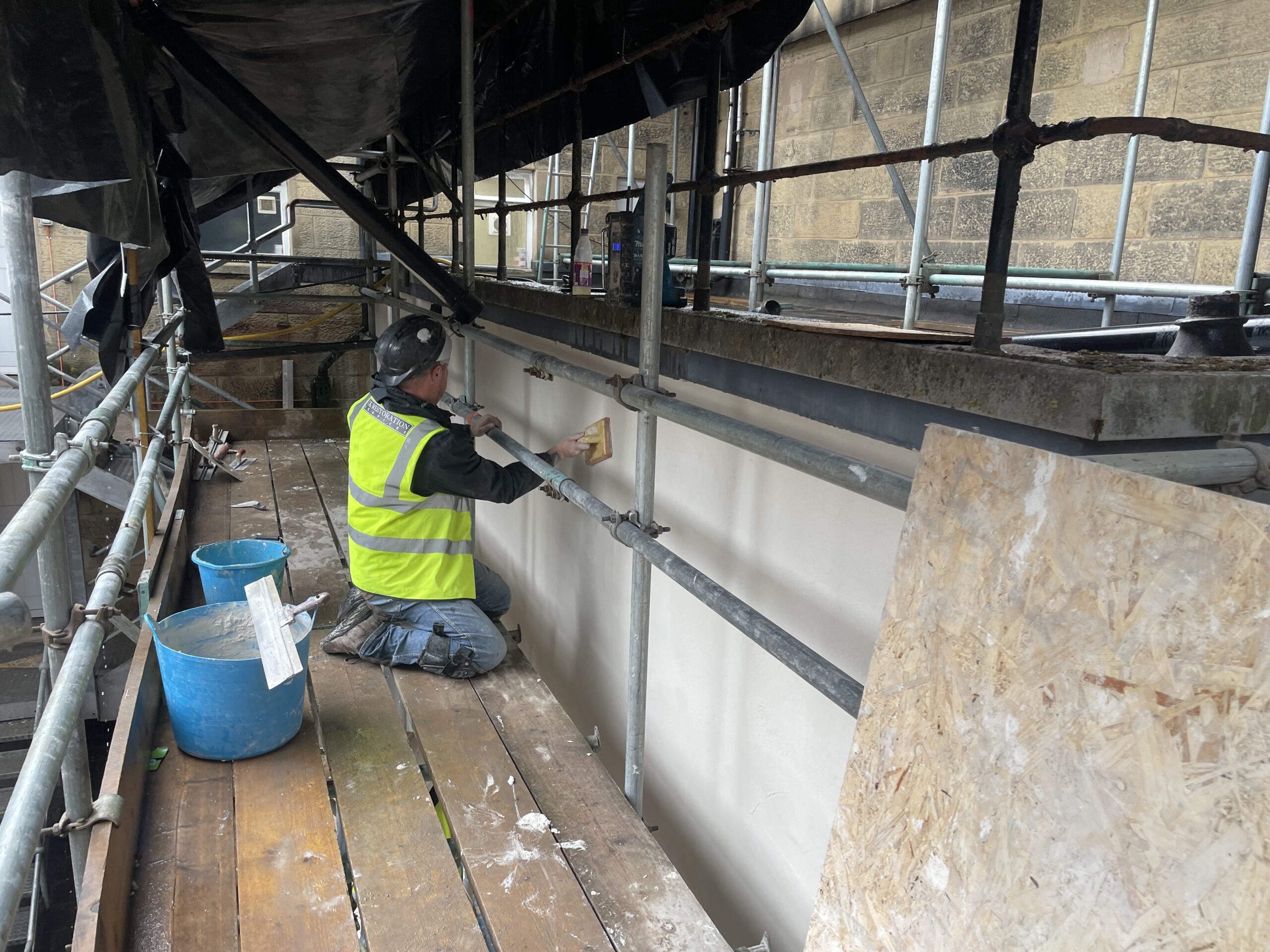
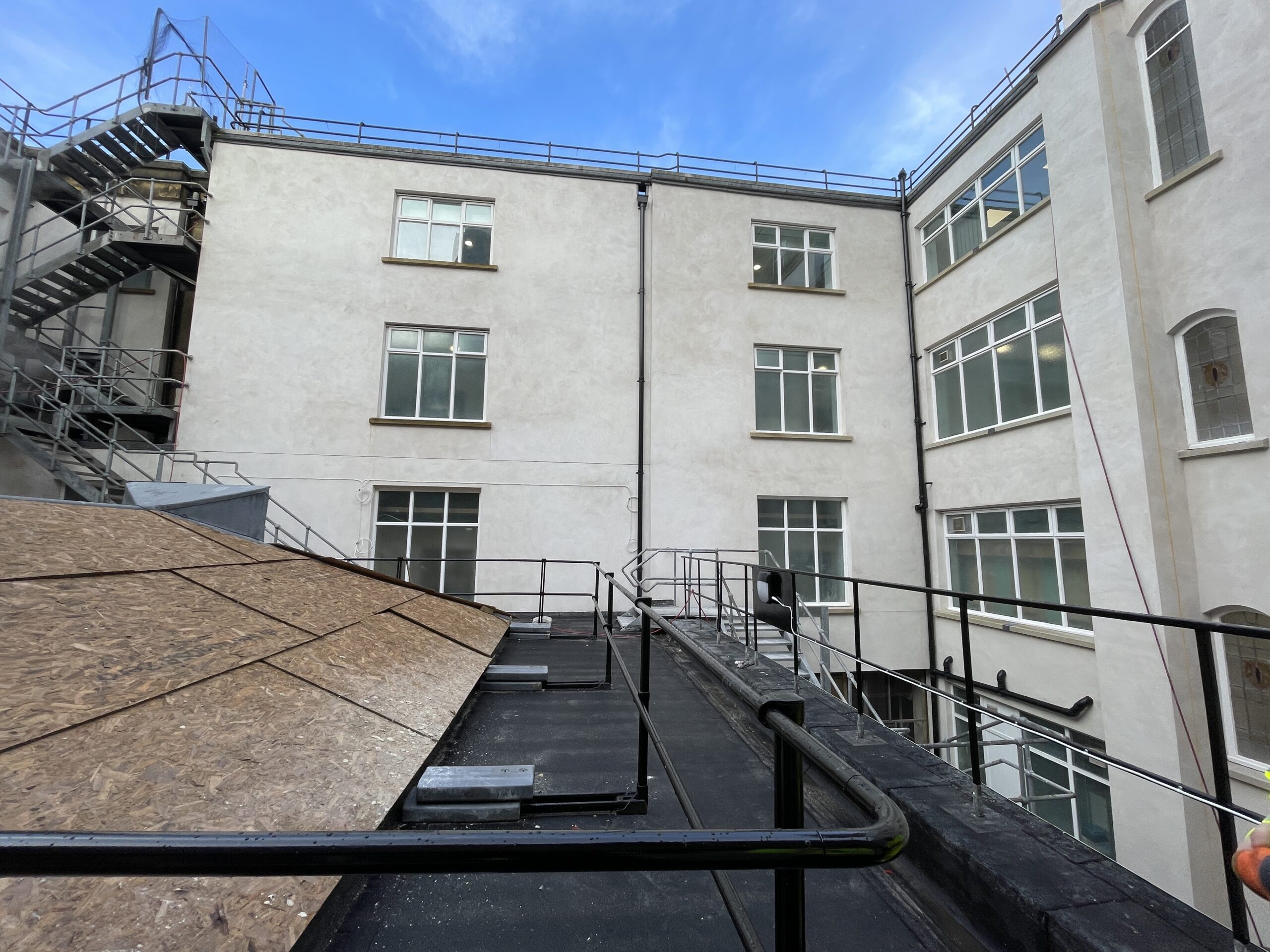
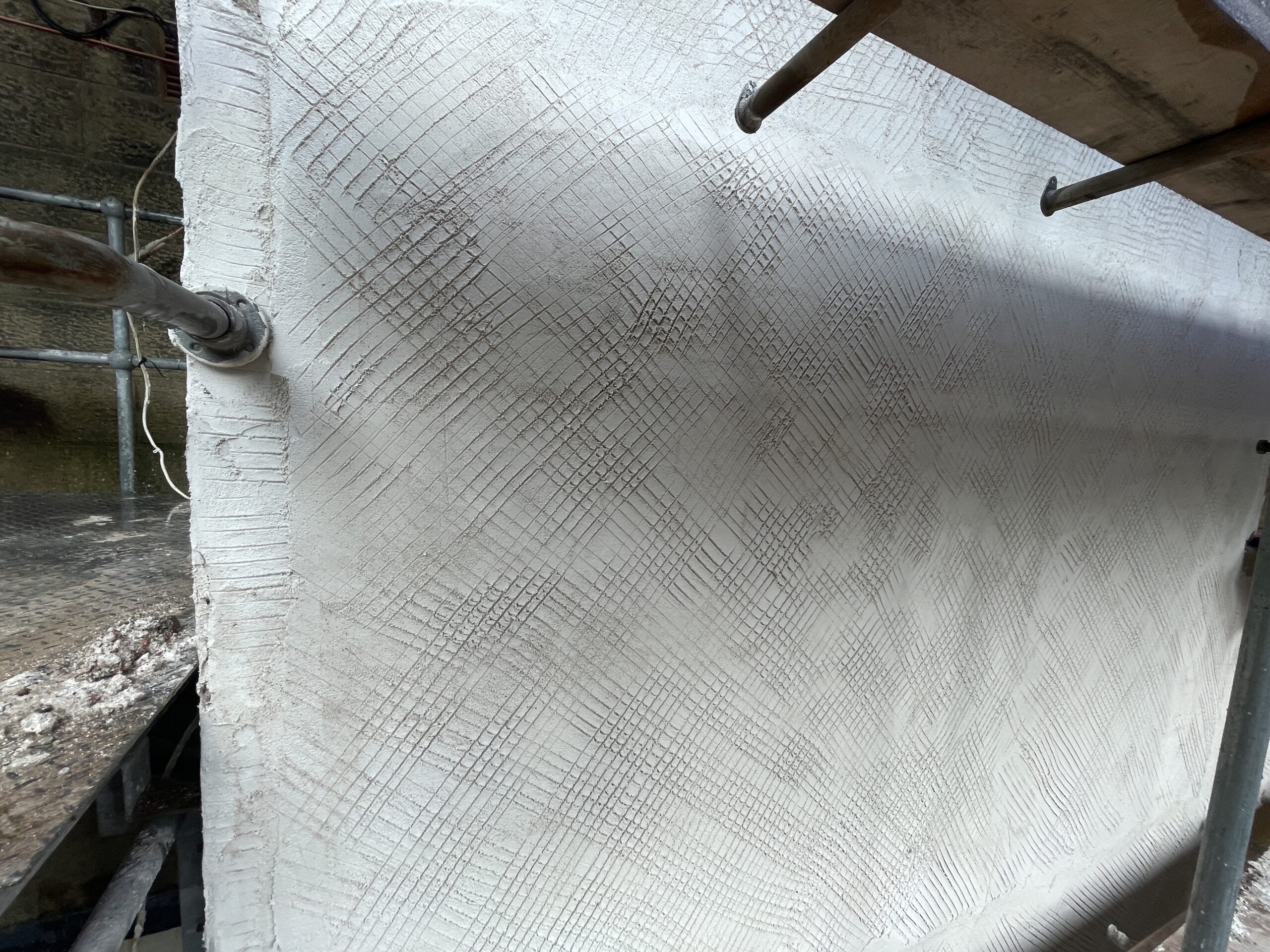
A key element of the project was the installation of a new breathable lime render system specifically selected for use on large scale historic masonry structures. Following preparation of the substrate, a Lime Green Ultra insulating basecoat was applied across all previously rendered elevations. This specialist basecoat provided enhanced thermal performance whilst maintaining the vapour permeability essential for historic buildings.
The render was applied in accordance with strict conservation principles and manufacturer recommendations, ensuring each coat was correctly cured and keyed to receive subsequent applications. Reinforcement mesh was incorporated where necessary to accommodate historic movement and reduce the likelihood of future surface cracking.
The finishing layer comprised Lime Green Natural Finish topcoat, carefully textured to provide an appearance sympathetic to the original character of the building. The resulting finish delivers a durable, breathable and aesthetically appropriate surface that allows moisture to evaporate naturally from the masonry structure.
Sandstone Cill Replacement and Masonry Repairs
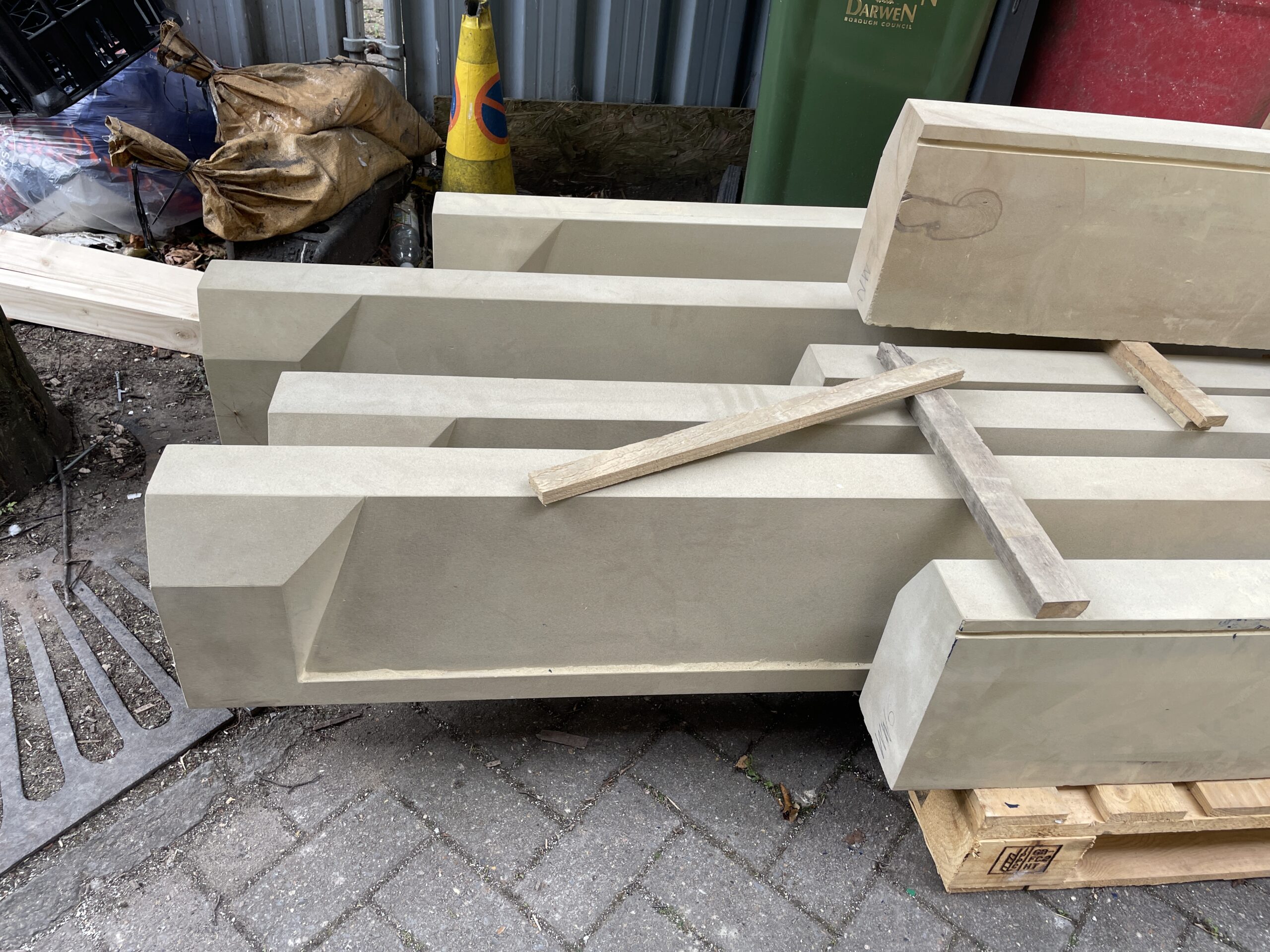
Alongside the render works, extensive stone replacement and masonry conservation repairs were undertaken throughout the quadrangle. Existing deteriorated cills were carefully removed and replaced with newly carved Yorkshire Buff sandstone units designed to match the original architectural detailing. New drip grooves and appropriate falls were incorporated into each cill to improve rainwater shedding and minimise future water ingress.
Repairs were also carried out to wall heads, parapets and masonry junctions where historic mortar failure had allowed moisture penetration. Existing cementitious pointing was removed and replaced using traditional lime mortar mixes, enabling the masonry to breathe naturally and reducing the risk of trapped moisture.
Additional masonry repairs included crack stitching, localised rebuilding, replacement lintels, concrete repairs, chimney rebuilding works and specialist timber repairs to historic windows and cills where deterioration had occurred.
Leadwork, Rainwater Goods and Associated Repairs
The longevity of any lime render system relies heavily upon effective water management. As part of the restoration programme, extensive leadwork repairs and upgrades were undertaken across the quadrangle.
Existing lead flashings were extended, renewed and upgraded using traditional code 5 and code 7 lead systems installed on new oak fillets with stainless steel fixings. These improvements ensured vulnerable junctions between masonry, roofs and rendered surfaces were adequately protected from water penetration.
Cast iron rainwater goods were removed, prepared, repaired and redecorated before reinstatement. Downpipes, soil pipes, air ducting and building services were carefully removed during the works and subsequently reinstalled, tested and commissioned following completion.
These improvements significantly enhanced the building’s ability to manage rainwater effectively, helping to protect both the newly installed render system and the historic masonry beneath.
Conservation-Led Approach
Throughout the project, every repair was undertaken with a conservation-first philosophy. Traditional materials and methods were prioritised wherever possible to ensure compatibility with the original construction.
The use of lime-based mortars, lime grouts and breathable render systems reflects best practice in heritage conservation, allowing the building to perform as originally intended whilst improving resilience against future weathering and environmental exposure.
The project team worked closely with the client and project stakeholders to ensure that all interventions respected the significance of Blackburn Town Hall as an important civic and architectural landmark.
Project Successes
The completed Blackburn Town Hall Quadrangle restoration has transformed the condition and appearance of the courtyard elevations. Defective render systems have been successfully replaced with a high-performance breathable lime render solution, while extensive masonry repairs have addressed long-standing defects that were contributing to moisture ingress and deterioration.
The installation of new sandstone cills, improved leadwork details and repaired rainwater systems has enhanced the building’s weather resistance and reduced maintenance requirements. Equally important, the conservation-led approach has safeguarded the historic character and architectural significance of the town hall.
The project demonstrates UK Restoration Services’ expertise in heritage rendering, lime plastering, conservation masonry repairs, sandstone replacement, leadwork restoration and historic building preservation. Through careful planning, specialist craftsmanship and attention to detail, the Blackburn Town Hall Quadrangle has been successfully restored and protected for future generations.